
%201.svg)


How to Get Paint Off Clothes: Expert Tips for Every Kind of Stain
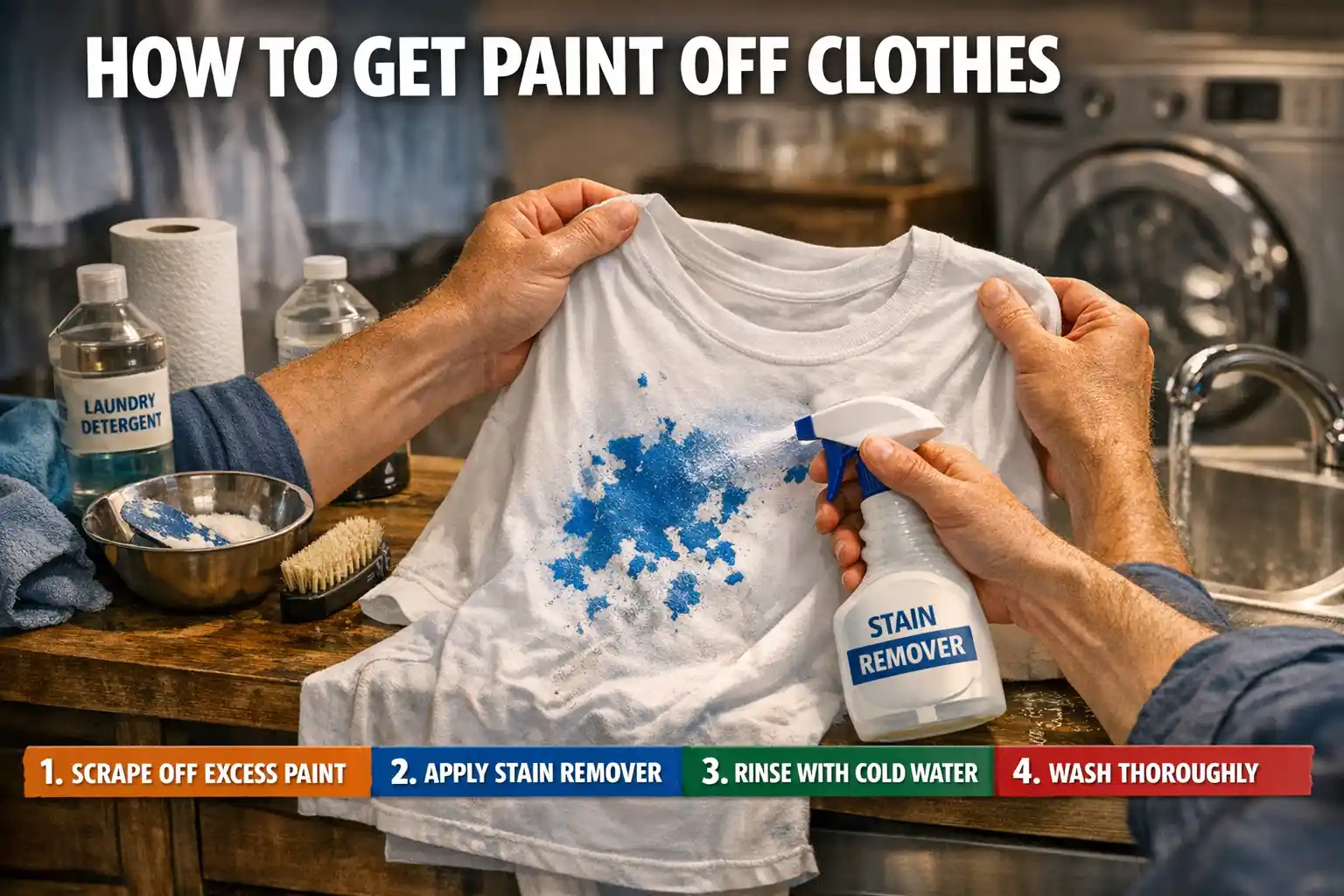
Key Takeaway:
To get paint off clothes, you need to act fast: remove excess paint, identify the paint type (latex, acrylic, or oil-based), and use suitable cleaning methods like blotting, soaking, or applying stain remover. Our guide delivers pro-tested steps for tackling fresh and dried paint stains to maximize your chances of saving your favorite clothes.
How to Get Paint Off Clothes: Expert Tips for Every Kind of Stain
Paint stains don’t have to mean the end for your favorite shirt or those work jeans you’ve broken in just right. At Cover Pro Painting, we've rescued countless paint-splattered clothes—both our own and homeowners'—using straightforward, proven techniques. If you’ve ever wondered how to get paint off clothes, this comprehensive guide walks you through every option, from DIY fixes for fresh latex spills to the stubborn, dried stains left by oil-based paints. You’ll get clear advice, trade secrets, and honest answers—so you can salvage stained garments with confidence.
Understanding Paint Stains on Clothing

Common Types of Paint: Latex, Acrylic, and Oil-Based
The first step to successfully removing paint from clothing is identifying the type of paint that caused the stain. Here’s how they break down:
- Latex Paint: Water-based and the most common for wall painting. Easier to clean when wet.
- Acrylic Paint: Also water-based but with a higher pigment load—used for art and crafts. Dries fast and can be tough to remove when dry.
- Oil-Based Paint: Used for trim, doors, and some exteriors. The most challenging to clean—you usually need powerful solvents.
Why Paint Stain Removal Methods Vary by Paint Type
The chemistry of latex, acrylic, and oil-based paints is the reason removal methods are so different. Water-based paints respond well to soapy water, laundry detergent, and gentle scraping. Oil-based paints, on the other hand, often need mineral spirits, turpentine, or commercial stain remover because they don't dissolve in water. Recognizing paint type sets you up for success.
First Steps: What to Do Immediately After a Paint Spill
Quick Action Makes a Difference
If you’ve just gotten paint on your clothes, the golden rule is straightforward: Act quickly. The longer paint remains on the fabric, the deeper it sets and the harder it becomes to remove—even with strong stain removers or elbow grease. Remove excess paint gently, without rubbing it into the fibers.
Essential Materials You’ll Need
- Paper towels or a wet cloth
- Dull knife or old toothbrush for gently scraping
- Dish soap and laundry detergent (preferably formulated as a laundry stain remover)
- Rubbing alcohol or hydrogen peroxide for tough stains
- Stain remover or paint thinner for oil-based spills
- Bucket of half warm water (never hot for fresh stains)
Safety Reminders: Skin & Surface Protection
Some products—especially paint thinner, turpentine, or commercial stain removers—can irritate your skin. Always wear gloves. Work in a ventilated area, and protect nearby surfaces from splash and residue. If you’re unsure about a product, always test it first in an inconspicuous area of the garment.
Quick Tips: For fresh paint stains, blot excess paint with a paper towel and rinse clothing with cold water promptly—never use hot water, as it may set the stain. Always avoid harsh scrubbing at first, as it can spread or drive the stain deeper.
How to Get Fresh Latex and Acrylic Paint Out of Clothes
Blotting—Don’t Rub
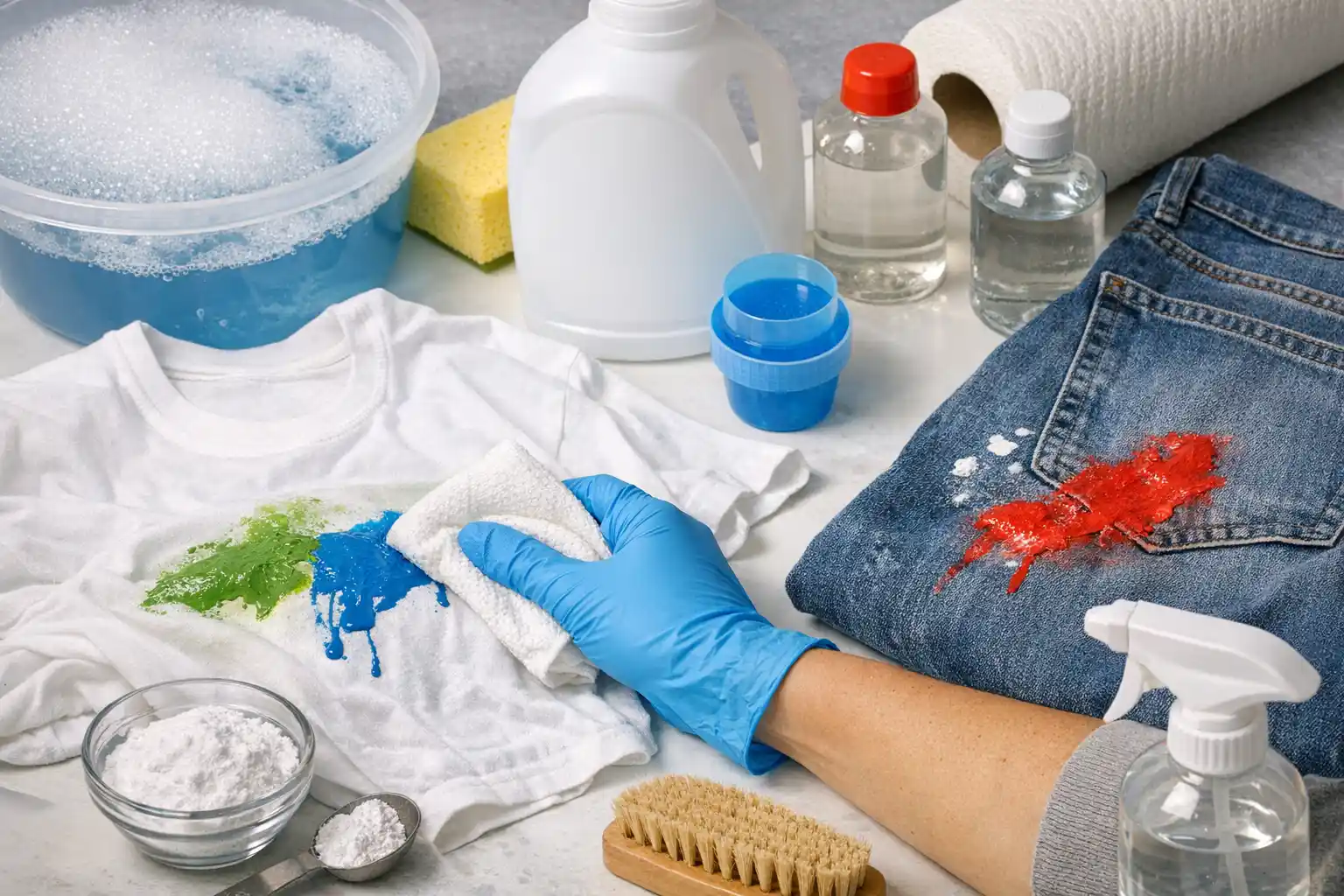
If you catch latex or acrylic paint while it’s still wet, grab a clean cloth or paper towel and blot the spot—do not rub, as this spreads the paint. The main goal is to remove excess paint before it dries. For water-based paint, less is often more at the start—heavy washing can push paint deeper.
Rinsing and Pre-Treatment Techniques
- Turn the garment inside out and run cold water through the back of the stain, flushing out as much paint as possible.
- Mix half warm water and dish soap to create a soapy solution. Soak the stained area for 20-30 minutes (soapy water overnight for tough stains is often even better—just avoid letting it dry out).
- Gently scrape any remaining blobs using a dull knife or old toothbrush.
- Apply laundry detergent or a laundry stain remover directly to the area. Let it sit for 5-10 minutes.
- Launder in warm water (never hot at first) with half detergent and inspect before drying. Repeat the process if stain remains.
Choosing the Right Laundry Detergents and Removers
For water-based paint, most modern laundry detergents do the job. For stubborn acrylic paint, try an extra boost with a commercial stain remover—there’s no shortage of options. If you're eco-minded or have sensitivities, opt for fragrance-free, biodegradable formulas.
Eco-Friendly Options and Precautions
- Soak in vinegar-and-water solution for extra muscle against latex paint stains.
- Dishwasher detergent can also help dissolve excess paint.
- Always rinse thoroughly—even eco products can leave behind soap residue if not washed out fully.
How to Remove Dried Latex and Acrylic Paint From Fabric
Loosening Paint Safely With Soaking Methods
When paint has dried, removal gets tougher. Start by scraping off flakes with a dull knife, gently, to avoid damaging fibers. Soak the stain in a mixture of half warm water, half detergent. Letting the garment soak overnight often helps soften dried paint stains.
Using Gentle Scraping Tools
If some paint remains, use an old toothbrush to work soapy water into the area, then gently scrape—never gouge. For persistent stains, rub with a bit of rubbing alcohol or hydrogen peroxide, but always do a spot test in an inconspicuous area first.
Professional-Grade Stain Removers: Pros and Cons
Products labeled as paint removers for fabric can be highly effective—especially on dried paint. They’re powerful, but can sometimes cause fading or weaken fibers. Follow directions closely and never leave them on longer than recommended.
Avoiding Fabric Damage: Testing First
Before using any new stain remover or solvent, test on a hidden part of the garment, like an inside seam or hem. Look for fading or warping—a red flag to choose milder measures instead.
Quick Tips: Dried paint is always harder to remove. Repeated soaking, application of stain remover, and gentle scraping over several rounds often yields the best results. Persistence—with gentle technique—matters more than force.
Getting Oil-Based Paint Off Clothes: Step-by-Step
Why Oil-Based Paints are More Difficult
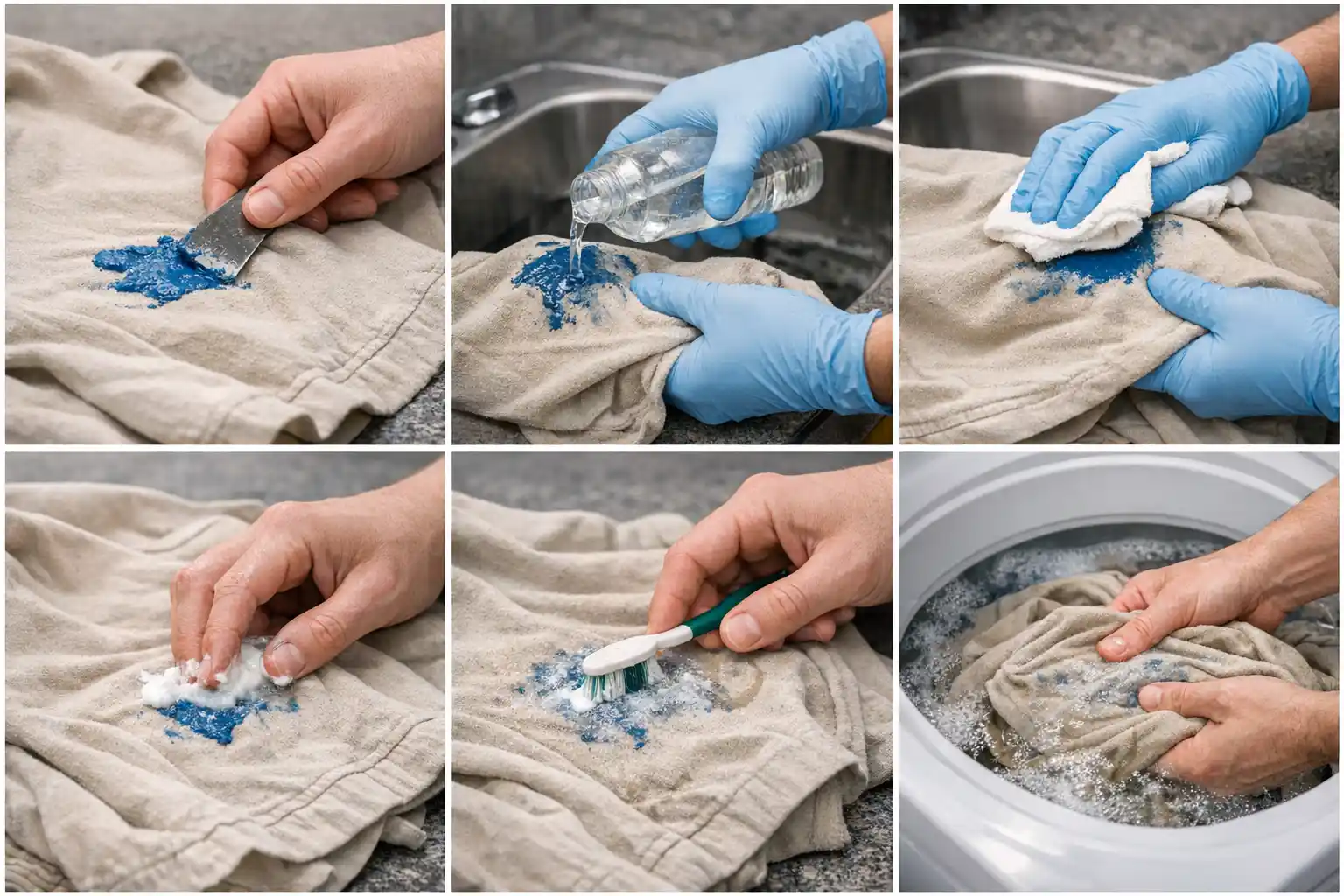
Oil-based paint clings to fabric fibers in a way that latex or acrylic never will. That’s why you’ll need solvents—not just water and detergent. These solutions must be used with caution to avoid harming the garment, yourself, or the environment.
Solvent Choices: Mineral Spirits, Turpentine, and Safer Alternatives
- For small spills, dip a clean cloth into a small amount of mineral spirits or turpentine, blot directly on the stain, and lift out as much paint as possible. Never pour solvents directly onto clothing.
- There are also low-odor, bio-based paint thinners on the market—less harsh than classic solvents.
- If only small paint remains, try applying a bit of dish soap or a commercial laundry stain remover next, then launder as usual.
Proper Use and Disposal of Chemicals
After using solvents, always wash clothing in warm water with detergent—but double-check fabric care labels. Dispose of used paper towels or rags in accordance with your local hazardous waste rules. Don’t toss solvent-soaked materials in regular trash.
Protecting Delicate Fabrics and Skin
Oil-based paint stains on silk, wool, or synthetics can be disastrous if the wrong process is used. When in doubt, professional dry cleaning is safest—most dry cleaners have experience with paint removal from garments. Wear gloves and ensure plenty of fresh air when working with solvents.
Tackling Dried or Set-In Oil-Based Paint Stains
Strategies for Hardened Stains
Dried oil-based paint requires all the paint-removal muscle you can safely use. Try applying a dab of paint thinner with a cotton swab, then gently scraping after a few minutes. Use soapy water to follow up and blot with a clean cloth. You may need multiple rounds of treatments—sometimes switching between commercial stain removers and household tricks like rubbing alcohol for better results.
When to Try Professional Products vs. Household Solutions
If household methods fail, consider products sold at hardware or paint stores that are labeled safe for fabric (always check for color-fastness first!). If paint remains after multiple gentle tries, move to professional cleaning. Dry cleaners often have access to strong, fabric-safe solvents and advanced equipment.
Risks of Aggressive Methods: When to Stop
If fabrics start to weaken or the color fades significantly during removal, call it quits. At this stage, continued treatment causes more harm than good. If the garment is special, valuable, or sentimental, seek professional help.
Quick Tips: Never mix different chemical products or solvents—stick to one approach at a time and rinse garments thoroughly between rounds. Combining chemicals can be unsafe for both fabric and user.
Special Considerations for Delicate or Dark Fabrics
Color Safe Techniques and Hidden Spot Tests
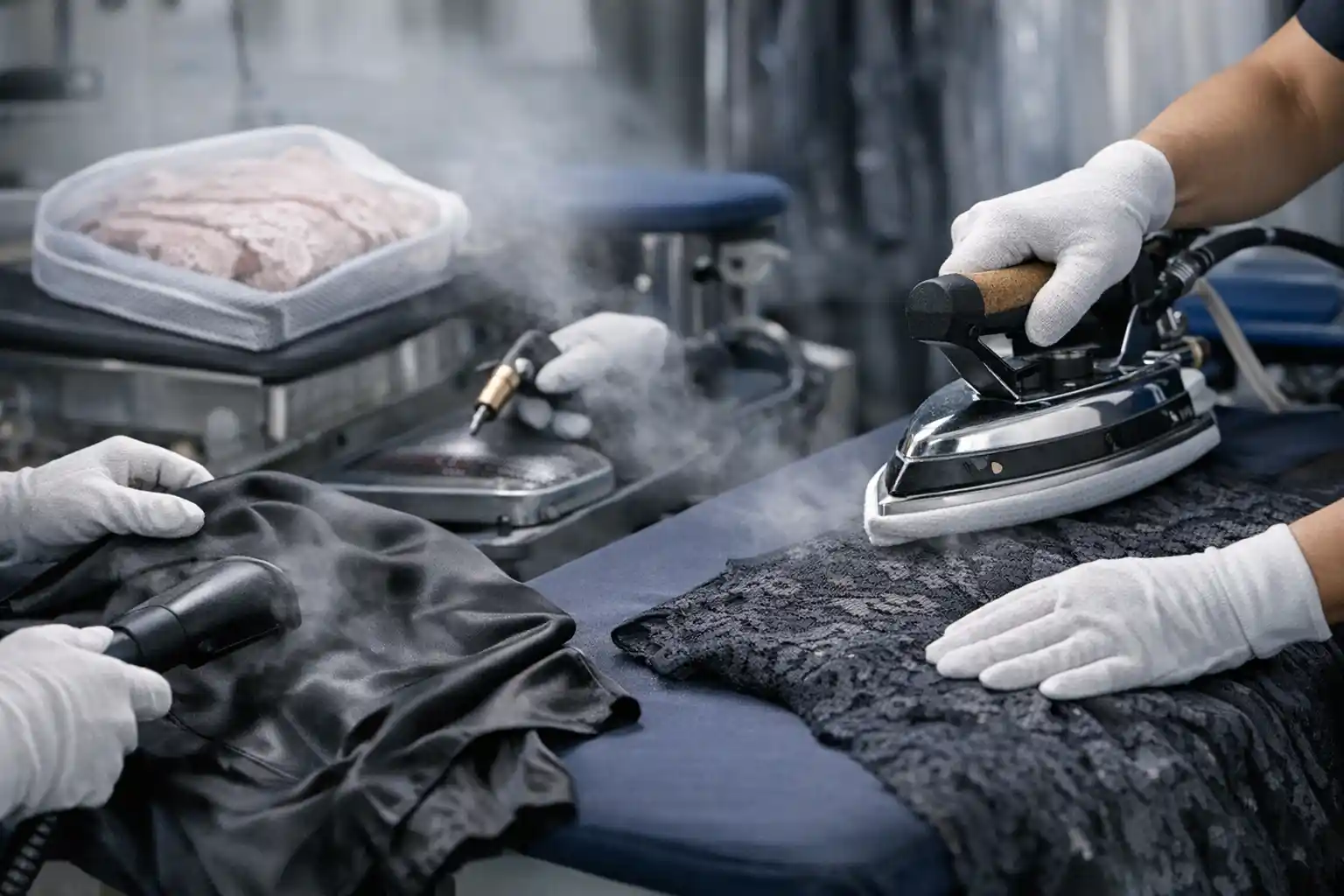
Dark fabrics and delicates aren’t as forgiving as everyday work shirts and jeans. Always perform a spot test in an inconspicuous area before applying any product. Color-safe or enzyme-based laundry detergents are the best first option for these garments.
Risk of Bleaching or Fading
Hydrogen peroxide and rubbing alcohol can lighten or discolor dark fabrics—especially if left on too long. Use the mildest detergents first and escalate only if the stain remains.
Picking the Right Removal Solution
Check fiber content and adjust your approach. Cotton is durable, while synthetics (like polyester) and delicates need gentle, less abrasive treatment. When in doubt, chase the safest option and escalate slowly.
How to Avoid Permanent Staining: What Not to Do
Accidentally Setting Stains with Heat
Never use hot water to rinse a fresh paint stain. Don’t put stained clothes in the dryer or iron them until the stain is absolutely gone—the heat will often set the stain permanently. Air dry only until you’re confident the spot is out.
Mistakes That Can Make Stains Worse
- Scrubbing harshly with a stiff brush—this can damage fibers and grind paint deeper.
- Over-applying chemical removers without testing on an inconspicuous area.
- Not rinsing between different removers or detergents.
- Leaving garments treated with solvents bunched up (risking fire hazard).
Quick Tips: Remember: Patience pays off with paint stains. Multiple gentle treatments with rinsing in between works better than a single, aggressive one. Prevention and quick action are always your best allies.
Professional-Grade Stain Removal: What Pros Use
Products Commonly Used by Painting Contractors
Professional crews, like Cover Pro Painting, stock a range of removers—from fast-acting enzyme detergents for water-based stains to fabric-safe paint thinners for tricky oil spots. We’re also big on prevention: our team rarely stains clothes due to rigorous prep and professional painting techniques, but when accidents happen, we've got the right products on hand.
Situations That Require Dry Cleaning or Expert Help
If you’ve followed all the steps above with little luck—especially on wool, silk, or heirloom garments—it’s time to seek out a reputable dry cleaner. Explain the paint type and all products used so far. Painters know when to admit defeat and let the pros take over!
What to Ask Your Dry Cleaner
- Have you treated paint stains before?
- Can you work with oil-based and water-based paint stains?
- Do you do a spot test for colorfastness?
- How will you dispose of solvent-based products?
Preventing Paint Stains in the Future
Best Practices from the Job Site
We never head onto a worksite without designated painting clothes—thick, long-sleeved shirts and pants, plus protective aprons. Our best prevention tip: suit up before you open the first can.
Recommended Protective Clothing and Accessories
- Wear painter’s coveralls or old, dedicated painting clothes for any project.
- Use disposable gloves and boot covers.
- Lay down plastic drop cloths or canvas tarps to catch paint droplets.
Simple Habits for DIYers and Homeowners
- Change into painting clothes before you start.
- Keep a wet cloth or paper towel handy for immediate clean-up.
- Store a stain remover in your painting kit—just in case.
Links: Protective Gear and Cleaning Supply Guides
- Learn more about selecting paint products and prep gear in our professional painting resources and full service overview.
Quick Tips: Prevention is always more reliable than cure. Armor yourself with painting clothes, gloves, and drop cloths. Most stains are avoidable with simple prep and the right gear.
Eco-Friendly and Safe Paint Removal at Home
Latest Trends in Non-Toxic Cleaners (2026 Update)
In 2026, more homeowners and pros are reaching for plant-based and enzyme-powered cleaners. Modern eco detergents, soap nuts, or solutions with citrus terpenes can dissolve latex and acrylic paint without harsh residues. They work best on fresh paint or lightly-set stains.
Avoiding Harmful Chemicals: What Works & What to Skip
Skip old-school, overly strong chemicals unless you have a truly impossible stain. Safer options include white vinegar, baking soda pastes, and oxygen cleaners like sodium percarbonate. Always read product labels and avoid anything that isn’t marked fabric-safe.
Safe Disposal of Paint and Cleaning Solutions
Never pour paint, paint thinner, or residue down household drains—it’s illegal in many areas and harms water systems. Find local hazardous waste drop-offs, or check your city’s rules online for paint and solvent disposal. For more advice on safe home projects, see our guide on addressing paint cracking and other common paint problems.
Conclusion: Trust Your Clothes and Your Home to the Pros
When to Call in a Professional Painter or Cleaner
Some stains refuse to budge—especially oil-based or dried acrylic. If these methods don’t work, reach out to a dry cleaner or contact a professional painting contractor with fabric stain experience. We know how to remove paint safely and completely.
Cover Pro’s Reliability and Cleanliness Promise
The Cover Pro Painting team is built on trust, preparation, and respect for every client’s property. We treat clothing, furniture, and floors with the same care as your walls and siding—because details matter. Our crews are licensed, insured, and bring proven experience to every job.
Contact and Internal Links: Estimate Requests, Exterior Painting Info, FAQ Pages
- Looking for pro results? Get your free estimate and see how we set the standard for household care and safety.
- Read more about our full spectrum of residential and commercial painting services.
- For DIYers, explore our tips for choosing perfect paint finishes or solving common painting problems.
Frequently Asked Questions
Can you get paint out of clothes after it dries?
Dried paint stains are tough, but not impossible—especially with pro tips. We cover approaches for both latex and oil in detail above.
Are there any safe, eco-friendly ways to remove paint from clothing?
Yes. Natural options like vinegar, baking soda, and newer eco detergents are often effective on water-based paint—see our updated 2026 recommendations.
What are the risks of using strong chemicals or solvents to remove paint stains?
Solvents can fade fabrics, irritate skin, and impact indoor air—always test in a hidden area and work in a ventilated space. We outline safe best practices here.
Is it ever better to take stained clothing to a professional dry cleaner?
If the stain is set or on a delicate or valuable item, it’s smart to get professional help. Check our guide for when to make that call.
What’s the biggest mistake homeowners make when trying to clean paint off clothes?
Heating paint (like putting stained clothes in the dryer) can set the stain permanently—avoid this and follow our prevention tips.
