
%201.svg)


What Type of Paint Is Best for Outdoor Fence Durability?
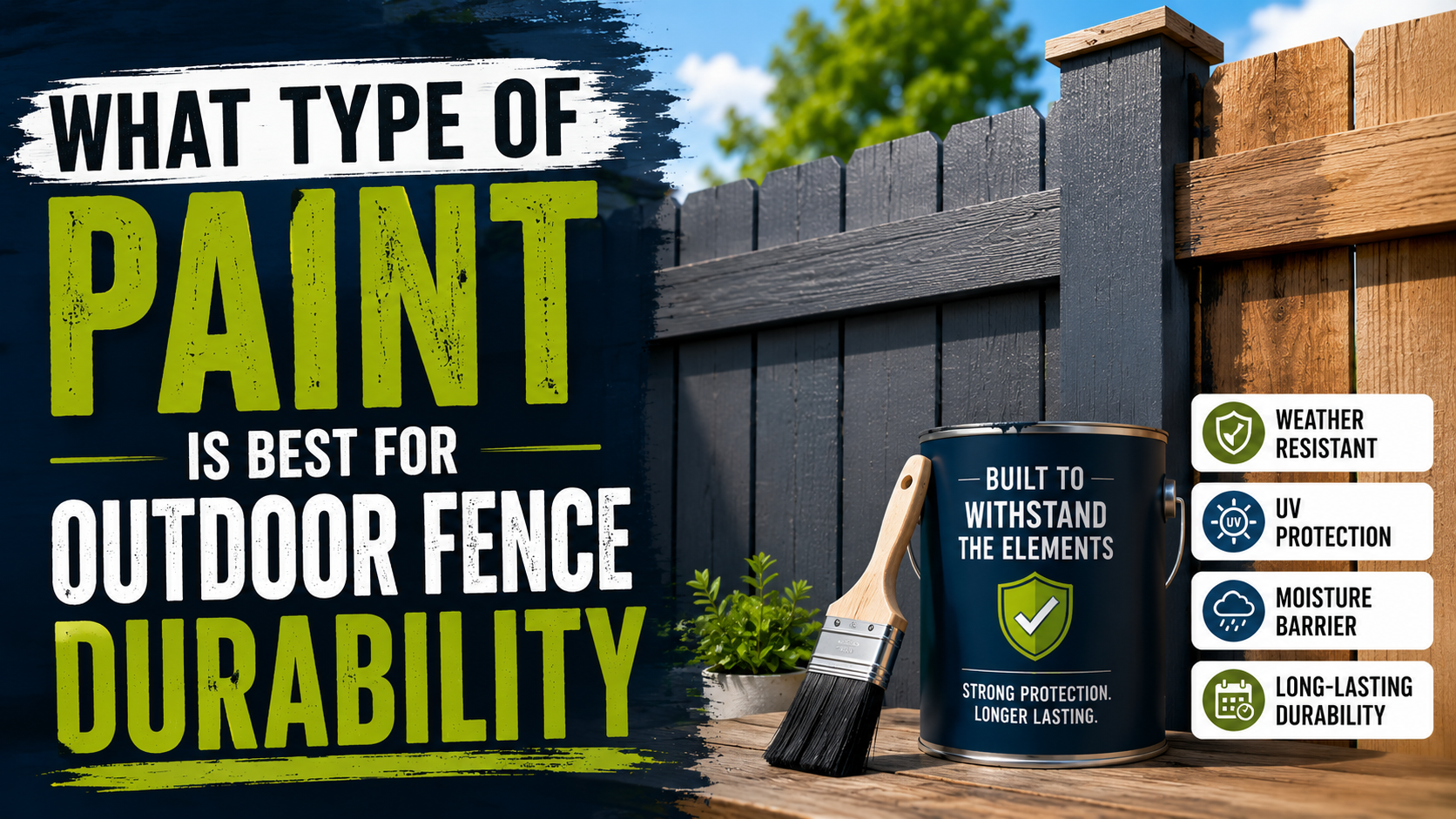
What Type of Paint Is Best for Outdoor Fence Durability?
Quick Answer
If you are asking what type of paint is best for outdoor fence durability, the answer is to use a high-quality system designed for exterior wood. In most cases, the best paint is a premium latex paint or other water-based paints, or a solid stain system that protects the wood while allowing it to breathe. The right paint, paired with proper preparation and application, creates a durable finish that protects your fence from moisture, harsh weather, and direct sunlight.
A wooden fence is one of the first things people see when they look at your home. The right paint can improve your home's curb appeal, protect the wood, and extend the life of your outdoor spaces. The wrong paint, or poor preparation, can lead to flaking paint, peeling, and costly repairs.
We see it all the time: homeowners choose a budget-friendly fence paint, skip the prep, and within a year or two the entire fence starts to peel. The truth is, the best wood fence paint is not just about the product. It is about the system—from cleaning to primer to final coat.
Why Fence Coatings Fail So Quickly
Constant Exposure to Sun, Rain, and Ground Moisture
A fence is exposed to rain, dirt, and direct sunlight every day. Moisture from the ground moves into the wood, while UV rays break down the paint on the surface. Without proper protection, the coating begins to peel and break down.
Wood Movement and Expansion
Wood expands and contracts with changes in moisture. When wood expands, rigid coatings cannot keep up. This leads to cracking and peeling. Preventing cracking starts with choosing the right paint that can move with the wood.
Poor Surface Preparation
One of the biggest common mistakes is applying paint over dirt, mildew, or old paint. Loose paint, flaking paint, and rough patches prevent a strong bond. Using a proper wood cleaner, removing old paint, and letting the surface dry completely makes all the difference.
Paint vs. Stain – What’s the Real Difference for Fences?
What Exterior Paint Does Well
Exterior paint, especially latex paint, provides a uniform surface and smooth finish. It is ideal for a painted fence where full coverage and consistent paint color are important. It also creates a protective barrier that helps protect against moisture and UV exposure.
Where Paint Falls Short
Paint forms a film on top of the wood. If applied incorrectly, it can trap moisture beneath the surface. Over time, this causes the paint to peel and flake. Oil-based paint penetrates deeper, but oil-based coatings can become brittle and crack.
What Solid Stains Do Better
Stains penetrate into the wood and allow it to breathe. They protect the wood while preserving its natural beauty. Solid stains still add color, but they reduce peeling and make touch-ups easier over time.
Why This Matters in the Pacific Northwest
With frequent rain and moisture, choosing paint designed for exterior wood is critical. Flexible coatings perform better and last longer in these conditions, especially when paired with exterior house color choices that suit the Pacific Northwest.
The Best Types of Coatings for Fence Durability
100% Acrylic and Latex Paint (Best Overall Paint Option)
Latex paint and other water-based paints are widely considered the best paint for most wood fence projects. These base paints provide a durable finish, resist peeling, and hold up in harsh weather. They also allow flexibility as wood expands.
Acrylic Latex Exterior Paint (Best for Full Coverage Look)
Acrylic latex paint is one of the best wood fence paint options when you want a smooth finish across the entire fence. It works well over existing paint and creates a clean, uniform surface.
Oil-Based Paint (Best for Specific Situations)
Oil-based paint and oil-based coatings are still useful for certain wood types like cedar. They penetrate deeply and can block tannins. However, oil-based products often require more upkeep and can peel as they age.
Semi-Transparent and Transparent Stains (Shorter Lifespan Option)
Stains that highlight the natural beauty of wood require more upkeep. They offer less protection but are chosen for their appearance in outdoor spaces.
How Long Should Fence Paint or Stain Last?
Realistic Lifespan by Product Type
Solid stains and high-quality paint offer the longest life. Transparent stains require more upkeep and frequent reapplication.
What Affects Longevity Most
Key factors include moisture, direct sunlight, prep quality, and the type of paint used. A properly prepared surface ensures a strong bond and longer life.
Why Manufacturer Claims Can Be Misleading
Marketing claims do not reflect real conditions. Rain, moisture, and sun exposure reduce lifespan. A long-lasting finish depends on proper preparation and application.
What We Recommend at Cover Pro Painting
Our Go-To System for Fence Durability
- Clean the entire fence using a professional wood cleaner to remove dirt and mildew
- Sand rough patches and remove loose paint and old paint
- Apply primer where needed to create a strong bond
- Apply the first coat of high-quality fence paint or stains
- Follow with a second coat for full protection and coverage
This process ensures the coating can cure properly and deliver long-term durability.
Why We Typically Recommend Solid Stains
Stains provide strong protection while allowing the wood to breathe. They reduce peeling and make maintenance easier with simple touch-ups.
When We Recommend Paint Instead
If there is existing paint, staying with paint is usually the best option. It helps maintain adhesion and creates a consistent look.
The Most Important Step: Surface Preparation
Cleaning and Mildew Treatment
Cleaning with just soap is not enough. A proper wood fence cleaner and prep process removes deep dirt and prepares the surface for applying paint.
Dry Time and Moisture Levels
The fence must dry completely before applying paint. Moisture trapped beneath the coating leads to peeling and failure.
Repairs Before Painting
Damaged boards and rot must be repaired first, just as damaged exterior siding in Kent, WA benefits from professional repair. The coating will only perform as well as the wood beneath it.
Common Mistakes That Ruin Fence Durability
Painting Over Damp or Dirty Wood
This prevents a strong bond and leads to peeling.
Using the Wrong Products
Interior paint or low-grade fence paint will not hold up outdoors.
Skipping Primer
Primer is essential for adhesion and durability.
Choosing the Wrong Finish
Using the wrong paint or stain for the wood type leads to flaking paint and poor results.
How to Choose the Right Option for Your Fence
Consider the Age and Condition of the Fence
Older fences may require primer and more preparation before applying paint.
Think About Maintenance Expectations
Some coatings require more upkeep and regular touch-ups.
Balance Appearance vs. Longevity
A natural look highlights the wood, while solid paint offers longer protection and improved curb appeal, just as choosing the best interior paint for each room balances beauty and durability indoors.
When to Hire a Professional
Professional preparation and application methods make all the difference in durability, especially when you work with a professional paint and rot repair company.
Professional Fence Painting vs. DIY – What’s the Difference?
Equipment and Product Access
Professionals use a paint sprayer, brush, and roller to ensure even coverage and a smooth finish.
Prep Quality
Proper sanding, cleaning, and priming create a strong foundation.
Long-Term Cost
A properly applied system reduces future repairs and repainting costs.
FAQs – Outdoor Fence Paint and Stain
What is the longest lasting paint for a fence?
Latex paint and acrylic-based paints are considered the best paint options for durability.
Is it better to paint or stain a fence?
Stains offer easier maintenance, while paint provides a smooth finish and uniform surface.
How often should a fence be repainted?
Most fences need repainting every few years depending on exposure.
Can you paint over old stain?
Yes, but proper preparation, sanding, and primer are required.
What color lasts longest?
A lighter shade may hold up better in direct sunlight, but product quality matters more.
Does paint prevent rot?
Paint helps protect against moisture but does not fully prevent rot.
What is best for cedar fences?
Oil-based paint or stains are often used to block tannins and improve durability.
Final Thoughts: Choosing the Right Coating for Long-Term Results
The right paint system protects your fence, improves your home's curb appeal, and creates a durable finish that lasts. Using primer, applying paint correctly, and following manufacturer's instructions ensures each coat bonds properly.
Applying paint in two coats, allowing each coat to cure properly, and choosing paint designed for exterior wood will protect your fence from moisture and harsh weather. Avoid painting in poor conditions, and always focus on preparation first.
