
%201.svg)


What Tools Are Used in Professional House Painting?
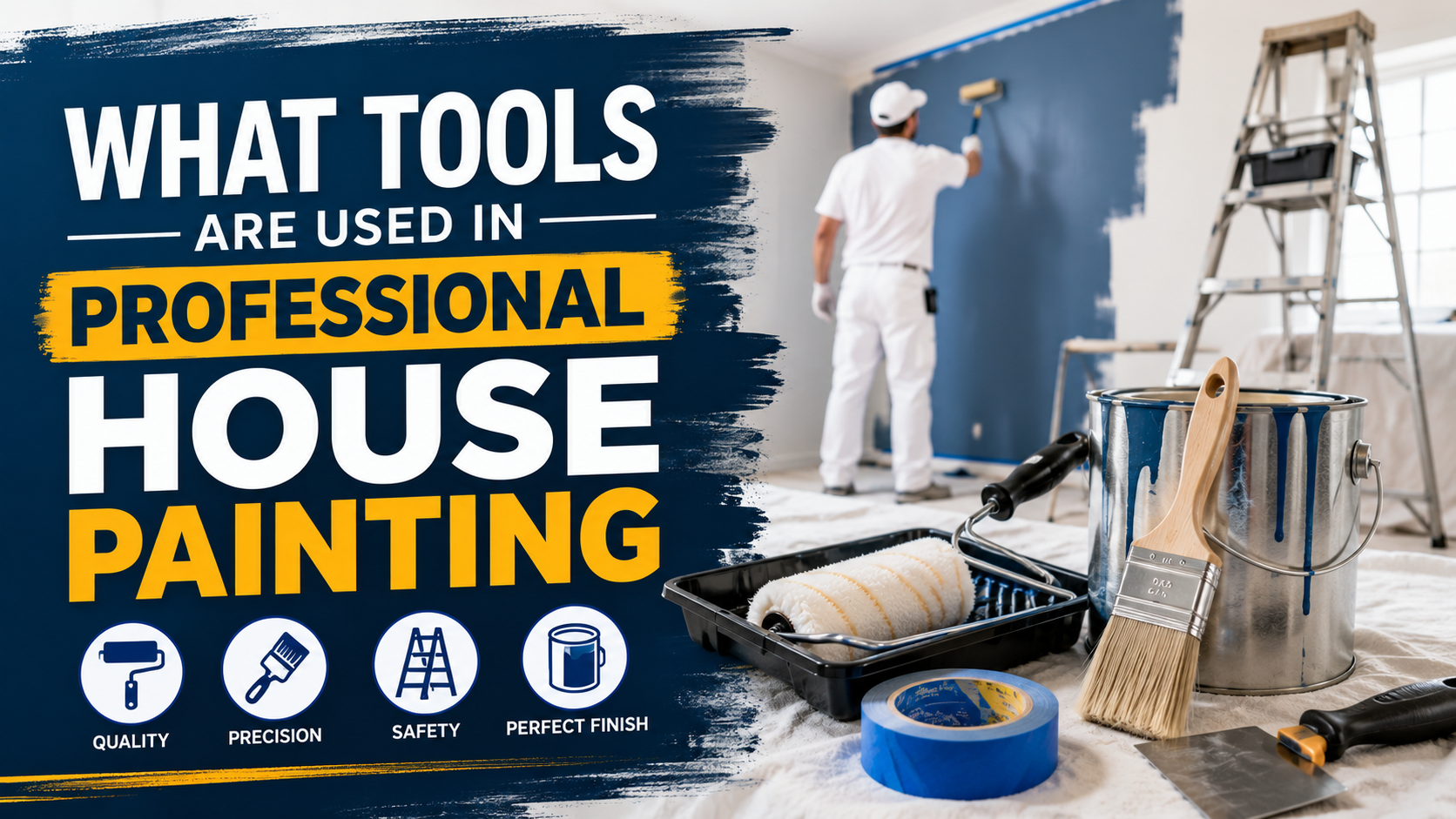
What Tools Are Used in Professional House Painting?
Here’s a quick answer: What tools are used in professional house painting comes down to having the right system, not just a few basic brushes and rollers. Professional painters rely on a full set of painting tools, surface prep tools, paint equipment, and protective materials to deliver a smooth finish that lasts. The right tools make all the difference in how paint looks, performs, and holds up over time.
Why Professional Painting Tools Matter More Than You Think
When homeowners think about a paint job, they usually think about color. Painting pros think about tools, prep, and process. The quality of painting tools directly impacts how paint bonds to surfaces, how smooth the finish looks, and how clean the job stays.
Using the best painting tools means fewer paint drips, better clean lines, and longer-lasting results. Cheap tools often leave streaks, shed fibers, or create uneven coverage. Professional painting tools are designed to apply paint evenly, reduce waste, and improve durability.
This is especially important for any house painting project where interior walls, trim, and large surfaces all require different approaches. The right tools and right equipment help make the job easier and help save time without cutting corners.
Surface Preparation Tools (Where Quality Really Starts)
Why Prep Work Is the Most Important Step
Before applying paint, proper preparation is critical. Most of the work in a painting project happens before paint ever touches the walls. Surface prep tools are used to remove old paint, repair damage, and create smooth surfaces for proper adhesion.
If loose paint or damaged areas are left untreated, the new paint will fail early. Prep is what separates a quick job from a professional finish.
Common Prep Tools Professionals Use
Professional painters use a full range of surface prep tools, including sanding blocks, orbital sanders, and scrapers to remove old paint. A putty knife is used to fill nail holes and repair small imperfections. These tools help create smooth surfaces that allow paint to bond correctly.
Other essential tools include caulking guns to seal gaps, and moisture meters to ensure surfaces are dry. For exterior work, pressure washing removes dirt and prepares surfaces for paint.
These painting supplies are a must-have for any long-lasting paint job.
How Proper Prep Prevents Paint Failure
Proper prep prevents peeling, cracking, and bubbling. Removing loose paint and smoothing rough surfaces ensures that new paint adheres properly. Filling nail holes and sanding rough areas creates a clean base for applying paint.
Without this step, even high-quality paint will not perform as expected.
Protection and Masking Tools (Keeping Your Home Clean)
How Professionals Protect Your Space
Before starting any painting project, professionals take time to protect floors, furniture, and surrounding surfaces. This step keeps the home clean and prevents damage, and homeowners also play a role by prepping the house for painting day.
Tools Used for Protection
Drop cloths are one of the most important painting supplies on any job. Canvas drop cloths are commonly used because they stay in place and absorb paint drips. A plastic drop cloth is often used for covering furniture and vertical surfaces.
Plastic sheeting, painter's tape, and masking film are also used to protect areas that should not be painted. Painter's tape helps create clean edges along trim, ceilings, and walls.
Many professionals also use tray liners to keep paint trays clean and allow for quick cleanup between coats.
Why This Step Separates Pros from DIY
Proper use of drop cloths, plastic, and painter's tape results in clean lines and protects floors and furniture. This level of care is what makes a professional paint job stand out.
Paint Application Tools (Where Skill Meets Equipment)
Professional Paint Brushes
High-quality paintbrushes are essential for detail work. Professionals use paint brush options like angled brush designs for cutting in along trim and corners. Synthetic bristles are commonly used today because they work well with water-based paints and latex paint.
A good paint brush allows for better control and a smoother finish. Many pros also use a paint brush cover to keep brushes fresh between coats and reduce waste.
Brushes are still one of the most important painting tools, especially for trim and detailed areas.
Rollers and Extension Poles
Paint rollers are used for covering large surfaces like walls and ceilings. Roller covers come in different thicknesses depending on the texture of the surface. Microfiber roller covers are often used for smooth surfaces because they provide even coverage.
Extension pole systems are a must-have for reaching high walls and high ceilings. An extension pole allows painters to maintain consistent pressure while applying paint, which helps create a smooth finish.
Rollers and extension pole setups also help save time and reduce the need for constant ladder movement.
Paint Trays and Accessories
A paint tray is used to hold paint and evenly load paint onto roller covers. Tray liners make cleanup easier and allow painters to switch colors quickly.
Many painters also use a handy paint pail for smaller areas, allowing them to hold paint while moving around without carrying full paint cans.
Paint trays and tray liners are simple but essential painting supplies that help keep the job organized.
Paint Sprayers
A paint sprayer is commonly used for large surfaces and exterior house painting projects. Airless sprayers are especially popular because they deliver fast, even coverage.
Paint sprayer systems allow for smooth finishes with fewer brush marks. Spray painting is also useful for larger projects where speed and consistency matter.
In many cases, professional painters will combine spray painting with back rolling to ensure proper adhesion and coverage.
Ladders, Scaffolding, and Safety Equipment
How Professionals Safely Reach Every Area
Painting often requires reaching high ceilings, high walls, and multi-story exteriors. Using the right equipment ensures safety and efficiency, and clearly outlining this in professional painting contracts helps homeowners understand what’s included in the job.
Common Access Equipment
An extension ladder is commonly used for exterior work, while step ladders are used indoors. These tools allow painters to reach difficult areas without damaging surfaces.
For larger projects, scaffolding may be used to provide stable access to wide areas.
Why Safety Equipment Matters for Homeowners
Using proper equipment reduces risk and keeps the job on schedule. It also protects surfaces from accidental damage during the painting process, and when hidden moisture has already caused decay, rot damage repair services in Renton, WA can be necessary before new paint goes on.
Paint Mixing and Handling Tools
Why Consistency in Paint Matters
Consistency in paint color is critical for a uniform appearance. Without proper mixing, slight differences between paint cans can show up on walls, just as choosing the best interior paint for each room affects how even and durable the final result looks.
Tools Professionals Use
Professional painters use buckets, mixers, and strainers as part of their paint equipment. Paint cans are often combined into larger containers to ensure consistency.
What Is Boxing Paint and Why It Matters
Boxing paint means mixing multiple paint cans together. This ensures that all surfaces receive the same color and finish. It is a standard practice in professional painting.
Repair Tools (What Most Painters Don’t Offer)
Identifying Rot and Surface Damage
Before applying paint, surfaces must be inspected for damage. Nail holes, cracks, and rot must be repaired to ensure a solid base, and in some cases homeowners need professional rot repair services in Kent, WA before painting can begin.
Tools Used for Repairs
A putty knife is used for patching small holes, while more advanced tools are used for larger repairs. These tools help restore surfaces before paint is applied, and some situations call for expert rot repair services in Puyallup, WA to address deeper damage.
Why This Step Is Critical Before Painting
Repairing surfaces ensures that paint adheres properly and lasts longer. Skipping this step often leads to early paint failure, and unresolved moisture issues can require professional rot repair services in Tacoma, WA to fully correct the problem.
Clean-Up and Final Inspection Tools
How Professionals Leave Your Home Clean
Cleanup is part of every professional job. Drop cloths, tray liners, and proper waste handling help maintain a clean environment.
Tools Used for Finishing
Brushes, rollers, and paint trays are cleaned thoroughly to maintain quality. Excess paint is removed and stored properly for future touch-ups.
Final Walkthrough Process
A final inspection ensures that all surfaces are properly coated and that clean edges and smooth finishes are achieved.
What’s Changed in Professional Painting Tools (2025 Updates)
Eco-Friendly Tools and Materials
Modern painting supplies now include eco-friendly options. Water-based paints and low-VOC products are commonly used in both interior and exterior painting.
Dustless Sanding Systems
Dustless sanding tools improve air quality and reduce mess during prep work. These tools are becoming standard in professional painting.
Improved Sprayer Technology
Airless sprayers and other paint sprayer systems have improved, allowing painters to apply paint more precisely with less waste.
Efficiency Tools That Save Time Without Cutting Corners
New tools and equipment help painters work more efficiently while maintaining high standards. These advancements help save time and improve results.
How to Tell If a Painter Is Using Professional Tools
Signs of a Professional Setup
A professional setup includes organized painting supplies, clean drop cloths, proper masking, and high-quality tools. This leads to better results and a cleaner job.
Red Flags Homeowners Should Watch For
Signs of poor work include lack of prep, minimal protection, and messy application. Paint drips, uneven coverage, and rough edges are common issues when the wrong tools are used.
Questions You Can Ask Before Hiring
Ask about the tools and process used for prep, application, and cleanup. The answers will help you understand the level of professionalism.
Why the Right Tools Still Require the Right Experience
Even the best painting tools cannot replace experience. Knowing how to use brushes and rollers, how to adjust for different surfaces, and how to apply paint evenly takes skill.
Professional painters combine the right tools with years of experience to deliver consistent results.
Work With a Team That Uses the Right Tools and the Right Process
A successful painting project depends on preparation, tools, and experience. Using the right tools ensures that paint is applied correctly, surfaces are protected, and the final result looks clean and professional.
From drop cloths and painter's tape to paint sprayer systems and extension pole setups, every tool plays a role in the outcome.
Choosing a team that uses professional painting tools and follows a proven process ensures that your home gets the attention it deserves, especially when you work with a trusted local company like Cover Pro Painting that serves homeowners across multiple service areas.
Frequently Asked Questions
What are the ten essentials every professional painter should have?
The ten essentials typically include high-quality paintbrushes, rollers with various nap sizes, painter's tape, drop cloths, caulking guns, putty knives, sanding sponges, paint trays with liners, extension poles, and a 5-in-1 multipurpose tool. These tools cover preparation, application, and cleanup for a professional finish.
Why is oil based paint still used by professionals?
Oil based paint is favored for its durability, smooth finish, and resistance to wear and moisture, making it ideal for trim, doors, and exterior surfaces. Professionals often use natural bristle brushes with oil based paint for optimal application.
How much more paint should I expect to use with a paint sprayer?
Paint sprayers typically use more paint than brushes or rollers because of overspray and the fine mist application. It’s common to need more paint, so planning for more paint supply is essential when using sprayers.
What safety equipment is necessary during painting?
Essential safety gear includes respirator masks to protect from fumes, safety goggles to shield eyes from splatters, gloves, and sometimes protective clothing. Proper ventilation and the use of personal protective equipment ensure a safe working environment.
How do professional painters achieve clean edges without tape?
Professionals often use high-quality angled trim brushes and paint edger tools that allow precise cutting in along ceilings, windows, and trim. This technique reduces the need for painter’s tape and results in crisp, clean lines.
What role do preparation tools play in paint longevity?
Preparation tools like sanding sponges, putty knives, and caulking guns help create a smooth, clean surface free of defects. Proper prep prevents peeling, cracking, and bubbling, significantly extending the lifespan of the paint job.
Conclusion
Professional house painting is much more than just applying color; it’s a precise craft that relies heavily on the right tools, thorough preparation, and skilled application. From surface prep tools like sanding sponges and putty knives to high-quality brushes, rollers, and paint sprayers, each piece of equipment plays a vital role in achieving a flawless finish. Safety gear and protective materials ensure the job is done cleanly and securely. Using oil based paint or latex paint with the appropriate brushes and rollers, along with tools like the versatile 5-in-1 tool and extension poles, professionals deliver durable, beautiful results that stand the test of time. Whether painting interiors or exteriors, investing in the right tools and techniques is essential for a long-lasting, professional-quality paint job that homeowners can be proud of.
