
%201.svg)


What Steps Are Taken to Protect Furniture During Interior Painting?
What Steps Are Taken to Protect Furniture During Interior Painting?
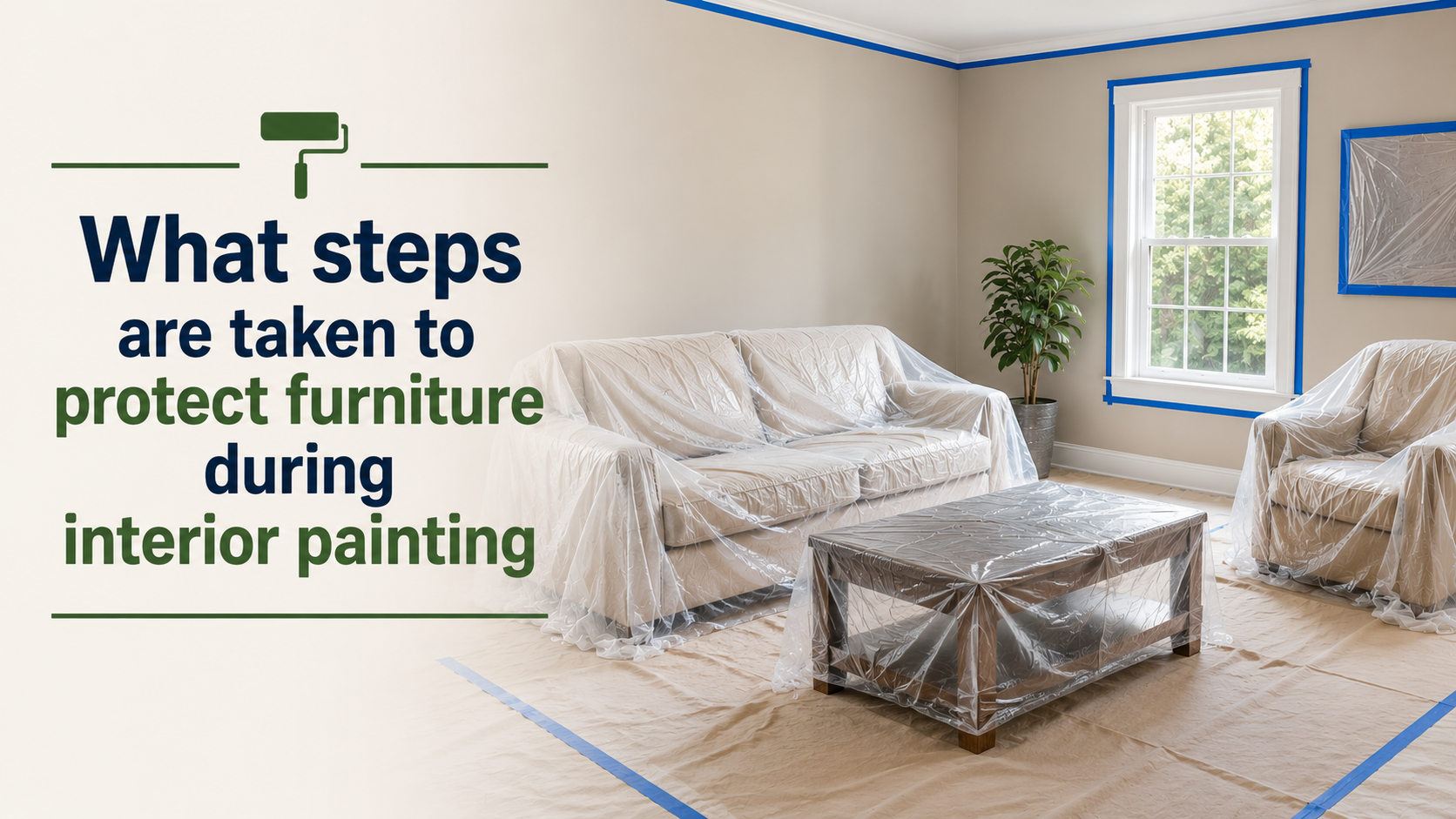
Here’s a quick answer: what steps are taken to protect furniture during interior painting comes down to proper preparation, the right materials, and a clear process. Professional painters move or center furniture, cover everything with plastic sheeting and canvas drop cloths, protect floors with drop cloths and rosin paper, seal edges with painter's tape, and maintain a clean, controlled space to prevent paint spills, paint drips, and dust. This is the best way to protect your furniture and achieve a flawless finish.
Why Furniture Protection Matters More Than Most Homeowners Realize
Furniture protection plays a pivotal role in any interior painting project. Without the right protection, paint splatters, paint drips, and dust can settle on delicate surfaces and ruin belongings. Even a small mistake during a paint job can damage hardwood floors, stain carpet, or leave dried paint on a surface that is hard to fix.
Professional painters understand that preparation is key. Protecting furniture is not just about covering items; it is about creating a space where painters can work efficiently while keeping every room safe. When protection is done right, the entire painting project becomes more organized, more controlled, and more stress-free.
Homeowners often focus on color and finish, but the real difference comes from the preparation process. Taking measures early helps prevent paint from reaching areas it should never touch.
Step-by-Step: How Professional Painters Protect Furniture
1 | Walkthrough and Protection Plan
Every painting project begins with a walkthrough. Professional painters assess the room, identify furniture, and determine the best way to protect each surface. This includes evaluating walls, trim, windows, window frames, light fixtures, and outlet covers.
This step allows professionals to choose the right materials and supplies. It also ensures the space is safe before any paint is opened. Preparation is not rushed because preparation is key to a successful paint job.
2 | Carefully Moving Furniture Out of the Work Area
Moving furniture is one of the first steps in protecting furniture. When possible, painters remove furniture from the room completely. This creates a clear space and reduces the risk of paint spills or damage.
When items cannot be removed, they are moved to the center of the room. This center placement keeps furniture away from walls, corners, and edges where most paint work happens. Painters use proper technique when moving furniture to protect floors, especially hardwood floors and tile.
This step also helps the team work efficiently since there are fewer obstacles in the space.
3 | Centralizing and Staging Furniture Safely
When furniture remains in the room, it is grouped in the center and spaced carefully. This creates a safe working area around the walls and trim.
The goal is to keep the space safe while maintaining access to all surfaces. Furniture is arranged in a way that prevents shifting during the project. This level of organization is part of what separates professionals from a typical DIY project.
4 | Covering Furniture with Protective Materials
Plastic Sheeting – First Layer of Protection
Plastic sheeting is used to cover furniture completely. This plastic layer blocks paint, dust, and moisture. It is one of the most important materials used in furniture protection.
Plastic is lightweight and flexible, which makes it easy to wrap around furniture of all shapes and sizes. It helps prevent paint seepage and protects delicate surfaces from exposure.
Canvas Drop Cloths – Added Protection and Stability
Canvas drop cloths are placed over plastic or used on their own in some cases. Canvas drop cloths are thicker, reusable, and more stable than plastic. They stay in place and absorb small paint drips.
Professional painters rely on canvas drop cloths because they provide durable protection and reduce slipping. This is especially important when working around furniture in a busy room.
Why Layering Protection Matters
The best way to protect furniture is by layering materials. Plastic sheeting blocks paint, while canvas drop cloths add weight and durability. This combination creates reliable protection and reduces the risk of exposure.
Using the right materials together ensures that furniture remains fully covered throughout the painting project.
5 | Protecting Floors to Prevent Secondary Damage
Protecting floors is just as important as protecting furniture. Floors take on heavy traffic during a painting project, so they require strong protection.
Drop cloths are used across hardwood floors, tile, and carpet. Canvas drop cloths are ideal for hardwood floors because they stay in place and provide grip. For carpet protection, painters often use plastic and rosin paper together.
Rosin paper is a key material for protecting floors. It creates a smooth barrier and helps prevent paint spills from reaching the surface. It is often secured with painter's tape along edges and corners.
This layered approach keeps floors safe and reduces cleanup time at the end of the project.
6 | Sealing Off the Workspace
Sealing the workspace helps prevent paint, dust, and fumes from spreading. Painters use plastic sheeting and tape to seal doorways, windows, and openings.
Painter's tape is applied along edges, corners, trim, and around outlet covers and light fixtures. This prevents paint seepage and keeps lines clean.
Proper ventilation is also considered during this step. Keeping airflow controlled helps maintain a safe and comfortable environment while preventing dust buildup.
7 | Special Care for Large or Delicate Furniture
Some furniture cannot be moved, such as built-ins or large items. These pieces require extra protection.
Painters use plastic sheeting and canvas drop cloths to fully cover these items. Tape is used to seal edges and ensure there are no gaps. This helps prevent paint drips and paint splatters from reaching the surface.
Delicate surfaces receive additional layers of protection. Taking measures like this ensures that even high-value items remain safe during the project.
8 | Daily Maintenance and Cleanup
Protection is not a one-time step. Throughout the painting project, painters check coverings, adjust materials, and clean up dust and debris.
Drop cloths are repositioned as needed, and plastic sheeting is secured again if it shifts. This ongoing process keeps the space organized and reduces the risk of damage.
A clean workspace allows the team to focus on details and maintain a high level of craftsmanship.
9 | Final Pre-Paint Inspection
Before applying a fresh coat of paint, painters complete a final inspection. They check all furniture, floors, and surfaces to confirm everything is protected.
This includes reviewing edges, corners, and trim to ensure tape is secure. Any exposed areas are covered immediately.
This final step ensures the room is fully prepared for a flawless finish.
What Homeowners Should Do Before the Painting Crew Arrives
Homeowners can help protect their furniture by removing small items like picture frames and personal belongings and following a few simple house prep steps before painting day. Clearing surfaces makes it easier for painters to cover and protect larger furniture.
If you have concerns about specific items, it is important to communicate them before the project begins. This helps the team plan the best way to protect your furniture and belongings.
Even though professionals handle most of the work, a little preparation from the homeowner helps the process go smoothly.
Common Mistakes That Lead to Furniture Damage
One of the most common mistakes is using plastic without canvas drop cloths. Plastic alone can shift and expose surfaces. Another issue is skipping painter's tape along edges, which can lead to paint seepage when working in any of our painting service areas around the South Puget Sound.
Dragging furniture instead of lifting it can damage floors, especially hardwood floors and tile. Not using rosin paper for carpet protection can also lead to stains.
Using the wrong supplies or skipping proper preparation often leads to problems that could have been avoided.
How Professional Prep Protects Your Home Long-Term
Proper preparation protects more than just furniture. It protects floors, walls, trim, corners, and every surface in the room, especially in homes where you may need a trusted residential painting company in Seattle, WA.
When professionals take the time to protect each area, the painting project runs smoothly, whether you hire a painting company in Tacoma, WA or another nearby team. This leads to better results and a longer-lasting paint job.
A well-prepared space also allows painters to work efficiently and focus on details, which is a hallmark of our painting company in Gig Harbor, WA. This is what helps transform your interior and deliver a clean, polished result.
Why Homeowners in the South Puget Sound Trust Cover Pro Painting
At Cover Pro Painting, residential and commercial painters in Seattle, protecting your home is part of every job. Our skilled team follows a detailed process to protect furniture, floors, and all surfaces before any paint is applied.
We use the right materials and supplies, including canvas drop cloths, plastic sheeting, painter's tape, rosin paper, and other professional-grade materials to ensure complete protection, backed by our Cover Pro Painting story and craftsmanship values. Every room is treated with care, and every project is handled with attention to detail.
Our painters show up on time, keep the space clean, and work with professionalism from start to finish, whether you're working with our painting company in Sammamish, WA or another nearby location. This approach creates a stress-free experience and helps deliver a flawless finish every time.
Frequently Asked Questions
Do painters move furniture or do I need to?
Professional painters typically handle moving furniture as part of the project. However, removing small belongings ahead of time is helpful.
How do painters protect furniture from paint splatters?
They use plastic sheeting and canvas drop cloths to cover furniture completely and prevent paint splatters.
Is it safe to leave furniture in the room during painting?
Yes, as long as it is properly covered and positioned in the center of the room.
What materials are used to cover furniture?
Common materials include plastic sheeting, canvas drop cloths, painter's tape, and other protective supplies.
How do painters protect floors while moving furniture?
Floors are covered with drop cloths and rosin paper, and furniture is lifted using proper technique.
Can paint fumes or dust damage furniture?
Dust can settle on surfaces, which is why sealing and covering are important steps.
How long does it take to prep a room properly?
Preparation time depends on the size of the space, but it typically takes several hours for a standard room.
Final Thoughts: Preparation Is What Protects Your Home
Preparation is key when it comes to protecting furniture during interior painting. Taking the time to protect surfaces, use the right materials, and follow a proven process ensures a better outcome.
A quality paint job starts with proper preparation. When everything is covered, sealed, and secured, the result is a clean, professional finish that helps transform your space.
Schedule Your Interior Painting Project
If you are planning your next painting project, our team is ready to help. We take every step to protect your furniture, floors, carpet, and interior surfaces while delivering a fresh coat that transforms your home.
Whether you are tackling a full interior update or planning ahead for your next painting project, our skilled team is here to make the process smooth, organized, and stress-free, whether you need a painting company in Covington, WA or painting professionals in Puyallup, WA. Schedule your service today and let our professionals handle the job with care.
