
%201.svg)


Paint with Confidence: Your Guide to Licensed and Professional Painting Services

Why Licensed Painting Contractors Matter for Your Property Investment
When searching for a licensed painting contractor, you're looking for more than just someone who can hold a brush. You need a professional who brings accountability, insurance protection, and proven expertise to your property investment.
Key Benefits of Hiring a Licensed Painting Contractor:
- Legal Protection - Licensed contractors carry liability insurance and worker's compensation
- Quality Assurance - Must meet state requirements and maintain professional standards
- Accountability - Registered with state agencies and subject to regulatory oversight
- Financial Security - Bonded and insured to protect against property damage or accidents
- Recourse Options - Clear legal pathways if work doesn't meet standards
The construction industry in Ontario accounts for $70 billion in annual economic activity and employs over 600,000 people. Yet many property owners still take risks with unlicensed contractors, potentially exposing themselves to serious liability issues.
A licensed Toronto painting company is more likely to be committed to meeting the standards of their trade. This commitment translates directly to better outcomes for your property.
The difference between a licensed professional and an unlicensed handyman goes far beyond just having paperwork. Licensed contractors must prove their competency, maintain insurance coverage, and follow safety protocols that protect both you and their workers.
In Washington State, you can easily verify if a contractor is properly registered, bonded, and insured through the Department of Labor & Industries. This simple step can save you thousands in potential liability and ensure your project meets professional standards.
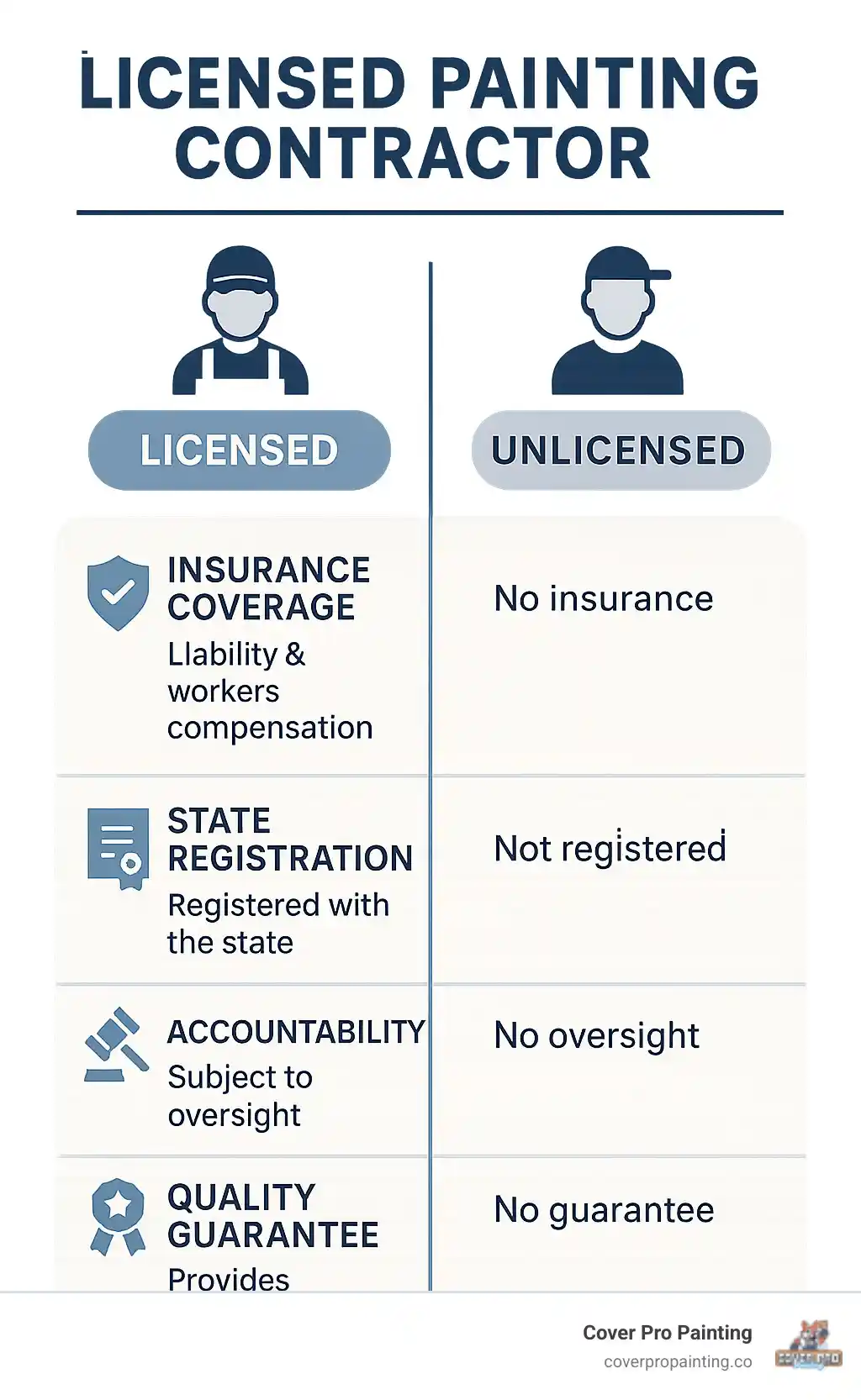
The "Licensed" Advantage: Why It Matters for Your Project
When you hire a licensed painting contractor, you're not just getting someone who knows their way around a paint brush. You're investing in a professional who brings real accountability, proper insurance coverage, and proven expertise to your home improvement project.
Think of licensing as your safety net. Licensed professionals operate under strict rules and regulations designed specifically to protect you as the homeowner. They're held accountable by state agencies, which means they must adhere to established safety codes and maintain professional standards throughout your project.
The benefits go far beyond just following rules. Licensed contractors provide genuine consumer protection through their commitment to quality craftsmanship and professional practices. When something goes wrong (and let's be honest, things sometimes do), you have clear recourse and protection.

Now let's talk about the potential risks of unlicensed work. That unlicensed painter might quote you a lower price upfront, but the hidden costs can be devastating. Without proper licensing and insurance, you're essentially gambling with your largest investment – your home.
Poor quality work is often the least of your worries. The real nightmare scenario involves financial liability when accidents happen. If an uninsured worker gets injured on your property, guess who might be responsible for their medical bills and lost wages? That's right – you.
We've seen too many homeowners learn this lesson the hard way. What started as a money-saving decision turned into a financial disaster that cost them thousands more than hiring a licensed professional would have in the first place.
For more insights into why professional expertise matters for your home, check out our guide on Why Hire Professionals for Residential Painting.
How Licensing and Insurance Protect You
The real power of hiring a licensed painting contractor lies in their insurance coverage. Two types of insurance create an essential safety net for your project: General Liability insurance and Worker's Compensation.
General Liability insurance protects you when accidents affect your property. Picture this: a painter accidentally knocks over a paint can, and it spills across your beautiful hardwood floors. With proper insurance, the contractor's policy covers the damage. Without it, you're stuck with the repair bill and a ruined floor.
We believe any reputable contractor should carry at least $2 million in liability coverage. Some of the best companies carry even more, showing their serious commitment to protecting their clients.
Worker's Compensation is equally crucial for your protection from worker injuries. If a painter falls off a ladder while working on your home, Worker's Comp covers their medical expenses and lost wages. Without this coverage, you could face a lawsuit that threatens your financial security.
These insurance protections provide something invaluable: peace of mind. You can watch your painting project progress knowing that unexpected accidents or property damage won't become your financial responsibility.
The Dangers of Uninsured Contractors
Hiring an uninsured contractor is like playing Russian roulette with your home and finances. The biggest danger isn't just poor workmanship – it's the crushing personal liability for accidents that can destroy your financial future.
When an uninsured worker gets hurt on your property, you become responsible for their medical bills, rehabilitation costs, and lost wages. We're not talking about a few hundred dollars here. A serious injury can result in tens of thousands of dollars in expenses that fall squarely on your shoulders.
Then there's the frustration of having no recourse for faulty work. When an uninsured contractor does a terrible job – think streaky paint, missed spots, or surfaces that start peeling within months – you have virtually no legal standing to demand they fix it. You'll likely end up paying another contractor to redo the entire project.
Potential legal issues add another layer of risk. Many areas have strict regulations about who can perform work on residential properties. Hiring an unlicensed contractor could result in fines or other penalties for you as the homeowner.
Perhaps most frustrating of all are unfinished projects. Uninsured contractors often lack the financial stability to complete jobs properly. They might disappear halfway through your project, leaving you with half-painted walls and no way to recover your deposit or force them to finish the work.
The bottom line? A contractor without proper insurance and licensing simply isn't worth the risk, no matter how attractive their initial quote might seem.
What Makes a Qualified Licensed Painting Contractor?
When we talk about a qualified licensed painting contractor, we're referring to a professional who embodies more than just painting skills. They possess a combination of legitimate business practices, comprehensive knowledge of the trade, and a commitment to professional standards.
A truly qualified contractor will hold the necessary state registration and licensing. For example, in California, a C-33 Painting and Decorating license specifically allows contractors to bid on and perform projects involving the application of paint, wallpaper, varnishes, shellacs, and stains. This license also covers surface preparation methods like scraping and sandblasting. This ensures that the contractor understands the full scope of work and materials involved in a professional paint job.
Beyond licensing, many reputable contractors are bonded. A bond provides a financial guarantee that the contractor will complete the work as agreed upon in the contract. If they fail to do so, you can make a claim against the bond to recover your losses.
Trade certifications, while often voluntary, are another strong indicator of a contractor's commitment to excellence. These certifications, sometimes requiring thousands of hours of experience and specialized courses, validate a contractor's services and often improve their job-winning potential.
Professional affiliations also speak volumes. Organizations like the Painting and Decorating Contractors of America (PDCA), Home Builders Associations, and Construction Associations signify that a contractor is part of a larger community dedicated to upholding industry best practices. An 'A' rating with the Better Business Bureau (BBB) further underscores their commitment to customer satisfaction and ethical business practices.
What we strive for and what you should look for is quality craftsmanship and attention to detail. This is our unique selling proposition, ensuring durable, beautiful results through the latest techniques.

Key qualifications for a licensed painting contractor
What truly sets a licensed painting contractor apart? It's a combination of experience, specialized knowledge, legitimate business operations, and robust insurance coverage.
Experience is paramount. While specific requirements vary by region, many trade certifications in Canada, for example, may require 6,000 hours of experience, or approximately three years on the job, alongside high school and industry courses. Some experts even suggest that a contractor with at least 10 years in the business is considered an expert. This extensive experience means they've encountered and successfully steerd a wide array of painting challenges, from intricate surface preparation to complex color matching.
Trade knowledge goes beyond just applying paint. It encompasses understanding different paint types, their applications, proper surface preparation techniques, and even identifying potential issues like mold or water damage during the preparation phase. This ensures a long-lasting and flawless finish.
Business legitimacy is another non-negotiable. A qualified licensed painting contractor will have a registered business name, a physical address, and potentially a Business Identification Number (BIN) if operating in a jurisdiction like Toronto. These details indicate a serious, established business rather than a fly-by-night operation.
Finally, adequate insurance coverage minimums are a hallmark of a qualified professional. As mentioned, a general liability policy of more than $2,000,000 and worker's compensation insurance are essential. These aren't just legal requirements; they're safeguards for you.
To learn more about our commitment to these qualifications and our approach to professional painting, we invite you to visit Our About Us page.
Understanding Certifications vs. Licensing
It's common to hear terms like "licensed" and "certified" used interchangeably in the painting industry, but there's a crucial distinction. Understanding this difference will help you better evaluate a licensed painting contractor.
Licensing is typically a state-mandated legal requirement to operate a business and perform specific services. It confirms that the contractor has met the minimum legal and competency standards set by a governing authority. These requirements often include passing exams, demonstrating financial responsibility (like bonding), and proving insurance coverage. For example, in Washington State, contractors must be registered, bonded, and insured to operate legally.
Certification, on the other hand, is often voluntary and signifies that an individual or company has met specific standards of skill, knowledge, or training set by an industry association, a trade organization, or even a paint manufacturer. While not always legally required, certifications validate a contractor's services and demonstrate a commitment to ongoing professional development.
In Canada, for instance, certification for painters may be required in Quebec, but it is voluntary in all other provinces and territories. This certification is also known as a 404C Painter and Decorator certificate. Painters can achieve Journeyperson status through apprenticeship programs, which typically involve thousands of hours of on-the-job training and technical instruction. Once certified by their province or territory, painters may qualify for the Interprovincial Standards’ Red Seal. This Red Seal endorsement allows them to work as a painter anywhere across Canada, signifying a high level of training and proficiency.
What does this mean for quality? A license ensures legal operation and a baseline of competence and accountability. Certifications, however, show a contractor's dedication to mastering their craft, staying updated with the latest techniques, and often specializing in certain areas. Obtaining a painter's certification, though a small investment, is a wise one that sets professionals apart from non-certified individuals, often leading to better results and greater client satisfaction.
Your Vetting Process: How to Find and Hire the Right Pro
Finding the perfect licensed painting contractor doesn't have to feel overwhelming. Think of it as building a relationship with someone who's going to transform your home – you want to make sure they're the right fit before you invite them in.
The best place to start your search is often right in your own neighborhood. Ask friends, family, and neighbors who they've used for painting projects. There's nothing quite like a personal recommendation from someone whose judgment you trust. These referrals come with real stories about how the contractor handled challenges, communicated throughout the project, and delivered on their promises.
Don't stop there, though. Cast a wider net by searching online for local painting contractors. Platforms like Google, Yelp, and HomeStars can reveal contractors you might not have found otherwise. But here's the key – don't just look at the star ratings. Dive into the actual reviews and read what people are saying about their experiences.
When you're reading reviews, look for patterns. Do multiple customers praise the same qualities, like showing up on time, protecting furniture, or cleaning up thoroughly? Or do you notice recurring complaints about missed deadlines or sloppy work? These patterns tell you much more than any single five-star review ever could.
Once you've narrowed down your list, it's time to start making calls. This is where having the right questions ready becomes crucial. You'll want to know how long they've been in business – we generally recommend looking for contractors with at least several years of experience. Ask to see their portfolio of recent work and request references from past clients.
Insurance and licensing questions are non-negotiable. Ask them to provide proof of both worker's compensation and general liability insurance. A legitimate licensed painting contractor will have these documents readily available and won't hesitate to share them.
Get into the specifics of your project too. What types of paints and materials do they typically use? How do they protect your property during the work? What's their cleanup process like? And perhaps most importantly, what kind of warranty or guarantee do they offer on their work?
When those estimates start rolling in, resist the urge to simply pick the lowest number. Instead, compare them carefully to make sure you're getting similar scopes of work, materials, and timelines. A detailed, written estimate shows professionalism and helps ensure everyone's on the same page from the start.

How to verify your licensed painting contractor is legitimate
Before you sign on the dotted line, take a few minutes to verify that your chosen licensed painting contractor is the real deal. This simple step can save you from major headaches down the road.
If you're in Washington State, you're in luck – the verification process is straightforward and free. The Department of Labor & Industries has made it easy to Verify a contractor in Washington State online. You can quickly check their registration status, bond information, and insurance coverage. This official verification gives you peace of mind that they're legally permitted to work in our state.
The Better Business Bureau is another valuable resource for checking a contractor's reputation. Look for their BBB rating and read through any customer complaints or reviews. An 'A' rating indicates a company that takes customer satisfaction seriously and works to resolve any issues that arise.
While you're researching, don't rely solely on testimonials from the contractor's own website. Those are nice to read, but they're naturally going to show the company in the best light. Instead, seek out independent reviews on platforms like Google Reviews, HomeStars, or Yelp. These third-party sites give you unfiltered feedback from real customers who have no reason to sugarcoat their experiences.
We believe transparency is essential in this industry, which is why we're proud to share honest feedback from our clients on Our Reviews page. When a contractor is confident in their work, they're happy to let their track record speak for itself.
What to Look For in a Painting Contract
A solid contract is your insurance policy for a successful painting project. Never, ever proceed without a detailed written agreement – it protects both you and your licensed painting contractor by clearly outlining expectations and responsibilities.
The scope of work section should be so detailed that anyone could read it and understand exactly what's included. For interior projects, it should specify which rooms, walls, ceilings, trim, and doors will be painted. For exterior work, every surface should be listed – siding, trim, eaves, doors, decks, or fences. Don't forget about surface preparation details like cleaning, sanding, patching holes, and priming. These prep steps are crucial for a long-lasting finish.
Materials matter tremendously in painting projects. Your contract should name the exact paint brands, product lines, and specific colors to be used, including any primers. This prevents any surprises when lower-quality substitutes show up at your door. Quality paints cost more upfront but save money in the long run through better coverage and durability.
A realistic project timeline keeps everyone accountable. The contract should include projected start and completion dates, along with any major milestones. Life happens, and weather can delay exterior projects, but having dates in writing helps keep things moving forward.
Payment terms should be fair and reasonable. Most reputable contractors ask for a modest deposit, followed by progress payments tied to completion milestones, with the final payment due when you're completely satisfied. Be wary of anyone asking for large upfront payments or full payment before the work begins.
Finally, look for warranty information. A confident contractor stands behind their work with a clear warranty that specifies what's covered, for how long, and what might void the coverage. This shows they're committed to your satisfaction even after they pack up their brushes.
You can learn more about our comprehensive approach to painting projects by visiting Our Painting Services page, where we detail our commitment to quality and customer satisfaction.
Frequently Asked Questions about Licensed Painters
We get a lot of questions from homeowners about what makes a licensed painting contractor worth the investment. Let's explore the most common concerns we hear.
What is the biggest risk of hiring an unlicensed painting contractor?
The biggest risk is liability – and it's scarier than most people realize. Picture this: an uninsured worker falls off a ladder while painting your house and breaks their leg. Guess who could be on the hook for their medical bills, lost wages, and potentially even long-term disability costs? You, the homeowner.
Without proper worker's compensation and general liability insurance, you're essentially rolling the dice with your financial future. We've seen homeowners face lawsuits that cost tens of thousands of dollars because they chose to save a few hundred upfront.
But the risks don't stop there. There's also no guarantee of quality or recourse for a poorly done job. If that unlicensed painter leaves you with streaky walls, peeling paint, or a half-finished project, you'll have little legal standing to demand they fix it. You'll likely end up paying twice – once for the bad job, and again to have a professional make it right.
How does licensing affect the cost of a painting project?
Yes, a licensed painting contractor typically costs more upfront than someone working out of their truck without proper credentials. But here's the thing – there's a good reason for that difference.
Licensed contractors have legitimate business expenses that unlicensed individuals simply don't carry. We're talking about insurance premiums (both general liability and worker's compensation), bonding costs, proper permits, and investments in quality equipment and ongoing training. These aren't just "nice to haves" – they're essential protections for you.
Think of it like buying a car. You could get a great deal on one without a warranty, but when something goes wrong, you're stuck with the repair bill. The same principle applies here. That higher initial investment often saves you money in the long run by preventing costly mistakes, avoiding liability issues, and delivering a finish that actually lasts.
Plus, you get the peace of mind knowing that if something does go wrong, you're protected.
What should I do if my project requires repairs before painting?
This is actually more common than you might think, especially with older homes or exterior projects. The good news? A professional licensed painting contractor should spot these issues during their initial inspection.
During our consultations, we always look for problems like wood rot, siding damage, or significant cracks that need attention before we even think about opening a paint can. Why? Because painting over damaged surfaces is like putting a band-aid on a broken bone – it might look okay for a while, but the problem will come back to haunt you.
Most reputable companies will handle minor repairs (like patching small holes or filling cracks) as part of their standard prep work. For bigger issues, like extensive wood rot or major siding problems, we can either take care of it ourselves or connect you with trusted specialists.
The key is addressing these underlying issues first. It ensures your new paint job will look great and last for years to come. If you're dealing with siding issues in the Puyallup area, we can help with that too. Learn about Siding Repair Puyallup WA to get your home's exterior in perfect shape before we work our painting magic.
Conclusion: Paint Your Home with Confidence and Quality
When it comes to changing your home with a fresh coat of paint, choosing a licensed painting contractor isn't just the smart choice – it's the only choice that makes sense. Throughout this guide, we've seen how licensing equals protection in every way that matters to you as a homeowner.
The peace of mind that comes with hiring a licensed professional is invaluable. You're protected from liability if accidents happen. You have recourse if the work doesn't meet your expectations. And you can sleep soundly knowing that your investment is backed by insurance, bonding, and professional accountability.
Vetting is crucial for quality, and it's worth taking the time to do it right. Verify that license through your state's official channels. Check those insurance certificates. Read reviews from real customers. Ask the tough questions about warranties and materials. A few hours of research upfront can save you from months of headaches later.
A professional paint job is much more than just making your home look beautiful – though it certainly does that! It's a significant investment in your property that protects your home's exterior from the elements, improves indoor air quality with proper preparation and premium paints, and can significantly boost your property value.
At Cover Pro Painting, we've built our reputation on quality craftsmanship and attention to detail. We understand that every project is unique, and we use the latest techniques to ensure your results are both stunning and long-lasting. Whether you're in Edgewood, Bellevue, Tacoma, Renton, or Gig Harbor, we're committed to delivering the professional results you deserve.
For a beautiful, durable finish that starts with a solid foundation, consider addressing any underlying issues first. Sometimes the best paint job begins before we even open the paint can – with proper repairs that ensure your new finish will last for years to come. Get a quote for expert siding repair in Tacoma, WA and let us help you create the perfect canvas for your home's change.
Your home deserves the best. Choose a licensed painting contractor and paint with confidence, knowing you've made an investment that will bring you joy and protection for years to come.
