



Garage Paint Ideas That Make the Space Brighter, Cleaner, and More Useful

Key Takeaway
The best garage paint ideas start with light neutral walls and a soft-white ceiling to brighten the space, then add a darker lower band, accent wall, or floor coating to hide scuffs. Match each coating to the actual surface and fix moisture, damage, or bare substrate before painting. Prep and the right colors are what make the result last.
For most garages, start with light neutral walls and a soft-white ceiling to brighten the space, then consider a darker lower wall, accent wall, cabinets, or floor coating to help hide scuffs and everyday wear. Match the coating to the actual surface and to how you use the garage, and fix moisture, damage, or bare substrate issues before any paint goes on. Whether you're a homeowner refreshing a cluttered single-car or a business owner cleaning up a shop space, the right garage paint colors and the right prep are what make the result last. We'll walk you through both.
Start With How You Use Your Garage
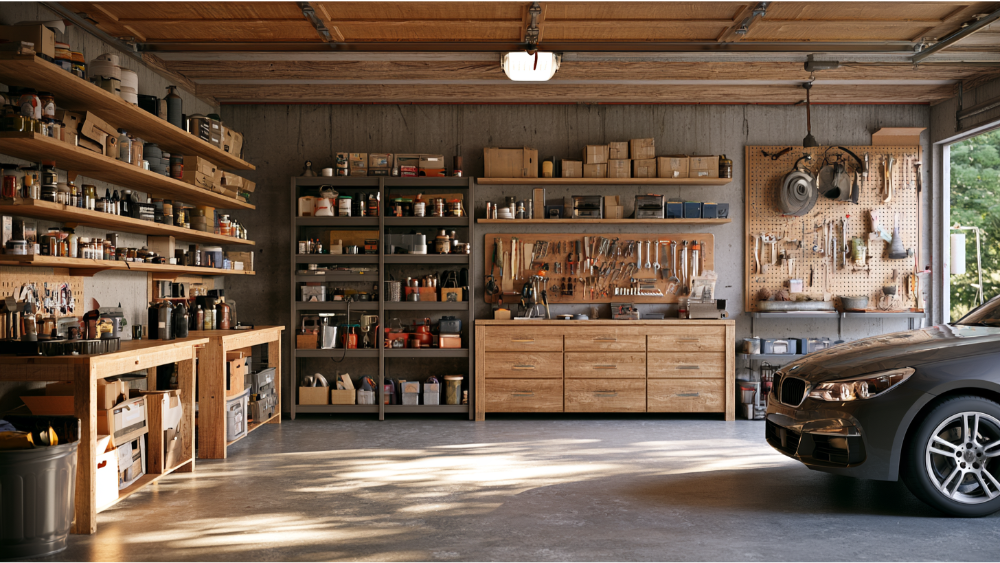
The way you use the garage should drive your garage colors and sheen choices before you ever pick a swatch. A parking-and-storage garage has different needs than a workshop, a home gym, a hobby space, or a detailing bay. A space where you clean cars or refinish furniture needs washable surfaces and good light, and detailed tasks call for extra brightness. A gym can take moodier color because it isn't a high-mess zone. Color-coded zones also help: a brighter workbench wall or a contrasting cabinet run makes tools easier to find.
7 Garage Color Schemes That Work
These use color families, not brand names, so you can carry them into any paint line. Darker colors work best in controlled doses where lighting is limited, since a deep shade can swallow light in a space with only one window.
- Bright Utility Garage: Soft-white ceiling, light greige walls, medium-gray floor, charcoal lower band. Best for everyday parking. Caution: keep the band height in scale with your benches and storage.
- Clean Workshop: White ceiling, light neutral-gray garage walls, a dark lower wall at the bench zone, high-contrast doors and trim. Great for visibility while hiding tool marks.
- Calm Home Gym: Soft sage or blue-gray walls, a bright ceiling, charcoal accents, a coordinated neutral floor. Keeps the space feeling settled.
- Warm Storage Garage: A warm, inviting beige or taupe on the walls, warm-white ceiling, olive or clay accent, wood-toned storage. These warm tones blend nicely with surroundings.
- Modern Showroom Garage: Off-white or pale gray main walls, a deep graphite feature wall, dark cabinets, a speckled medium-tone floor. Charcoal gray hides dirt and adds depth.
- Bold but Balanced Garage: Teal, navy blue, deep green, or muted red on one feature wall or cabinet run, with light neutral walls and ceiling everywhere else.
- Two-Tone Hard-Working Garage: A light upper wall over a darker lower section to disguise everyday marks. Scale the band to your benches and vehicles rather than copying a fixed height.
Choosing Garage Paint Colors for Every Surface
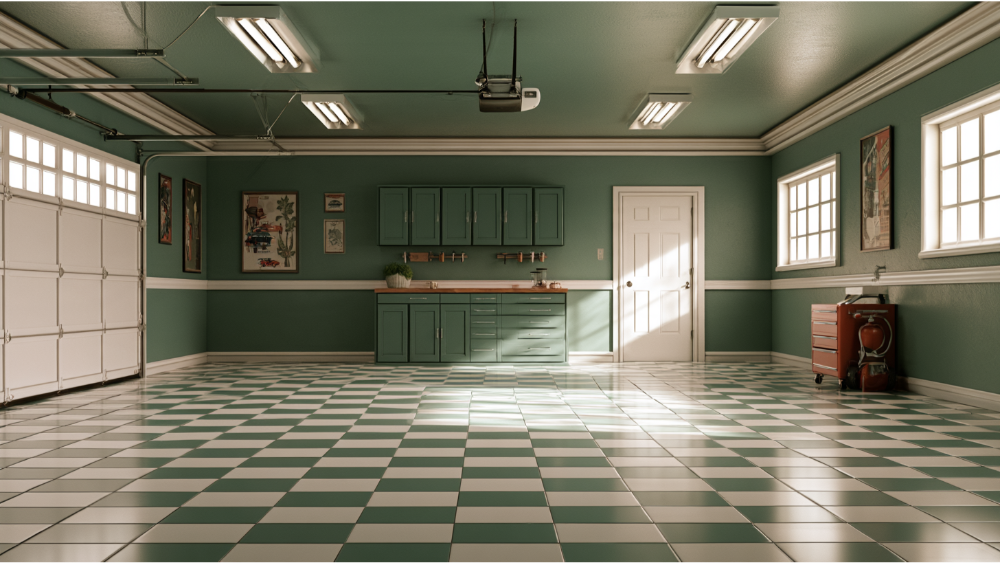
Don't pick each surface on its own. Coordinate them as one plan so the finished garage reads intentional instead of patched together. The goal is a coordinated garage color scheme where each surface complements the others.
- Garage walls: Lighter walls maximize visibility and help the garage feel larger, and lighter colors bounce more light around the room.
- Ceiling: A light colored ceiling in crisp white or bright white bounces light down and reduces shadows.
- Interior side of the garage door: Usually best kept close to the wall color so it recedes, often the same color as the surrounding surface.
- Door into the house: A satin or semi gloss finish here handles handprints and cleaning.
- Trim and millwork: A clean white or a step lighter or darker than the walls frames the room.
- Cabinets and pegboard: A contrasting color helps organize tools and adds visual interest.
- Concrete floor: Choose a floor tone that grounds the palette, then coat it with a dedicated floor system, not wall paint.
Choosing Your Paint Color Doesn't Have to Be a Last-Minute Decision
One thing that often surprises our customers is how simple the paint selection and ordering process actually is. Choosing the right color is, of course, one of the most important decisions you'll make, but that doesn't mean you need to have everything figured out weeks in advance.
At Cover Pro Painting, we use Sherwin-Williams paints almost exclusively. With so many locations throughout the area, we typically recommend visiting your local Sherwin-Williams store to explore colors and pick up samples. You can try those samples against your home's existing materials and see how they look in your actual lighting before making a final decision. Once you've settled on a color, simply provide us with the color code and we'll take care of getting the paint.
In fact, we generally don't pick up the paint until the day we're ready to apply it. We know that choosing a color can take some time, and it's not unusual for customers to change their minds right up until the last minute. There's no reason to rush that decision just because your project is scheduled. Take your time, explore your options, and make sure you're happy with your selection. We'll handle the rest.
Garage Door, Front Door, and Your Home's Exterior
The outside face of the garage door is part of your home's exterior, so treat it with the same care you'd give the front door. The most dependable move is to match the garage door color to the siding trim or the body of the house so it blends in, or to pull it in line with the front door for a coordinated accent. When you're matching garage colors to the rest of the house, a color that fights the home's exterior colors draws the eye to the largest blank panel on the house, which is rarely the look you want. If you're repainting the siding anyway, that's the natural moment to settle the garage door color, the front door, and the trim as one palette, especially if you already have beige siding to work around.
Picking Finishes: Flat Paint, Satin Finishes, and Acrylic Latex

No single sheen is universally "best." Semi gloss cleans more easily than flat paint, but it also shows drywall seams, patches, and dents, so higher sheen asks for better surface prep. Flat absorbs stains and scuffs, which is why it's better left for ceilings. Satin finishes strike a middle ground that stands up to everyday wear while still looking clean. An acrylic latex is a common choice for garage wall paint because it holds color well, cleans up with water, and resists yellowing over time. Still, product and substrate compatibility matter more than the sheen label, so check the material you're actually painting before you buy an acrylic latex in any given shade.
Surface Prep Comes Before Color
Prep is where a garage paint job is won or lost. Paint applied over a problem surface fails early, no matter how good the color looks on day one. Here's the order we follow:
- Empty or protect the space.
- Find leaks, condensation, or active moisture before anything else.
- Clean mold correctly and never paint over it. The EPA is clear that moisture control is the key to mold control, and a coating over mold is likely to peel.
- Repair damaged drywall, wood, trim, or door framing.
- Degrease contaminated surfaces. A clean wall, washed down before painting, holds a finish far better.
- Finish and prime bare drywall. The Gypsum Association calls priming the most important step before final paint because it equalizes the porosity of the drywall paper and joint compound.
- Use the correct masonry or substrate primer where garage walls aren't standard drywall.
- Evaluate concrete moisture and surface profile before any floor coating.
- Testing paint colors under the garage's actual lighting, not in a store, keeps surprises out of the finished room.
- Follow the product's temperature, recoat, and cure instructions.
Ventilate while you work and favor lower-VOC products where they help, though the EPA notes a "low-VOC" label doesn't mean a product is free of all harmful compounds. When rot, damaged trim, or leaks are discovered during prep, having one contractor handle both the repairs and painting helps keep the project moving without coordinating separate crews.
Garage Floor Paint vs. Epoxy Coating
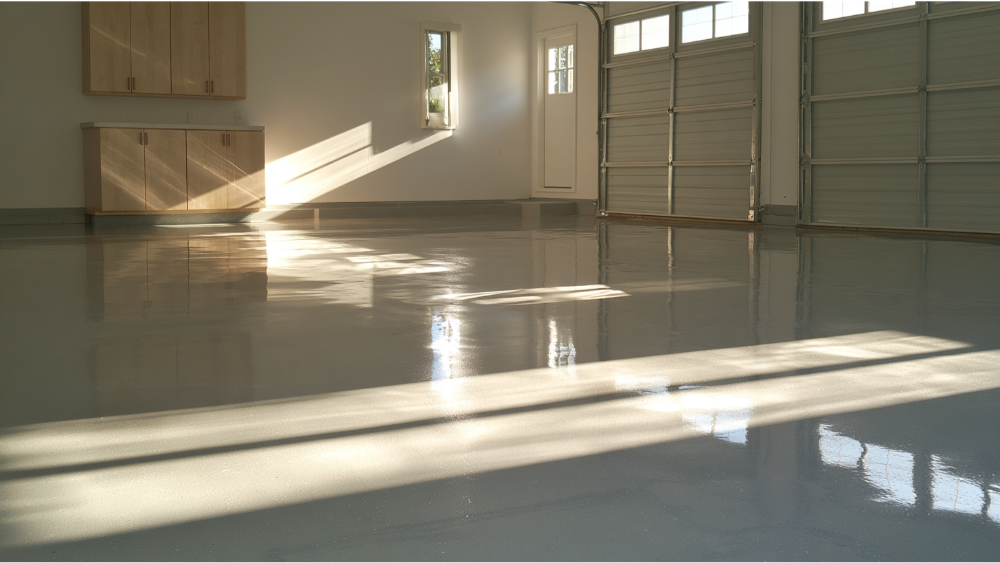
These are not the same thing. A one-component floor paint and a two-component (epoxy) coating cure differently and serve different durability needs, so you can't swap one for the other. Both depend heavily on the concrete underneath: moisture coming up through the slab and the roughness of the surface strongly affect adhesion, which is why a pro screens moisture and profiles the concrete first. Finish your garage walls and ceiling before the final floor coating so drips don't land on fresh work. Decorative flakes can add grip and hide small imperfections. For the full breakdown, see our dedicated concrete coating guide. We also offer epoxy and garage floor coatings as a service.
Garage Paint Considerations for the Pacific Northwest
Around here, moisture is the detail that makes or breaks a garage job. Wet vehicles and equipment track water inside, and the region sees a lot of it. At Sea-Tac, the nearest regional station, NOAA's 1991 to 2020 normals show about 39.34 inches of precipitation across roughly 156.2 wet days a year. Check how your garage door sheds weather and inspect the base of the garage walls for dampness. Correct any leaks or rot, let surfaces dry fully, and stay within the product's temperature and humidity limits. Garages here also experience significant temperature swings, which can stress coatings applied over damp or improperly prepared surfaces. Mildew-resistant paint won't fix an underlying water problem. From our Edgewood home base, we handle rot repair, siding, and carpentry alongside painting, so homeowners don't have to coordinate separate contractors when repairs are needed before the finish work begins.
Painting a Garage in an Older Home (Pre-1978)'

If your home was built before 1978, lead paint is a real possibility. For paid work in most pre-1978 housing, the EPA's Renovation, Repair and Painting Rule generally applies once a project disturbs more than 6 square feet of painted surface inside (20 square feet outside), and routine scraping or sanding can count as disturbance. Cover Pro Painting is EPA Lead-Safe (RRP) Certified, so containment and cleanup are handled the right way. It's a safety and peace-of-mind matter, and one less thing for you to figure out.
Should You DIY or Hire a Pro for Garage Painting?
A garage repaint can be a reasonable DIY project when the garage walls are sound, dry, and already finished, the job is a simple repaint, and there are no lead-safe, masonry-moisture, or floor-coating complications. A fresh coat on a single wall is well within reach for many homeowners.
Call in a pro when:
- Drywall needs real taping and finishing, not just a touch-up.
- You see water stains or recurring mold.
- Wood, trim, or framing feels soft or rotted.
- The garage mixes several surfaces at once.
- The project includes doors, cabinets, and a floor coating.
- The home predates 1978 and prep will disturb existing paint.
This is where working with a full-service contractor can make a difference. Having one team handle the necessary repairs, preparation, and painting can simplify the project and help ensure the underlying issues are addressed before the finish goes on. Before hiring anyone, you can confirm a contractor is properly set up with Washington's L&I verify-a-contractor tool, which shows active registration, bond, and insurance.
The Right Order to Paint a Garage

- Leak correction and repairs
- Carpentry or drywall work
- Dust-producing sanding and concrete prep
- Ceiling
- Walls
- Doors, trim, and cabinets
- Final floor coating
- Storage and fixtures, including LED lighting that brings more light to the workspace
- Final walkthrough and cleanup
The exact order can shift based on your floor system and install plan, so treat this as a strong default rather than a rigid rule.
Get a Free Estimate and Color Consultation
Cover Pro Painting is a founder-led team based in Edgewood, serving homeowners and businesses across the greater Seattle-Tacoma area. Start with a free estimate and color consultation to see exactly what your garage needs, from surface prep and rot repair to walls, doors, cabinets, and floor coatings. We can also help you land on garage paint colors that suit the style of your home and match the garage door color to your home's exterior. Choosing colors for multiple surfaces is easier with a second set of eyes, and we'll help you find combinations that work throughout the space. Exterior projects carry our 3-year workmanship warranty, and we're glad to talk through first-time customer savings and 0% APR financing. Call 206-222-0435 or request "Get My Free Painting Estimate." Don't see your city listed? Contact us to confirm service availability.
Frequently Asked Questions
What color should I use on the front door and garage?
Light neutral walls with a soft-white ceiling are the dependable default inside because they brighten the space and make the most of your lighting. Outside, a bright white or a step off the siding keeps the garage door and front door tied together. Add a darker lower band or accent to hide wear, and choose the overall palette around how you actually use the garage.
What earth tones and neutral colors work for a garage?
Soft grays, light gray, light greige, and a warm, inviting beige work well for general use, while sage green keeps a gym or studio calm. These neutral colors and earth tones are easy to live with and simple to match later. A creamy white softens the whole room if bright white feels too stark.
Do darker colors and accent colors suit a garage?
Yes, in measured amounts. Charcoal, matte black, and darker tones add modern contrast and create depth on a feature wall, and these darker colors hide dirt well. Navy suits more traditional homes, while graphite accent colors read sharp on modern homes. Used as accents against lighter walls, deeper shades anchor the space without making it feel closed in.
What are the current color trends for garages?
Soft grays, charcoal, warm earth tones, and sage are among the trending colors right now, along with high-contrast two-tone walls and single feature walls. These color trends lean on different colors layered thoughtfully so the room still reads calm. Matching your garage door color or trim to the home's exterior and siding trim also boosts curb appeal.
Is it better to spray or roll garage paint?
Both work. Rolling gives you more control and better coverage on textured garage walls, while spraying is faster for large or empty garages but needs careful masking and prep. A pro can advise based on your surfaces and layout, and on choosing garage paint colors that hold up to daily use.
