
%201.svg)


Best Deck Paint: How to Choose the Right Finish for Lasting Results

Key Takeaway
The best deck paint for most situations is a premium 100% acrylic or urethane-modified acrylic porch-and-floor coating labeled for exterior horizontal walking surfaces, with mildew resistance and abrasion resistance. But paint is not always the right call. On a fully exposed, previously unpainted wood deck, a penetrating stain typically outperforms paint because it weathers gradually instead of cracking and peeling, making future maintenance far simpler.
If paint is the right call for your deck, the best deck paint is a premium 100% acrylic (or urethane-modified acrylic) porch-and-floor coating specifically labeled for exterior horizontal walking surfaces, with mildew resistance and an anti-slip option where traction matters. But paint isn't automatically the best finish. On a fully exposed, previously unpainted wood deck, a penetrating stain often performs better over the long haul, because film-forming paint peels once moisture finds its way into the boards. A typical backyard deck around here sits out in the open with nothing over it, and that exposure shapes the decision more than any product label does.
The right answer depends first on whether the deck is wood, concrete, or composite, and whether it's bare, stained, or already painted. Below we walk through a decision framework, the selection criteria that actually matter, the prep sequence that determines how long any finish lasts, and realistic dry and cure expectations.
Quick Decision Table: What Finish Should Go on Your Deck?
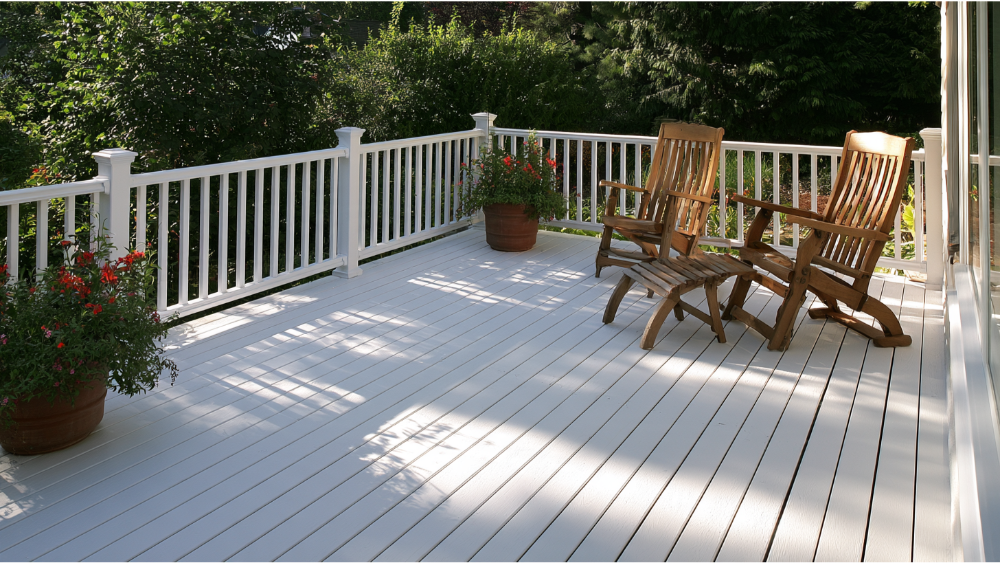
Three terms do most of the work here. Film-forming finishes (paint and solid-color stain) sit on top of the wood and can crack and peel. Penetrating finishes (semi-transparent and transparent stains, exterior timber oils) soak in and weather away gradually instead of peeling. Resurfacers are thick-build coatings that bridge minor cracks and add texture to worn boards.
Deck type or conditionUsually the right finishWhyWatch out forBare, sound wood with attractive grainSemi-transparent penetrating stainShows the grain, weathers instead of peelingNeeds recoating more oftenFully exposed unpainted wood deckPenetrating stainHorizontal exposure is hard on film coatingsPaint here is a peeling riskPreviously painted woodCompatible horizontal-rated repaint systemRemoving all old paint is rarely practicalLoose coating must come off firstWeathered or mismatched boards needing colorDeck paint or solid stainOpaque color unifies repairs and patchworkCommitting to a film finish going forwardSoft or rot-damaged woodRepair or replace firstNo coating restores structureCoating over decay hides it temporarilyRoof-protected porch floorPorch-and-floor paintLeast weather exposure, longest film lifeStill needs abrasion resistanceConcrete deck or patioMasonry/floor-rated coatingDifferent substrate, different systemNew concrete needs cure timeCapped composite or PVCUsually nothingCaps are designed to shed coatingsPainting may affect warranty coverageOlder uncapped compositeOnly with manufacturer approvalSome older boards accept coatingsVerify in writing before buying anything
Is Deck Paint or Stain Better? How to Decide Before You Buy
Wood-finish experts at the USDA Forest Products Laboratory are blunt about this in the Wood Handbook: fully exposed horizontal wood surfaces are prone to peeling when coated with film-forming finishes, and penetrating finishes are preferred where practical because they weather rather than crack and peel. That makes future maintenance far simpler. Solid-color stains form a film too, so they carry the same risk.
That said, paint has real advantages. It gives you full color control, higher surface durability underfoot, and the ability to unify boards that no longer match after repairs or years of sun. Stain keeps the wood looking like wood and fails gracefully, fading rather than flaking, but most penetrating finishes need reapplication every one to three years. Oil-based penetrating products generally soak in better than water based versions, and darker pigment loads give more UV protection because pigment is what blocks the sun.
Here's the point most product roundups skip: once a deck is painted, going back to stain means stripping or sanding the entire surface down to bare wood. That's a significant job. If you're opting for paint, treat that decision as a long-term commitment, not a season's experiment. For more detail on the tradeoff, see our guide on deck paint vs. stain.
"One of the first things we look at when evaluating a deck is whether paint is actually the right finish. We've had homeowners come to us specifically asking for a painted deck, only to find that the existing wood and exposure would make a penetrating stain the better long-term option. If we don't think paint is the right choice for the deck, we'll tell you—even if that means recommending a different service."
Paint generally makes sense when:
- The deck is already painted and the existing coating is largely sound.
- It's a covered porch floor with limited weather exposure.
- Boards have been replaced and the color no longer matches.
- Opaque color is the goal, matched to siding or trim.
- The wood is structurally sound and the grain isn't worth showing.
Deck Stains: The Four Types and When Each One Makes Sense
If you're leaning away from paint, it helps to know that deck stains are not one product. Clear water repellents carry almost no pigment, so they shed water but give very little UV protection and tend to need attention every year. Semi-transparent stain adds enough pigment to slow graying while still letting the grain show. A semi transparent finish is the most commonly recommended starting point for sound boards with grain worth seeing. Semi-solid stain carries more pigment and evens out boards that have already started to gray or show uneven wear. Solid-color stain behaves much like paint, forming a film that hides the grain entirely and can peel in the same way.
Oil-based and water based stains both have a place. An oil based stain soaks deeper into dense, dried-out boards and tends to be more forgiving on older lumber. Water based stains dry faster, clean up with water, hold color well in sun, and release less odor around the house. Whichever direction you go, spot touch-ups are far easier on a stained deck than on a painted one, and that alone is worth weighing.
What Type of Deck Paint Is Best? The Selection Criteria That Actually Matter

Regular exterior house paint is formulated for vertical siding and trim. It isn't built for foot traffic, dragged furniture, or standing water. The label has to name decks, porches, patios, floors, or steps. If it doesn't, put it back.
Coatings get tested on lab panels under controlled conditions. Your deck gets tested by rain, bare feet, and patio furniture. Plenty of consumers buy off the front label, but the technical data sheet on the back is where the useful information lives.
Take this checklist to the paint counter or to your estimate:
- Specifically approved for exterior horizontal walking surfaces
- Approved for your exact substrate (wood, concrete, or an approved composite)
- 100% acrylic or urethane-modified acrylic
- Stated mildew and moisture resistance
- Scuff and abrasion resistance for foot traffic
- UV resistance and color retention
- A compatible primer within the same product system
- Anti-slip aggregate compatibility if traction matters
- A published technical data sheet listing recoat and return-to-service times
Water-Based vs. Oil-Based: Which Is the Better Choice?
Water-based acrylic coatings dry faster, often within a couple of hours to the touch, clean up with soap and water, and flex with seasonal wood movement, which means less cracking as boards keep swelling and shrinking. They also come in lower-VOC formulations. Oil-based products penetrate rather than build a film, resist moisture well, and help hold off mold, but they take longer to dry and demand more skill to apply evenly without lap marks.
One caution on the eco-friendly angle: the EPA notes that low-VOC and no-VOC labels are built largely around outdoor air and ozone-forming definitions. Low-VOC is a reasonable preference and we use family-safe products where they fit the job, but it doesn't by itself prove a product is harmless or right for your deck. Surface suitability still decides performance.
Best Deck Paint by Deck Condition
Previously painted decks. You need a repaint system compatible with whatever is already down there. Test adhesion by scraping a few spots in different areas. Where the old coating lifts, it comes off; where it holds, dull the gloss and feather the edges so the new film has something to grip.
Old or weathered wood. A thicker-build resurfacer can bridge minor cracks and splintering while adding traction underfoot. It will not fix soft wood. If a screwdriver sinks into a board, that board gets replaced before anything gets coated.
High-traffic decks and stairs. Prioritize abrasion resistance and add a compatible anti-slip aggregate on treads and main walking routes. Painted surfaces get slick when wet. No coating is slip-proof, but texture meaningfully improves traction.
Wet or shaded decks. Boards that dry slowly need mildew resistance and texture, not optional extras. Standing water under a film coating is the single most common path to peeling.
Roof-protected porch floors. This is the best-case scenario for paint. Less UV, less rain, and the longest realistic film life you'll get from a deck coating.
Decks where opaque color is the priority. Solid stain or deck paint both deliver full coverage. Paint usually gives more surface hardness; solid stain usually goes on thinner. Either way, prep rules apply.
Wood, Concrete, or Composite? Check the Material First
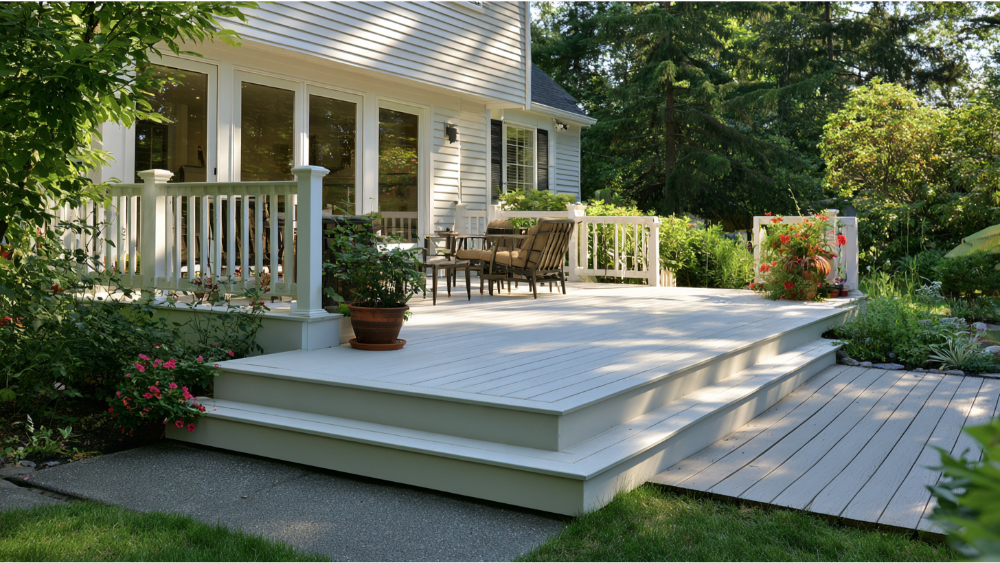
Wood. Assess two things: moisture content and the existing coating. New wood, especially freshly installed pressure-treated lumber, holds far more moisture than it appears to, and it needs to be dry enough for your chosen product. One manufacturer source cites roughly 15% moisture content or below as a typical paintable level. The widely repeated advice to "wait six months" after installation is too simplistic. Use a moisture meter and follow the coating's technical data sheet, because exposure, treatment type, and weather all move that timeline.
Concrete. Decks and patios on concrete need a masonry or floor-rated coating, not a wood product. New concrete also needs to cure. One current product sheet lists 30 days before coating, but check your specific product.
Composite. Capped composite and PVC boards are designed to shed everything, including paint. Coating them can fail to bond and may affect warranty coverage. Older uncapped composite is sometimes paintable, but only with the decking manufacturer's current approval. Our article on painting composite decking covers the specifics.
Why Surface Prep, Not the Can, Determines How Long Deck Paint Lasts
We'll say this plainly: preparation matters more than brand. A mid-tier coating on a properly prepped deck outlasts the most expensive coating sprayed over mildew and loose paint, every time. Here's the sequence we follow, in order.
"We've seen plenty of decks where the previous coating looked fine from a distance but was failing underneath—peeling at board edges, trapping moisture, or covering wood that was already beginning to deteriorate. Once the surface is properly cleaned and the loose coating is removed, the actual condition of the deck becomes much easier to see. That's why we inspect for rot and structural issues before talking about the finish."
- Inspect for rot and structural problems. Soft boards, loose fasteners, corroded metal hardware, failing posts and railings, deteriorated end grain, and framing members that flex under weight. A deck screw that spins without the thread biting is telling you the wood around it has gone soft. Pay particular attention to where a post meets the framing or the ground, since that's where water sits longest and the first sign of trouble is often a dark, spongy band near the base. Our guide on how to tell if your deck has wood rot walks through what to probe and where.
- Replace unstable or decayed material. Paint cannot restore stability to a weakened board.
- Correct the moisture source. Drainage, downspout discharge, trapped debris between boards, ledger flashing. Fix the cause or the decay returns.
- Remove loose and failing coating. Scrape until what remains is firmly bonded.
- Clean the surface. Dirt, mildew, grease, and contaminants all block adhesion. Use the least aggressive effective method. Pressure washing helps, but USDA guidance warns that excessive pressure damages boards. Too much PSI raises grain, gouges softwood, and buys you hours of extra sanding.
- Rinse thoroughly. Cleaner residue left behind interferes with the coating.
- Let the deck dry to the coating's specification. Not "looks dry." Dry to the number on the data sheet.
- Sand weathered fibers and feather coating edges. USDA guidance cites 50 to 80 grit for removing weathered surface fibers and feathering old paint edges, and only after lead risk has been addressed on older properties.
- Prime where the system requires it. Bare wood, exposed patches, and certain substrates need the matched primer.
- Apply the specified coats. Typically two or three, at the stated thickness. One coat almost never reaches the film thickness the manufacturer tested, no matter how good it looks going down. A pad applicator or roller covers the field efficiently; a brush handles edges, board ends, gaps, railings, and posts. Back-brushing works the coating into the grain instead of letting it bridge across it.
This is also where our full-service approach pays off. Rot repair, carpentry, and board replacement happen in the same scope as the painting, so nobody is coating over a problem and calling it finished. Keep a log of the product, color, and date somewhere you'll find it again, because the next recoat goes much faster when you're not guessing. More detail in our walkthrough on how to prepare a deck for painting.
Weather, Drying, Curing, and When You Can Walk on It
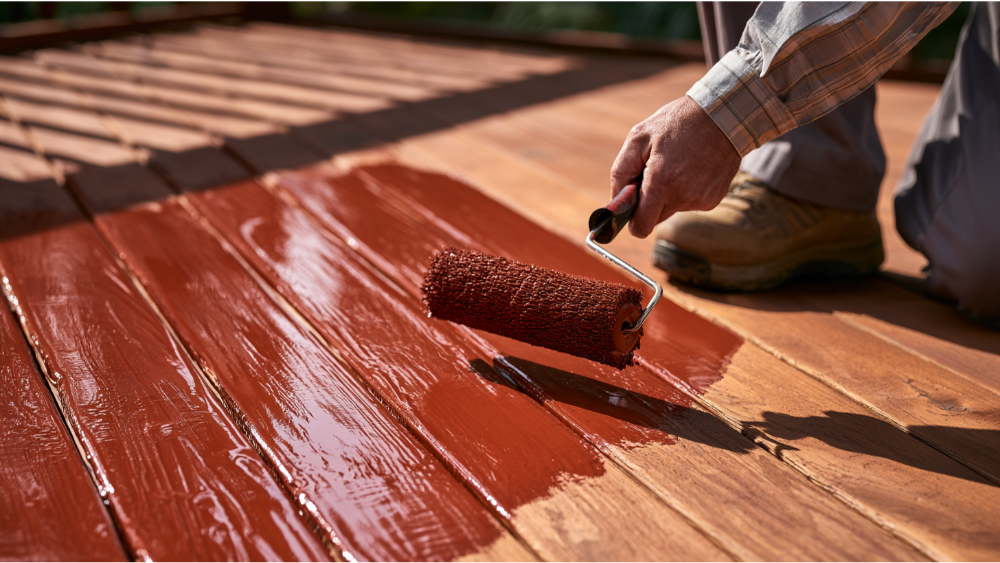
Four different terms get collapsed into one on most product pages, and that's how decks get ruined in the first week.
- Dry to touch: the surface no longer transfers paint to your finger. Often around an hour for waterborne floor coatings.
- Recoat time: when the next coat can go on. One current acrylic floor coating lists 4 to 6 hours. Another urethane-modified acrylic lists 12 hours. Same category, very different instructions.
- Light foot traffic: careful walking, usually well before full cure.
- Full return to service: furniture, planters, grills, pets. One product lists 72 hours before normal use. Another lists 5 to 7 days.
A deck that feels dry is not a deck that's ready. Planter feet set on an uncured film will leave permanent marks.
Before any coating goes down, check air temperature, surface temperature (boards in direct sun run much hotter than the air), the overnight low, humidity and dew point, and the rain-free window ahead. Two current exterior floor-coating documents list a 50 to 90 degree Fahrenheit application range, but treat that as a common example rather than a universal rule. Western Washington hands us long wet stretches, the occasional snow and freeze-thaw cycle, and a spring that teases dry weather before it delivers it, so timing matters as much as product choice. Cool, damp conditions stretch every number on the data sheet. We confirm the working timeline in your estimate once we've seen the scope and the forecast.
Why Does Deck Paint Peel? The Most Common Causes
- Painting damp wood. Trapped water pushes the film off from underneath.
- Using wall or siding paint on a walking surface. It isn't formulated for abrasion or standing water.
- Leaving loose coating underneath. New paint is only as attached as what's below it.
- Coating over mildew, dirt, or mill glaze. Adhesion fails at the contaminant layer, and a deck that was rinsed but never truly cleaned belongs in this category. That's especially true on boards that stay shaded.
- Painting over rot. The wood keeps deteriorating and takes the finish with it.
- Incompatible old and new coatings. Chemistry mismatches cause lifting and wrinkling.
- Applying the film too thick. Thick films cure unevenly and crack.
- Working outside the product's weather window. Cold or wet application never fully coalesces.
- Moisture trapped at joints and end grain. End grain drinks water; seal it or it wicks.
- Using the deck before cure. Early traffic marks and tears a soft film.
Every item on that list is a prep or process failure, not a product failure, and every one of them costs real money to undo.
Choosing a Deck Color That Holds Up and Looks Right
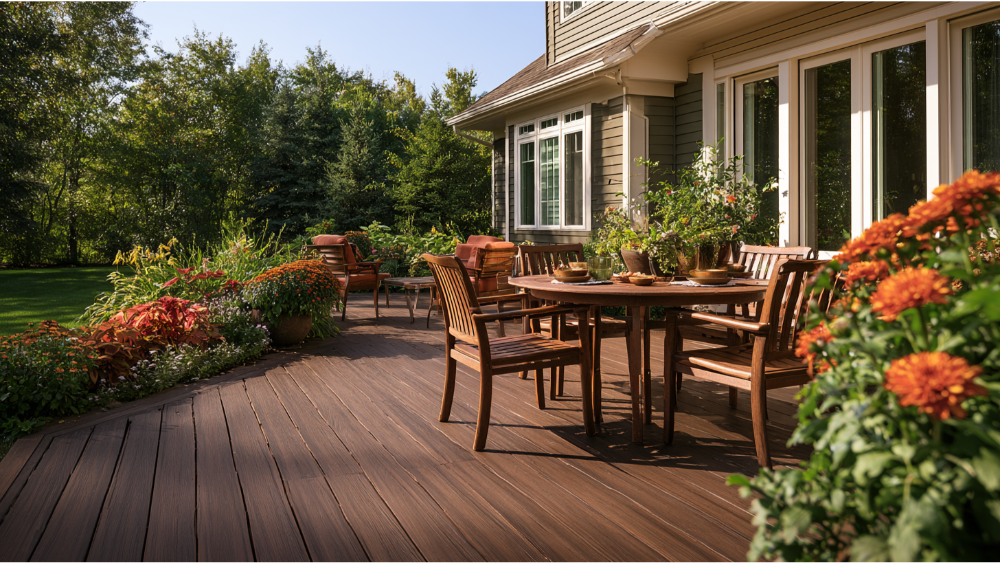
Start with performance. Lighter colors stay noticeably cooler underfoot than dark ones, which matters on a south-facing deck where people go barefoot. Darker colors absorb more heat but hold pigment well and make surrounding greenery read brighter.
Then the aesthetics. Coordinate the deck with your siding and trim first, since those are the largest adjacent surfaces. Gray undertones sit well with modern architecture; soft, natural shades sit comfortably against planting beds. If the deck connects to a living room or kitchen through sliders, pulling the color toward your interior flooring blurs the line between inside and out in a way that makes both spaces feel larger. Save a Pinterest board if that helps you narrow the field, then test your two or three finalists on actual deck boards and review them in morning light, afternoon sun, and shade before you commit. A Pinterest photo was shot in different light, on different wood, with a different fence and yard behind it. A free color consultation comes with every project we take on, so you don't have to make the call off a two-inch chip.
When Should You Hire a Professional Deck Painter?
A straightforward recoat on a small, sound deck is reasonable DIY work. Call a professional when:
- Peeling is extensive or there are multiple unknown old coatings stacked up.
- You suspect rot, soft boards, or compromised posts and railings.
- Carpentry or board replacement is part of the job.
- The property was built before 1978. Under the EPA's RRP Rule, paid work that disturbs painted surfaces generally requires a certified firm and trained renovators, with a minor-repair exception for exterior work disturbing 20 square feet or less.
- The deck is large, with stairs and railings that multiply the labor.
- Your dry-weather window is short and the prep sequence can't be rushed.
- You'd rather not coordinate a carpenter and a painter separately.
Cover Pro Painting is licensed, bonded, and insured in Washington State and EPA Lead-Safe (RRP) Certified, which is directly relevant when scraping and sanding an older painted deck. See our overview of lead-safe deck painting for pre-1978 homes. Alex founded the company at 20 and still oversees every project personally, now past 13 years in business with over 100 years of combined painting experience on the crew. Our website reports 100+ verified 5-star Google reviews, and most of our work continues to come from repeat clients and referrals. Exterior painting projects carry a five-year warranty, and we use premium paint products backed by lifetime manufacturer warranties. When the deck isn't the only thing that needs attention, we also handle fence painting and staining, siding repair, and rot repair in the same scope.
Frequently Asked Questions
What is the best paint for outdoor decking?
A premium 100% acrylic or urethane-modified acrylic porch-and-floor coating labeled for exterior horizontal walking surfaces. Look for stated mildew resistance, abrasion resistance, UV protection, and a compatible primer in the same system. Add an anti-slip aggregate on stairs and routes that stay wet.
Can you just paint over old deck paint?
Only if the existing coating is sound, clean, dry, and compatible with the new product. Loose paint has to be scraped off, edges feathered, and glossy areas dulled so the new film bonds. On homes built before 1978, disturbing that old paint triggers lead-safe work practices for paid renovation.
Should the railings and posts get the same finish as the deck boards?
Not always. Railings, posts, and the skirt around the frame are vertical, so they hold a film coating much better than the walking surface does. A common approach is paint or solid stain on the vertical parts for color and contrast, with a penetrating stain on the boards underfoot. Just make sure both products are compatible where they meet.
Is it better to paint a deck with a brush or roller?
Both. Use a pad applicator or roller across the open field for speed and even thickness, then a brush for edges, board ends, gaps between boards, railings, and posts. Back-brushing works the coating into the grain instead of letting it sit on top, which improves adhesion.
Is there deck paint that lasts 10 years?
Be skeptical of universal lifespan claims. Some premium solid-color products advertise warranties up to 15 years, but those figures generally apply to vertical surfaces. Decks are horizontal, walked on, and fully exposed, so expect meaningfully less. Real-world life depends on prep, repairs, drainage, and traffic. Check the specific product's warranty and data sheet.
Start With an Honest Look at the Deck, Then Pick the Finish
The best deck paint is the one matched to your deck's material, condition, existing coating, and exposure, and no coating outperforms the surface prep underneath it. Start with a free estimate and a full assessment: failed coatings, moisture, rot, and prep needs identified before anyone recommends a finish. Cost depends on size, condition, and how much carpentry the boards need, which is why we give you a clear number after walking the deck rather than before, providing a written scope so nothing shifts midway. We're based in Edgewood, WA and serve the greater Seattle-Tacoma area. Don't see your city listed? Contact us to confirm service availability. First-time customers get 10% off, and 0% APR financing is available.
Get My Free Painting Estimate or call 206-222-0435.
