
%201.svg)


White Exterior Paint: How to Choose the Right White and Make It Last
Key Takeaway
White exterior paint is a timeless, high-curb-appeal choice, but the best white is rarely the brightest one on the shelf. Soft, tested whites with undertones matched to your roof, trim, and sun exposure perform far better than a pure white chosen indoors. Even a perfect color only lasts when surfaces are properly prepped, primed, and caulked before the first coat goes on.
White Exterior Paint: A Timeless Look That Rewards Careful Choices
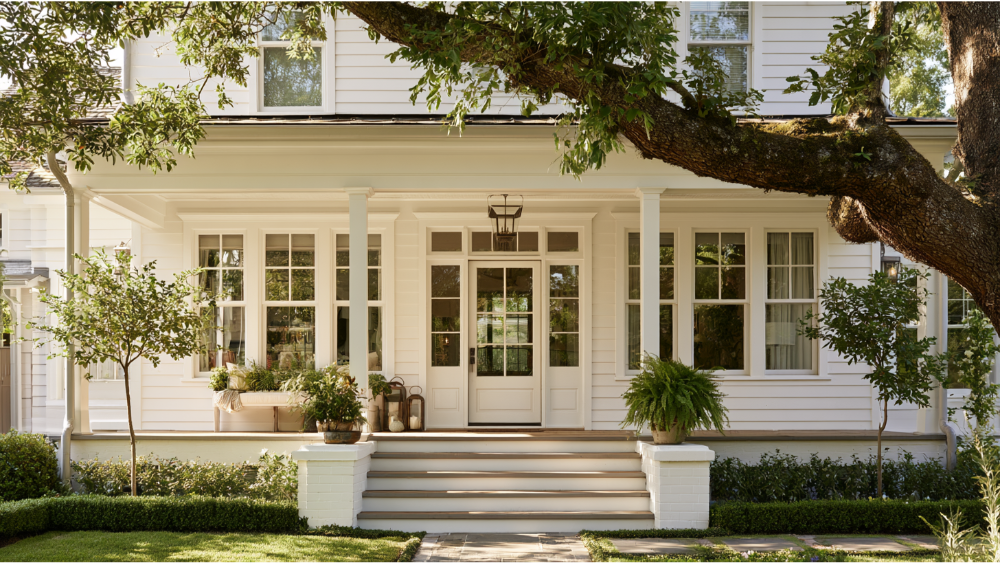
White exterior paint can be a timeless, high-curb-appeal choice for almost any house. But the "best" white is rarely the whitest one on the shelf. It's usually a soft, tested white paint color that works with your roof, trim, siding, masonry, and sun exposure. And here's the part most paint colors guides skip: even a perfect white only lasts when the surface underneath is properly prepped. If you're planning an exterior repaint and you want clean, long-lasting results (not a redo in two years), this guide covers both halves of the job. We'll walk through how to choose the right white, and how to make sure it holds up.
Why White Exterior Paint Is Trickier Than It Looks
A small paint chip lies. White reflects more light than any other color, so once it's on a whole wall in open daylight, it can look brighter, cooler, yellower, or flatter than it did indoors. Two ideas explain most of this.
Undertones are the subtle warm or cool cast inside a white. A white can lean cream, gray, blue, or greenish depending on the light and the materials around it. That's why two whites that look identical on a chip can read as different shades on a full wall. LRV, or Light Reflectance Value, is a 0 to 100 scale where higher numbers reflect more light. High-LRV whites bounce back the most sunlight and tend to resist fading better than dark colors, but they can also glare in bright sun. This is exactly why testing large samples outdoors matters so much before you commit to any of your favorites.
How to Choose the Right White Paint Color for Your Home's Exterior
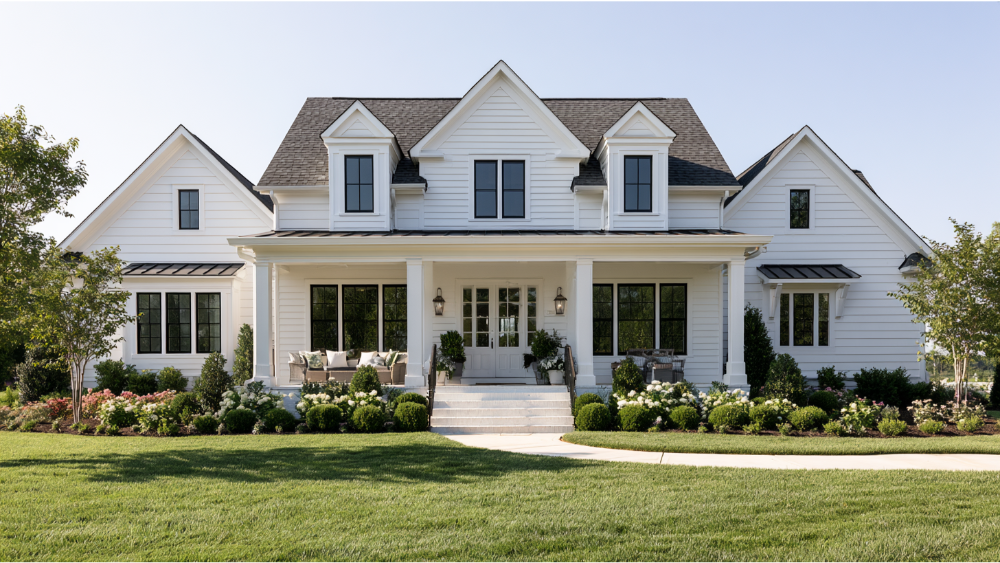
White never stands alone. It has to work with the fixed elements you're not repainting. Before you settle on a shade, take a good view of each of these:
- Roof color and its undertone (warm brown, cool gray, black)
- Trim and gutters you plan to keep
- Stone, brick, or masonry, including red brick, which pushes cooler whites warmer
- Landscaping and the green cast it throws onto shaded walls
- Sun exposure and shade on each side of the house
- Architectural style (a crisp modern white reads differently on a craftsman or a farmhouse)
- HOA or property requirements, where they apply
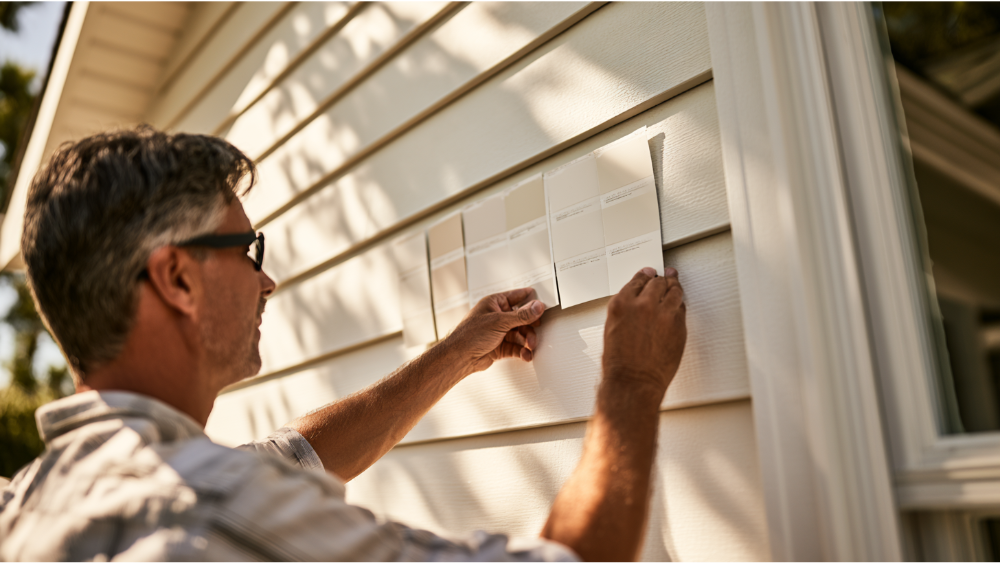
Soft whites and off-whites pair beautifully with natural materials like wood and stone, adding warmth without looking stark. Once you have a few candidate paint colors, paint large samples on different sides of the house and check them morning, midday, and evening. A free color consultation can shortcut a lot of guesswork here, so the color you choose still looks right after the whole home's exterior is covered.
Warm White vs. Cool White vs. Neutral White
Here's a quick side-by-side of how the three families behave outdoors, so you can narrow your list before you test:
Warm Whites: Alabaster and White Dove
Warm whites carry a soft cream or greige undertone. They feel cozy and forgiving, and they're a common designer pick because subtle warmth reads as inviting outdoors. The tradeoff: they can look yellow in deep shade. Sherwin Williams Alabaster, Benjamin Moore White Dove and Greek Villa, and Farrow & Ball Wimborne White are well-known warm exterior paint colors, and White Dove in particular is one of the most requested white paint colors for both trim and full-body siding. Alabaster suits a warmer palette and holds a classic look that ages well.
Cool Whites: Simply White and Chantilly Lace
Cool or crisp whites feel modern and clean, but in strong light they can read blue or stark. Sherwin Williams Pure White, Benjamin Moore Simply White, and the very bright Chantilly Lace fall here. Simply White and Chantilly Lace are among the brightest Benjamin Moore whites, so they show off architectural detail and lend a modern feel, but can glare on a sun-facing wall.
Neutral Whites: A Balanced Pick
Neutral whites sit in the middle and tend to be the safer bet across changing light. In sunny conditions, a slightly warm white often calms glare better than a pure cool white. These Sherwin Williams and Benjamin Moore names are just illustration. We use premium paint products backed by lifetime manufacturer warranties and match the white paint color to your home, not to a brand.
What Sheen Is Best for White Exterior Paint?
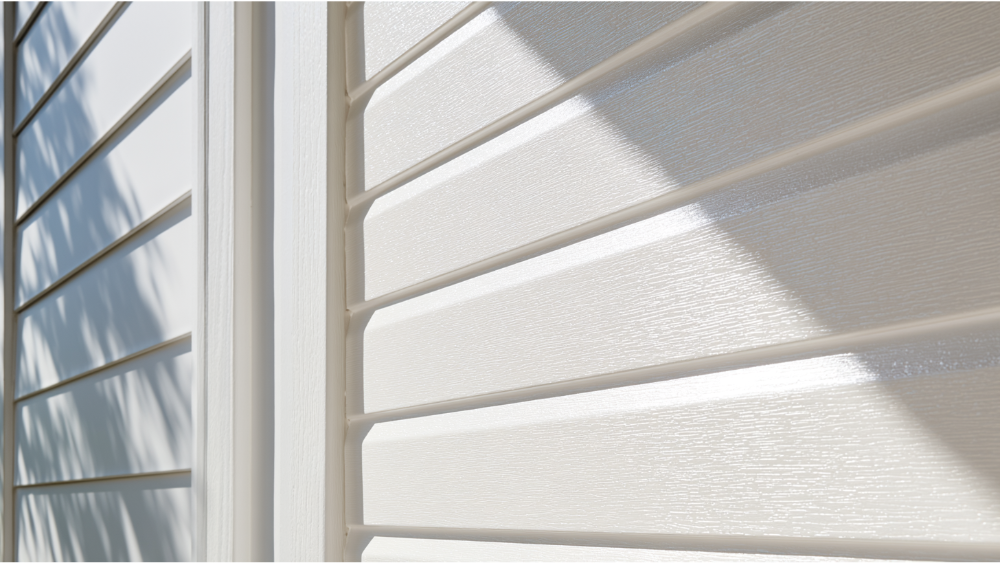
Sheen changes how white behaves, so it's worth matching to the surface.
- Body siding: flat or matte hides small flaws and cuts glare, but it holds dirt more readily.
- Eggshell or satin: a slight sheen balances durability and cleanability, which is why satin is popular on siding.
- Trim and doors: satin or semi-gloss stands up to touch and wipes clean, ideal for the parts that take the most wear.
- High-gloss: mirror-like and durable, but it demands flawless surface prep.
Durability comes from both the formula and the sheen. The catch with white is that higher sheen shows every defect and lap mark. That's one more reason prep carries more weight on a white house than on a dark one, and the difference it makes is easy to see up close.
The Part Most Color Guides Skip: Surface Prep
White is unforgiving. It magnifies dirt, chalking, nail stains, tannin bleed from bare wood, failed caulk, and uneven patchwork. So the finish really starts before the first coat. Our process looks like this:
- Clean the surface so paint bonds to sound material, not grime or mildew.
- Remove loose, peeling paint and chalking.
- Sand and scrape where needed.
- Caulk gaps to seal out moisture.
- Prime bare or stained wood so stains don't bleed through white paint.
- Correct rot and siding damage before any paint goes on.
Paint is not a repair product. If there's soft trim or failing siding, we handle the rot repair, siding replacement, and carpentry ourselves, so you're never juggling multiple contractors. A quality 100% acrylic latex flexes with temperature swings to resist cracking and can last well over a decade when prep is done right, which is a good sign the crew did the groundwork. We also watch conditions: most latex wants roughly 50°F to apply (some products go down near 35°F, always label-dependent), and we don't paint right after rain or with rain in the forecast.
White Paint and Older Homes: Lead-Safe Considerations
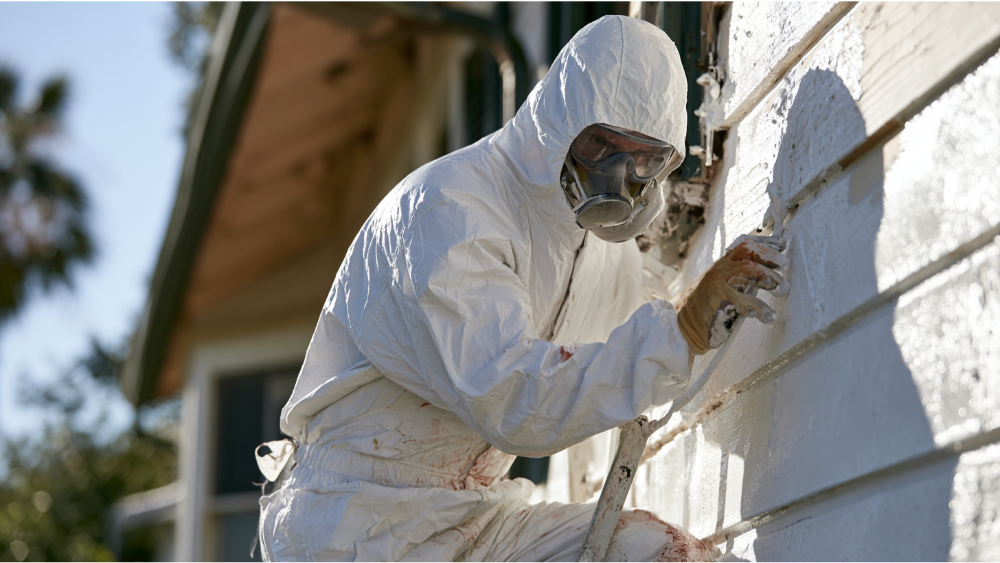
Scraping and sanding old exterior paint on a pre-1978 home can disturb lead-based paint. The EPA estimates that 87% of homes built before 1940 and 24% of homes built between 1960 and 1978 contain some lead-based paint, and its simplest safe approach is to assume it's present. Deteriorating exterior paint that's peeling or chalking can even contaminate the soil around a house. The EPA's Renovation, Repair and Painting Rule covers paid painting and carpentry that disturbs paint in pre-1978 homes. It's worth taking a moment to acknowledge this before work starts. Cover Pro Painting is EPA Lead-Safe Certified (RRP Certified), so older-home prep is handled with the right precautions from the start.
Does White Exterior Paint Keep Your Home Cooler?
Yes, lighter surfaces reflect more sunlight than dark ones, but the dramatic numbers you may have seen are about roofs, not siding. A clean white roof reflecting about 80% of sunlight can stay roughly 50 to 55°F cooler on a summer afternoon than a gray roof reflecting 20%. Exterior walls receive only about half the sun exposure of a roof, so a light-colored wall helps modestly rather than transforming your cooling bill. Climate, insulation, and shade all factor in too. White is a smart, honest choice for heat, just not a miracle.
Keeping a White Exterior Looking Clean Over Time
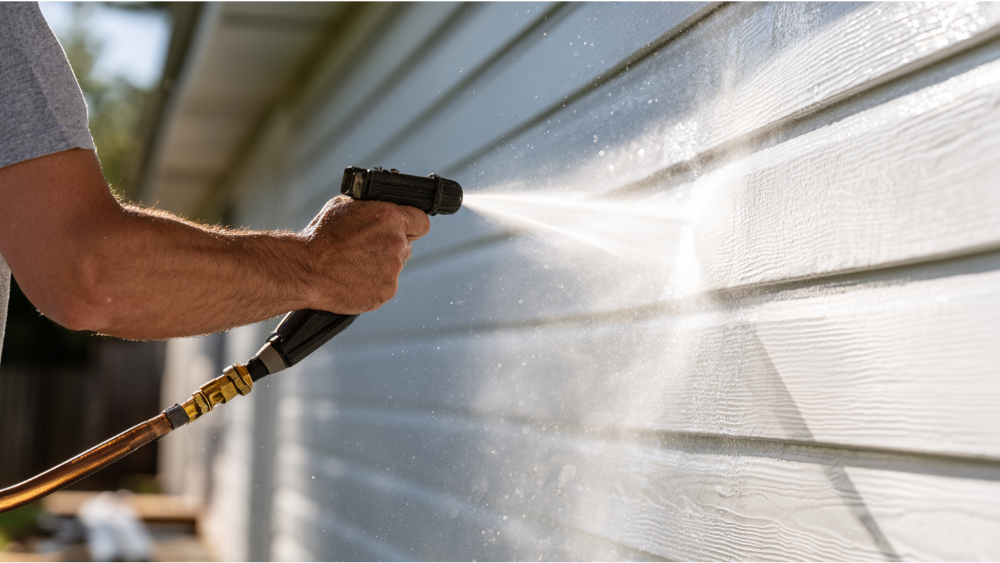
White does show dirt, mildew, pollen, algae, and splash-back sooner than darker colors. It still stays looking good with routine care:
- Give it a gentle wash periodically.
- Keep gutters and drainage working so runoff doesn't streak the walls (we offer gutter cleaning too).
- Keep landscaping and mulch clear of the siding.
- Inspect and repair peeling, cracking, or moisture issues promptly before they spread.
A smoother satin or eggshell finish also rinses cleaner than a dead flat, which keeps the whole space around your home looking fresh and beautiful between washes.
When to Get a Professional Color Consultation and Estimate
It's worth bringing in help when your house mixes multiple materials, when you're pairing white-on-white or white with dark trim, or when there's brick, vinyl, older paint, rot, or peeling in the picture. Choosing the perfect white and making it last are really the same job. Every project includes a free color consultation. Start with a free estimate that looks at color, surface condition, prep, needed repairs, and the finish plan, so you know the full scope and a clear number before work begins. We're based in Edgewood, WA and treat every home like our own. Get a free estimate: call 206-222-0435.
Frequently Asked Questions About White Exterior Paint Colors
What is the most popular white exterior paint?
People gravitate toward soft warm whites like Alabaster and White Dove, crisp whites like Pure White, and bright whites like Simply White or Chantilly Lace, and each type suits a different home. We recommend testing rather than picking by reputation alone. The right one depends on your home's roof, trim, and light, not on popularity. If you have a color you love, add it to your list and we'll test it on the wall.
Is white a good color for a house exterior?
Yes. White is timeless and boosts curb appeal, but it only lasts when the surface is properly prepped and the undertone actually suits your home's fixed elements. If those two things agree, it's a great, long-lasting choice.
Why does my white exterior paint look yellow or blue?
It's the undertone reacting to outdoor light. Warm whites can look yellow in shade, and cool whites can read blue in bright sun. Test large samples outside on different sides of the house before committing.
Should exterior trim be the same white as the siding?
A slight contrast usually reads best, with trim a touch brighter and the body slightly softer, creating clean definition. Dark trim makes crisp contrast but needs careful heat and substrate consideration. Not sure which way to go? Leave a comment or ask during your estimate and we'll help you compare a few paint colors side by side. To learn more or discover which whites work for your setup, follow the link on our site, click through to the contact form, or continuing the conversation by phone works just as well.
