
%201.svg)


When to Paint New Siding: How Long to Wait Before the First Coat
Key Takeaway
Paint new siding when the material is correctly installed, clean, dry, and within the manufacturer's finishing window - not after an arbitrary wait. Factory-primed fiber cement and engineered wood can typically be coated right away, while bare wood must first reach 9% to 14% moisture content. Knowing when to paint new siding comes down to material type, moisture readings, and the product manual.
There's no universal waiting period for new siding. You paint when the siding is correctly installed, clean, dry, properly prepped, and still inside the manufacturer's finishing window. Bare wood is the main exception: it needs to reach an acceptable moisture level first. Factory-primed fiber cement and engineered wood can usually be coated promptly once they're dry and free of construction dust.
If you've just had new siding installed, or it's going up next month, the fear is reasonable. Paint too early and you trap moisture. Wait too long and you can void a warranty or lose the primer. Below is a material-by-material timetable, plus how to confirm the wall is actually ready instead of guessing from the calendar.
The Quick Answer: When to Paint New Siding, by Siding Type
The right timing depends almost entirely on what the siding is made of and whether it arrived bare, factory-primed, or factory-finished. Here's the short version.
The calendar is the weakest input in this decision. Material, moisture, and the manufacturer's written instructions are the ones that actually matter.
Why "Wait 30 Days" Is Usually the Wrong Answer for New Siding
The 30-day cure rule you've probably read about belongs to new stucco, concrete, and masonry. Those materials are still chemically curing and off-gassing moisture. Wood, engineered wood, and factory-primed fiber cement don't work that way. Applying a blanket 30-day wait to siding is borrowed advice from a different problem.
The other thing that confuses people is the "paint within 180 days" language printed in siding manuals. That's a deadline, not a delay.
Myth vs. fact: "Within 180 days" does not mean "wait 180 days." It means finish the siding no later than 180 days after installation. Painting it on week one is fine, and usually better.
Search this topic and you'll find "paint immediately," "wait for the wood to dry," "60 to 90 days," "180 days," and "30 days" all on the same page of results. None of them are lying. They're each answering a different material.
Factory Primer vs. a Finished Coating: What You Actually Have on the Wall
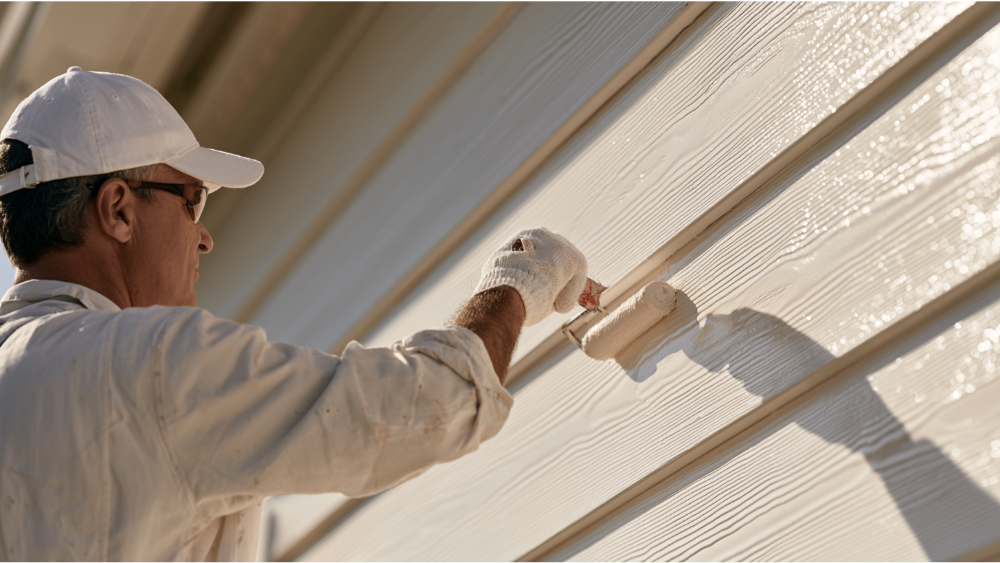
Almost every timing question gets easier once you know which of three states your siding is in
- Bare. No coating at all. Solid wood, cedar, unprimed board. It needs primer and topcoat, and it's vulnerable to weather until it gets them.
- Factory-primed. There's a thin bonding layer that helps paint stick and protects the board briefly in transit and during construction. It is not a weather-resistant finish. Primer alone will chalk, dirty up, and degrade if it sits exposed.
- Factory-finished. Color and protective coating are already applied under controlled conditions. These walls normally need only manufacturer-approved treatment of cut edges, fasteners, scratches, and installation damage.
One detail people miss on primed board: every field cut is bare material. The installer's saw exposes an unprotected edge that needs to be sealed per the product's instructions before it takes on water.
When Should You Paint New Wood or Cedar Siding?
With solid wood, the question isn't how many days have passed since installation. It's how much water is in the board. Kiln-dried and green lumber behave completely differently, and the acclimation numbers below describe storage and conditioning before the boards go up, not a countdown after they're nailed on.
Western red cedar guidance is a good reference point. Kiln-dried clear cedar often arrives around 12% to 15% moisture and may be ready to install on delivery if it stayed dry in transit. Dry knotty cedar may need 7 to 10 days of ventilated storage. Green or unseasoned cedar can need at least 30 days, and longer in damp conditions, which describes a lot of our fall and winter here.
What Moisture Level Should Wood Siding Be Before Painting?
The USDA Forest Products Laboratory's Wood Handbook says exterior wood performs best when it's painted near the moisture level it will live at in service, generally 9% to 14% in most U.S. conditions. Paint wood above 20% moisture and the risk of blistering and peeling climbs sharply, because the water has to leave eventually and it will push the film off to do it. Western red cedar finishing guidance sets the same 20% ceiling.
A moisture meter settles this in about ten seconds per board. Counting days does not.
How Long Can Bare Wood Siding Sit Before the First Coat?
Not long. APA advises applying the first finish coat as soon as possible, preferably within two weeks of installation, and warns that unprotected wood can show surface damage within four weeks of exposure. Cedar left out past roughly two weeks may need sanding, brushing, or washing before it will hold a finish, and smooth flat-grained cedar often benefits from a 50 to 60 grit scuff sand. Tannin bleed on cedar and redwood also makes primer selection a real decision, not an afterthought. Bare siding does not need to "season" outdoors. That's a myth that costs people a finish.
Painting Factory-Primed Engineered Wood and Composite Siding

Current engineered-wood installation instructions are direct about this: paint all exposed surfaces, including anywhere water can collect, using a compatible high-quality exterior coating, as soon as possible or within 180 days. APA's more general guidance for preprimed siding puts the topcoat window at 60 to 90 days, subject to whatever the siding manufacturer says. When the two conflict, the specific product's manual wins.
Two things routinely go wrong on composite siding. First, primer that's been on the wall through weeks of construction gets chalky and picks up dust, so it has to be washed and checked before a fresh coat goes on. Second, field cuts and installation dings expose raw board. Those spots need sealing or spot priming before the finish coats, or you've built a wick straight into the panel.
When to Paint New Fiber-Cement Siding
Factory-primed fiber cement has no post-installation cure period to wait out. The board isn't curing on your wall. Official installation manuals typically call for an exterior-grade acrylic finish applied within 180 days of installation, never over wet or saturated siding, and only after dirt, construction dust, and any mildew have been cleaned off.
Field-cut edges need to be primed or painted as the manual specifies. Some manuals also call for two finish coats and back-rolling if the coating is sprayed, though that's product-specific and not a universal rule for every fiber cement board on the market. This is one of those places where the exact installation manual and the coating's technical data sheet govern, and where reading them is genuinely faster than guessing.
Does New Vinyl or Metal Siding Need Paint?
Usually not. Vinyl is a factory-colored material, and industry guidance describes it as needing no additional paint or caulk as part of a normal installation. Most new residential and commercial metal panels also arrive with a factory-applied coating. Full field painting on either one is generally unnecessary unless the product was supplied bare or primed specifically for field finishing.
If you want to paint vinyl anyway, check the siding warranty first, use a coating approved for vinyl, and be careful with color. Paint manufacturers have long warned against going darker than the original because of heat absorption and potential warping, though some newer vinyl-safe color systems allow more range. The product instructions are more authoritative than any blanket rule.
For scratched or dented metal panels, ask the panel supplier which touch-up system they approve. Extensive field touch-up can look noticeably different from the factory finish, and replacing a panel is sometimes the better call.
How to Tell Whether New Siding Is Ready for Paint
Run this list before anyone opens a can.
- Material and finish state identified: bare, factory-primed, or factory-finished.
- Manufacturer installation instructions and the coating's data sheet in hand.
- Wood moisture measured with a meter, not judged by eye.
- Surface clean: no construction dust, mud, handling marks, or oils.
- No mildew or biological growth, especially on shaded north elevations.
- Field-cut edges sealed or primed as required.
- Fasteners set correctly and damaged factory primer spot-primed.
- Caulk applied where specified and cured per its own label.
- No unresolved rot, flashing failure, or water entry behind the siding.
- Forecast clear enough for the coating's drying period, with surface temperature comfortably above the dew point.
How Rain and Pacific Northwest Weather Affect the Timeline
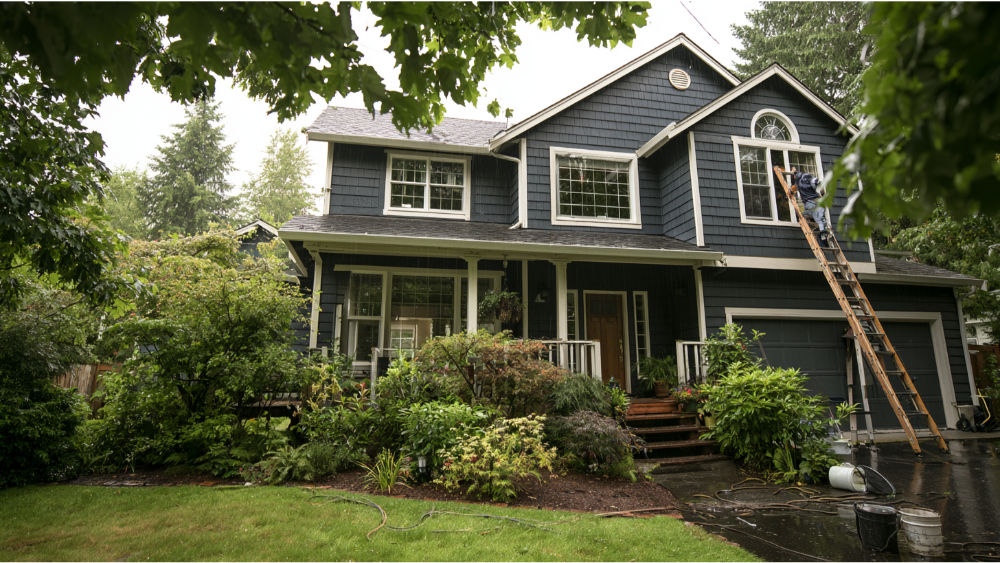
One paint manufacturer's guidance suggests a minimum of one day after heavy rain before painting, and is clear that the surface, not the calendar, decides. Wood and masonry hold far more water than vinyl or aluminum. Around Edgewood and through the Seattle-Tacoma area, that distinction matters more than it does in a dry climate.
A single sunny afternoon following a week of rain often isn't enough. North-facing and heavily shaded walls dry slower than the south elevation of the same house, and they can still read wet on a meter when everything else is fine. Overnight dew shortens the safe working window on both ends of the day, and moisture that got behind lap joints or into lower courses can take considerably longer to leave than the visible face suggests.
One technical spec we work from requires the surface to stay at least 5°F above the dew point during application, and manufacturer guidance recommends holding conditions above the dew point for up to 48 hours after application for ideal film formation. That's product-specific, not a universal standard, but it explains why we plan exterior work around the forecast rather than around a fixed schedule. We won't promise a completion date that ignores what the weather is doing.
What Happens If You Paint New Siding Too Soon
Painting damp or unprepared siding doesn't fail on day one. It fails on month eight, which is worse, because by then the crew is long gone. What you tend to see:
- Poor adhesion, then peeling in sheets along the wettest elevations.
- Blistering as trapped moisture works its way out through the film.
- Tannin or water staining bleeding through the topcoat on cedar and redwood.
- Uneven sheen where the substrate absorbed the coating inconsistently.
- Gaps and cracks at joints as wood shrinks under a film that can't move with it.
- A warranty claim you can't make, because the manufacturer's application conditions weren't met.
What Happens If You Wait Too Long
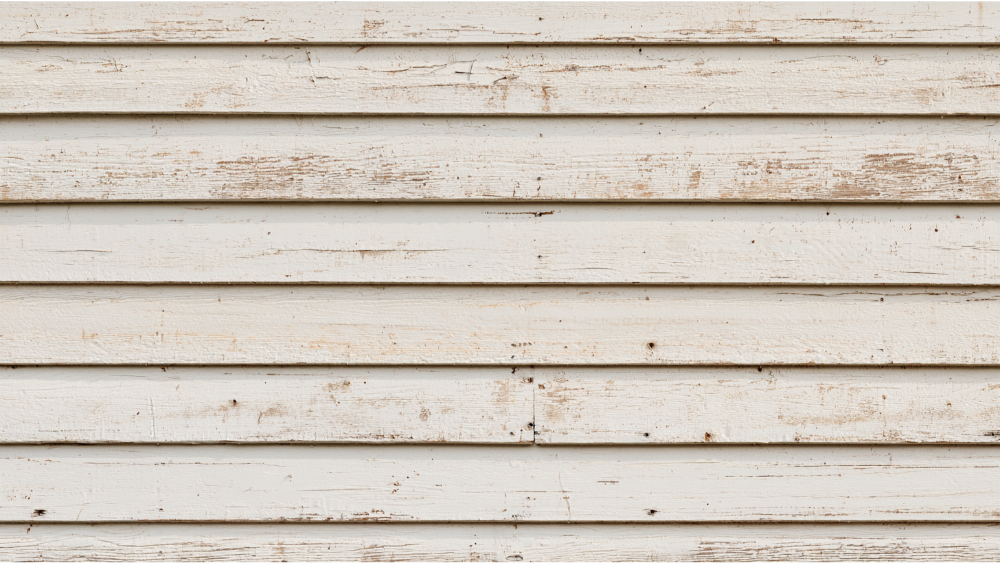
The opposite problem is just as real. Bare wood degrades under UV within weeks, and the damaged surface fibers won't hold a coating until they're sanded or washed off. Factory primer chalks and collects dirt, which means extra cleaning or a full reprime before the topcoat. Unsealed cut edges start absorbing water. And if you sail past the manufacturer's finishing window, you may have given up your coverage on the siding itself.
Every one of those adds prep hours to the job. Painting on time is the cheaper version of this project.
Inspect What's Behind the Siding Before You Cover It
If your siding was replaced because it had failed, paint is the last step, not the fix. We see homes where new board went over sheathing that was already soft, or where flashing at a window head was never corrected. The wall looks finished for a season or two, and then the same water finds the same path.
Before we coat anything, we're checking for rot in sheathing and trim, failed or missing flashing, open joints, untreated cut edges, and any detail that directs water behind the siding rather than off it. When we find something, we handle it. Rot repair, siding repair, carpentry, and the painting all come from the same team, so you're not coordinating one crew to fix the wall and another to finish it. That's the whole point of full-service: the problem gets corrected once, by people who are accountable for how the finish holds up afterward.
Lead-Safe Practices on Pre-1978 Homes
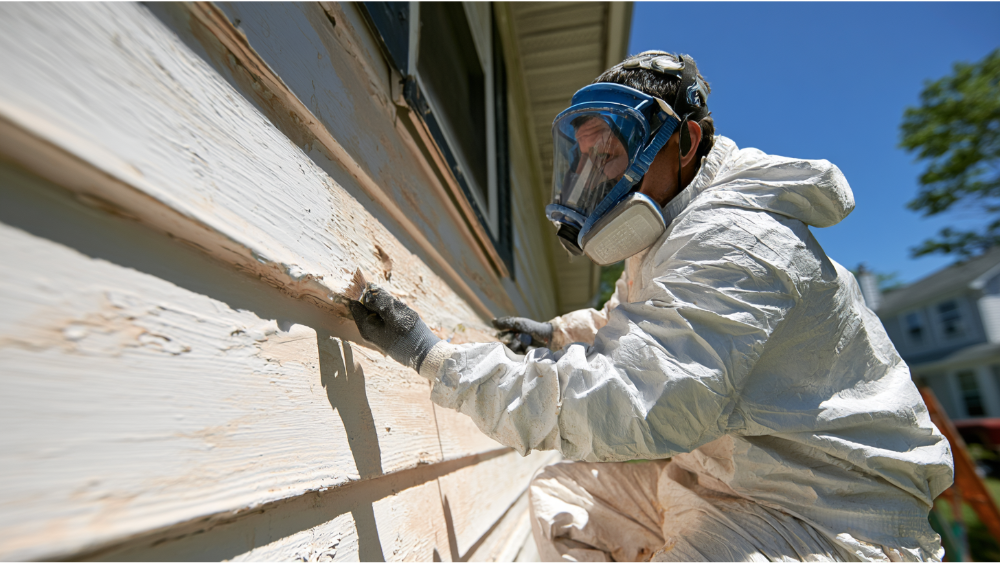
New siding often means old siding came off first. When paid contractors disturb painted surfaces in housing built before 1978 or in child-occupied facilities, EPA's Renovation, Repair and Painting Rule generally requires a certified firm using lead-safe work practices. Removal, prep around old trim, and related carpentry can all fall under it. Cover Pro Painting is EPA Lead-Safe Certified (RRP Certified), so the containment and cleanup requirements are built into how we run those jobs.
Frequently Asked Questions
Can you paint new siding immediately after installation?
Often yes. Factory-primed fiber cement and engineered wood can typically be coated as soon as they're installed, clean, and dry. Bare wood is the exception, since it needs an acceptable moisture reading first.
How dry should wood siding be before painting?
The USDA Wood Handbook points to 9% to 14% moisture content in most U.S. conditions, and painting above 20% raises the risk of blistering and peeling. Cedar finishing guidance uses the same 20% ceiling. Check with a meter.
Does factory-primed siding need another primer coat?
Not usually, if the primer is intact and clean. It does need spot priming wherever the primer is damaged and on every field-cut edge, and a full reprime if the primer has weathered or chalked past its finishing window.
How long should siding dry after rain before painting?
At least a day after heavy rain is a common manufacturer minimum, but the surface decides. Wood holds water longer than vinyl or metal, and shaded walls dry slower than sunny ones, so measure rather than assume.
Get a Clear Plan for Painting New Siding
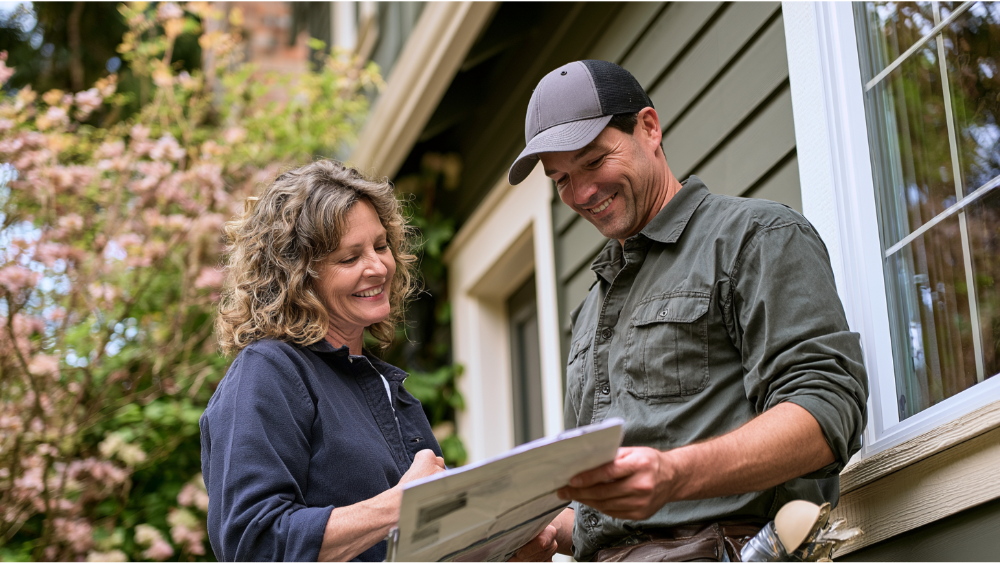
If you're not sure whether your siding is dry enough, whether the factory primer is still sound, or whether the cut edges and repairs were handled correctly, have someone look at it before the first coat goes on. We'll identify the material, check moisture, review the manufacturer's finishing requirements, and tell you plainly what the wall needs.
Cover Pro Painting is a licensed, bonded, and insured contractor based in Edgewood, serving homeowners and businesses across Tacoma, Puyallup, Federal Way, Kent, Auburn, Milton, Renton, Bellevue, Seattle, and the surrounding cities. Founder-led for over 13 years, with a five-year warranty on exterior painting projects and premium products backed by lifetime manufacturer warranties. Call 206-222-0435 or request your free estimate, and you'll know exactly what your project involves before we start.
