
%201.svg)


Types of Paint Finishes: How to Choose the Right Sheen for Every Surface
Key Takeaway
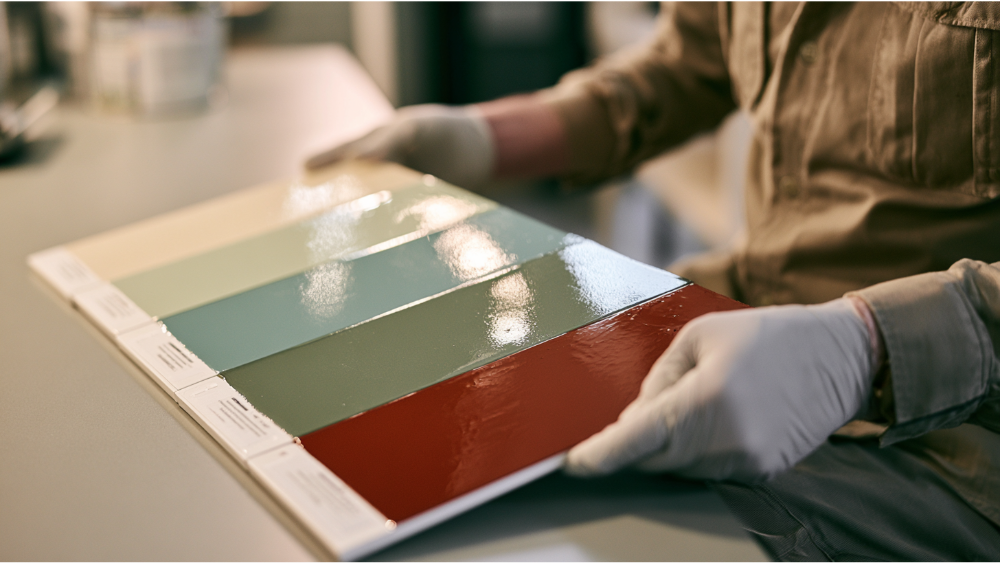
The main types of paint finishes, from least to most shiny, are flat/matte, eggshell, satin, semi-gloss, and gloss/high-gloss. Flat and eggshell absorb light and hide surface imperfections best, while semi-gloss and high-gloss resist moisture and clean easily but reveal every flaw underneath. Matching the right sheen to each room, surface condition, and traffic level is what makes a paint job last.
The main paint sheens, from least shiny to most shiny, are flat/matte, eggshell, satin, semi-gloss, and gloss/high-gloss. Lower-sheen finishes absorb light and do a better job hiding surface imperfections, while higher sheen paints reflect more light, are easier to clean, and resist moisture, but they reveal every flaw underneath. The right choice depends on the room, the surface condition, the traffic it sees, the lighting, and the prep work behind it. Whether you're deciding what belongs on walls, ceilings, trim, doors, cabinets, or siding, we want you to end up with a paint finish that looks right and holds up, so you're not repainting in two years.
Quick Paint Finish Comparison Chart
Here's the fast version. Use it to narrow your options, then read the sections below for the reasoning behind each pick.
What Does Paint Finish (Sheen) Actually Mean?
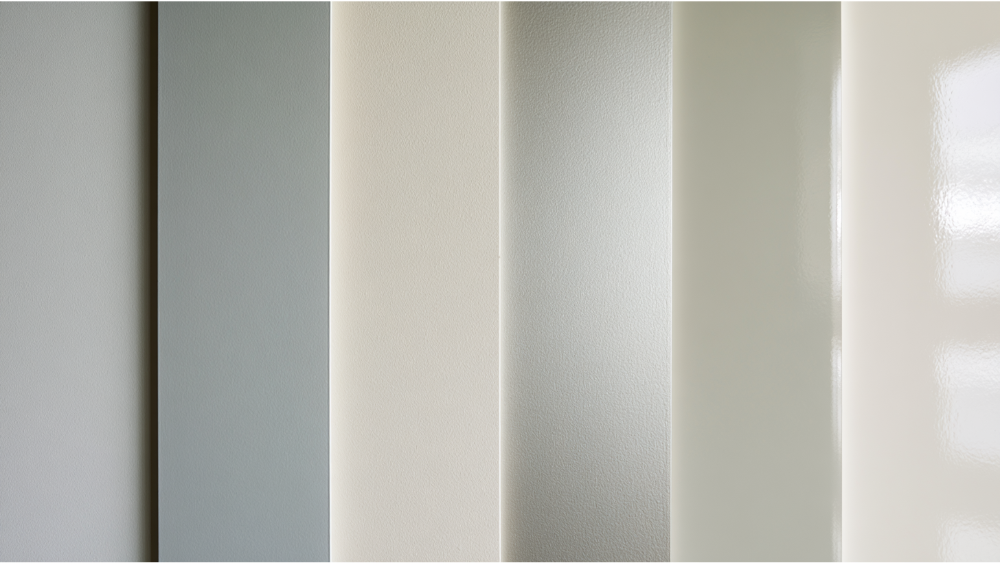
Paint finish, or sheen, is simply how much light the dried paint reflects off its surface. That single quality drives almost every practical difference between paint sheens, and it's the first thing both professional and DIY painters should understand before starting a painting project.
Lower sheen paint absorbs more light. That's why a flat finish and an eggshell finish soften a room and quietly help hide minor surface imperfections like small dents, patches, and uneven spots on the wall. The tradeoff is that they don't stand up to scrubbing as well. Higher sheen paints reflect more light back at you. Semi gloss and high gloss paint wipe clean, shrug off moisture, and take repeated cleaning, which is why they belong on trim, doors, and surfaces that get touched a lot. But that same reflectivity broadcasts every ripple, brush mark, and minor surface imperfection underneath.
One thing worth understanding before you shop: finish names are categories, not exact matches across brands. One company's satin paint can look a little different from another company's satin. A Sherwin Williams satin and a Benjamin Moore satin, for example, may land at slightly different gloss readings even though the label says the same thing. That's why we confirm the right paint sheen with sample boards and manufacturer product data sheets rather than the label alone.
Sheen Is Measurable, Not Just a Marketing Word
Sheen isn't guesswork. The Master Painters Institute (MPI) defines seven gloss levels on its sheen chart, from G1 matte/flat through G7 high gloss, and gloss is measured with a glossmeter at 20°, 60°, and 85° angles under ASTM D523. The reason lower sheens help with hiding surface imperfections comes down to how the paint is formulated: a higher pigment volume concentration scatters light instead of bouncing it straight back, which softens what your eye sees. A high gloss paint carries less of that flattening pigment, so it bounces light directly and reads as a mirror like finish.
The Main Types of Paint Finishes Explained
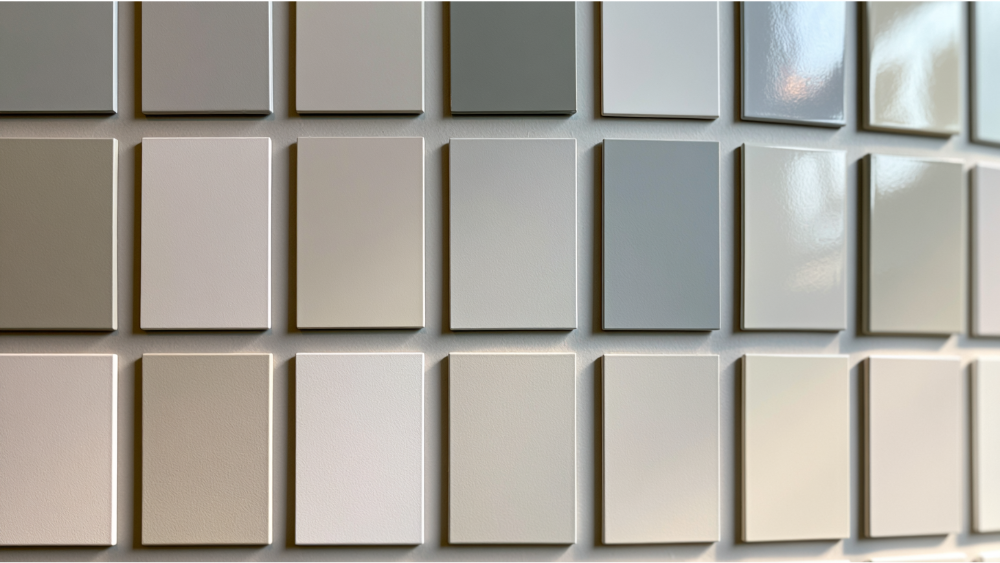
Each of these types of paint finishes is a performance decision, not just a style pick. The goal is matching the sheen to the surface it lives on and the demands that surface faces every day.
Flat Paint and the Matte Finish
Flat paint, sometimes called a matte finish, sits at the bottom of the sheen scale (roughly 0–3% shine) and does the best job of hiding surface imperfections. Because it reflects so little light, this paint finish disguises dents, seams, patched spots, and minor unevenness that a shinier paint would put on display. That makes flat paint the go-to for ceilings, where you want a quiet, non-reflective surface, and for adult bedrooms and other low-traffic rooms where a soft look matters more than heavy cleaning.
A flat finish also touches up well. Because there's no sheen to match, small repairs tend to blend in rather than leaving a shiny halo. The tradeoff is durability. Flat or matte finishes have the lowest washability of the common finishes and can hold onto scuffs and marks. We'd steer you away from flat paint in a busy hallway, a kids' room, or a family gathering space where hands and shoes meet the wall. In those high traffic areas, the softer look isn't worth the cleaning frustration. Save the matte finish for the calm rooms and the ceilings, where matte paints do their best work.
Eggshell Paint Finish
An eggshell finish is the reliable default for a lot of interior walls, and for good reason. Eggshell paint carries a subtle sheen (around 12–25%), so it has a soft glow in the right light without looking shiny. It's more durable and easier to clean than flat paint, but softer and more forgiving than satin paint, which puts it in a comfortable middle spot for everyday living.
That balance makes eggshell paint a strong pick for living rooms, dining rooms, hallways, family rooms, and bedrooms. It stands up to a light wipe-down when someone leaves a mark, yet it still helps with hiding surface imperfections and most minor wall flaws thanks to its low sheen reminiscent of a soft finish. If you're repainting a whole house and want one paint finish that works across most of the shared spaces, eggshell is usually where we'd start the conversation. It gives you a clean, warm look with enough cleanability for normal life, without demanding the near-perfect surface that a glossier gloss finish would.
Satin Paint Finish
Satin paint is the practical middle ground, with a soft pearl like finish and a subtle shine in the 25–35% sheen range. It's noticeably more durable and easier to clean than an eggshell finish, which is what makes it so useful in the parts of a home that take a beating.
Satin paint handles high traffic walls and moisture-prone spaces well, so it's a common choice for kitchens, bathrooms, laundry rooms, and kids' rooms. It wipes down without much fuss and resists the humidity that would eventually wear on a lower sheen. Depending on the product, satin also works on some exterior siding and trim, where a low, weather-ready sheen helps the surface shed dirt and moisture.
The catch: that extra reflectivity shows more surface flaws than an eggshell finish does. Ripples, patches, and uneven drywall become easier to spot, especially in strong light, so satin paint gives up some of the imperfection-hiding advantage that flatter sheens have. That means prep matters more with satin. When the surface underneath is smooth and properly prepared, satin paint gives you a clean, durable, smooth finish that earns its place in the busiest rooms of the house. That velvety finish is part of its appeal.
Semi Gloss Paint Finish
Semi gloss (roughly 35–60% sheen) is built for cleaning and moisture. Semi gloss paint is the standard for trim, doors, and cabinets, and it works well in bathrooms, laundry rooms, and utility areas where surfaces get wiped down often. It resists moisture, takes repeated scrubbing, and holds up to the daily contact those surfaces see, which is exactly why it belongs in high traffic areas that need frequent cleaning.
On architectural details, semi gloss paint also gives you a crisp, defined edge that separates trim and doors from the flatter walls around them. That contrast is part of why it looks so clean when it's done right, and it's why a semi gloss finish reads as intentional next to an eggshell or flat paint wall.
Where people get into trouble is spreading semi gloss across large walls or ceilings because they want the easy cleanup. At that scale, the reflectivity turns against you and shows every blemish, patch, and roller mark on the surface, undoing any help you'd get from hiding surface imperfections. On broad, imperfect walls, semi gloss paint can look harsh and busy. Keep it on the surfaces it's meant for, back it with careful surface prep, and it delivers exactly what you'd want from it.
High Gloss Paint and the Gloss Finish
Gloss and high gloss paint (over 60% shine) sit at the top of the scale. They're ultra-reflective, tough, and highly stain resistant, with the strongest visual impact of any paint finish. That lustrous finish is why glossy paint shines on architectural details: front doors, kitchen cabinets, trim, shutters, molding, and window casings. On a front door or a set of cabinets, high gloss reads as polished and intentional, and it stands up to the constant handling those surfaces get, so it earns its place in high traffic areas where hands touch the surface daily.
The tradeoff is unforgiving. A high gloss finish will amplify surface imperfections underneath it, from a slightly raised patch to a faint sanding scratch, which is the opposite of hiding them. MPI notes plainly that high gloss finishes tend to enhance texture and defects in the surface, which is why they demand excellent prep. This is not a paint finish for broad, imperfect walls. On a large flat surface, gloss paint will magnify flaws you never noticed. Use it as an accent and on the high-touch details where its high durability and shine both pull their weight, and make sure you paint carefully over a genuinely smooth surface before it goes on.
Best Paint Finish by Room and Surface
Here's how the paint sheens map onto the actual interior surfaces in a home. Think of it as a starting point. The best paint finish for a given space still depends on your surface condition, lighting, and how the room gets used.
A quick note on bathrooms and kitchens: the old default was semi gloss for anything near moisture, but that advice is evolving with better paint technology. Newer moisture-resistant satin paint and even some quality eggshell products can hold up well in these rooms when ventilation is good and the product is a strong one. If your bathroom has a working exhaust fan and you want a softer look, a premium moisture-resistant satin paint is worth considering. Cabinets and high traffic areas like entryways are the spots where semi gloss and high gloss paint still make the most sense, because they take repeated cleaning without wearing thin. As a full-service company handling both interior and exterior work, we look at each surface on its own before recommending the appropriate paint finish, because the right answer for your entryway isn't necessarily the right answer for your siding.
The Finish Is Only as Good as the Surface Prep Behind It
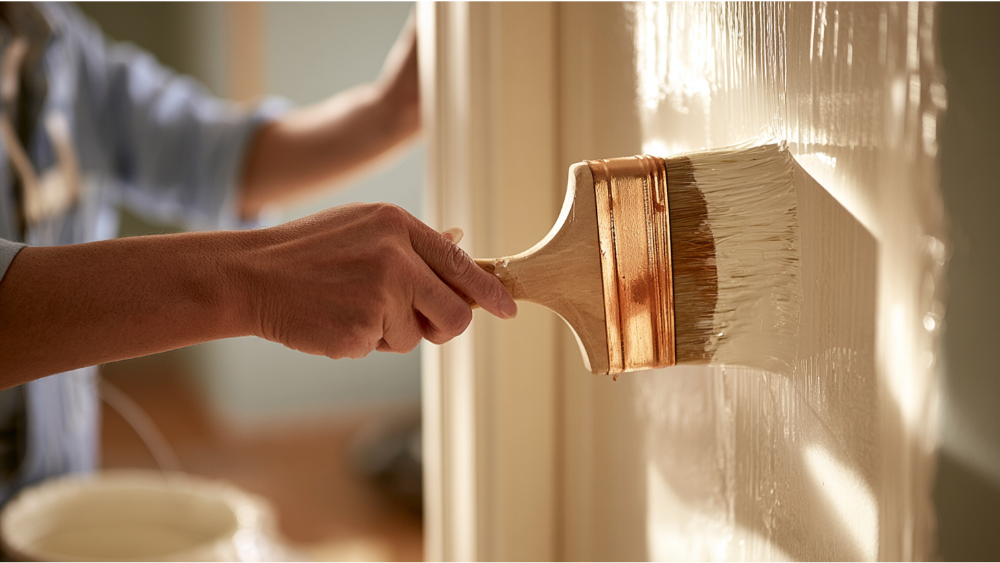
You can pick the perfect paint finish and still end up disappointed if the surface underneath isn't prepared. This is the part most finish guides skip, and it's the part that decides whether your paint looks clean and lasts or fails early. Surface prep is where we lead, because it's the honest proof of lasting quality.
Good prep is a sequence: cleaning the surface, sanding it smooth, patching holes and cracks, caulking gaps, and priming where needed. None of it is glamorous, but all of it shows in the final result. Higher sheen paints make prep even more important because they reveal everything. A satin paint or semi gloss coat over a poorly prepped wall will show the ripples, the patches, the roller texture, and the lap marks where wet and dry paint met. On a flat paint wall, some of that hides. On a shinier gloss finish, those painting flaws are on full display.
Old peeling paint has to be dealt with before recoating, not painted over. Painting fresh coats onto a failing surface just buys the failure a new top layer. MPI uses a deterioration scale that runs from a sound surface (DSD-0) all the way to substrate damage (DSD-4), where the material itself needs repair or replacement. Their guidance is clear that no repainting should start until those adverse conditions are corrected and the surface is acceptable.
Which leads to a plain truth: no paint finish can hide rot, failing siding, or structural deterioration, and no amount of rich color on top will change that. A beautiful coat of paint over soft, damaged wood is a short-term cover-up, not a fix. This is where being able to handle everything under one roof matters. If we find rot, damaged siding, or wood that needs replacing during an estimate, we can take care of the rot repair, siding replacement, and carpentry work with the same team that does the painting. You never have to line up a separate contractor, coordinate schedules, or wonder who's responsible for what. It's one relationship, start to finish.
The reason we put this much weight on prep isn't just principle. A widely cited manufacturer surface-prep resource reports that up to 80% of coating failures can be traced to inadequate surface preparation affecting adhesion. That figure comes from an industry resource rather than a government standard, so we treat it as directional rather than gospel, but it lines up with what we see on real jobs. When paint fails early, the surface underneath is almost always the reason.
Common Mistakes When Choosing a Paint Finish
Most finish regrets come from a handful of predictable mistakes. Here's what to avoid so you don't end up redoing the work.
- Putting semi gloss on every wall because it "cleans better." The cleanability is real, but so is the reflectivity. On large walls, semi gloss paint exposes flaws that a lower sheen would help hide, and the room can look harsh.
- Using flat paint in a high traffic family space. A flat finish looks lovely until the first scuff you can't wipe off. In hallways, kids' rooms, and busy living areas, factor in washability, not just the soft look, and lean toward a finish that's easier to clean.
- Ignoring lighting and raking light. Light hitting a wall at a low angle exaggerates texture, and higher paint sheens make it worse. A paint finish that looks fine in one room can look uneven in another with big windows.
- Choosing a deep or high-contrast paint color without expecting extra coats. Dark paint and rich colors don't cover in one or two passes. MPI notes that deep or high-contrast accent colors may need three or more finish coats over primer for satisfactory hiding. Plan for it so you're not surprised.
- Touching up satin paint or semi gloss and expecting it to disappear. Higher sheen paints can flash, meaning the touched-up spot reflects light differently than the surrounding wall. Sometimes the right fix is recoating the full surface, not spot-patching.
- Painting over dirty, glossy, damaged, or peeling surfaces without prep. This is the fastest route to early failure. The new paint has nothing sound to grip.
- Skipping lead-safe precautions in an older home. Sanding or scraping in a pre-1978 home can disturb lead paint. That's a safety issue, not an optional step.
Special Notes for Older Homes, Low-VOC Paint, and Commercial Spaces
A few situations deserve extra thought before you settle on the right paint and a plan. Here's what to keep in mind for older homes, indoor air quality, and buildings that get heavy use.
Painting Older Homes and Lead-Safe Practices
The federal government banned consumer use of lead-based paint in 1978, but the EPA says it's still present in millions of homes. In fact, the EPA estimates about three-quarters of U.S. homes built before 1978 still contain some lead-based paint. That matters the moment prep starts, because sanding, scraping, and disturbing old painted surfaces can release lead dust.
Under the EPA's Renovation, Repair, and Painting (RRP) Rule, anyone paid to disturb painted surfaces in homes, childcare facilities, and preschools built before 1978 must be certified and trained in lead-safe work practices. The EPA recommends that homeowners planning this kind of work in a pre-1978 home hire a lead-safe certified professional painter. Cover Pro Painting is EPA Lead-Safe Certified (RRP Certified), which means older-home prep gets done with the right precautions in place. If your home predates 1978, this should be part of the conversation before anyone picks up a sander.
Low-VOC Paint and Indoor Air
Volatile organic compounds (VOCs) are chemicals that can evaporate from paint into the air as it dries. The EPA defines them broadly and recommends maximum ventilation while painting indoors. Low-VOC and family-safe options are a reasonable choice for interior spaces, especially in bedrooms and homes with kids or sensitivities. Most major manufacturers, including Sherwin Williams and Benjamin Moore, now offer low-VOC types of paint across common paint sheens, so you rarely have to trade indoor air quality for the finish you want.
One honest caveat: the EPA cautions that "low-VOC" or "zero VOC" labels may not fully account for everything a product emits into indoor air, and there's no single federally enforceable VOC standard for ordinary indoor settings. So the label helps, but ventilation still matters. If low-VOC paint is a priority for you, we can point you toward premium products that fit and make sure the space is well ventilated during and after the work.
Commercial, HOA, and Property Management Spaces
For property managers, HOA boards, and facilities managers, finish selection is a maintenance decision. The right paint finish there is chosen around traffic, how often surfaces get cleaned, and how easily they touch up between full repaints. Higher-sheen finishes on corridors, entries, and common areas take repeated cleaning better and are easier to clean when hands and carts leave marks, and washability and scrub resistance can be measured through standards like ASTM D3450 and ASTM D2486 rather than left to marketing claims. Low traffic areas can lean on a lower sheen for a softer look, while a consistent finish schedule across a property keeps future touch-ups predictable, so the building stays looking cared for without constant surprises. We apply the same standards to a school, office, or community building that we apply to a family home.
When to Ask a Professional
Plenty of small paint jobs are fine to handle yourself. But some situations are worth a professional eye before you commit, mostly because the cost of getting it wrong is a full redo. Reach out if your surfaces are damaged, glossy, or peeling, if you're choosing finishes and a paint color across multiple rooms and surfaces at once, if you're painting exterior siding or trim exposed to weather, or if you're working on an older home where lead-safe practices come into play. And if the whole point is a result that looks clean and lasts, a walkthrough and a clear plan save you from guessing.
When we visit, we look at the interior surfaces first, talk through the paint finish that fits each one, and give you a transparent estimate so you know exactly what the project involves before any work begins. A free color consultation comes with every project, so the paint color and the finish get decided together, with samples, not from a chip in a store. Seeing a satin paint and an eggshell finish side by side on your own wall, under your own light, tells you far more than any label.
Which paint finish is best for interior walls?
An eggshell finish is the reliable default for most interior walls. It has a soft, subtle sheen, is easier to clean than flat paint, and still helps with hiding surface imperfections. In busier spaces or moisture-prone rooms, satin paint is often the better call for its added durability.
