
%201.svg)


Painting Soffit and Fascia: The Part Homeowners Ignore Until It Rots
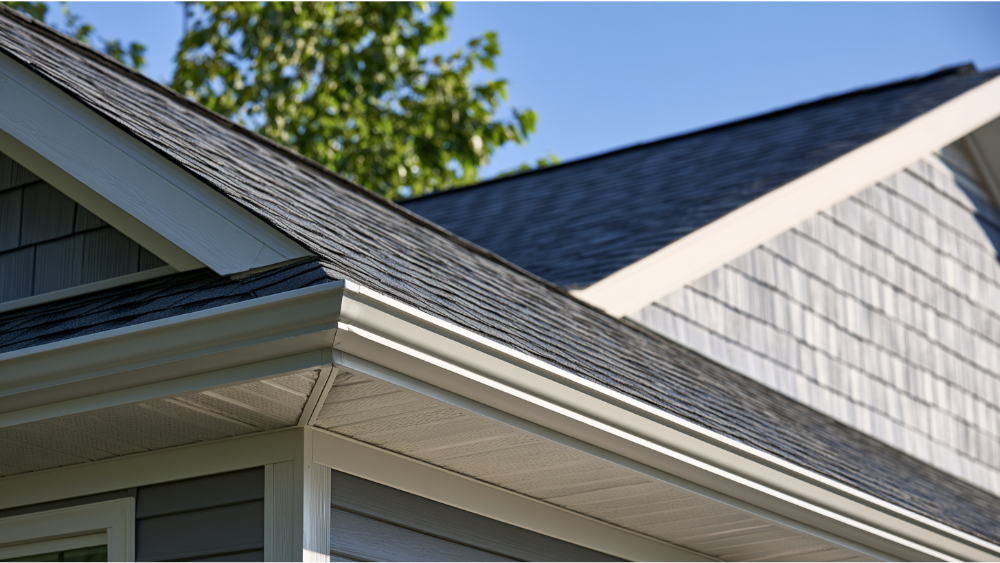
Key Takeaway
Painting soffit and fascia protects your roofline from rot, but only when the underlying material is sound and dry first. Fix leaking gutters, failed flashing, and any soft or swollen boards before opening a can of paint. Wood above roughly 20% moisture content risks blistering and peeling within months. Paint is the final protective step, not the first repair.
Yes, you can paint soffit and fascia, and on most homes you should. But only after you've confirmed the material is sound and dry, and only after you've corrected whatever is letting water in. A fresh coat over soft, wet wood hides the problem for a season and then peels again. If you've noticed peeling old paint, dark staining, or a fascia board that gives a little when you press it at the roof edge, here's what to check, what to fix, what drives the cost, and how the paint should actually go on.
What are soffit and fascia, and why do they matter?
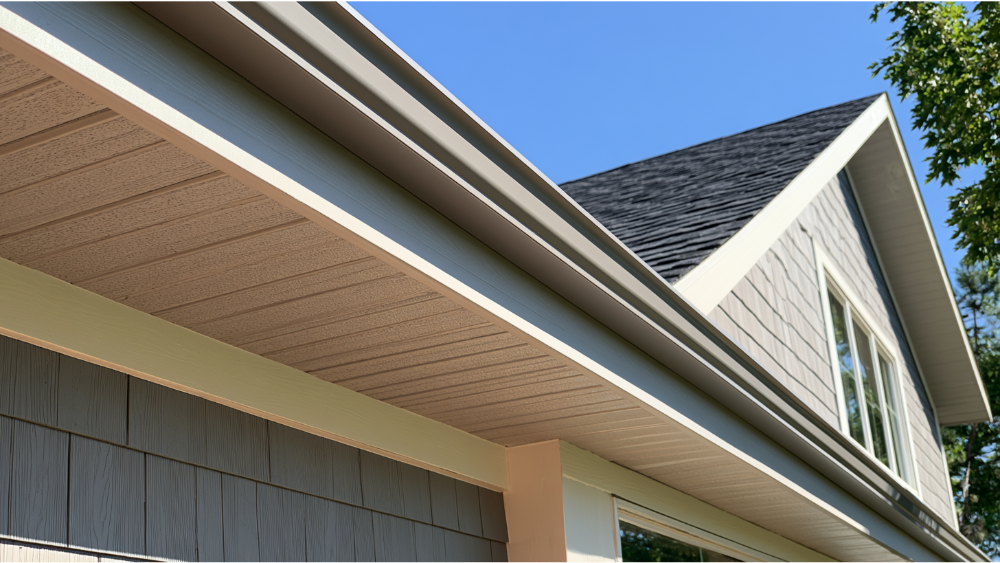
Walk out to the driveway and look up at the roof edge. The vertical board running along that edge, usually with the gutters attached to it, is the fascia. The panel closing off the underside of the roof overhang is the soffit, and it's often vented to let intake air into the attic.
Together they seal the roof structure against water, pests, and weather while framing the whole roofline visually. Fascia boards also carry the weight of full gutters after a storm. That's a lot of work for two surfaces most people never look at closely, which is exactly why painting soffit and fascia deserves more than a quick coat.
Why do fascia boards rot before the rest of the house?
Wood absorbs liquid water far faster through exposed end grain than through the face of a board, according to USDA Forest Products Laboratory research. Fascia is full of end grain: cut ends, butt joints, miters at the corners. Those spots soak up runoff and dry slowly, so they fail first.
Common water sources to check before you paint anything:
Paint is protection for sound material. It is not a repair for soft, wet, or rotted wood. Forest Service guidance is direct about this: when water keeps entering through failed joints, an intact paint film can actually slow drying and hold that moisture in the wood.
Paint, repair, or replace? Inspect the roof edge first
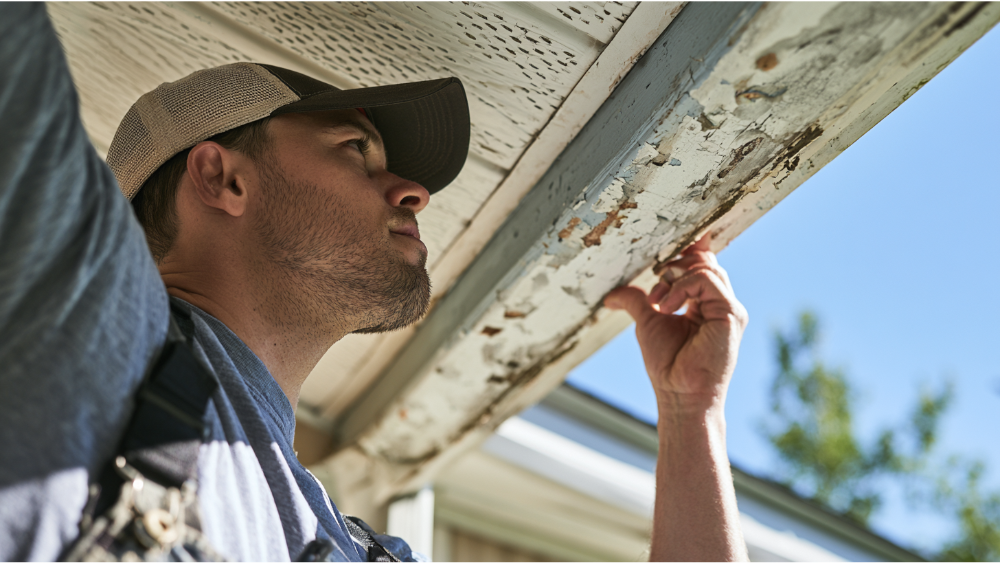
This is the decision most articles skip. Before anyone talks about brushes, someone needs to press on the boards, look behind the gutters, and check for moisture. FPL guidance ties blistering and peeling risk to wood above roughly 20% moisture content, and decay fungi sustain growth around that same level.
When repainting is enough
- Boards are firm and dry to the touch and to a meter
- Peeling is old paint failure, not wet substrate
- Joints, seams, and fasteners are stable
- No sagging soffit panels and no recurring stains bleeding through
- Gutters and drip edge are carrying water clear of the wood
When spot rot repair is the right call
- Damage is isolated to a short run or a single board
- One soft end or a deteriorated joint
- A gutter attachment point has pulled or softened
- The water source can be identified and corrected
The rest of the roofline can be in great shape while one corner is gone. New wood at those repairs should get a wood preservative on the cut ends before primer goes anywhere near it.
When you need to replace soffits or fascia
- Rot runs along a long section rather than one spot
- The fascia no longer holds gutter fasteners securely
- Soffit panels sag, gap, or have opened up to pests
- Rafter tails or subfascia behind the board look affected
- Moisture came back after a previous repaint
- Widespread fungal growth is visible
This is the point where a painting-only contractor tends to stall out and hand you a referral. We handle the rot repair, the carpentry, the siding, and the paint under one relationship, so you're not coordinating a carpenter for the damage and a separate crew for the whole house, trim, and door painting.
Do the materials change how you paint soffit and fascia?
They change almost everything about the paint system. Identify what you have before choosing a primer, and expect a mix. Plenty of homes here pair wood fascia with vinyl soffit panels, or run fiber cement siding up to an aluminum-wrapped roof edge.
MaterialCan it be painted?Main concernWoodUsually, when sound and dryRot, exposed end grain, peeling from trapped moistureAluminumOften, with thorough cleaning and an aluminum-appropriate primerChalking and a slick factory finish that won't hold paint on its ownVinyl / polymericSometimes, using a product made for vinylHeat absorption from dark colors, panel movement, manufacturer warranty termsFiber cement / compositeYes, following manufacturer instructionsRequired primer and an approved coating system
How to prep exterior surfaces before you begin painting
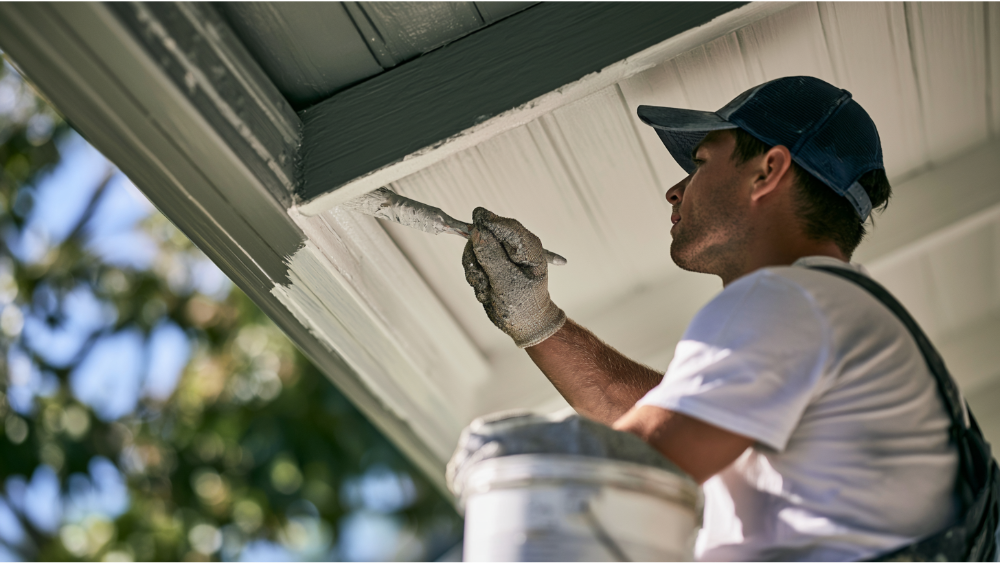
Surface preparation is where a roof-edge repaint is won or lost. Nothing about this stage is optional. Stage your supplies and set a plan before the first ladder goes up: work one side of the house at a time, and keep the right tools with you so you're not climbing down for a brush.
Clean, scrape old paint, sand, and let it dry completely
On homes built before 1978, scraping and sanding fall under the EPA's Renovation, Repair and Painting Rule for paid work, with an exterior minor-repair threshold of 20 square feet total disturbed across the project. We're EPA Lead-Safe (RRP) Certified, so containment and cleanup are handled correctly on older homes.
Prime bare wood, seal the right gaps, and leave the vents alone
Exterior-grade primer goes on all bare, repaired, or stained wood, with a primer matched to the substrate where aluminum or vinyl is present. Paintable caulk belongs on appropriate seams and joints only. Do not caulk openings designed for ventilation or drainage.
The U.S. Department of Energy is explicit that soffit vents should never be painted over or blocked. The 2021 IRC sets a baseline net free ventilation area of 1/150 of the attic space, reduced to 1/300 when stated conditions are met. You don't need to memorize the math. You just need to know that paint must never shrink the vent opening your attic was designed around.
What exterior fascia paint should you use? Start with acrylic latex paint
Think in terms of a paint system rather than a single can. A high-quality 100% acrylic latex paint over the correct primer is the standard approach for wood fascia boards and trim, usually in satin or a semi-gloss finish so the surface sheds water and cleans easily. Two thin coats over an undercoat outperform one heavy coat every time. Paint quality shows up years later, not on day one, which is why we use premium products backed by lifetime manufacturer warranties, matched to the material we're coating.
Work in one direction to avoid lap marks
When you paint fascia in long runs, keep a wet edge and move in one direction with a brush so lap marks don't telegraph down the roofline. Spray paint moves quickly across vented soffit panels, but it demands full masking and back-brushing on wood to work the coating into the grain. Soffit painting is overhead work, so thinner coats keep drips off your siding. Watch the weather too, since humidity and rain during cure will cost you the finish.
Leave labeled additional paint behind once you've finished painting
One of the more useful tips we give homeowners: keep a labeled can of additional paint in the garage. After we've finished painting, that leftover material means a future touch-up matches instead of standing out.
What does painting soffit and fascia cost per linear foot?
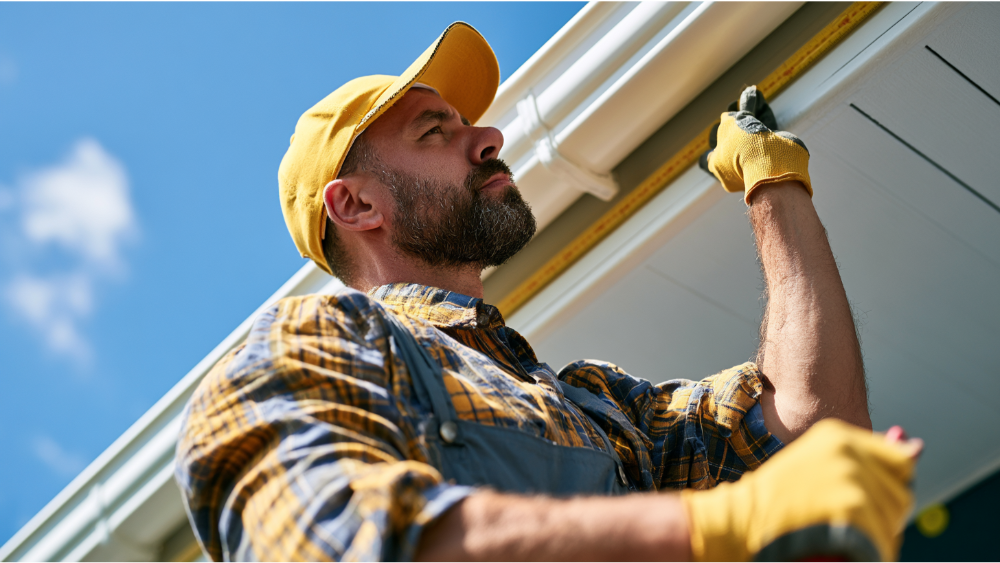
Estimates are usually framed around linear footage. Someone measures the roofline, counts the linear foot runs of fascia, adds the soffit width, then adjusts for everything that makes the job harder or easier. We don't publish fixed prices, because two houses with the same measurement can be completely different projects.
What actually moves the cost:
Cost per linear foot is a starting frame, not an answer. Repair scope moves the number far more than the paint does, which is why we put all of it in writing before the job starts.
A note on Puget Sound roof edges
Sea-Tac averages 39.34 inches of precipitation a year across about 156 days with measurable rain, based on NOAA's 1991 to 2020 normals. That narrows the windows where roof-edge wood is dry enough to prep and coat, and shaded overhangs can stay damp long after the rest of the house has dried. Around Edgewood, where we're based, gutter debris and moss are steady contributors to fascia rot.
When it makes sense to bring in an exterior painting pro
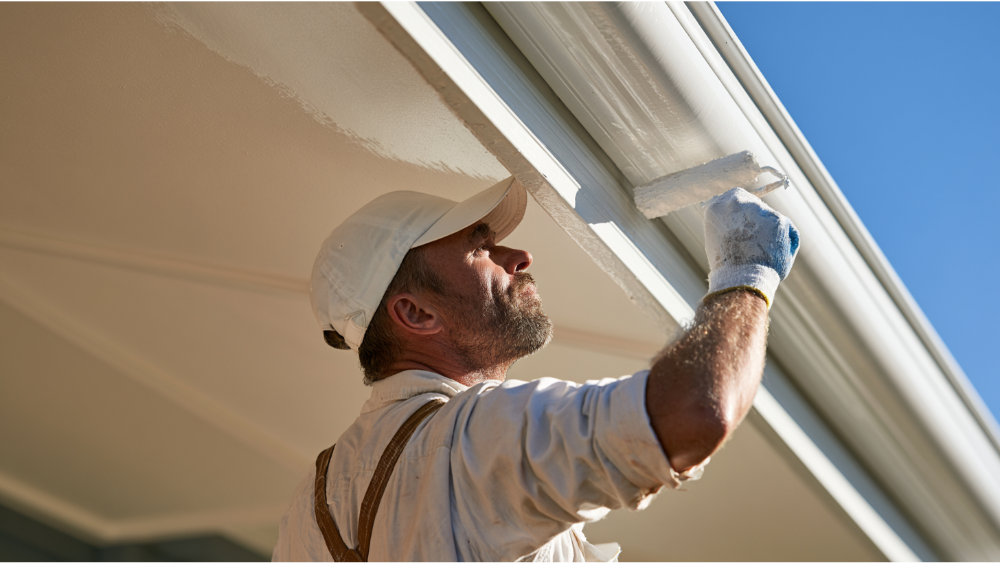
Roof-edge work happens overhead, on ladders, often over sloped ground. OSHA's guidance calls for three points of contact while climbing, a roughly 1:4 ladder angle, and side rails extending at least 3 feet above any landing surface. Add gutters, a brush in one hand, and a second story, and the risk adds up fast. Call someone in when the home has multiple stories or a complicated roofline, when rot extends past the face board, when ventilation may be compromised, when the house predates 1978, or when the paint work has to be coordinated with carpentry.
Frequently Asked Questions
Will paint stop fascia rot?
No. Paint protects sound wood from wetting, but it can't reverse decay, and a film over wet wood can trap moisture inside the board. Correct the water source and replace the compromised material first. Then paint does the job it's actually good at, which is keeping dry wood dry.
How do I know if my fascia needs replacing instead of repainting?
Press firmly on the board along the roof edge, especially at corners, joints, and the ends of each run. Sound wood feels solid. If it gives, feels spongy, or your finger sinks into a joint, that section is compromised. Sagging soffit panels, fasteners that no longer hold gutters, and stains that keep bleeding through a fresh coat all point to replacement rather than paint.
How much does it cost to paint soffit and fascia?
Estimates are built around linear footage of fascia plus soffit width, then adjusted for the conditions that actually drive the work: how much rot repair the roof edge needs, what materials are up there and which primers they require, ladder access and roof pitch, whether gutters come down, and how much scraping the old paint takes. Repair scope moves the number far more than the paint does, which is why we measure the roofline in person and put the full scope in writing before anything starts.
Can aluminum or vinyl soffit and fascia be painted?
Usually, but each one needs a different system. Aluminum chalks as it ages and has a slick factory finish, so it needs thorough cleaning to remove the chalk residue and a primer made for metal. Vinyl needs a coating engineered for vinyl, and going darker than the original panel color can cause the panels to absorb heat and warp, and may void the manufacturer's warranty. Most homes are a mix, so the roof edge gets identified material by material before any primer is selected.
