
%201.svg)


Painting a Concrete Floor: What to Know Before You Start
Key Takeaway
Painting a concrete floor can last for several years, but only if the slab is clean, dry, sound, and properly prepared before any coating goes down. Moisture pushing up through the slab and skipped surface prep cause nearly all peeling and blistering. Test for moisture with an 18 by 18 inch plastic sheet taped for 16 hours, profile the surface to give paint something to grip, and match the product to the traffic the floor actually sees.
Yes, you can paint a concrete floor, but the finish only lasts if the slab is clean, dry, sound, and properly prepared first. Most peeling, blistering, and chipping doesn't come from a bad can of paint. It comes from skipped surface preparation, moisture in the slab, oil the paint can't grip, or an old coating that was never removed. So before you buy anything, the real question isn't which colour to pick. It's whether your concrete can actually hold a coating.
We wrote this for homeowners and businesses weighing a basement, garage, patio, or utility-room floor who want a result that lasts, not one they redo in two years. Think of it as a pre-project decision guide rather than a step-by-step tutorial. Get the surface right and the paint has a fighting chance. Get it wrong and no floor paint will save you. Painting concrete floors is one of those projects that looks simple in a video and turns into a headache when the coating lifts, so the more you understand up front, the better your odds of a finish you're proud of.
Can You Paint a Concrete Floor?
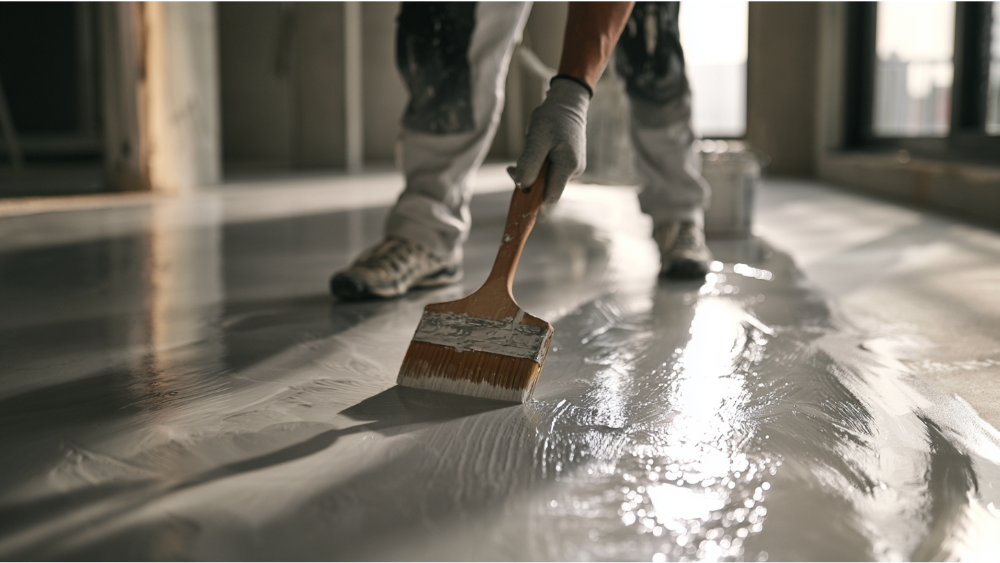
Yes, when the concrete is clean, dry, sound, and prepped the way the coating calls for. Painted floors can hold up for several years under those conditions. Skip the prep and you'll be scraping in a season or two.
Painting concrete works well in spaces where the slab stays reasonably dry and traffic is moderate: basements, laundry rooms, utility rooms, workshops, covered porches, and patios. Interior concrete in a finished basement or a mudroom takes a coating nicely because the space is protected from the weather. Garage floors work too, but they take more abuse. Hot tires, dropped tools, and road salt wear a garage floor faster than a basement, so a garage coating often needs recoating sooner or calls for a tougher system altogether.
Some floors are poor candidates no matter how good the paint is. Watch for these red flags:
- Active moisture pushing up through the slab
- Concrete saturated with oil or grease
- Weak, crumbling, or spalling concrete
- A sealed or glossy surface a coating can't grip
- Old paint or coating that's already peeling
- Heavy vehicle or hot-tire exposure
None of these are automatic dealbreakers, but each one has to be addressed before any paint goes down. The work under the finish decides how long it lasts. A bare concrete slab in good shape is the easiest surface to work with, while a floor buried under layers of old paint and grease needs real effort before a single coat makes sense.
Paint, Epoxy, Stain, or Sealer: What Are You Really Looking For?
Most guides blur these products together, which is how people end up with the wrong one. Here's what each actually does:
Concrete stains soak into the surface and shift the colour of the concrete itself, so they read very differently from an opaque concrete floor paint that sits on top and hides what's underneath. If you want to keep some of the natural character of the slab, stains are worth a look. If you want a uniform, solid same color across the floor, floor paint is the better fit.
Masonry paint can be used on concrete surfaces, but it doesn't last as long as a dedicated concrete floor paint or floor product, so it's a compromise, not an upgrade. Masonry paint is really built for vertical concrete surfaces and block, not for the abrasion a floor takes underfoot. Whatever you choose, follow the manufacturer's specs on whether it's oil based or water based, how it's applied, and what it can go over. Oil based concrete paint can offer strong adhesion and durability, but it takes longer to dry and carries more odour, so ventilation matters more with it. Water based products dry faster and clean up with less fuss, though they can be less resistant to heavy chemical exposure.
Painting Concrete Floors vs. Wood Floors: Why Wall Paint Fails
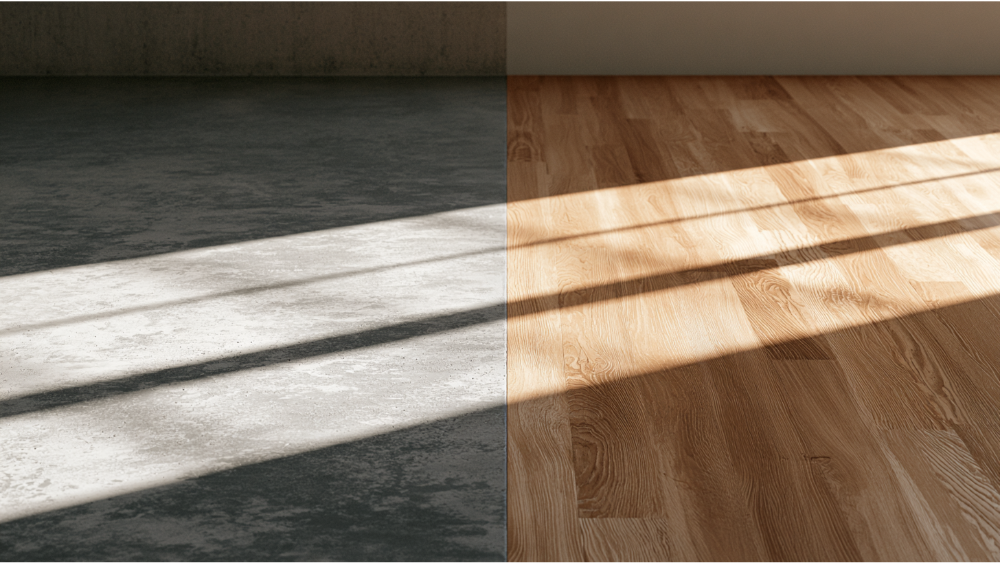
One firm rule: never use wall paint on a floor. The paint you'd put on your walls isn't formulated to survive foot traffic, abrasion, or moisture from below, and it will fail fast. Walls simply don't take the same punishment a floor does, and neither wood floors nor concrete tolerate a coating that wasn't specifically formulated for the surface. If the space sees real wear (a garage, a shop, a commercial floor), you're looking at a coating system, not just paint. We install epoxy floor coatings for garage floors as part of our full-service work, and the coating choice is only as good as the prep underneath it. A proper floor paint is extremely durable when it's matched to the surface and applied over a sound slab.
The Pre-Paint Checklist: Is Your Interior Concrete Ready?
Before you buy paint, find out whether your concrete can actually hold a coating. Run through this checklist first. If you can't answer "yes" to the readiness items, stop and fix the problem before you go any further.
- Is the concrete fully cured? A new floor needs time before coating.
- Is it dry enough, with no active moisture or hydrostatic pressure? This is the make-or-break item.
- Are there cracks, chips, spalling, or soft concrete? Damage has to be repaired first.
- Is there oil, grease, salt, wax, adhesive, or curing compound on the surface? Contaminants block adhesion.
- Is there old paint or sealer that's failing? Loose coating has to come off.
- Is the surface too smooth or glossy to grip a coating? It may need profiling.
- Is the home built before 1978, with old paint that could need lead-safe handling? This changes how the work is done.
Every one of these traces back to the same idea: the paint bonds to the surface, so the surface has to be ready to bond. Miss one and you've built a finish on a weak foundation. The next sections walk through the two that trip up the most people, moisture and prep.
Why Moisture Is the Failure Point Most People Miss
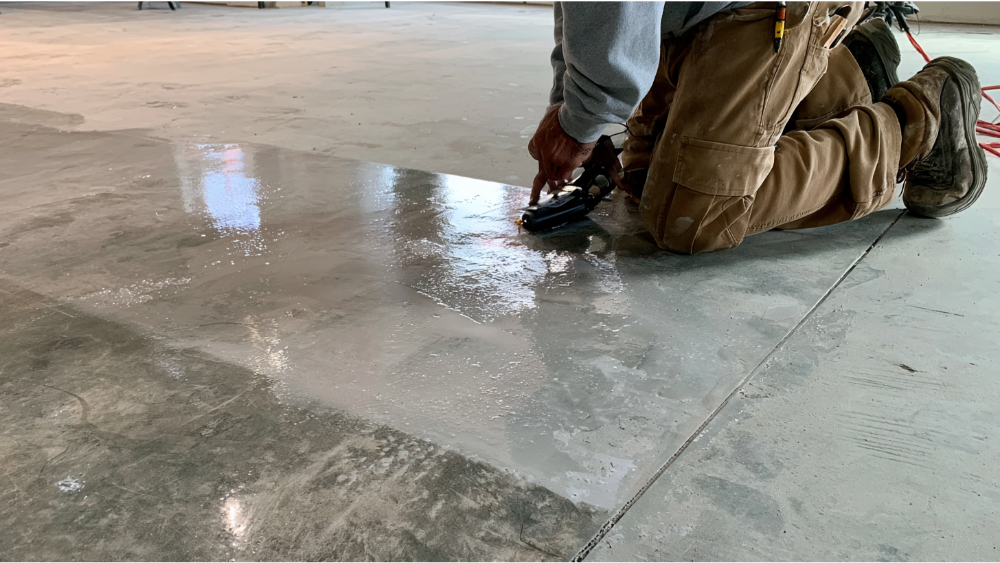
Concrete is porous, and a slab sitting on the ground wicks moisture up from the soil underneath. That vapor moves toward the surface, and when a coating seals the top, the pressure has nowhere to go. It pushes the paint off from below, which is why moisture is one of the most common reasons concrete floor coatings fail. You can do everything else right and still watch the finish blister if the slab is damp.
You can catch a lot of this before you ever open a can. Watch for these signs:
- Dark patches that look damp on the surface
- A musty or damp smell in the room
- Efflorescence, the white powdery salt that leaches out of concrete
- Bubbling or lifting in an existing coating
A simple screening test is the ASTM D4263 plastic sheet method. Tape an 18 by 18 inch piece of polyethylene sheet flat to the concrete floor and leave it for at least 16 hours. If you find condensation under the plastic or the concrete has darkened, that's surface moisture, and it's a warning that a coating could fail.
That screening test tells you something, but not everything. For garage floors, below-grade basements, or commercial floors carrying a high-value coating, professional methods measure moisture more precisely: the ASTM F1869 calcium chloride test runs 60 to 72 hours to measure vapor coming off the slab, and ASTM F2170 uses in-situ probes to read relative humidity inside the slab itself. A common target is under about 5 percent moisture content, but the real threshold is product-specific, so follow the coating manufacturer's numbers. If your floor is below grade or you're investing in a serious coating, test moisture before anything else.
Surface Preparation: The Step That Decides Whether the Paint Bonds
This is where the job is won or lost. Prep isn't the boring part before the real work. It is the work. A premium product over a dirty, unprofiled slab will still peel. Here's the order that gets clean, long-lasting results and rids the surface of anything that would keep paint from sticking.
- Clean and degrease. Sweep and vacuum all surface debris, then wash the floor. Use a concrete degreaser on stubborn oil and grease stains, since paint won't stick to anything greasy. Older oil stains often need two or three passes with the degreaser to fully lift. On exterior porches and patios, pressure washers help lift ground-in dirt and residue.
- Remove loose or failing paint. Any old paint or coating that isn't firmly bonded has to come off, or it'll take your new paint with it when it lets go. A scraper and a stiff brush handle small areas; larger floors call for mechanical removal.
- Repair cracks, chips, and holes. Fill and patch damage so you're coating a solid, even surface. Let patch material cure fully before you move on.
- Deal with old adhesive. If the slab once held flooring, leftover glue has to be scraped or ground off, because a coating won't bond over it.
- Create the right surface profile. Bare concrete or a glossy slab usually needs to be opened up so the coating has texture to grab. Light sanding can help on smaller interior concrete areas, though it won't replace grinding on a large or sealed floor.
- Vacuum and remove all dust and other debris. Clear away every bit of dust, dirt, and laitance (the weak, powdery layer on the surface). Anything left behind becomes a separation layer under your paint.
- Let the floor dry completely. After washing, allow roughly 36 to 48 hours of drying before you coat, longer in humid conditions. The slab must be completely dry before you start painting.
About that profile: the industry describes it with a scale called ICRI CSP, running from CSP 1 (nearly flat) to CSP 10 (very rough). In plain terms, it's the texture the coating needs to grab. The coating manufacturer sets the profile their product requires, so the right roughness depends on what you're applying, not a guess. This prep-first approach is exactly how we keep a finish from failing early, and it's the part cut-corner painters skip.
Etching vs. Grinding: How to Open the Surface Safely
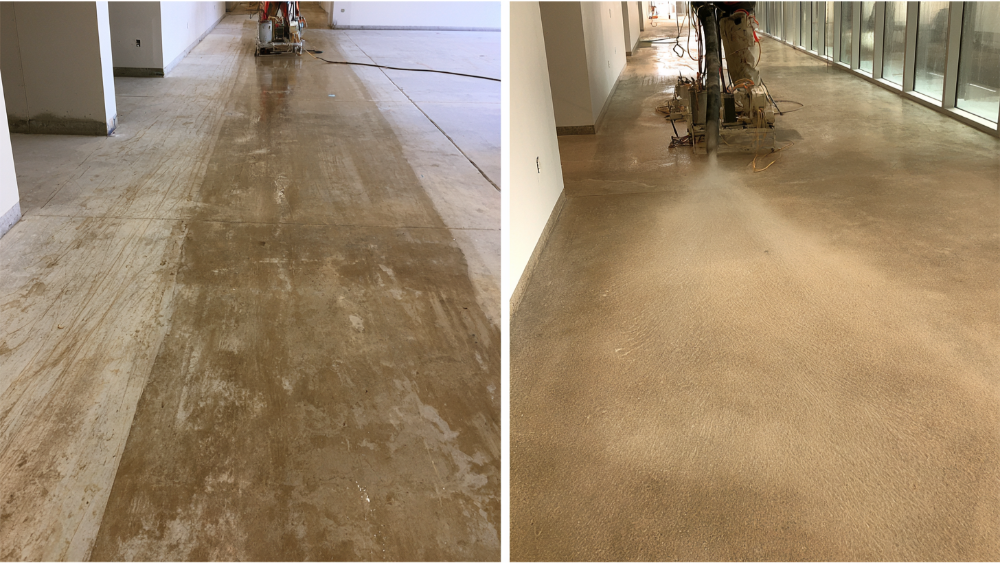
There are two main ways to profile a floor, and each has real tradeoffs.
Acid etching uses a mild acid to open up bare concrete. It can work, but it has limits. It needs thorough rinsing, careful handling, and it's less dependable than mechanical methods. The EPA notes acid etching is best left to experienced applicators and used only when other cleaning options aren't available. If you do etch, always add acid to water, never water to acid, and wear skin and face protection with running water nearby for flushing. Indoors, etching is often impractical and hard to do safely, especially in a closed basement space with poor airflow.
Grinding, sanding, or shot blasting is more reliable for coatings, but it throws off respirable crystalline silica dust, which is a genuine health hazard. OSHA sets an action level of 25 μg/m³ and a permissible exposure limit of 50 μg/m³ as 8-hour averages, and it specifically flags grinding and abrasive blasting as high-exposure tasks. That means wet methods, HEPA vacuuming (a HEPA filter captures 99.97 percent of particles at 0.3 microns), and proper respiratory protection, not dry sweeping the mess around the room. Sanding a small patch by hand is one thing; grinding an entire floor is a dusty, physical job that eats through equipment.
One more flag: if the home was built before 1978 and you're disturbing old painted concrete, you may be dealing with lead paint. The EPA's Renovation, Repair, and Painting rule applies once you disturb more than 6 square feet inside or 20 square feet outside. There's no single "just etch it" answer. The right method depends on the floor and the coating, and heavy grinding on an older or contaminated slab is usually a job for a certified professional painter.
Primer, Coats, and Topcoat: Building a Finish That Lasts
With the surface ready, application goes in order. If the product calls for a primer or sealer, use it. A primer improves adhesion between the concrete and the paint, and skipping it when the manufacturer recommends it is one of the easier ways to shorten the life of the job. On a very porous or freshly profiled surface, a primer also evens out how the concrete floor paint soaks in, so the topcoats lay down more consistently.
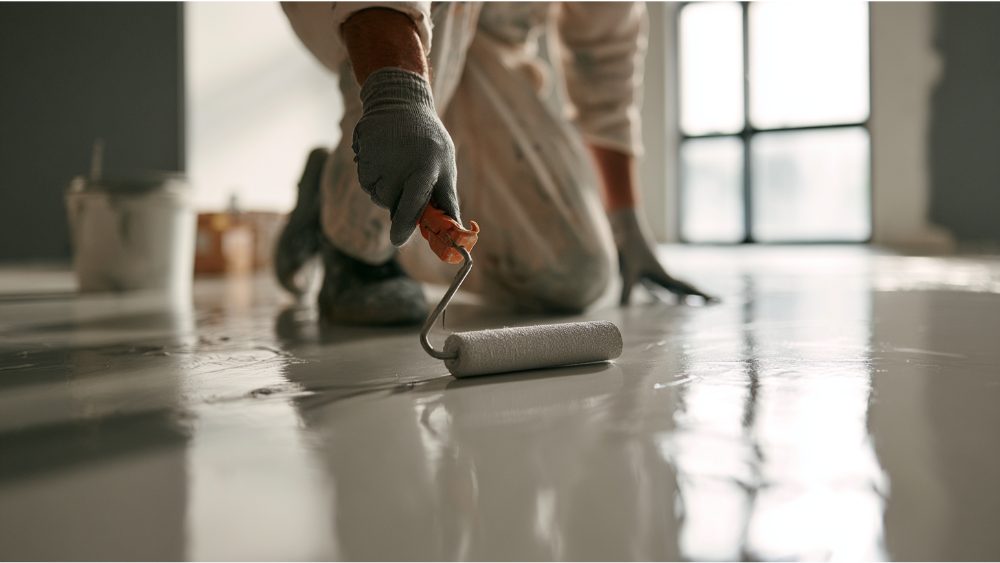
Cut in the edges and corners with a brush first, then work the field with a paint roller for even coverage. A short-nap roller suits a smooth interior slab, while a slightly thicker nap reaches into the texture of a rougher garage floor. Thin, even coats beat thick ones every time. Thick paint traps solvent, dries unevenly, and is more likely to lift. Keep a wet edge as you move across the floor so the first coat blends instead of leaving lap marks. Plan on at least a second coat, and often several coats, for durability and consistent colour, letting each dry per the manufacturer's instructions before the next. Coverage runs roughly 6 to 8 square meters per liter as a rough guide, but check the can, since it varies by product and surface porosity.
For high-traffic areas, a polyurethane or clear topcoat adds a wear layer that protects the colour underneath. And anywhere the floor gets wet, consider an anti-skid additive. Painted concrete can be slick when wet. ADA-compliant surfaces must be stable, firm, and slip resistant, and ASTM D2047 recognizes a static coefficient of friction of at least 0.5 as nonhazardous for walkways. That's a useful benchmark for a commercial floor, though it shouldn't be treated as a promise for every wet exterior or garage condition.
Dry Time and Cure Time: When Can You Use the Floor Again?
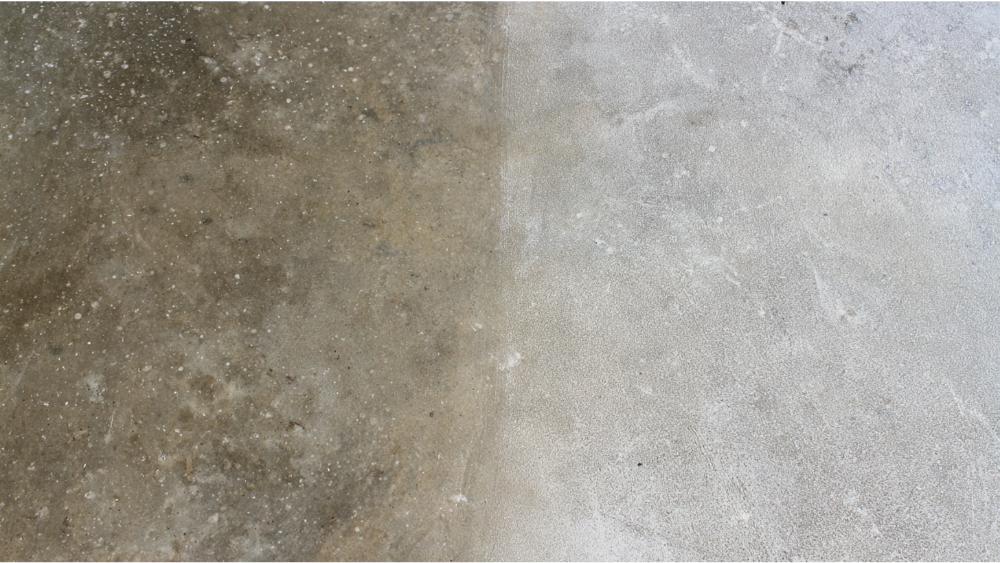
Dry and cured are not the same thing, and rushing this stage undoes good work. Dry-to-touch comes first, then light foot traffic, then heavy traffic and furniture, then vehicle tires, and finally full cure. Each is a separate milestone.
Actual times vary a lot by product. Here are two real examples, both specific to their own coatings under lab-like conditions:
- One data sheet lists about 12 to 16 hours for light foot traffic, 24 hours for normal foot traffic, and 5 days for vehicle traffic at roughly 70 to 80°F and 50 percent humidity.
- Another lists 24 hours for light foot traffic, 72 hours before furniture, 7 days before automotive tires, and 30 days before wet cleaning.
Treat those as illustrations, not rules for your floor. New concrete typically needs about 28 to 30 days of cure before standard floor paint or coating goes down, but curing isn't the same as being dry enough, so you still have to test moisture even after 28 days. Temperature and humidity change everything, cooler or damper air stretches dry times out. An oil based product will generally take longer to reach full cure than a water based one, so read the label for your specific paint. Ventilation matters too, since paint releases VOCs even with low-VOC products (the national VOC limit for floor coatings is 400 g/L). The safe rule is simple: follow the label and give the floor its full cure before furniture, rugs, vehicles, or cleaning.
Why Concrete Paint Peels (and How to Prevent It)
Almost every peeling paint job traces back to prep or moisture. Here are the usual culprits:
- Moisture vapor pushing up through the slab and lifting the coating from below
- Oil or grease the paint could never bond to
- Dust or laitance left on the surface, creating a weak separation layer
- Concrete that was never profiled, so the coating had nothing to grip
- An existing coating that wasn't bonded, taking the new paint with it when it let go
- The wrong paint type for a floor, like the paint meant for walls
- A rushed recoat or cure, trapping solvent or applying over paint that wasn't ready
- Heavy traffic too soon, before the finish reached full strength
- Hydrostatic pressure below grade, forcing water through the slab
Read that list again and the pattern is clear: fix moisture and do the prep, and most of these never happen. So there's less to worry about once the groundwork is right. That's the whole reason we never let paint go straight onto a problem surface. When we paint a concrete floor, the prep and moisture work come first, every time, because that's what keeps the finish on the slab.
When to Call a Professional Painter
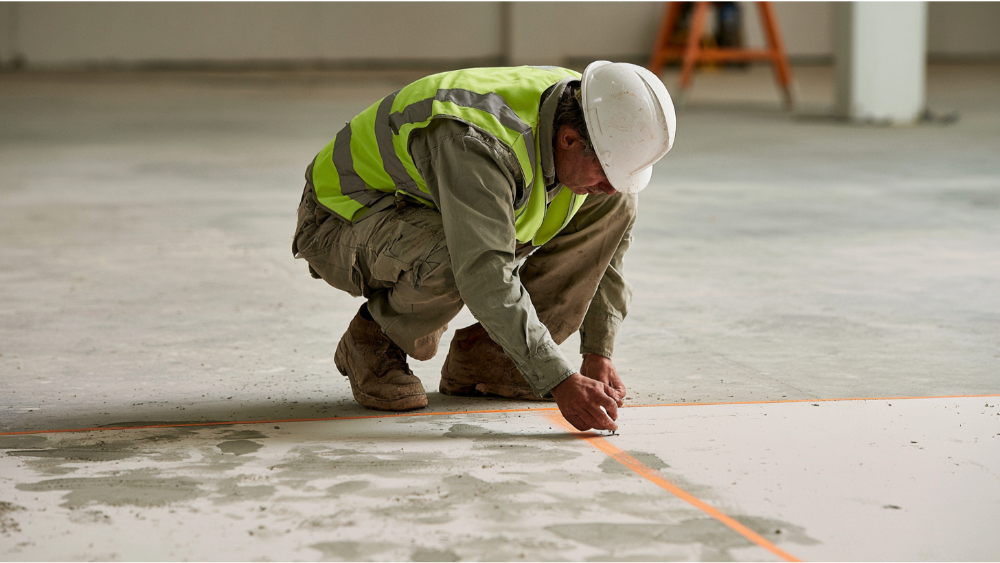
Some concrete floors are reasonable DIY projects. Others need equipment, testing, and experience you probably don't want to buy for a one-time job. It's worth bringing in a professional when:
- An old paint coating is peeling and has to be fully removed
- There's moisture, efflorescence, or hydrostatic pressure to diagnose and address
- The floor needs grinding or shot blasting with proper dust control
- It's a garage floor facing hot tires and heavy wear
- There are cracks, spalling, or damaged concrete that need real repair first
- The home predates 1978 and old paint could be disturbed
- It's a commercial, HOA, school, office, or other high-traffic floor
This is where our full-service approach earns its keep. If the slab has cracks, failed coating, moisture concerns, or damaged concrete, we handle the rot repair, carpentry, and prep before any premium product goes down, so you're not managing a separate crew for every problem. We're licensed, bonded, and insured in Washington State, and EPA Lead-Safe (RRP) Certified for older homes. Whether it's a single garage floor or a run of interior concrete across a commercial space, the same standards apply. Start with a free estimate and a clear look at what your concrete floor actually needs before any coating goes down. You'll know the scope and the plan before we begin.
Frequently Asked Questions
Do I need primer before painting a concrete floor?
Usually yes. A primer or sealer improves adhesion between the concrete and the paint, and most floor products call for one. If the manufacturer recommends it, don't skip it, because that's a common cause of early peeling.
How long should concrete cure before painting?
New concrete typically needs about 28 to 30 days of cure before a standard floor coating. But curing isn't the same as being dry enough, so test the slab for moisture even after the cure period has passed.
How do I know if my concrete floor is too wet to paint?
Watch for dark damp patches, a musty smell, efflorescence, or bubbling in an old coating. For a quick screen, tape an 18 by 18 inch plastic sheet to the floor for at least 16 hours; condensation or darkening underneath signals a moisture problem.
What's better for a garage floor, paint or epoxy?
For a garage facing hot tires and heavy wear, a two-part epoxy or dedicated garage floor coating holds up better than basic floor paint. It's more durable but also more prep-sensitive, so the surface has to be clean, dry, and properly profiled first.
Can I use masonry paint on a concrete floor?
You can, but it's a compromise. Masonry paint is built for vertical concrete surfaces and won't stand up to foot traffic the way a dedicated concrete floor paint will. For a floor, a product made for floors is the better choice.
Why is my concrete floor paint peeling?
Almost always moisture or prep. Vapor from the slab, oil or grease, leftover dust, an unprofiled surface, or a rushed cure will all lift a coating. Fixing the moisture source and doing thorough surface prep prevents nearly all of it.
