
%201.svg)


Painting a Brick Fireplace: What to Know Before You Commit
Key Takeaway
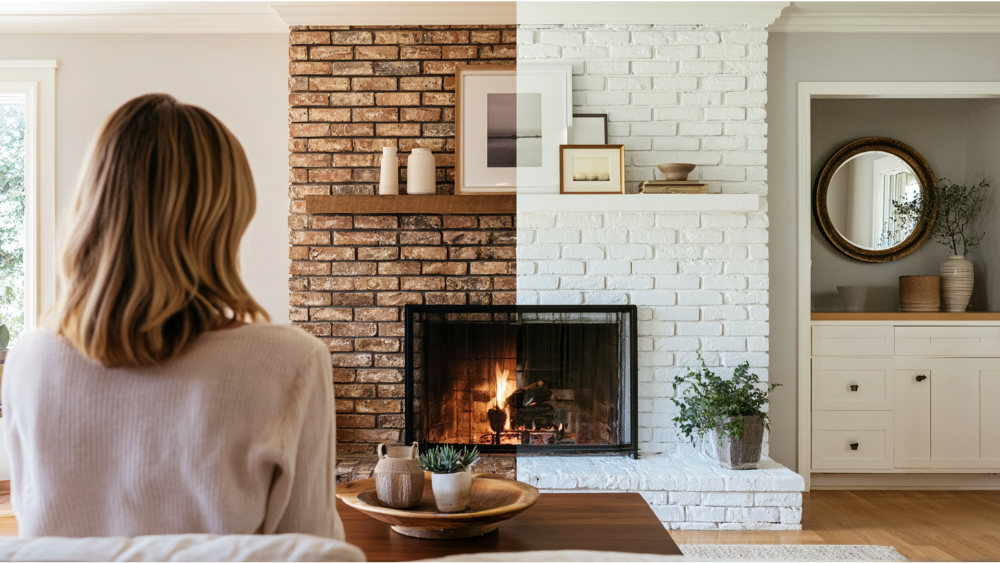
Painting a brick fireplace is a permanent commitment: once paint bonds into the porous masonry surface, returning to natural brick is difficult and can cause lasting damage. For a successful result, the brick must be clean, structurally sound, and fully dry before primer is applied, with two finish coats on the facing and surround only - never inside the firebox. Whitewash or limewash are more reversible alternatives if you want a softer look.
Yes, painting a brick fireplace can be a beautiful change that modernizes a dated room in a weekend of work. But it's a real commitment, not a whim. Fireplace brick is one of the more porous surfaces in your home, so once you paint it, getting back to the original brick is difficult and can permanently damage the masonry face.
Here's the short version from a painter's perspective: paint only lasts if the brick is clean, dry, structurally sound, and properly prepped, and if you paint the right surfaces. That means the facing and surround, never the inside of the firebox. If you're a homeowner weighing a fireplace makeover, this step by step guide walks you through the decision before you pick up a brush.
Should You Paint Your Brick Fireplace?
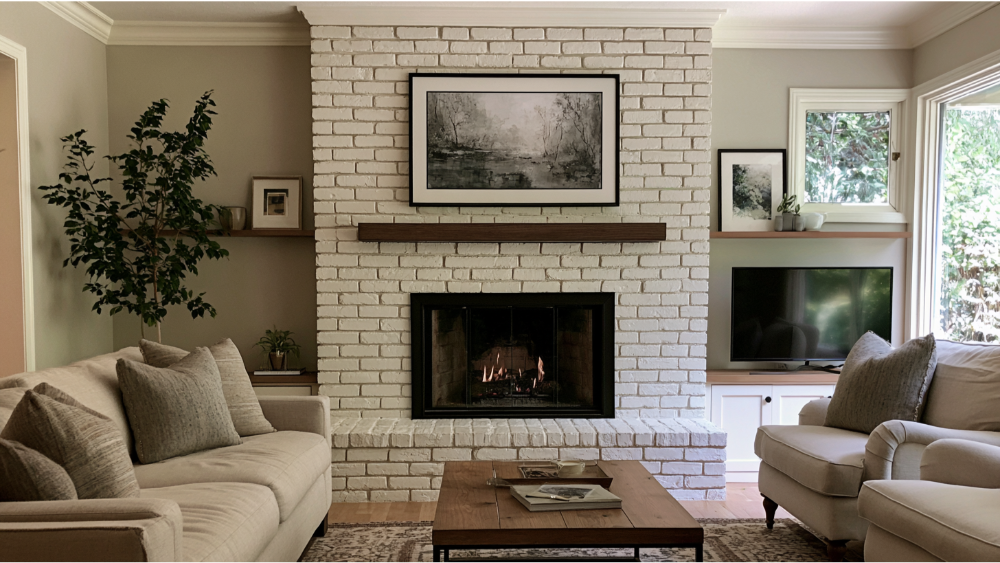
The best candidates are clean, dry, structurally sound brick surfaces where you're confident about the design change. If that describes your fireplace, painting a brick fireplace can be one of the highest-impact updates in a living space.
Many homeowners choose it for good reasons. A painted brick fireplace modernizes a dated focal point, light colors brighten a dark room, and paint hides old soot stains and imperfections. Whether your fireplace is red brick or brown brick, a fresh coat can completely transform it. Painted brick is also easier to wipe down than raw brick that has never been sealed.
Think twice if any of these apply:
- Historic or soft, crumbly brick that could be damaged by prep
- Visible moisture, water staining, or white powdery deposits
- Heavy soot from years of active use
- Any chance you'll want the natural, unpainted brick look back later
If you're on the fence, know that paint isn't the only path. There are softer, more reversible options worth understanding first.
Painting vs. Whitewash, Limewash, and Brick Stain
Paint gets the most attention, but it's the most permanent of the finishes. Here's how the main options compare:
If you love your brick's texture but want a lighter tone, limewash or stain may serve you better than solid paint. Not sure which suits your space? Our free color consultation helps you decide before anything gets committed to the wall.
What Part of the Fireplace Can Actually Be Painted?
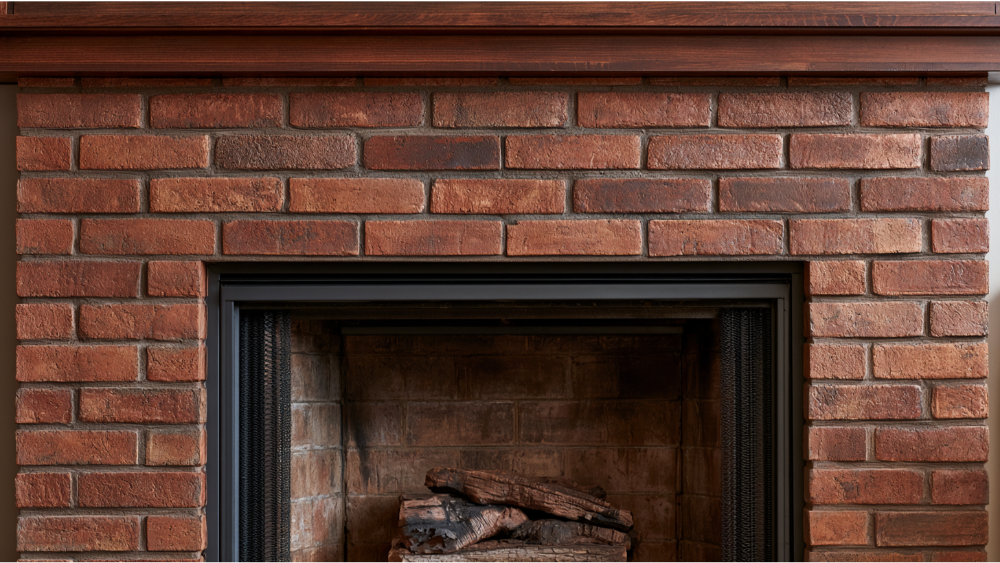
This is where a lot of homeowners get into trouble, because not every surface plays by the same rules.
- Brick facing and surround — the usual target when painting a brick fireplace. Paintable with the right prep and primer.
- Hearth — depends on the material, heat exposure, and foot traffic. Product compatibility matters here.
- Firebox interior — do not treat this like normal fireplace brick. Standard latex is not heat resistant paint and can blister with direct flame exposure. Even specialty paints rated up to 1,200°F often warn against use in areas directly exposed to flames. A high heat rating does not make a paint firebox-safe.
- Metal doors and inserts — a separate product category. Follow the manufacturer's guidance for the specific unit.
- Mantel and trim — paintable, but if it sits close to the opening, clearance rules apply. More on that in the pro section.
The Brick Has to Be Sound First
Before any paint goes on, the brick and mortar need to be in good shape. Paint doesn't fix problems. It hides them, and sometimes it makes them worse.
Inspect the mortar lines and the brick wall for cracks, spalling, loose brick, white powdery deposits (efflorescence), water staining, and any peeling paint from a previous coating. Brick absorbs moisture, so if there's an active issue, a non-breathable coat can trap moisture buildup against the masonry and lead to peeling or structural trouble down the line.
Moisture has to be addressed before painting a brick fireplace, not painted over. Cracks should be repaired with a masonry-safe filler. If the mortar is crumbling, that's a repair job before it's a paint job. This is where our full-service approach helps: we handle the mortar and repair work and the painting, so you're not lining up separate trades. One more thing worth knowing: a painted brick fireplace can also show up as a note in a home inspection, so do the repairs right.
Why Proper Preparation Is What Makes the Finish Last
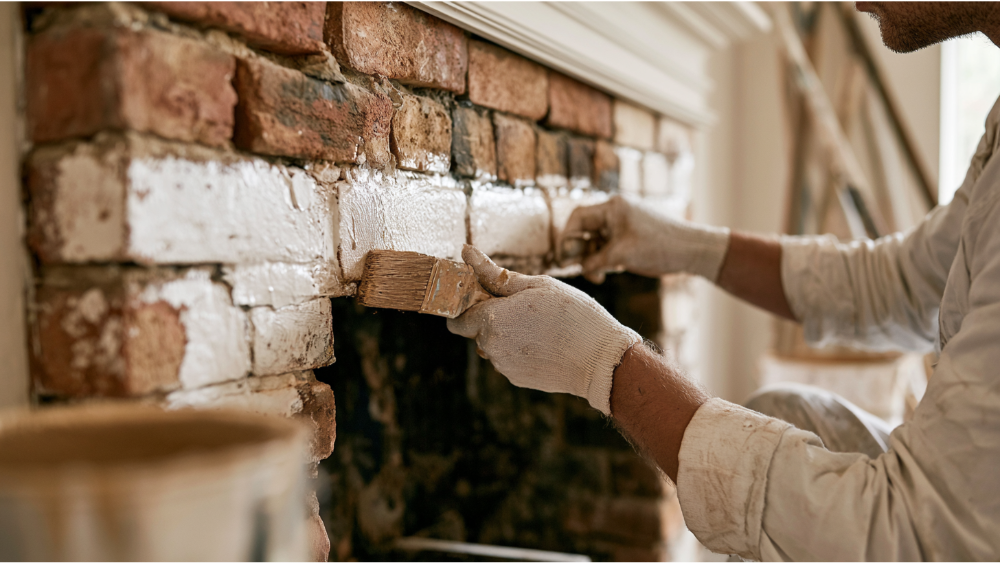
Surface preparation is the whole reason a painted brick fireplace still looks good years later. Proper preparation is exactly what separates the painting project that holds from the one that fails, and skipping it is why some painted fireplaces start peeling in two years. Here's the order that gets clean, long-lasting results:
- Protect the surrounding area. A drop cloth on the floor, painter's tape on adjacent walls and the mantel edges.
- Remove dust, soot, and loose debris. A wire brush knocks off flaking material, then vacuum the mortar lines and brick faces. A stiff wire brush is the right tool for cutting through embedded surface grime.
- Deep clean the brick. Use an appropriate masonry cleaner to lift mineral residue and embedded soot that a brush alone won't touch, then rinse with fresh water so you begin painting over a clean surface.
- Let the brick dry completely. That's commonly 24 to 48 hours, and longer in damp conditions. The brick has to be fully dry before primer, or you're trapping moisture from day one.
Every step here separates a finish that holds from one that fails. Prep work like this is not optional. High quality paint helps seal the brick's pores and resist dirt buildup, but only if the brick surfaces underneath were cleaned and dried the right way.
Do You Need to Prime Brick Before Painting?
Yes. Brick is porous and absorbs moisture, so it drinks up finish paint and lets soot and mineral bleed-through ghost right through the color. A high-adhesion masonry or bonding primer seals those pores, blocks stains, and improves alkali and efflorescence resistance so the finish coat has something solid to grip.
Give the primer full time to cure before you paint over it. Dry time is product-dependent, and many masonry primers do best allowed to dry overnight. Rushing this step undercuts everything you did during prep.
What Paint and Sheen Should You Use on a Brick Fireplace?
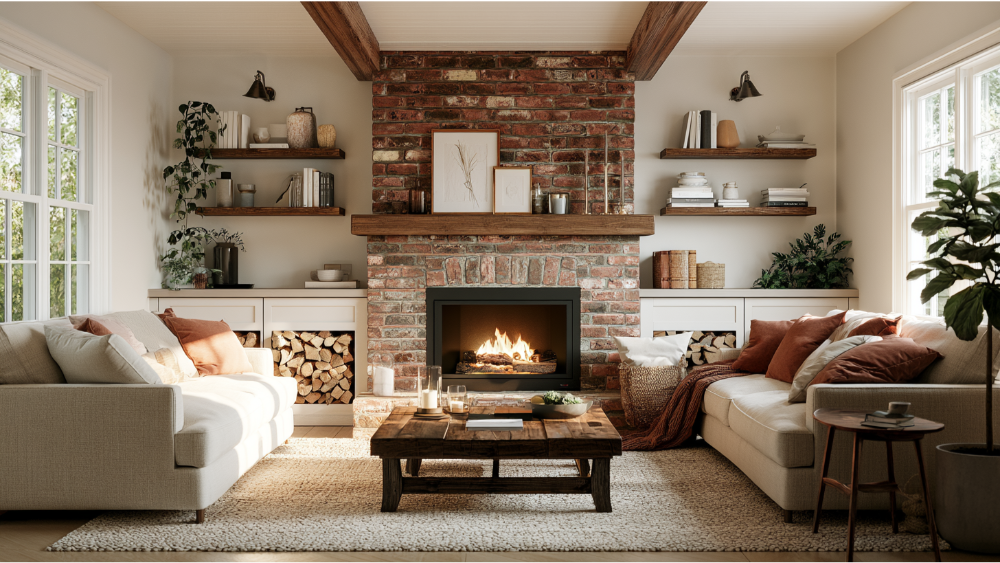
Use premium paint products over a masonry-compatible primer. Quality materials are among the best paints for a surface this porous and textured, and they deliver lasting results. Some homeowners ask about specific lines, such as Sherwin Williams masonry and bonding products, but the right choice always comes down to the primer pairing and how the surface is used, not the label alone.
For application, brush the mortar lines and deep-textured areas first, then switch to a heavy-nap paint roller for the brick faces so you apply paint into every pit and pore. Plan on two coats for even coverage and durability. A single coat almost never looks consistent on brick, so a second coat in the same color is what evens out any uneven coverage.
Sheen is a real tradeoff:
- Matte or eggshell — softer, more natural look that hides texture and small imperfections.
- Satin or semi gloss — easier to wipe clean, but more reflective and a bit less natural.
The right product also depends on how the fireplace is used and the high temperatures the surface reaches, so follow the manufacturer's instructions for the specific paint. We use premium products backed by lifetime manufacturer warranties.
Lead-Safe Considerations for Older Homes
Consumer lead-based paint was banned in 1978, but plenty of older homes still have it, on mantels, trim, built-ins, surrounding walls, or brick that was painted decades ago. Disturbing those surfaces by scraping, sanding, or repair can release lead dust into your living space.
The EPA defines lead-based paint at or above 1.0 mg/cm² or 0.5% by weight, and those determinations should be made by certified professionals rather than guessed at. Many older homes across the Seattle-Tacoma area fall into the pre-1978 category, especially those built before mid-century, which makes this worth checking before you disturb any old painted surface near your fireplace.
Cover Pro Painting is EPA Lead-Safe (RRP) Certified, so older-home surfaces get handled with the proper practices from the start.
How to Avoid Painting the Brick and Regretting It

The biggest source of regret is rushing the paint color decision, so slow down here. Sample your top choices directly on the fireplace brick and view them in the room's real lighting at different times of day. Morning light and evening light can make the same off white read very differently.
Decide up front whether you want the brick's natural texture visible. If you do, whitewash or limewash keeps more of it than solid paint. Think about how the fireplace relates to your walls and the rest of the space, since the fireplace is usually the focal point of the entire room.
And keep the big caution in mind: returning painted brick to natural brick is difficult, and abrasive removal to strip paint can permanently scar the masonry face. This is exactly where a free color consultation earns its keep, because getting it right the first time is far easier than undoing it. If you want to avoid painting the brick at all, that's worth deciding before any primer touches the wall.
When Should You Hire a Professional Instead of DIY?
Honest answer: DIY can work fine on clean, sound, modern brick, giving new life to the room for relatively little effort. Call a professional when the job gets more complicated. Bring in a pro if you have:
- A pre-1978 home or any suspected lead paint
- Crumbling mortar or damaged brick that needs repair first
- Heavy soot or a lingering smoke odor
- A tall or floor-to-ceiling fireplace that's hard to reach safely
- An active fireplace with unknown chimney condition (get a qualified chimney inspection before regular fires)
- Adjacent trim, carpentry, or repair work tied into the project
If you're modifying the mantel or trim rather than just painting it, clearances matter. Current code limits combustible mantels and trim near the fireplace opening (generally 6 inches, with limits within 12 inches), which is another reason to loop in a pro for anything beyond paint. This is different from a full remodel, but the same care applies to brick that has weathered outdoors, where exterior paint and coatings follow different rules than interior work.
Why Homeowners Choose Cover Pro Painting for Brick Fireplaces
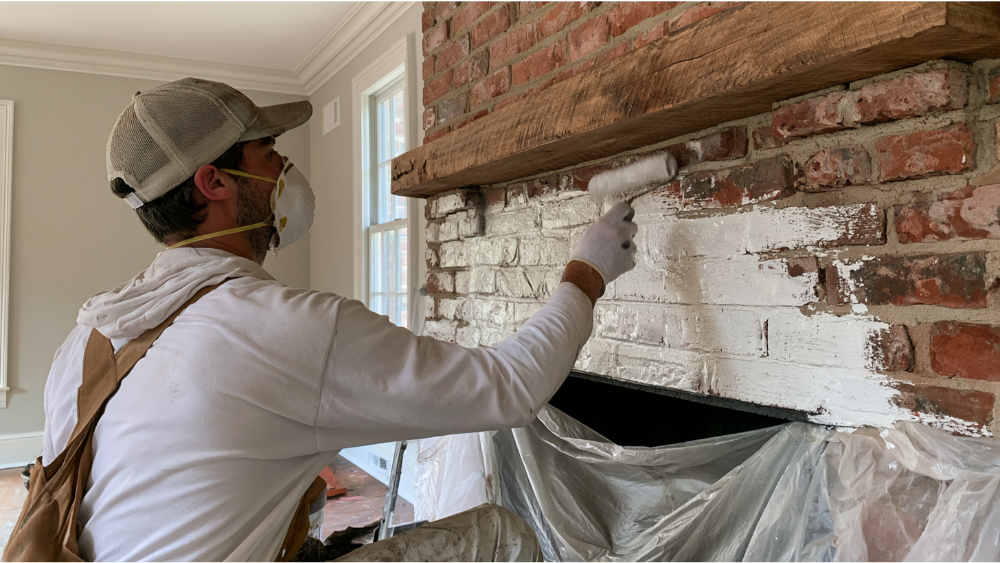
We're an Edgewood-based, founder-led team serving the greater Seattle-Tacoma region, including Federal Way, Tacoma, Kent, Puyallup, Bellevue, and the surrounding cities. When you bring us a brick fireplace, we assess the masonry first, handle any rot repair, mortar, trim, or carpentry it needs, then prep, prime, and paint. With the right materials and the right tools, the whole painting process runs smoothly. One team, one relationship, no juggling contractors.
We're EPA Lead-Safe Certified and licensed, bonded, and insured in Washington. Every project starts with a free color consultation and a transparent estimate before any work begins, plus clear communication from start to finish. Want simple maintenance tips or a plan for another space in your home? We're happy to walk you through it. Start with a free estimate: call 206-222-0435 or request one online.
Frequently Asked Questions
Is painting a brick fireplace a good idea?
It can be, when the brick is clean, dry, and structurally sound and you're confident about the change. A painted brick fireplace modernizes a dated focal point and brightens a dark room. Just remember it's difficult to reverse.
Can you paint the inside of a fireplace or firebox?
Not with normal paint. Standard latex can blister with direct flame exposure, and even paints rated to 1,200°F often warn against use in areas directly exposed to flames. The firebox interior needs specialized products, not the same paint used on the surround.
Do I need to prime brick before painting?
Yes. Brick is porous, so a high-adhesion masonry primer is needed to seal the pores, block soot and mineral bleed-through, and give the finish coat something to grip. Let it dry fully, often overnight, before painting a brick surround.
Can painted brick be restored to natural brick later?
It's difficult and often not worth the risk. Paint bonds into the porous surface, and abrasive removal can permanently damage the brick face. If you might want unpainted brick someday, consider a lighter finish like whitewash or limewash instead.
Should I hire a professional to paint a brick fireplace?
DIY is reasonable on clean, sound, modern brick. Hire a pro for pre-1978 homes, crumbling mortar, heavy soot, tall fireplaces, active fireplaces with unknown chimney condition, or when repairs are needed alongside the paint. If you found your way here from a previous post on interior updates, this is a natural next project to plan with a pro.
