
%201.svg)


Painting a Basement Floor: What Holds Up to Moisture?
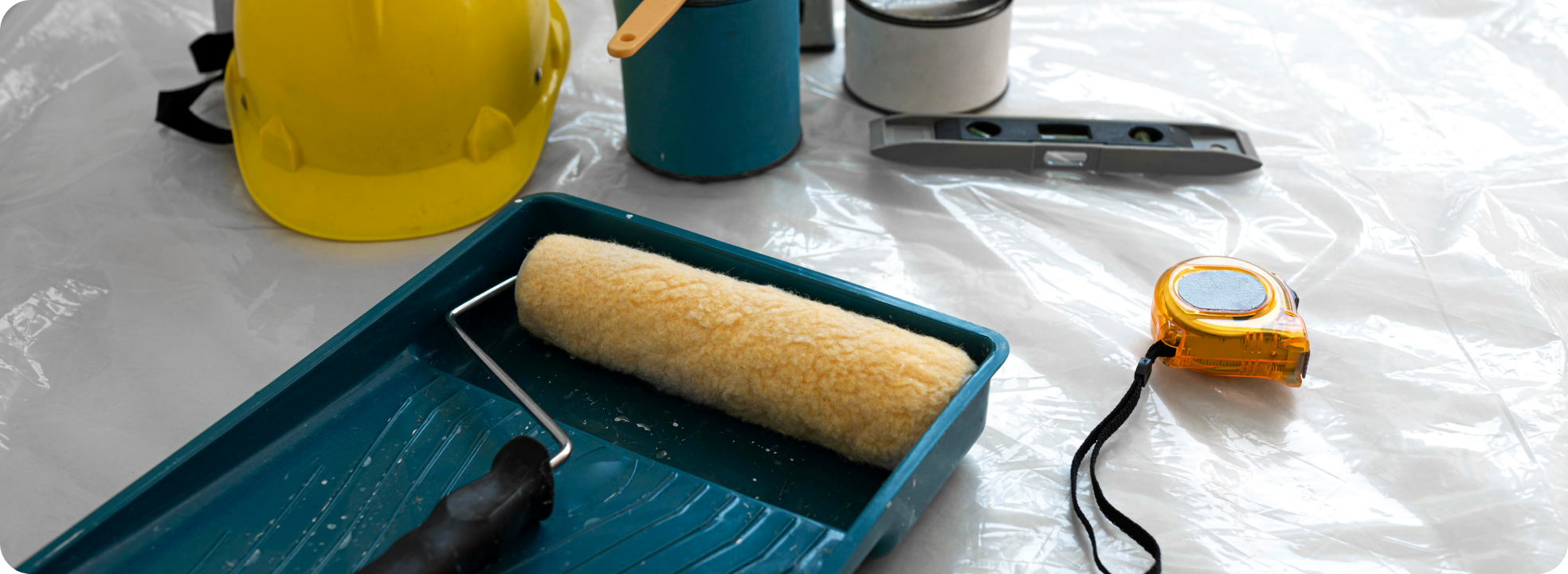
Key Takeaway
For painting a basement floor, two-part epoxy holds up best on a dry, properly prepped slab, while polyurea coatings last 10 to 20 years in damp-prone spaces. No coating survives active seepage or a slab that stays wet. Fix the moisture source first, confirm readings fall below roughly 4% moisture, then choose the system that matches your slab's actual conditions.
The coating that holds up best on a basement floor is the system that matches your slab's moisture level. On a dry, properly prepped surface, a two-part epoxy is the most durable choice you can make. But no floor paint should ever go over active seepage, standing water, or a slab that stays damp. If moisture is part of the picture, you fix the water first, then you coat. This is for the homeowner staring at a dusty, stained, or damp basement floor who wants a finish that lasts, not one that peels in a year. The rule that saves the whole project is simple: moisture first, coating second.
Painting a Basement Floor: What Holds Up to Moisture in Damp Environments?
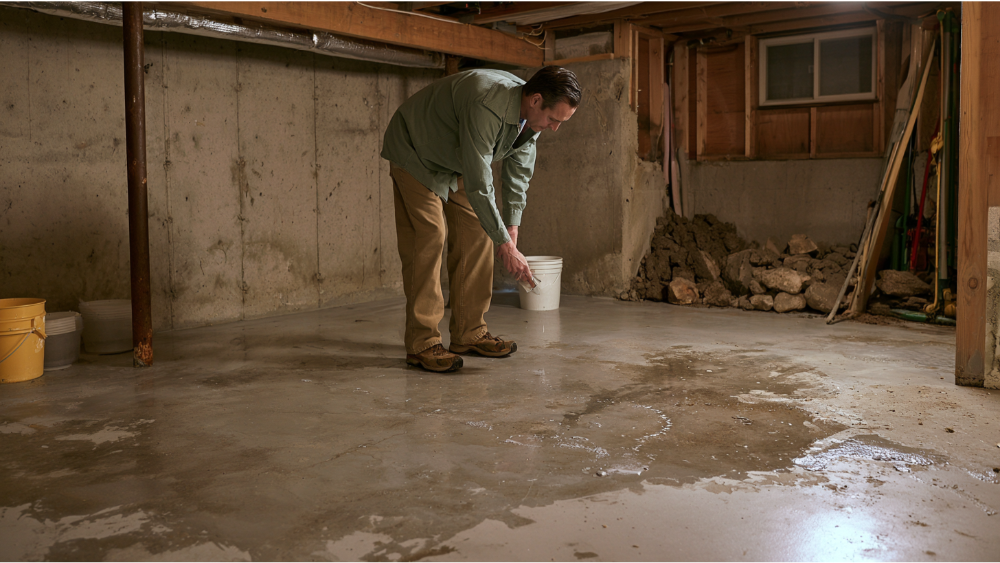
Concrete looks solid, but it's porous. It absorbs water and lets moisture travel up through the slab as water vapor. Where there's a high water table or a missing vapor barrier under the slab, hydrostatic pressure can push that moisture right through the concrete. When a coating traps that moisture underneath, you get bubbling, small craters, and eventually peeling. That's the number one moisture issue behind basement floor coatings failing in damp environments.
The volume of water a home deals with is easy to underestimate. A single inch of rain on a 2,000-square-foot roof footprint can shed roughly 1,250 gallons of water toward the ground around your foundation. After heavy rain, that pressure climbs. Standard latex wall paints aren't built for it. They'll sit on the surface and let go the moment vapor starts moving, which is why matching the right materials to your slab matters more than the color you pick. Many homeowners learn this the hard way after a first coat fails.
When Your Basement Floor Is Not in Good Shape to Paint Yet
Some floors aren't in good shape for any coating. Paint won't fix these conditions. It will fail over them. Hold off if you see any of these:
- Standing water or puddling
- Damp spots that show up after heavy rain
- White powdery residue (efflorescence)
- Existing paint or coating that's peeling
- A musty smell or any sign of mold
- Wet cracks or seepage at the wall-to-slab joint
- A failed moisture test
The EPA is direct about this: moisture control is the key to mold control, and water-damaged areas should be dried within 24 to 48 hours to help prevent mold from taking hold. Hydrostatic pressure has to be resolved before you apply any moisture barrier that will block water from below. We'd rather tell you a floor isn't ready than take money for a coating we know will fail.
How to Test a Concrete Basement Floor for Moisture Problems
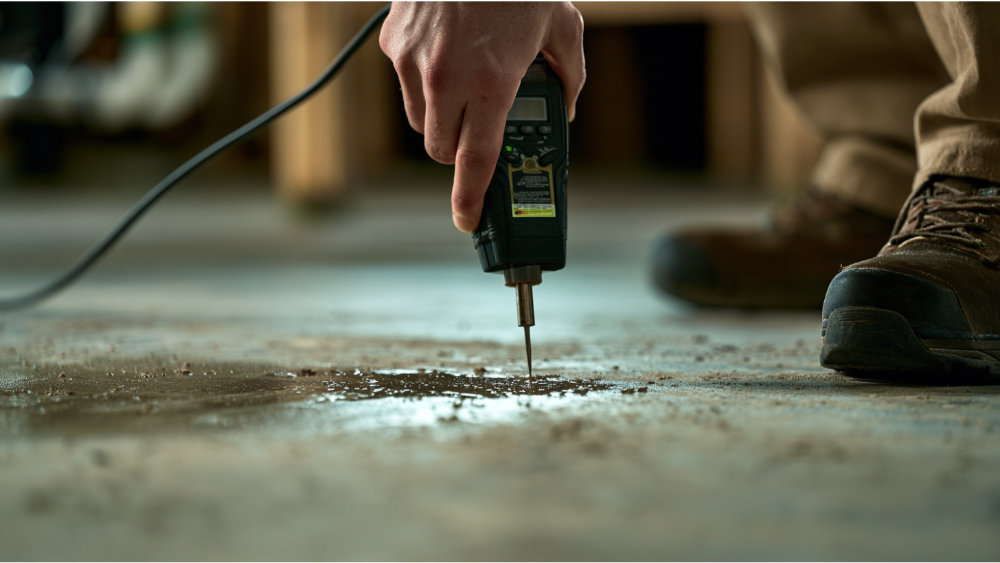
Testing follows a simple hierarchy: visual signs, then a plastic sheet test, then quantitative testing when the project warrants it. Catching moisture problems now saves you from redoing the whole floor later.
The plastic sheet test is a solid first screen you can do yourself. Tape an 18-inch by 18-inch piece of 4-mil polyethylene to the concrete floor, sealing all four edges, and leave it for at least 16 hours. If you find condensation on the underside or a darkened patch of concrete when you pull it up, moisture is moving through the slab. Run about one test per 500 square feet, since one spot won't speak for the whole surface. This is a warning sign, not a final verdict.
For higher-risk projects, professionals use quantitative tests. A calcium chloride test (ASTM F1869) measures how much moisture the slab gives off over 1,000 square feet in a 24-hour window. In-slab relative humidity probes (ASTM F2170) read moisture inside the slab, which is more accurate than any surface check. As a practical benchmark, moisture generally needs to read below about 4% before coating, and the coating manufacturer's data sheet always has the final say.
What Basement Floor Coatings Hold Up Best to Moisture?
"Best" depends on how much moisture you have and how the space gets used. Here's an honest comparison of the common coatings homeowners weigh:
One detail that matters on bare concrete: a moisture-blocking base coat is what gives the topcoat something to grip and something to resist vapor from below. Skip that first layer, and even good coatings struggle. Some coatings require that primer to reach their rated moisture resistance at all. Polyurea coatings in particular are worth a look when the space stays damp-prone, since they flex instead of cracking and they resist mold better than a rigid film. Their moisture tolerance is part of why they last so long in areas prone to dampness.
Epoxy vs. Concrete Coating in a Damp Basement
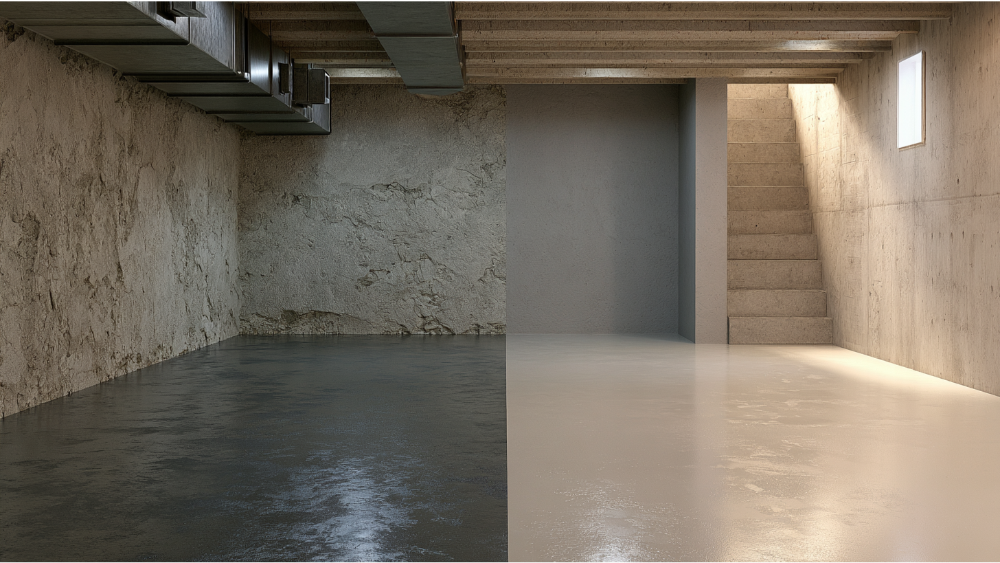
These are the two options most people weigh, so here's the head-to-head. Two-part epoxy wins on wear resistance. It holds up to foot traffic, a home gym, or a family room floor better than anything else, but it demands a dry basement with a well-prepped, low-moisture slab to do it. Acrylic or latex concrete coating is less durable and needs recoating more often, sometimes every year or two in a moist space. Its advantage is that it breathes, which can make it a safer pick on some older slabs with mild vapor movement. Neither is universally better. You match the coating to the slab, not the other way around, and you weigh how much foot traffic the floor will really see.
The Prep Work and Application That Makes the Finish Last
Skipping prep is exactly why floors peel. This is where clean, long-lasting results actually come from, and it's the part we don't cut. Good surface preparation starts long before the first coat. Here's the sequence we follow:
- Clean and degrease the entire surface to lift oils, stains, and dust
- Remove any failed or unknown old coating and dull, flaking layers
- Patch cracks and holes with the right concrete filler
- Address the wall-to-slab joints where seepage often starts
- Profile the surface by grinding or approved etching so the coating bonds
- Vacuum every trace of dust so the slab is truly clean
- Re-test moisture where the condition calls for it
- Prime with the correct primer, then build the coating in the right layers according to the system
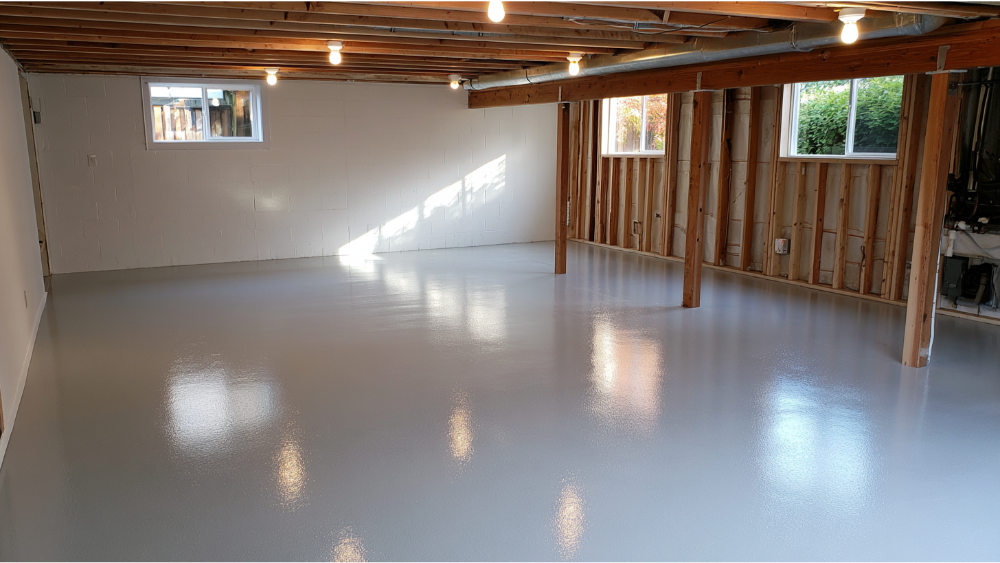
Painted concrete gets slippery when wet, so we can mix a granular anti-slip additive into the final coat. It's a small step that makes a real difference on stairs and near entries. Before any of this, moving furniture and clearing the slab lets us prep every inch properly. The care that goes into proper prep is what separates a finish that lasts from one you're redoing in eighteen months. Done right, a fresh coating can transform a gray, stained slab into a surface you're glad to walk on. Professional application and the right materials give the finish real durability, whether the room becomes living space or stays one of your storage areas.
Fix the Moisture Source Before You Coat
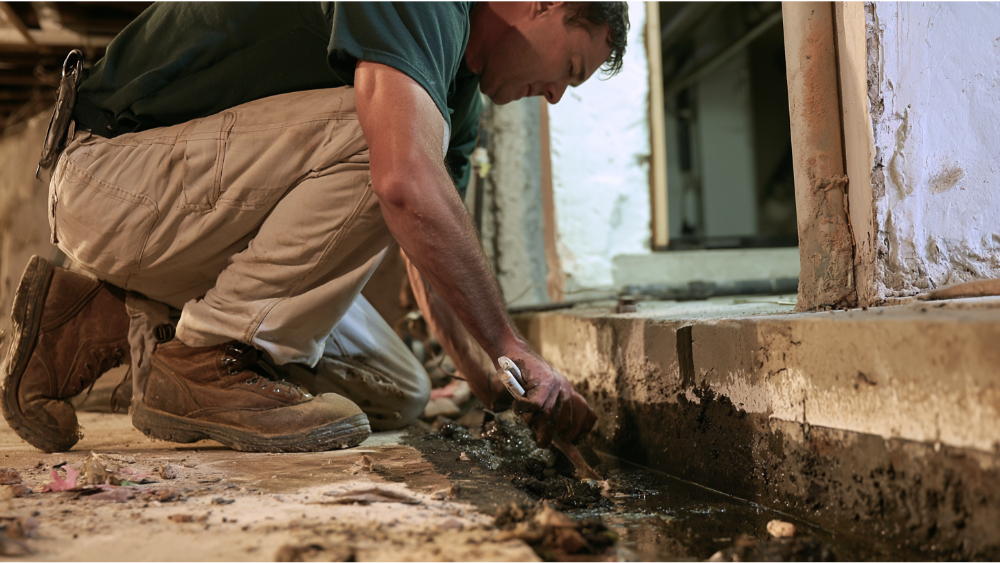
Coating a floor does not waterproof a basement or stop active seepage. A masonry sealer can help with minor moisture only. The real fix is finding where the water comes from. Common culprits include:
- Poor exterior drainage around the foundation
- Dirty or overflowing gutters, especially after heavy rain
- Foundation cracks
- Plumbing leaks
- Condensation from high indoor humidity
- Missing or aged under-slab vapor control
Several of these fall inside what we already do. Cover Pro handles painting, surface prep, crack repairs, rot repair, siding, carpentry, and gutter cleaning, so a couple of the moisture contributors on that list can be sorted by one team instead of you juggling contractors. That full-service approach is a real break from managing several trades at once, and ongoing maintenance is easier when one crew knows your home.
Safety: Ventilation, Chemicals, Lead-Safe Prep, and Radon
Basements need airflow during coating and cure. Some epoxy and resin chemicals are hazardous before they cure, so we follow the safety data sheet, use proper PPE, and favor low-VOC, family-safe products where they fit the job. Cleaning chemicals used to degrease a slab need ventilation too. For homes built before 1978, prep that disturbs old painted surfaces (floor, stairs, trim, or walls) falls under the EPA's Lead-Safe (RRP) rules. We're EPA Lead-Safe Certified, so that work is done to the standard. One more thing worth checking: if you plan to seal the slab and use the basement more, consider a radon test first. The EPA's action level is 4 pCi/L, and mitigation is easier to install before a coating goes down.
A Note for Edgewood and Seattle-Tacoma Basements
Cool, damp Puget Sound seasons mean basements around here often carry higher humidity and reveal moisture problems that a drier climate might hide. Laundry rooms and utility rooms tend to show it first, since they already run warm and wet. Low temperatures and high humidity also stretch out dry and cure times, and most coatings need surface and air temperatures above roughly 50°F to form a proper film. Unlike an exterior deck that battles sun and UV rays, a basement's challenge is vapor from below. Newer Washington slabs are built with stronger under-slab vapor retarders and better proper installation than many older homes, so older Edgewood-area basements especially should be moisture-tested before you pick a coating. If you're hiring out the work, use a licensed, bonded, and insured Washington contractor, and verify status through L&I if you're unsure. We're based in Edgewood and licensed, bonded, and insured in Washington State.
When to Call a Professional for a Free Consultation
Bring in a pro when you see peeling floor paint, an unknown old coating, recurring dampness, large cracks, or a failed moisture test. The same goes if the basement is going to serve as a finished basement, family room, home gym, or office, where a coating failure is expensive to redo and heavy foot traffic will test the finish daily. Pre-1978 homes with painted surfaces that prep will disturb are another clear signal to get lead-safe hands on it. A free consultation makes choosing the right materials easier when someone has seen how local slabs behave.
Frequently Asked Questions
Can I paint a basement floor if it gets damp?
Not until you find and fix the moisture source. A coating over a damp slab traps vapor underneath and peels. Test the floor first, correct any active water, and confirm the slab is in good shape and dry before choosing a coating.
Will epoxy stop moisture from coming through a basement floor?
Epoxy can reduce vapor transmission on a dry, prepped slab, but it won't stop active seepage or hydrostatic pressure. Those are water-source problems that have to be handled before any coating goes down and before it can properly protect the concrete.
What's better for a basement floor, epoxy or concrete coating?
Epoxy is far more durable and better for foot traffic, but it needs a dry, low-moisture slab. Acrylic or latex concrete paint breathes better and can suit some older slabs with mild vapor movement, though it needs recoating more often. Polyurea coatings are another strong option in damp-prone spaces.
What does white powder on a basement floor mean?
That's efflorescence, mineral salt left behind as moisture moves through the concrete and evaporates. When it's present, it signals active moisture, so don't coat over it. Address the water source and test the slab first, then clean the surface before any coating.
How long should new concrete cure before painting?
Most products require a minimum of about 28 to 30 days for new concrete, but the coating's data sheet controls the exact time. Coating too early leads to adhesion failure.
Start With a Free Estimate
If your basement floor is damp, stained, or peeling, we'll inspect it, talk through any moisture concerns, explain the prep it actually needs, and give you a clear scope before any work begins. Concrete is tough but porous, so we help homeowners choose a coating that fits their slab and the way they'll use the space, so the finish holds up for years and won't leave the room dull and worn. No surprises, no fixed price online, just a transparent estimate built around your slab's real condition. Call us today at 206-222-0435 to get your free estimate.
