
%201.svg)


Paint and Primer in One: Does It Really Replace a Separate Primer?
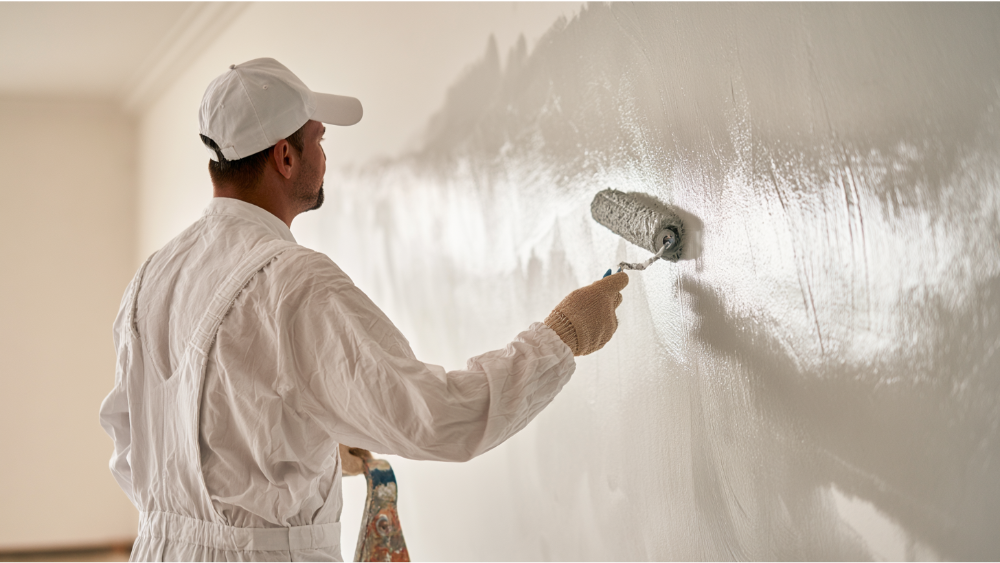
Key Takeaway
Paint and primer in one is a self-priming topcoat that works well on clean, previously painted surfaces with modest color changes, but it does not replace a dedicated primer on bare drywall, raw wood, stained walls, or glossy surfaces. The surface condition decides whether it is enough. Plan on two coats for full color and durability, even with an all-in-one product.
Does Paint and Primer in One Actually Work? (Quick Answer)
.webp)
Yes, paint and primer in one works well on clean, sound, pre painted surfaces when you're making a modest color change. No, it doesn't replace a dedicated primer on bare drywall, raw wood, stained walls, glossy or slick finishes, big color jumps, or weathered exterior surfaces. The surface decides, not the label on the can. Paint and primer in one is a self priming topcoat, not a heavy-duty primer for challenging substrates, and it does very little on raw, porous surfaces like unsealed drywall or bare wood.
If you're a homeowner or property manager trying to figure out whether an all in one product is enough or you still need a separate primer, this guide walks through it surface by surface. The short version: prep is what makes any coating last, and no paint skips that step for you.
What "Paint and Primer in One" Actually Means
Paint and primer in one combines two products into a single can. It's a self priming paint built with higher solids and denser resins than standard paint, which makes it thicker and helps it grip a surface that's already close to paint-ready. It isn't a real primer mixed into paint the way some people picture it, and it isn't a marketing gimmick either. Because it's a richer formula, it usually costs more per can than ordinary paint.
That extra cost can still work in your favor. When the surface genuinely qualifies, buying one paint can be more cost effective than buying a separate primer and a separate topcoat, and it can save you money on a straightforward job. The catch is in that word "qualifies." A self priming paint does some of what a primer does on a surface that's sound and sealed. It does not do what a true dedicated primer does on a problem surface. Manufacturers describe these products as self priming on most properly prepared surfaces, and then point you toward special-purpose primers for stains, slick surfaces, and bare substrate. That distinction is the whole story.
How Self Priming Paint Works vs. When You Prime Separately
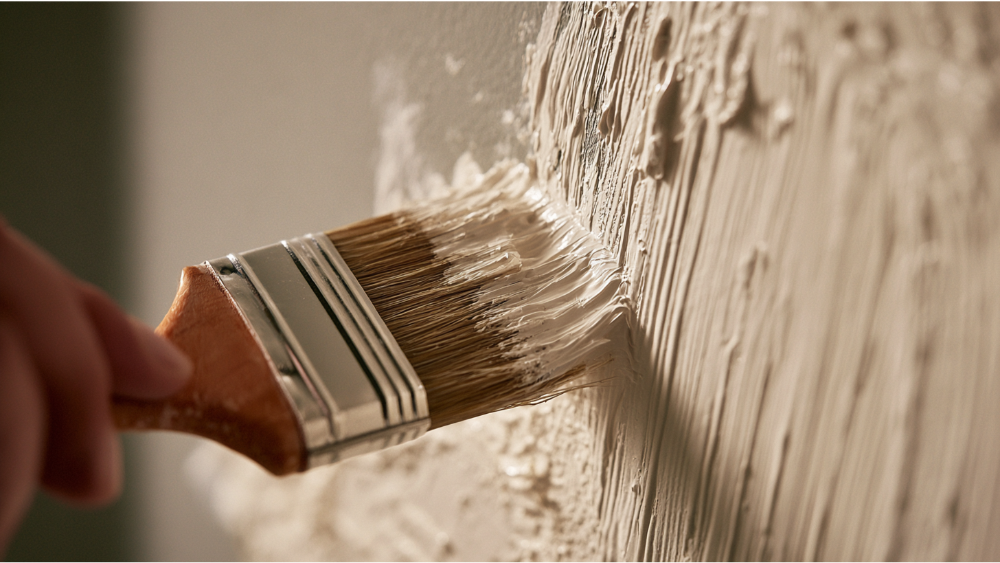
Primer and paint aren't interchangeable because they're built to do different work.
- Primer creates adhesion, seals porous surfaces so paint absorbs evenly, blocks stains from bleeding through, and lays down a uniform base. A good paint primer does this before any desired color goes on.
- Paint delivers color, sheen, durability, and protection against wear.
A quality all-in-one can improve adhesion over regular paint and reduce peeling on clean, pre painted walls. But better adhesion is not the same as a true bonding primer for glass-smooth glossy surfaces, and it is not the same as a stain-blocking primer for a water mark. When the surface needs a specific primer function, that's the moment to prime separately, because the all-in-one usually can't cover it. The only reason to reach for one over the other is what the surface in front of you demands. Knowing when a paint with primer is enough and when you prime separately is what keeps the finish from failing early.
When Paint and Primer in One Is Usually Fine
All-in-one paint is a good choice when the surface is already doing most of what a primer would do. Green-light conditions:
- Previously painted drywall or plaster in sound condition.
- A clean, dry surface with no dust or grease.
- A dull or lightly scuffed surface (not glossy).
- A similar color or a modest color change.
- No peeling, chalking, stains, or exposed substrate.
- A product label or technical data sheet that allows your substrate and texture.
Even here, priming and prep are part of the job. Washing the surface and lightly scuffing it gives the new paint something to hold onto and helps improve adhesion. The paint being self priming doesn't remove that first step. It just means you may not need a separate primer coat on top of proper cleaning. On smooth, sound walls this is where a self priming paint earns its place and can deliver good coverage close to one coat on a like-for-like color.
When You Still Need to Prime Separately
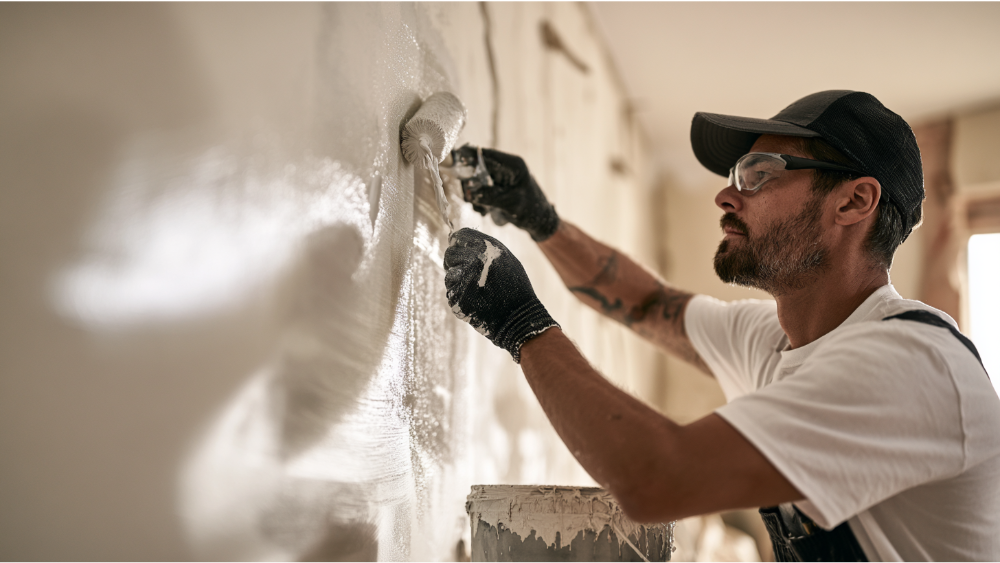
When the surface has a problem paint alone can't solve, a dedicated primer isn't optional and you'll want to prime separately.
New drywall or fresh joint compound
Raw drywall and joint compound are porous and absorb paint unevenly, giving you uneven surfaces. A traditional primer seals the surface first so the finish looks uniform instead of blotchy. One coat of primer is usually enough before your color coats go on.
Wall repairs and patches
Patches absorb differently than the surrounding wall and will flash, meaning they show through as dull spots, unless they're primed or the wall is handled consistently. Spot priming those repairs evens out the texture so the topcoat reads as one surface.
Bare and knotty wood
Raw wood needs a separate primer. Tannin-rich and knotty woods can bleed through the finish without a stain-blocking primer holding it back, and no amount of self priming paint will stop that on its own.
Glossy, slick, or oil-based finishes
Coatings applied over hard, slick, or glossy surfaces tend to peel because there's nothing for them to stick to. These surfaces need a profile from sanding plus a bonding primer. Acrylic paint over an existing oil-based coating generally isn't recommended without extra prep or the right bonding primer.
Water, smoke, grease, tannin, and rust stains or odors
A dedicated primer is what you use to block stains. Water stains, smoke, grease, and tannin often need an oil-based stain blocker. All-in-one paint isn't designed to seal them, so they bleed back through no matter how many coats you add.
Dark-to-light color changes
Going from a deep color to a light one is easier with a tinted or dedicated primer, which cuts the number of finish coats you'd otherwise fight through and saves you paint and money.
Uncoated metal and masonry
All-in-one paint isn't built for bare metal. Porous masonry needs the right primer to seal and bind it. New masonry, concrete, and block should cure per the supplier's recommendation, usually about 30 days; if the job can't wait, allow 7 days, then prime.
What Goes Wrong When You Skip the Primer
Skipping the right primer is where the failures homeowners dread come from. You'll see peeling as the paint lets go of a slick or unsealed surface. You'll see flashing and uneven sheen where patches and porous areas drink up paint differently. You'll see old water or smoke stains bleed straight through, patch outlines ghosting on the walls, and finishes that need redoing far sooner than they should.
Why good paint still fails on a bad surface
Almost always, these are surface and prep problems, not paint-quality problems. A premium can of all-in-one over an unprepped surface still fails, even a well-regarded line like a Benjamin Moore product or a Sherwin Williams Super Paint. Neither is a marketing ploy, but neither turns a bad surface into a good one. That's why we inspect and prep before anything goes on, so the finish you pay for is the finish you keep. Good paint on a bad surface is money wasted.
How Many Coats, and How a Pro Decides What to Prime
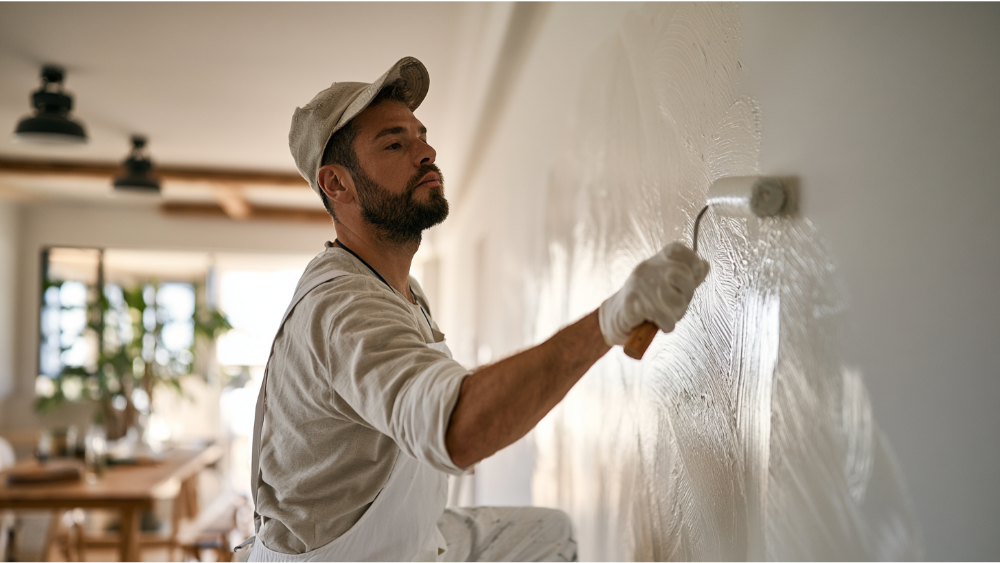
The "one coat" idea is the most common myth about how these products paint works. Even self priming paint generally needs a second coat for full color development and a sturdier coat that holds up over time. On a previously painted surface in good shape you might finish in one or two coats. Porous surfaces or big color changes usually take more coats. Plan on two.
Deciding what to prime is a judgment call based on the surface, not a formula, and it shapes the whole painting process. Before we pick a system, we look at the substrate, how well the existing paint is holding, any stains or moisture, repairs that need to happen first, the surface profile and texture, the color change, the sheen, and whether it's an interior or exterior project. Exterior work adds real constraints: don't paint below 50°F unless the product is rated for it, and hold off during rain, fog, or when rain is coming.
Older homes add one more step. For houses built before 1978, disturbing painted surfaces (over 6 square feet inside, over 20 square feet outside) triggers federal EPA lead-safe practices. Cover Pro Painting is EPA Lead-Safe Certified (RRP Certified), so that work is handled correctly. And because we're full-service, rot repair, siding, and carpentry get addressed before paint goes on instead of leaving you to coordinate a second contractor. That's part of the quality every customer gets from us, whether we're painting walls, trim, or an entire exterior.
What to Ask Before You Hire a Painter
A trustworthy painter answers these questions openly. Ask them:
- Which surfaces will actually be primed?
- Are bare and patched areas spot-primed, or is the whole wall being primed?
- Are stains being sealed with a stain-blocking primer?
- How many finish coats are included?
- What surface prep and repairs are part of the scope?
- Are lead-safe practices needed for an older home?
- Will the estimate clearly separate prep, repairs, primer, and paint?
If a proposal just says "paint and primer in one" with no mention of surface condition, that's worth a second question. One of the main reasons projects fail is a scope that glosses over prep. We also protect what shouldn't get painted, masking glass, taping off plastic and fixtures, and keeping our brushes off surfaces they don't belong on. Based in Edgewood, WA and serving the greater Seattle-Tacoma area, we start every project with a free estimate and clear communication so the surface, prep, repairs, primer needs, and finish system are spelled out before work begins. We want every customer to know exactly what they're paying for. Call 206-222-0435 or request Get My Free Painting Estimate. Don't see your city listed? Contact us to confirm service availability.
Do paint and primer in one products actually work?
Yes, on sound, pre painted surfaces that have been cleaned and lightly scuffed. They don't work as a substitute for a dedicated primer on bare, stained, glossy, or exterior-problem surfaces, where you should prime separately.
Is all-in-one paint and primer good?
It's a good paint for the right surface. It isn't a shortcut around prep or a fix for a problem substrate, so the surface condition matters more than the product.
Can I use paint and primer in one on new drywall?
No. Raw, unsealed drywall needs a dedicated primer to seal it first, or the finish will absorb unevenly and look blotchy. Prime it separately, then apply your color coats.
Can paint and primer in one cover stains?
No. Water, smoke, grease, and tannin stains need a stain-blocking primer to block stains at the source. All-in-one paint isn't built to seal them, so they bleed back through.
How many coats of paint and primer in one do I need?
Generally two coats for full color and durability. A previously painted surface in good condition may finish in one or two coats.
