



Moss, Algae, and Mildew on Painted Siding: Why It Keeps Coming Back

Key Takeaway
Mildew on painted siding keeps coming back because cleaning removes visible growth without fixing the moisture conditions that allow it to establish. A wall that stays damp for hours gives mold spores enough time to take hold, especially on north-facing walls with poor air circulation. Fix the moisture source first, such as clogged gutters, overgrown shrubs, or missing flashing, then clean and repaint on a regular schedule.
Mold, mildew, algae, and moss keep coming back on house siding because washing removes the visible growth but not the damp, shaded, slow-drying conditions feeding it. Mold and mildew spores are always in outdoor air. Once a wall stays wet long enough and has a little dirt or pollen to feed on, the growth returns. Lasting control means correcting the moisture source, cleaning the siding with a solution that won't damage siding or the coating on it, then repainting only when the surface is clean, dry, and sound.
This one is written for the homeowner who has already scrubbed the same wall once or twice and wants to know whether they're dealing with a cleaning problem, a paint problem, or a water problem. The short version of our approach: clean, correct, coat.
Why does mold and mildew on painted siding keep coming back after you clean it?

Three things have to be true for mold and mildew to take hold, and cleaning only addresses one of them.
First, mold spores and mildew spores exist naturally in outdoor air. You can't scrub them out of the environment, and no cleaning solution removes them permanently. Second, the wall has to stay wet long enough for those spores to colonize. Third, there needs to be something to feed on: dust, pollen, tree sap, soil splash, and the nutrients in the paint film itself. Seasonal swings speed all of this up, which is why mold and mildew often explode across a house after a long wet stretch.
Here's the point the rest of this article rests on. The growth is a symptom. The wetting pattern is the actual problem. Left untreated, that pattern does more than dull your home's appearance. It softens trim, opens joints, and eventually costs you boards.
Is it mold, mildew, algae, moss, or just dirt?
Color alone is not a reliable way to tell these apart, and mixed colonies on one wall are common. Still, the texture and pattern give you useful clues.
Mildew: flat, patchy gray, brown, or black spotting
Mildew usually shows up as dull, blotchy spotting rather than anything raised or fuzzy. It tends to cluster under eaves and in shaded areas of the house that never see direct sunlight. This kind of mold sits on the coating and feeds on what's on the coating.
Algae: a thin green film, usually in shaded areas
Algae reads as a thin green or greenish-black film across the surface. It doesn't consume wood fibers, but it only grows where the siding stays damp, so it's a moisture indicator worth paying attention to.
Moss: thick, cushiony growth that holds water against the siding
Moss is one of the few plants that will happily live on a wall, and it's springy to the touch. It's the one to take seriously, because it holds water directly against the siding long after the rain stops. Moss on house siding means that spot almost never dries out.
Dirt, chalking, and tannin staining that only look like mold
Not every dark streak is biological. Chalked paint, road grime, rust runs from fasteners, and tannin bleed from cedar knots all mimic mold. Dabbing a spot with a diluted household bleach solution can help: biological staining lightens quickly, dirt doesn't. That test separates mold and mildew from grime. It won't tell you algae from mildew.
The conditions that keep house siding wet enough to grow mold

Five repeat offenders account for most of the mold and mildew we find on siding:
- Shaded areas with poor air circulation
- Overflowing or leaking gutters and downspouts
- Sprinkler and irrigation overspray
- Trees, shrubs, pollen, sap, and debris collecting on exterior surfaces
- Failed caulk, flashing, siding joints, or not enough clearance at grade
Shade, plants, and the lack of proper ventilation
Walls that get little sun dry slowly, and a house crowded by shrubs or overhanging branches barely moves any air at all. Foundation plants set tight against the siding trap moisture and block the proper ventilation a wall needs to shed water between rains. Add the sap, pollen, and leaf litter that come with mature trees and you've built the mold a food source on top of the damp.
Gutters, downspouts, and sprinklers hitting the same wall
A gutter packed with fir needles overflows down the same three feet of siding every storm. A downspout seam drips onto the same lap board for years. A sprinkler head clipping the house every morning wets it before it ever finished drying. These are fixable, and gutter cleaning is one of the services we handle ourselves for exactly this reason.
What the location of the growth tells you about your house
Where it grows is diagnostic:
- North facing walls: least sun, slowest drying. Usually an exposure issue.
- Directly under an eave or gutter seam: overflow or a leaking joint.
- Around a window, vent, or penetration: failed caulk or flashing.
- Bottom courses: rain splashback, tight grade clearance, or irrigation.
- Behind shrubs and foundation plants: no airflow, no drying.
The key read: even mold and mildew across a whole elevation is usually about sun and exposure. One concentrated patch that keeps returning almost always means something on the house is wetting that spot.
Does mold and mildew mean there's rot behind the siding?

Not automatically. Algae, moss, and surface mold live on the siding and don't eat wood fibers. What they prove is that the wall stays wet, and prolonged wetting left untreated is exactly what causes decay over time.
Check for these:
- Wood that feels soft or spongy under thumb pressure
- Swelling or delamination at board edges and butt joints
- Crumbling material, especially near the ground or at trim
- Open joints and peeling concentrated at seams
- Staining that returns to the same spot every single year
This is why we handle rot repair, siding repair, and carpentry with our own team. The damaged material gets corrected before anything gets painted, rather than sealed under a fresh coat where it keeps working on the structure underneath.
How to clean mold and mildew off house siding without causing a bigger problem
One rule overrides every recipe you'll find online: identify your siding material first (vinyl, wood, fiber cement, engineered wood) and follow that manufacturer's care instructions. Some vinyl and fiber cement manufacturers expressly say not to power wash their product, and a few name the cleaning solutions they'll accept.
A reasonable sequence for sound siding:
- Pre-rinse with a garden hose to knock loose debris off the surfaces
- Mix a cleaning solution labeled for your siding and apply it to the affected areas with a garden sprayer
- Let it sit for the dwell time the label specifies
- Scrub gently with a soft bristle brush, working in sections so nothing dries on, and use a sponge on trim and tight spots
- Go back over stubborn spots rather than raising pressure or scrubbing harder
- Rinse with clean water, spraying downward, and never direct water upward into laps, joints, or vents
Cover nearby plants with plastic sheeting and pre-wet the landscaping to protect plants, then rinse them again with clean water when you're done. Wear old clothes, gloves, and safety glasses. We don't publish a universal bleach ratio, PSI, or nozzle distance, because the right answer changes with the product and the coating. In Washington, wash water can carry soap, dirt, and paint debris into storm drains that discharge without treatment, so check with your local sewer and stormwater authority before you send runoff anywhere.
Chlorine bleach, oxygen bleach, or vinegar: choosing a cleaning solution
These are the three cleaning solutions homeowners compare most often. Chlorine bleach (sodium hypochlorite) knocks the stain down fast but is often said to evaporate too quickly to do much on porous surfaces. Oxygen bleach penetrates better, is commonly described as non corrosive, and is widely recommended for house siding because it's gentler on the coating and on plants. White vinegar is the mildest of the three and is reported to kill up to 82% of mold species. Never mix bleach with ammonia or other cleaners. That combination creates toxic fumes.
Ready-made siding cleaners and no-rinse products
Retail shelves carry hose-end house washes that mix bleach and detergent, no-rinse treatments that leave a slow-acting film to break down mold over several weeks, hydrogen peroxide based oxygen cleaners marketed as easier on plants, and fast-acting removers that clear black and green staining in seconds. Match the label to your siding material and follow its dilution, dwell time, PPE, and rinsing directions. Products that claim to kill mold or prevent it can fall under EPA pesticide labeling rules, so the label is the instruction manual.
Pressure washer or hand washing: what most homeowners get wrong
Should you use a pressure washer on painted house siding? Often no, or only at low pressure with a wide fan by someone who knows the material. A pressure washer can cut into the paint film, drive water behind vinyl panels, and soak sheathing that then dries very slowly. That makes the mold and mildew problem worse, not better. Low pressure, a soft brush, the right cleaning solution, and a patient rinse are a more effective cleaning method than raw PSI ever will be. The second thing many homeowners get wrong is assuming the wash itself is the fix. Renting a machine removes the stain without changing a single condition that caused it, which is why so many people watch it come right back within a season.
Why painting over mold and mildew always fails
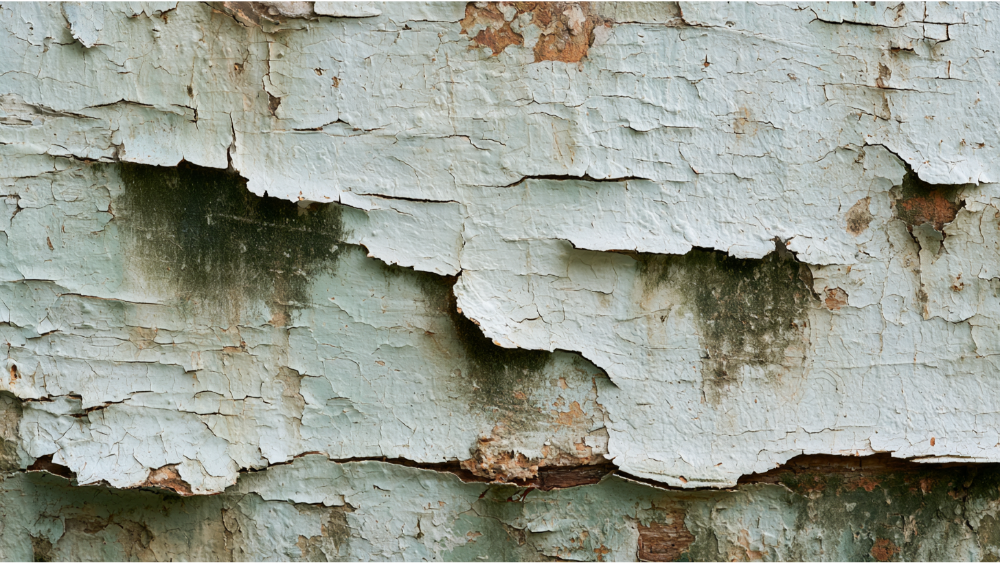
EPA's guidance on mold is direct: remove the growth, clean and dry the surface, correct the water problem. Never paint or caulk over mold. A coating applied over contaminated surfaces loses adhesion and peels.
Moisture in the substrate matters just as much. USDA guidance says blistering and peeling are likely when wood is painted above 20% moisture content. That's why surface prep isn't something we rush through to get to the fun part. Prep is the reason the finish is still there in year five.
Clean, repaint, or repair? A simple way to decide
That call gets made accurately on your actual house, not from a photo, which is what a free estimate is for.
Regular maintenance that keeps mold and mildew from coming back
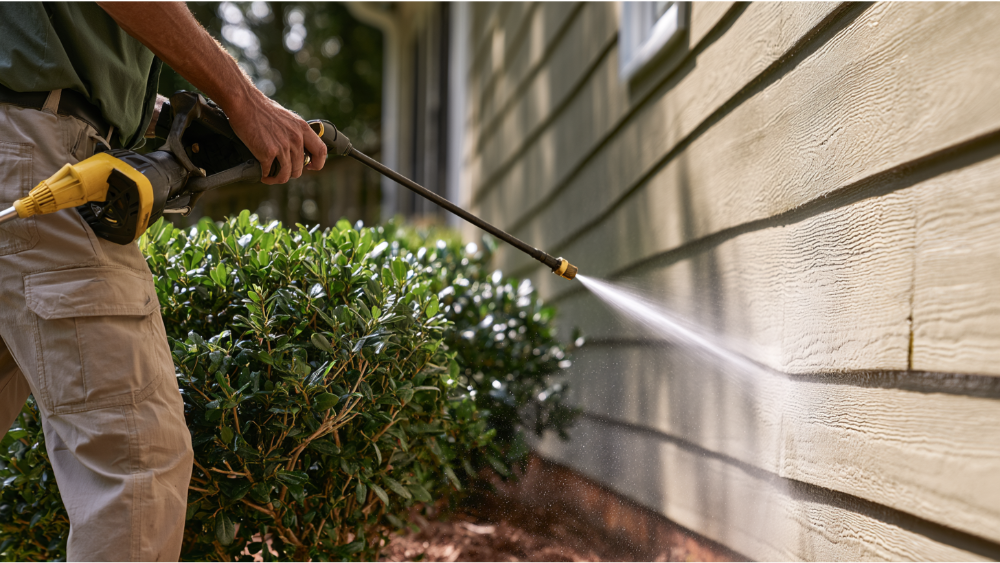
Once the moisture source is corrected, a yearly routine limits future mold growth and keeps your home's appearance where you want it:
- Clean the siding about once a year, more often on shaded or heavily wooded lots
- Keep gutters and downspouts clear, especially through fall needle drop
- Trim trees and shrubs back for sunlight and proper ventilation
- Redirect sprinkler heads away from the house
- Wash by hand where you can, and save pressure equipment for materials the manufacturer approves
- Inspect after wet seasons for peeling, open joints, and soft spots
- Repaint with a properly selected mildew-resistant product after full surface prep
Mildew-resistant paint is not a magic bullet
The honest caveat most articles skip: exterior paint with a built in mildewcide inhibits growth on painted surfaces. It does not stop mold permanently, and no coating outruns a leaking gutter or a sprinkler aimed at the siding. There's no magic bullet product here. Routine cleaning plus corrected drainage is the real solution.
Why Seattle-Tacoma and Edgewood homes see this more often
Under NOAA's 1991 to 2020 normals, Seattle-Tacoma International Airport averages 39.34 inches of precipitation a year spread across roughly 156.2 days with at least 0.01 inch. The frequency matters more than the total. Walls get wet often and dry slowly, and the mature evergreens and shaded lots common around Edgewood, Federal Way, Puyallup, and Tacoma stretch that drying time further. Homeowners here aren't doing anything wrong. The climate simply keeps house siding damp for more of the year. We're based in Edgewood, and this is the single most common exterior condition we walk up to.
Pre-1978 homes: why cleaning and prep need lead-safe practices
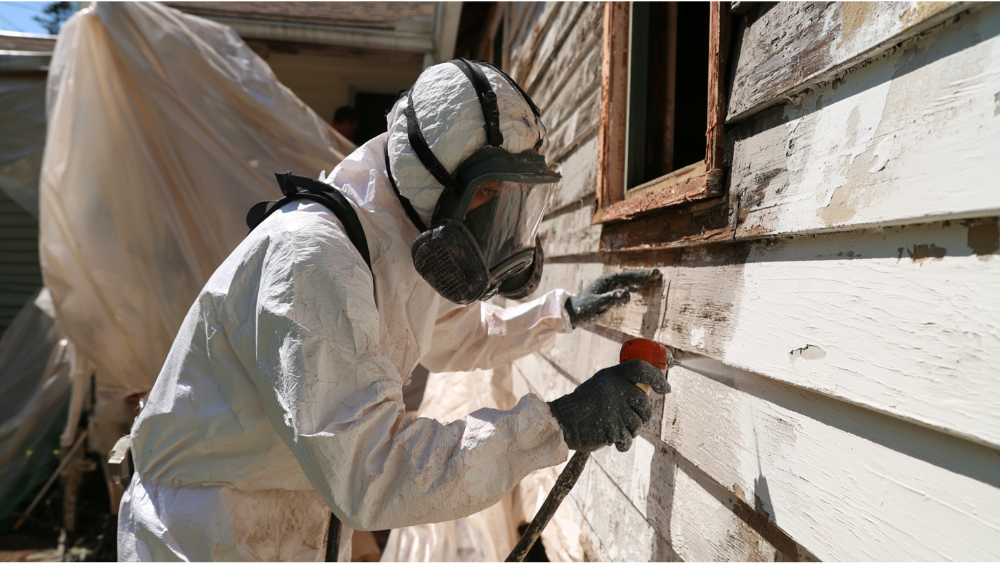
Homes built before 1978 are more likely to have lead-based paint. Washing aggressively, scraping, or sanding can release chips, dust, and contaminated wash water into your yard and onto your plants. Paid contractors performing covered work on pre-1978 homes must follow EPA's Renovation, Repair and Painting Rule unless an exemption or documented lead-free determination applies. EPA does not ban pressure washing outright, but the work area has to be contained and the wastewater managed properly. (EPA's minor repair threshold of 20 square feet is context, not a loophole.) We're EPA Lead-Safe Certified, so this is built into how we prep older homes.
When to bring in professional help, and what to expect
Call someone when mold returns to the same spot after cleaning, when boards feel soft or swollen, when peeling concentrates at the seams, when the wall is two stories or hard to reach, or when the paint predates 1978. We handle painting, rot repair, siding replacement, carpentry, and gutter cleaning with the same team, and Alex oversees each project start to finish. We're licensed, bonded, and insured in Washington State, we back exterior painting projects with a five-year warranty, and we use premium paint products backed by lifetime manufacturer warranties. Every project includes a free color consultation.
Start with a free estimate and see exactly what your siding, repairs, and surface prep will involve. Get My Free Painting Estimate: call 206-222-0435.
Frequently asked questions
How do you remove mold and mildew from exterior painted surfaces?
Start with the gentlest cleaning solution that works: a garden hose pre-rinse, a cleaner labeled for your siding applied with a pump sprayer, a soft brush, and a downward rinse with clean water. Then fix whatever keeps that wall wet, or the mold returns.
Will Dawn and vinegar remove mildew from siding?
That cleaning solution can lift light surface growth, and white vinegar is reported to kill up to 82% of mold species. For heavier mold and mildew, oxygen bleach is more commonly recommended for house siding. Never combine any of these with chlorine bleach or ammonia.
What can I spray on my siding to remove mildew?
Use a cleaning solution specifically labeled for your siding material, whether that's vinyl, wood, or fiber cement, applied at the label's dilution and dwell time. Skip improvised mixes, and test any cleaner in an inconspicuous spot first.
Does mildew-resistant exterior paint stop mildew permanently?
No. It slows growth on painted surfaces, which is genuinely useful, but under damp enough conditions mold and mildew can appear on any coating. It won't compensate for a leaking gutter, overspray, or a wall that never dries.
