



Laundry Room Paint Colors: How to Choose a Color That Works
Key Takeaway
Warm whites, pale blues, soft sage greens, and light greiges are the most reliable laundry room paint colors because they reflect light, make compact spaces feel larger, and stay looking clean. Satin finish works best on walls, with semi-gloss for high-splash areas and trim. Always test large samples under your actual room lighting before committing.
Warm whites, pale blues, soft sage greens, light greiges, and muted yellows are the most reliable laundry room paint colors because they keep a compact space feeling bright without looking sterile. Light paint colors also make a small room feel larger by reflecting more of the available light. The real answer, though, depends on your room's light, appliances, and surfaces. This guide shows you how to choose laundry room colors that last, because color is only one part of a result that holds up.
The Most Reliable Laundry Room Paint Colors
Rather than chase branded names, start with the color families that consistently work in a laundry room:
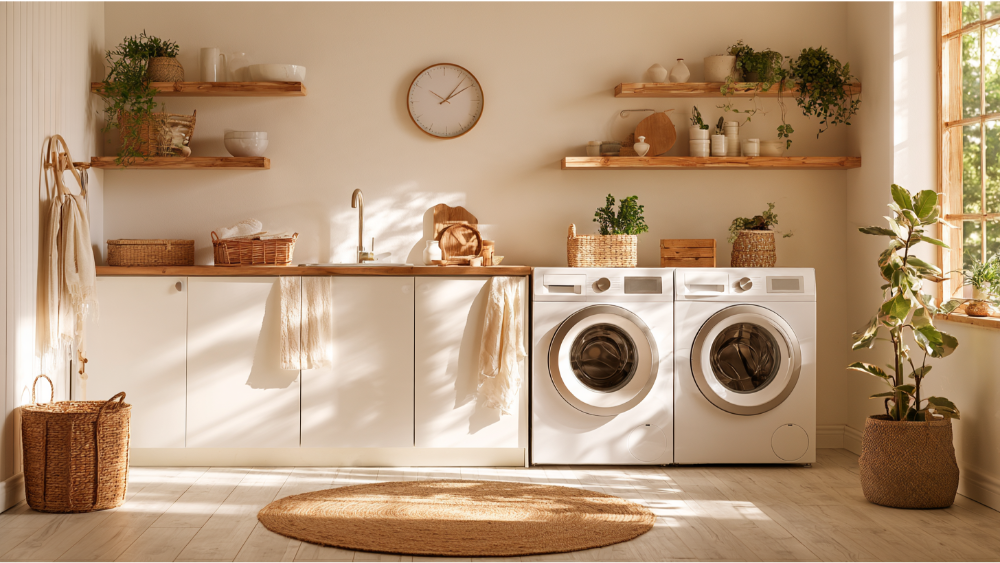
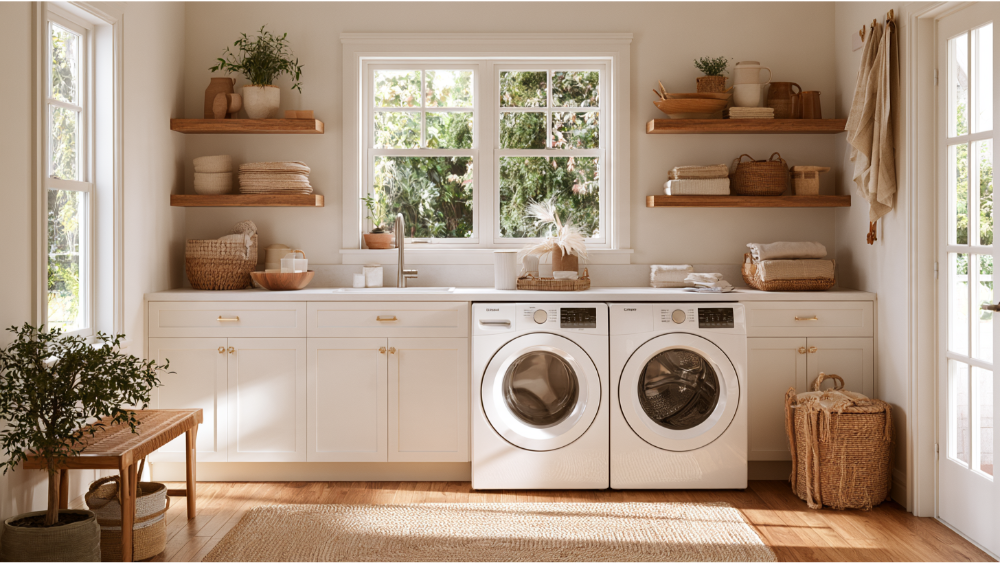
- Warm whites: clean and inviting, they keep a utility room feeling fresh and airy.
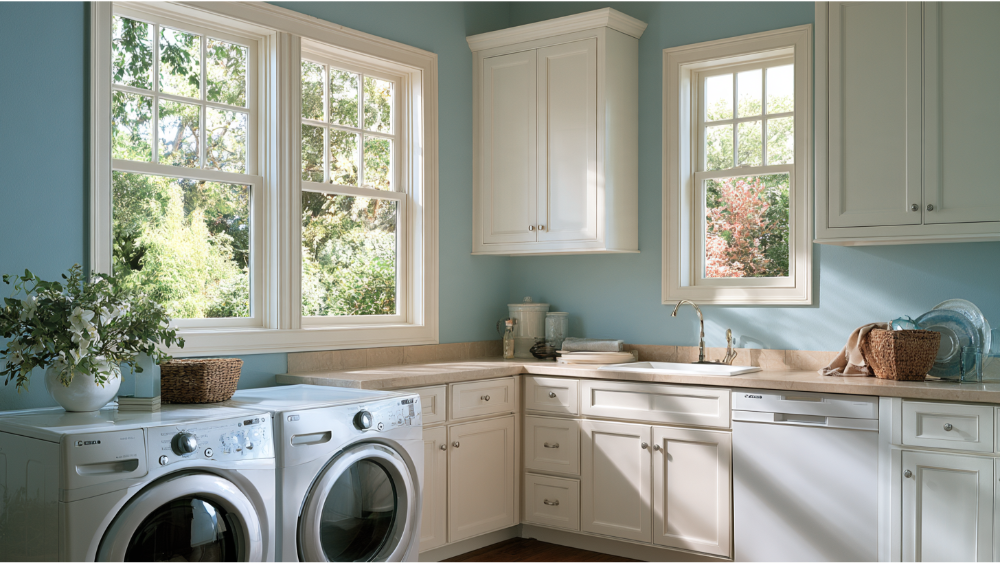
- Pale blue and blue-green: calm, crisp hues that read as clean, which suits the room's purpose and create a soothing space.
- Soft sage and muted green: calming, nature-connected shades that feel grounded and create a restful vibe.
- Light greige and taupe: warm neutrals that quietly disguise scuffs and detergent splashes.
- Muted yellow or peach: a cheerful touch that adds a pop of energy to a plain laundry space.
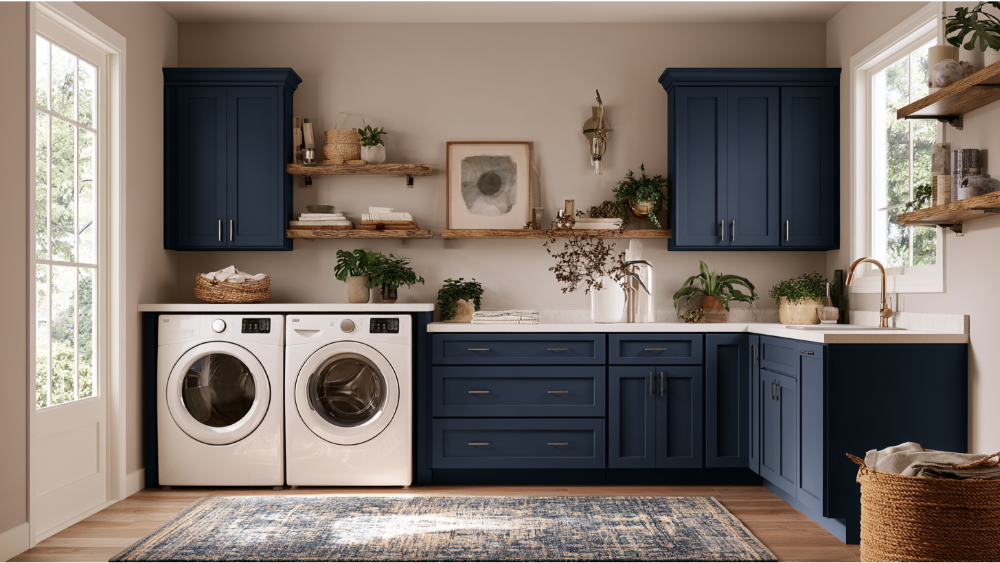
- Navy, charcoal, or black: best used as controlled accents, on cabinets or a single wall.
Start With the Room, Not the Paint Chip
The right color is set by the room's conditions, not by what looks good on a chip in the store. Before you fall for a shade, look at what you're actually working with in this functional space:
- Natural light versus only artificial light.
- Bulb color temperature. ENERGY STAR describes 2700 to 3000K as warmer light and 4000K and above as cooler, which can make whites and blues read crisper or colder.
- Room size, cabinet color, and appliance finish.
- Flooring and countertops, and whether the room is visible from an adjoining space.
Light reflectance value (LRV) is a handy comparison tool: a higher number reflects more light, which helps in a dim room. Treat it as a way to compare two candidates, not a pass/fail score. A higher CRI bulb also renders color more faithfully, so test under your real lights before committing a bit of money to gallons.
Best Laundry Room Paint Colors by Situation
Match the direction to your room's condition:
Contrasting trim can sharpen the whole look, giving a simple room some definition and real character. If you want ideas that feel current, a soft green trance of sage paired with a warm neutral trim reads calm and modern without going trendy. Small touches like a vintage rug, woven baskets, or a few brass details add color and personality, and they complement almost any wall tone.
Can You Use Dark or Bold Paint in a Small Utility Room?
Yes. A deep color isn't automatically wrong for small spaces, but it needs enough light and some balance to work. You can keep it to the cabinets or go all four walls (color drenching) for a cozy, enveloping feel. A rich blue gray reads sophisticated and elegant without going harsh, and a bold black accent can look crisp against light trim. Keep the lighting adequate, and balance a dark palette with light counters, trim, flooring, or appliances. Natural wood tones warm up a bold scheme with real depth and warmth, and keep the space from feeling heavy. The right hues can look gorgeous and give the whole room a serene, cheery vibe at once.
How to Coordinate Laundry Room Paint With Appliances and Cabinets
With white appliances, avoid competing whites that clash. Pair them with a muted color or a warm neutral so nothing fights. Stainless or graphite finishes are flexible and sit well with lighter walls or controlled contrast. Natural wood cabinets warm up the palette on their own. If your cabinetry is white, green, navy, gray, or black, pull an undertone from the flooring or countertops to tie the room together. Brass hardware can add a warm accent against cooler walls, and a hint of metal helps the whole scheme shine. Suddenly the space has a quiet beauty, and folding clothes feels a little more enjoyable.
What Paint Finish Works Best in a Laundry Room?
Start with a washable paint. Satin is the broadly practical default for walls. Semi-gloss earns its place where frequent wiping or splashing happens, and on doors, trim, and cabinetry. Keep in mind that sheen names vary by manufacturer: MPI lists eggshell at 10 to 25 gloss units, satin at 20 to 35, and semi-gloss at 35 to 70. Check the product data, not just the label. Higher sheen also shows more wall texture and defects, which is why prep matters. Low-VOC, family-safe options exist, but still follow the product label and ventilate during and after painting.
Surface Prep: What to Fix Before You Paint
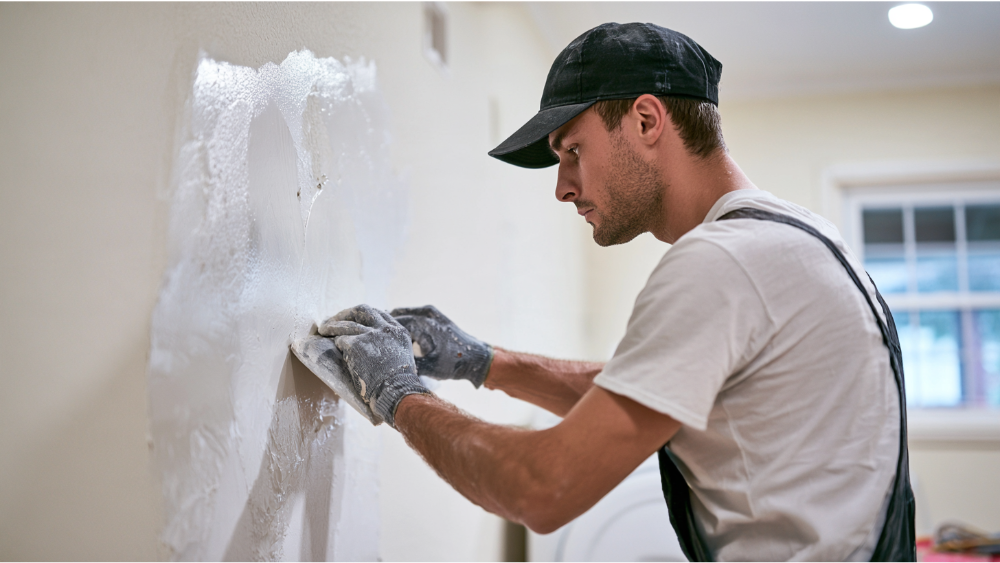
Prep is everything. Color can't fix a bad surface, and a laundry room sees more lint, moisture, and splashing than most rooms. Before you open the finish coat:
- Remove lint, dust, and detergent residue.
- Repair dents, holes, failed caulk, and damaged trim.
- Address active leaks and condensation at the source.
- Clean and dry mold-affected hard surfaces properly.
- Prime repaired, stained, or uneven areas as your system requires.
EPA guidance is clear: keep indoor humidity below 60% (ideally 30 to 50%), dry wet materials within 24 to 48 hours, and never paint over mold or wet surfaces, because the paint will peel. This is where full-service capability helps. We handle rot repair, siding, carpentry, and damaged trim with the same team, so damage is corrected before the flawless finish goes on. In homes built before 1978, prep can disturb old lead paint, so lead-safe (EPA RRP) practices apply. Cover Pro Painting is EPA Lead-Safe Certified.
How to Test a Laundry Room Paint Color
- Narrow your choice to two or three color families.
- Use large samples, not a small chip.
- Place samples beside the cabinets, appliances, flooring, and trim.
- View them with the permanent lights on and off.
- Check them during the hours you actually use the room.
- Test the intended sheen when you can.
- Finalize only after repairs and primer are complete.
Light changes how a paint color reads, so the room itself is the only honest test. When you are still thinking it over, live with the samples for a few days before you commit. The right choice brings the space to life and makes everyday chores feel more relaxed, and it helps you move the project forward with less second-guessing. If you spot an idea you love online, save it to your browser or drop a comment on our website so we can reference it later.
Get a Free Estimate From Cover Pro Painting
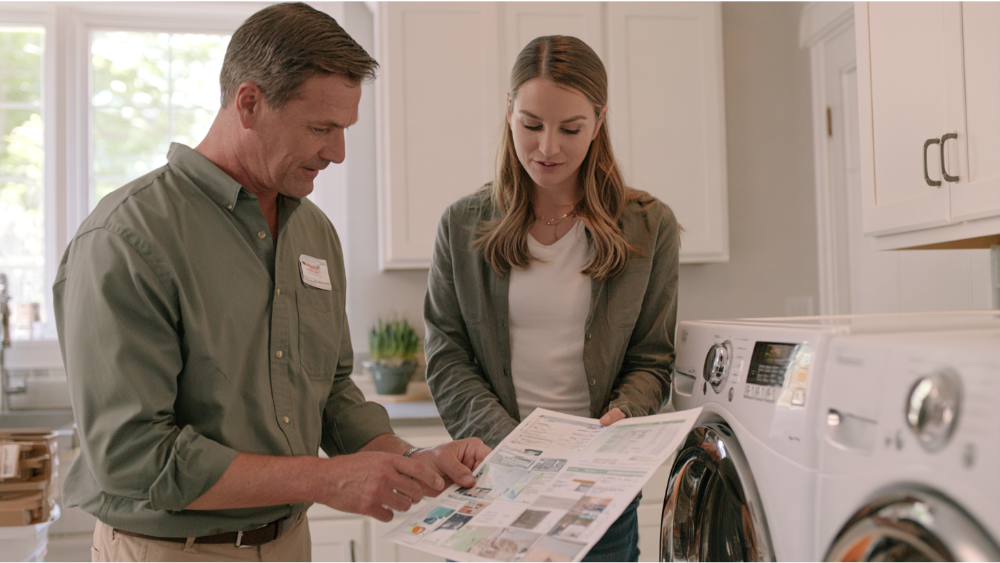
Bring in a pro for cabinet or millwork painting, peeling or water-damaged surfaces, tight appliance clearances, multiple repairs, or older homes needing lead-safe prep. One clear scope that covers repairs and painting keeps the whole project clean. We'll help you get the ball rolling and have some fun with color along the way. We're the Edgewood, WA team serving homeowners and businesses across the greater Seattle-Tacoma region, with premium paint products, attention to detail, and clear communication from start to finish. A free color consultation comes with every project, so you don't have to settle the color question alone. Start with a free estimate and see exactly what your laundry room project will involve. Call 206-222-0435 or request a free estimate.
Frequently Asked Questions
What type of paint should I use in a laundry room?
Use a washable finish. Satin is the practical default for walls, with semi-gloss for high-splash areas, trim, and cabinets. Check the product data, since sheen names vary between manufacturers.
What color makes a small laundry room look larger?
Light paint colors with higher light reflectance, like warm whites, pale sage, and light greige, reflect more of the available light and open up a compact space. These same shades work well in other small spaces around the house.
Do I need to fix moisture damage before repainting?
Yes. Paint over active leaks, condensation, or mold will peel. The source and damaged materials must be corrected and surfaces fully dried first. EPA advises drying wet materials within 24 to 48 hours and keeping humidity below 60%.
What color is replacing gray in 2026?
Warm neutrals, greiges, and soft nature-inspired greens like sage are increasingly chosen over cool gray because they feel warmer and more inviting. Choose paint colors that suit your light and fixed finishes rather than following a trend alone.
Should laundry room walls and cabinets be the same color?
Either works. Matching reads calm and cohesive, while contrasting cabinets or trim adds definition. Pull an undertone from the flooring or countertops to keep the palette connected.
