
%201.svg)


Kitchen Paint Colors That Work With Any Cabinet Color
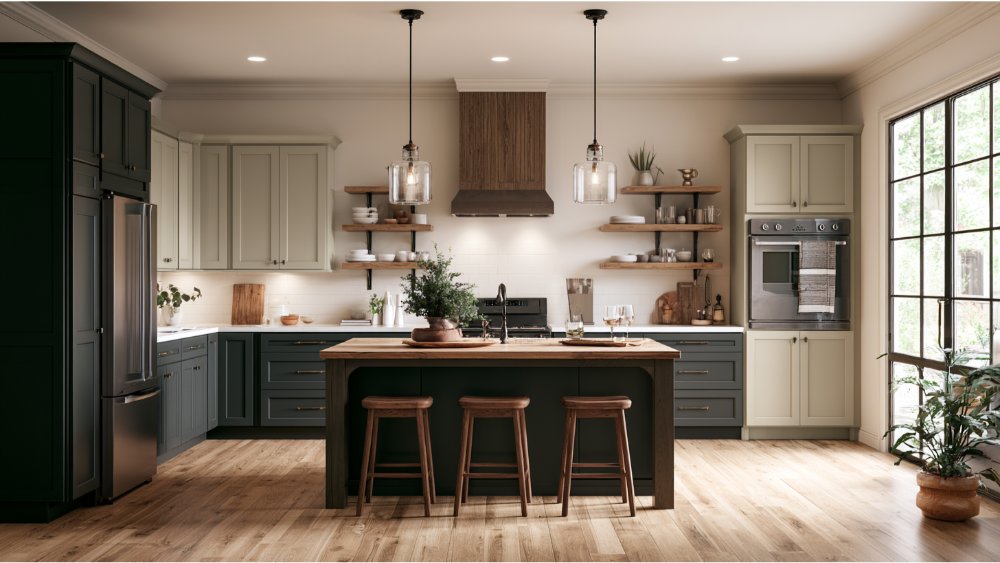
Key Takeaway
The kitchen paint colors that work with any cabinet color are warm white, soft off-white, cream, greige, taupe, light warm gray, muted sage, and dusty blue-gray. These low-chroma neutrals stay calm against wood, painted, and dark cabinets alike. Match the wall undertone to your cabinet undertone, then test samples in your actual kitchen light before ordering gallons.
The kitchen wall colors that work with the widest range of cabinets are warm white, soft off-white, cream, greige, taupe, light warm gray, muted sage, and dusty blue-gray. There's no single magic shade for every kitchen. The safest choice is a balanced neutral or muted color coordinated to your cabinet undertone, plus your countertops, backsplash, flooring, and natural light. This guide is for homeowners repainting a kitchen who don't want to guess wrong and end up repainting again in a year. You'll get a short list of cabinet-friendly color families, a way to match them to your kitchen cabinets, and the process that makes the finish actually last. Because a great color only looks great if the wall underneath it was prepped right.
The Kitchen Paint Colors That Work With Almost Any Cabinet Color
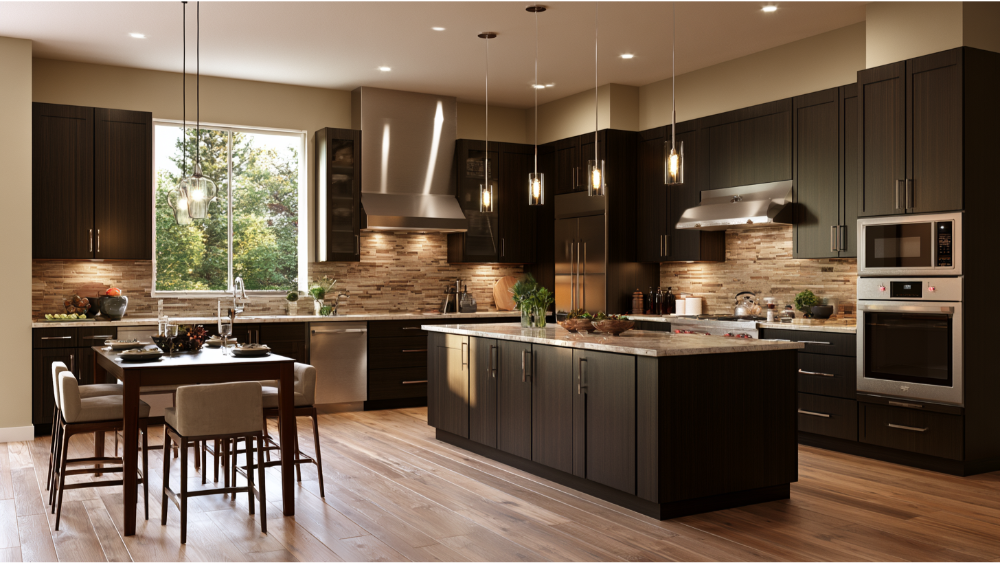
These color families flatter the most cabinet types because they're muted and easy to build a room around. Keep them in mind as a shortlist before you start pulling swatches and gathering ideas.
- Warm white: soft and inviting, complements painted, wood, and dark finishes without going stark.
- Soft off-white: the most versatile of all, a gentle backdrop that lets cabinets lead.
- Cream: softens stark white cabinets and pairs naturally with natural wood.
- Greige: bridges warm and cool tones, so it suits nearly any cabinet.
- Taupe: looks elegant in both traditional and modern kitchen styles and enhances wood stains.
- Light warm gray: warm grays age better than cool grays, which can read blue over time.
- Muted sage: a soft nature-inspired green that pairs easily with white, wood, and gray cabinetry.
- Dusty blue-gray: adds quiet color while staying neutral enough to coordinate broadly.
- Soft charcoal: best as an accent wall, not the whole kitchen, unless you're going for a deliberately moody design.
Notice these are color families, not specific paint chips. That's on purpose. A "warm white" from one paint line and another will read slightly different, and the right one depends on your room and how you actually live in it.
Why These Colors Work With So Many Kitchen Cabinets
The logic is simple once you see it. These colors are low-chroma, meaning they're muted rather than bright and saturated. A muted wall doesn't compete with your countertops, backsplash, flooring, or appliances, so the space reads calm instead of busy. They also carry balanced undertones that bridge warm and cool cabinet finishes, which is why greige in particular is so flexible. And because they're understated, they leave room for future changes: swap a backsplash or replace hardware down the road, and the walls still work.
The trend data backs this up. In the 2026 Houzz kitchen report, off-white was the top renovated-kitchen wall color at 29%, followed by white at 21%, gray at 10%, blue at 7%, and beige at 7%. Neutrals and soft colors dominate open-plan interiors. NKBA's 2026 report found 96% of respondents named neutrals as the most popular kitchen colors, with greens at 86% and blues at 78%.
One shift matters for the "any cabinet color" promise: wood is now a leading cabinet finish for kitchen cabinets, chosen by 29% of renovating homeowners in that same Houzz report, edging out white at 28%. So your wall color has to flatter warm wood grain, not just painted white doors and drawers.
How to Match Wall Color to Your Cabinet Undertone
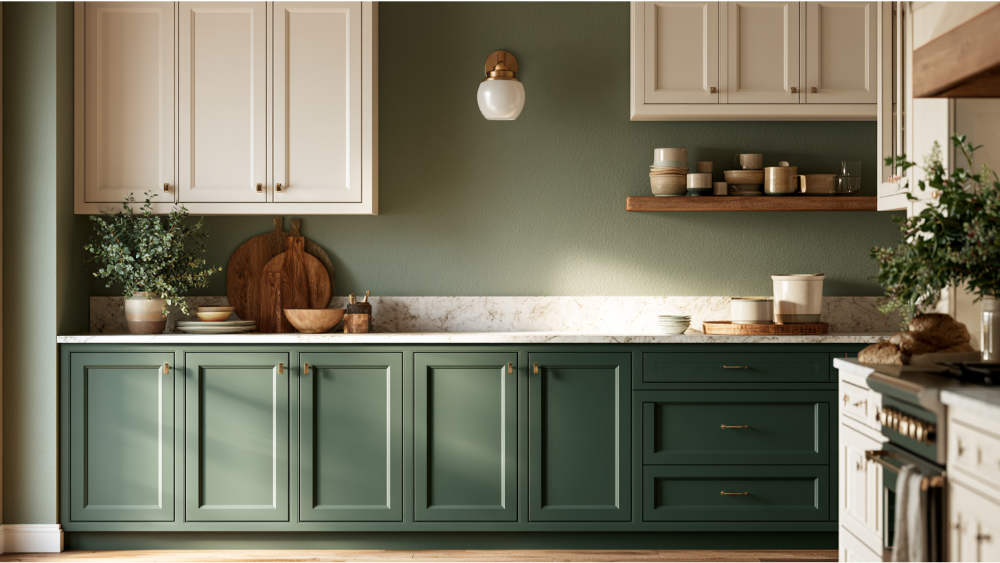
Undertone is the quiet color underneath the main color. Cabinets can lean warm (yellow, red, brown), cool (blue, gray, green), or neutral. Get the wall's undertone in the same family as your cabinets and the room feels cohesive. Fight the undertone and something looks off even if you can't name why. Here's a starting point by cabinet type.
Two-tone kitchens are common now, with 24% of renovating homeowners choosing different upper and lower cabinet colors in the 2026 Houzz report. If that's you, pick a wall color that bridges both. A light greige or soft warm white usually does the job without picking a side, and it carries the same tone across cabinets, drawers, and an island if your layout has one. Pairing that neutral with custom cabinetry in a wood or painted finish is one way to make even a simple color feel refined.
Kitchen Design Inspiration: Countertops, Backsplash, and Light
Your wall color has to coordinate with the whole room, not the cabinets alone. Walk through the fixed finishes before you commit. Granite and marble countertops read as elegant classics, while concrete and stainless steel are more current and lean cool. A bright mosaic tile backsplash already brings color to the room, so calmer walls keep it from feeling chaotic. Then factor in flooring, trim and doors, hardware, appliances, open shelving and storage, and any adjacent room your kitchen opens into. If you're gathering kitchen inspiration from photos, remember that a modern kitchen you love online was styled and lit for the camera, so treat those images as a starting point rather than a promise.
Light is the other half of the equation, and it matters more than most people expect. NKBA's 2026 report ranks natural lighting (95%), quality lighting (93%), and task lighting (92%) among the top kitchen design considerations. Paint reacts to all of it. One useful tool is LRV, or Light Reflectance Value, a 0-to-100 scale showing how much visible light a color reflects. Higher numbers read brighter and more open; lower numbers read deeper and absorb light.
This is where local reality lands. If you're in Edgewood or anywhere across the greater Seattle-Tacoma region, you know our natural light runs gray and changeable. A color that looks perfect in a bright showroom can read cooler and flatter in your actual kitchen. Test it at home before you order gallons so the finish you create matches the mood you had in mind.
Kitchen Inspiration: Where to Look for Ideas That Actually Fit Your Home
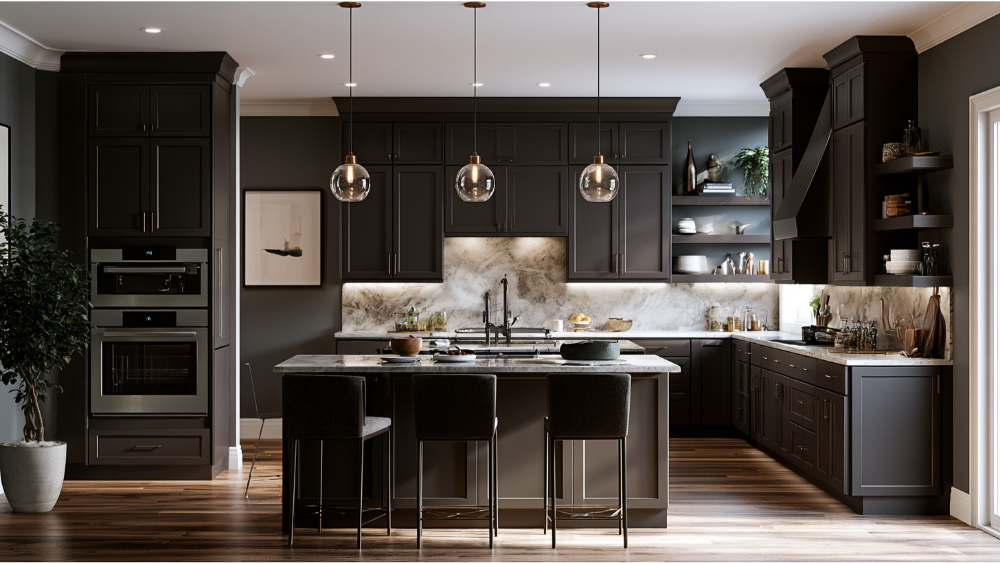
It helps to explore a wide range of sources before you decide. A design magazine, a builder's photo collection, or a well-lit page from a favorite home store can spark ideas you'd never reach on your own. Homeowners across the country pull inspiration from all sorts of interiors, and even historic architecture can shape the personality of a modern space. If you love the look of a particular kitchen, ask what materials, cabinets, and finishes give it that character. Architects and designers, from a small studio to a big-name figure like David Rockwell, build their reputation on that kind of thoughtful detail, and the same focus works in a family kitchen. The goal isn't to copy a single example. It's to find the style and items that make your home feel like yours.
The Best Paint Finish for Kitchen Walls
Kitchens deal with grease, splatter, steam, food prep, and frequent wiping, so sheen isn't a small detail. Here's the plain-English breakdown of common finishes.
- Eggshell: a soft, low-sheen finish that hides more wall imperfections. Fine for lower-traffic kitchen walls.
- Satin: more durable and wipeable, the workhorse for busy kitchen walls near food prep and the stovetop.
- Semi-gloss: best for trim and doors, where you want a tougher, wipeable surface. Usually too shiny for full walls unless that's the look you're after.
- Flat or matte: beautiful but use it carefully in a kitchen unless the product is specifically built for cleanability.
For most kitchen walls, satin gives you the wipeability you'll be glad to have every time food splatters near the cooktop.
The Step Most Color Articles Skip: Kitchen Wall Prep
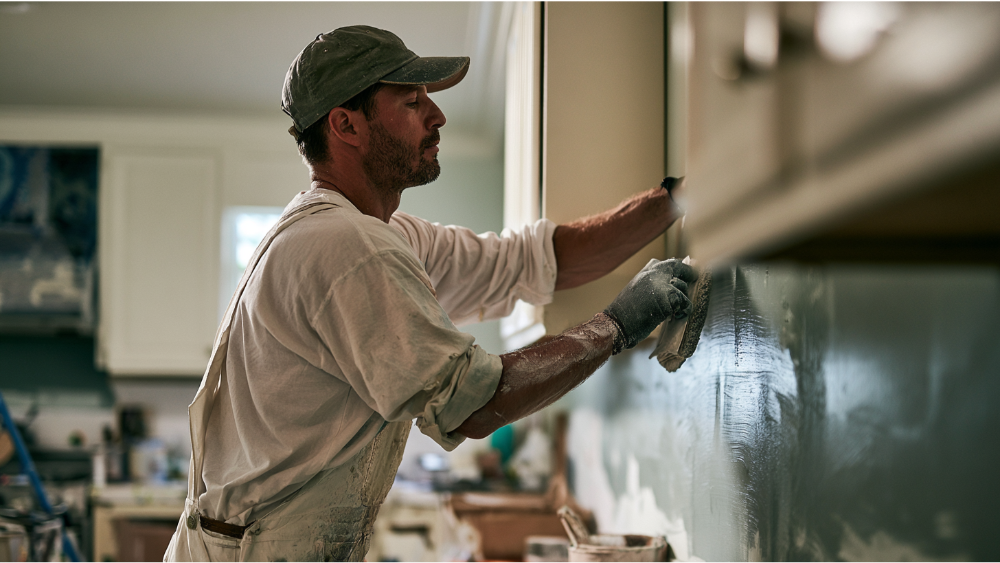
A color only looks clean and lasts if the surface underneath was prepped right. Kitchen walls are the toughest case, because grease and cooking film collect on them over time and wreck paint adhesion. Skip the prep and even a premium color can peel, streak, or refuse to cover.
Proper surface prep for a kitchen looks like this: wash the walls with a grease-cutting cleaner and rinse them clean; repair any drywall dings or cracks; sand or scuff glossy old coatings so new paint can grip; spot-prime stains and repaired areas; and use the right primer whenever you're changing color, sheen, or surface condition. It's unglamorous work, and it's the single biggest reason a repaint looks flawless a year later instead of tired. The same care applies if you're painting kitchen cabinets, drawers, or a built-in island, where a slick factory finish needs to be scuffed and primed to hold new paint. Whether the cabinets are stock or built from scratch, that keeps the finish durable and functional for years.
Older kitchens deserve one extra note. Homes built before 1978 are more likely to contain lead-based paint, which the federal government banned for consumer use that year. For those homes, lead-safe work practices matter, and the EPA recommends hiring an EPA Lead-Safe (RRP) Certified contractor. We're certified, so pre-1978 kitchens are handled safely. It's also worth choosing low-VOC, family-conscious products and ventilating well while painting, since the EPA notes many VOCs run higher indoors than out.
How to Test Kitchen Paint Before You Commit
Testing is how you avoid an expensive mistake. Don't choose off a tiny paper chip. Here's a checklist that works.
- Paint sample swatches right next to your cabinets, drawers, counters, backsplash, and trim, not on some distant wall.
- View them in morning, afternoon, and evening light. Color shifts as the day moves.
- Check them under your actual kitchen bulbs, not just daylight.
- Always compare at least one warmer and one cooler option side by side.
The color that pulls the whole room together on the sample is the one worth ordering in gallons. If it's fighting your countertop or reading cold under your bulbs, better to learn that now. This is the moment to trust how a color makes the space feel, not just how it looks on a chip.
When to Bring in a Professional, and Get a Free Estimate
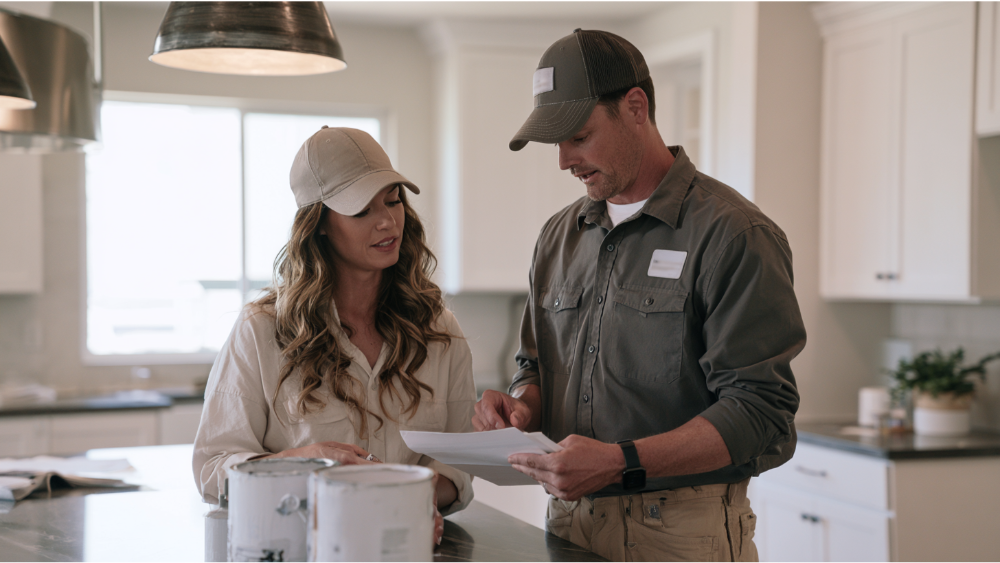
Some kitchens are a straightforward weekend job. Others aren't. Bring in a pro when the walls have grease buildup, stubborn stains, damaged drywall, glossy old paint that needs scuffing, older-home lead concerns, or when the color has to flow cleanly into an open living or dining space. Repainting or building out kitchen cabinets and adding storage is another point where professional prep and finishes make a visible difference, especially in a busy eating and gathering area.
We're a founder-led team based in Edgewood, WA, serving the greater Seattle-Tacoma region. Our interior painting includes a free color consultation, careful surface prep, premium products with low-VOC options, and EPA Lead-Safe Certified work for pre-1978 homes. We're licensed, bonded, and insured in Washington State. And because we're full-service, we can handle any trim, door, cabinet, or wall repair your kitchen needs in the same visit, so you're not juggling separate contractors while trying to create your dream kitchen and bring your design ideas to life.
Start with a free estimate and see exactly what your project will involve. Call us today at 206-222-0435 or request Get My Free Painting Estimate online. When you're ready to meet with our team, we'll help you choose the color and finish that fit your kitchen and your needs.
Frequently Asked Questions
What is the best kitchen wall color for any cabinet color?
A balanced neutral or muted color is the safest bet, with soft off-white and greige leading the pack. They coordinate with warm and cool cabinets alike and don't fight your countertops or backsplash, which makes them a reliable starting point for almost any kitchen design.
What color walls go with wood or oak cabinets?
Warm greige, muted taupe, and soft sage work well, because they calm the orange tones in wood without clashing. Steer clear of cool grays, which can make natural wood look dated. These warm neutrals let the grain feel rich rather than muddy.
Should kitchen walls be lighter or darker than cabinets?
There's no fixed rule. It depends on room size, light, and the contrast you want. Lighter walls open up a small kitchen; a deeper wall adds depth when you have strong light to support it. Let the style you're after and how the room feels guide the call.
What paint finish is best for kitchen walls?
Satin is the practical choice for most kitchen walls because it's durable and easy to wipe near food prep. Save semi-gloss for trim and doors, and use flat or matte finishes only if the product is made for cleanability.
Do I need to prime kitchen walls before painting?
Often yes. Prime when you're switching colors, changing sheen, covering stains, or painting over glossy or repaired surfaces. In grease-prone kitchens, a clean, well-primed wall is what makes the finish last and the whole space look freshly done, keeping the result welcoming for years.
