



How to Remove Paint From Hardwood Floors Without Damaging the Finish

Key Takeaway
To remove paint from hardwood floors, start with the gentlest method: blot fresh paint immediately, or soften dried latex paint with a damp soapy cloth and lift it using a plastic scraper held nearly flat. For oil-based paint, test mineral spirits in a hidden spot first and rub with the wood grain. Always protect the existing finish by testing any product in an inconspicuous area before treating the visible floor.
The Short Answer: Start Gentle, Protect the Finish
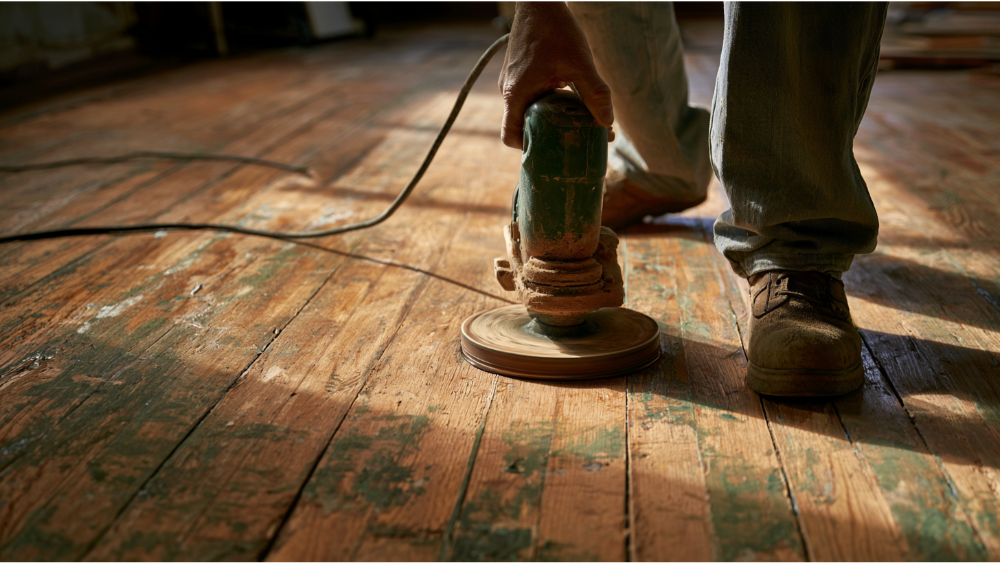
Start with the least aggressive paint removal method. Blot fresh paint, or soften dried water based paint with a barely damp cloth that has a little soap on it, then lift it with a plastic scraper held nearly flat. Test anything stronger in a hidden spot first, and stop before you reach for sanding or heat. The real goal isn't just dissolving the paint. It's getting it off without stripping the floor's finish underneath, which means patience and the right technique matter more than force.
Check These Four Things Before You Touch the Paint
A few seconds of identification saves you from a permanent mistake. The right method depends entirely on what materials you're working with.
Lead-Paint Warning for Homes Built Before 1978
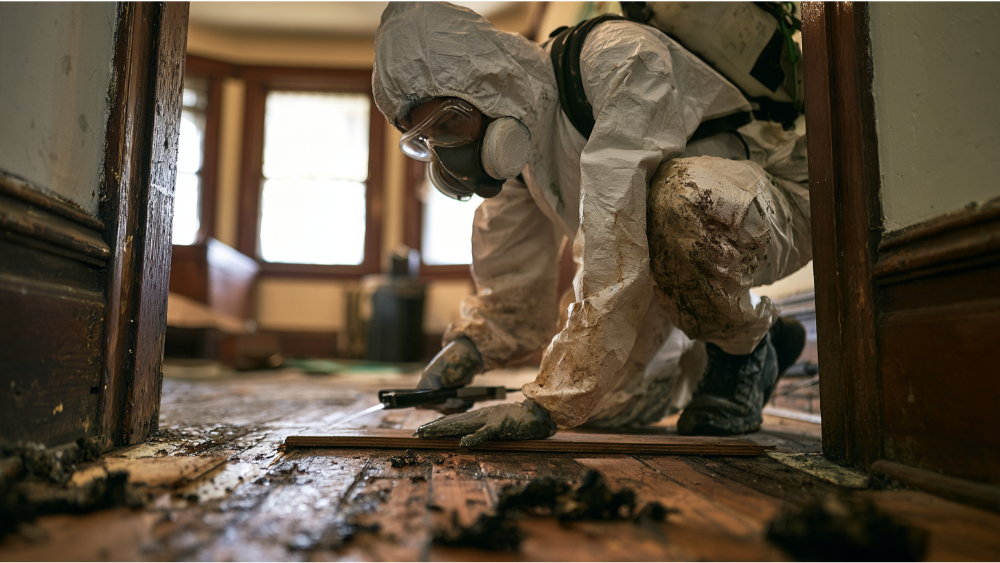
There's a real difference between a fresh drip from a recent can of water based wall paint and old, unknown-age paint stains on a floor in an older house. The first is low concern. The second is the one to take seriously. Paint made before 1978 may contain lead, and disturbing it through scraping, sanding, or heat can create hazardous dust. The EPA recommends lead-safe practices for exactly this situation. If you're dealing with old or unknown paint in a pre-1978 home, don't sand, power-scrape, or heat it. Bring in a lead-safe certified professional. Cover Pro Painting is EPA Lead-Safe (RRP) Certified, which matters any time older painted surfaces get disturbed.
Supplies for the Safest First Attempt
You don't need many specialized tools to start. Gather:
- Microfiber or a clean rag in white cotton
- Mild dish soap or a wood-floor cleaner approved for your finish
- A plastic putty knife, plastic scraper, or an old plastic card
- Cotton swabs for seams
- Rubbing alcohol for testing, plus gloves and eye protection if you'll use a labeled solvent
Leave these in the drawer: metal blades, steel wool, abrasive pads, and steam cleaners. Metal gouges wood, abrasives leave permanent scratches, and steam forces moisture into the boards.
How to Remove Fresh and Dried Paint Latex Stains
Fresh latex
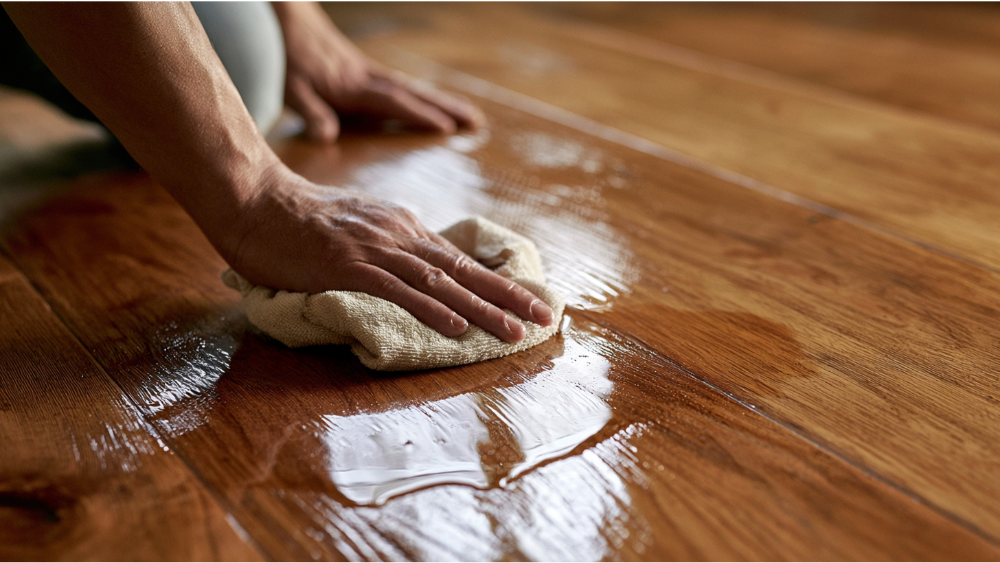
Move fast. Scoop or blot the excess without spreading it, working from the outside toward the center. Wipe with a damp cloth dipped in hot water and a little soap, then dry the area right away. Check the seams, since paint likes to run into them.
Dried latex
Climb the ladder slowly. Start gentle and only escalate if you have to.
- Gently scrape a raised edge of the paint spot with a putty knife made of plastic, held nearly flat to the floor.
- Soften it with a damp cloth and a mild cleaning solution. Damp, not dripping.
- Repeat the softening and lifting instead of pressing harder. A little elbow grease beats a sharp tool here.
- If it's still stubborn, test a few drops of rubbing alcohol or denatured alcohol on the paint and on the finish in an inconspicuous area first. Alcohol can affect shellac and older finishes, so the test protects you. Dab it with a clean rag and let it sit briefly before you gently rub.
- Wipe clean to lift any remaining residue, then dry the area promptly.
- Stop at the first sign the finish is changing.
How to Remove Oil Based Paint From Hardwood Floors
Oil based paint bonds harder and won't give up to soap and water. Confirm the type if you can by checking the original can to determine your approach. Then test a finish-compatible labeled product, or a little mineral spirits, in a hidden spot before you commit to the paint removal process. Apply the solvent from a lightly dampened rag and rub in the direction of the wood grain. Never pour chemicals onto the floor.
Work in a well ventilated area with the windows open, since these chemicals give off strong fumes. Keep children and pets out, and remove anything that could spark or hold a flame. Stop immediately if the finish turns cloudy, dull, tacky, or discolored. Harsh paint thinner can soften many finishes, so go slow and test before you lean on it. One note on old supplies: methylene chloride consumer paint removers were pulled from sale after November 22, 2019 because of serious safety risks, so don't reach for an old can of that chemical stripper or paint remover. If the finish is delicate or unknown, have a professional take a look before you push further.
Getting Paint Out of Cracks and Floorboard Seams
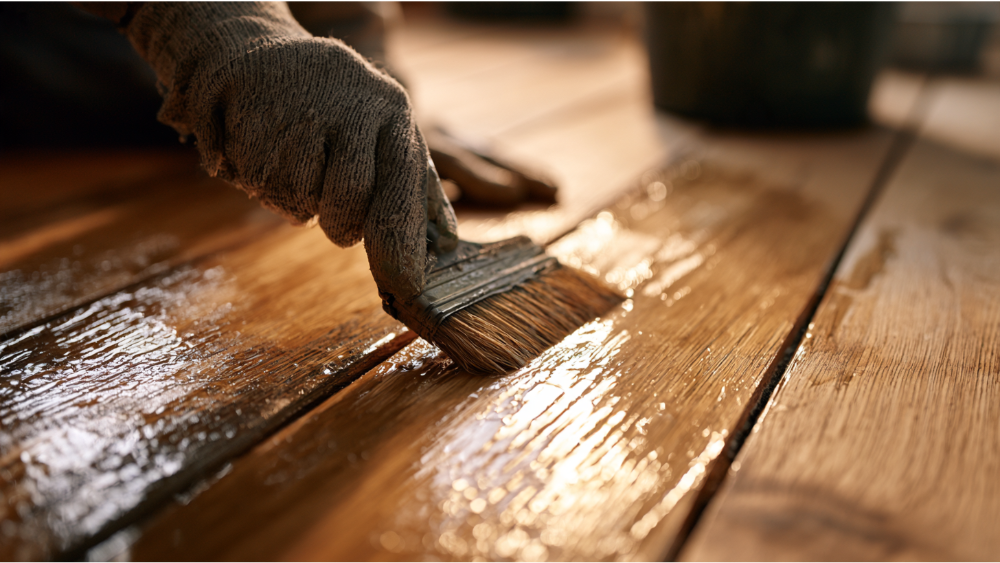
Seams need a light touch and extra care. Use a cotton swab, a soft nylon brush, or a nonmetal plastic pick. Don't flood liquid or chemicals into the joint, where moisture can do real damage, and never dig between boards with a razor. Paint that has soaked into bare grain and set like a stain usually can't be cleaned off at all. That points to refinishing or board repair rather than spot cleaning.
What Not to Use on Finished Hardwood Floors, and Which Paint Removal Tool to Skip
Keep these away from a finished floor:
- Metal scrapers and razor blades
- Acetone or lacquer thinner as default cleaners
- Vinegar or lemon juice mixtures (the NWFA warns that acidity harms wood and finishes over time)
- Bleach and ammonia
- Steel wool and abrasive pads
- Wet mops and steam
- Poured solvent or paint thinner
- Spot sanding
- A heat gun or hair dryer on old, unknown, or finished floors
Heat scorches wood regardless of lead, and EPA rules prohibit heat above 1,100°F on lead paint. A heat gun belongs with professional refinishing, not casual spot removal.
When Spot Removal Becomes a Refinishing Job
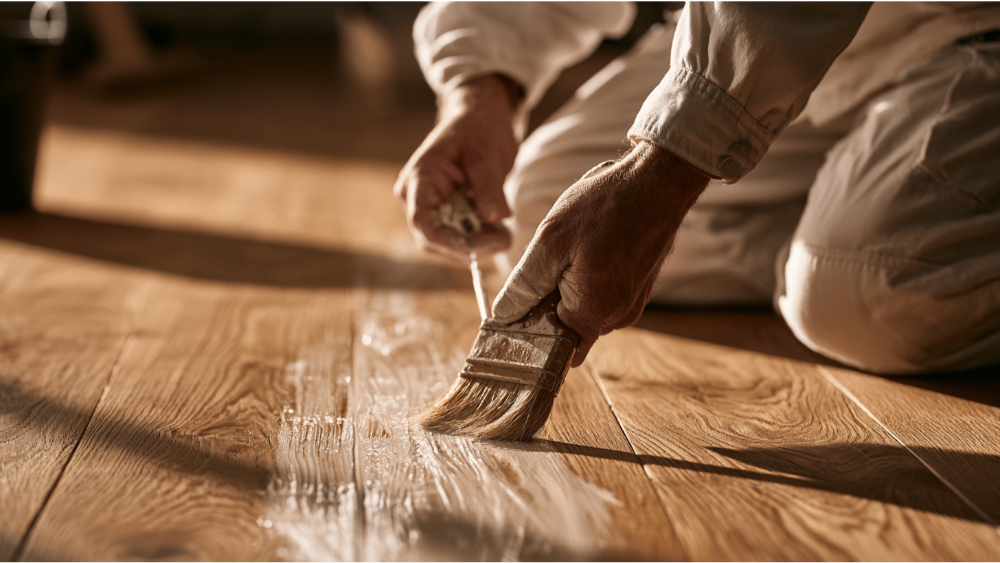
Lifting a few specks of remaining paint off an intact finish is cleaning. Taking paint off whole hardwood floors is a stripping and sanding project, and that's a different trade. Call a flooring professional when paint covers a large area or the entire floor, when there are multiple old layers, when dried paint has soaked into bare wood, when the finish lifted off along with the paint, when engineered flooring has a thin wear layer, or when the floor is historic or valuable. Push too hard on bare grain and you risk removing the surface along with the stain. This is honest territory: that work belongs with a flooring refinisher who can restore the floor's beauty.
How Professional Painters Keep Paint Off the Floor in the First Place
The best paint removal method is never needing one. Before we open a single can, we protect the floor and any nearby carpet. We secure the coverings so they can't slide or expose seams, keep cleanup rags and a clean rag within reach, and cap and secure containers between coats. Wet drips get wiped immediately with a damp cloth, and we inspect the floors and edges before leaving the room. That kind of floor protection is part of surface prep and attention to detail, and it's where craftsmanship actually shows.
Planning an interior update in Edgewood or anywhere across the greater Seattle-Tacoma area? Start with a free estimate and see how we approach surface prep, floor protection, and clear communication from start to finish. The careful groundwork is the whole idea. Get a Free Estimate, 206-222-0435.
Frequently Asked Questions
Will vinegar remove paint from hardwood floors?
It's not recommended. The NWFA cautions that vinegar's acidity can damage wood and finishes over time. Use warm water with a little soap and a plastic scraper instead.
Does WD-40 remove paint from hardwood floors?
It can loosen some paint stains, but it may leave an oily residue and can affect the floor's finish. Test it in a hidden area first, then rub the surface clean afterward.
How do you remove paint from wood floors without damaging the wood?
Start with the gentlest method, use plastic tools instead of metal, keep moisture and chemicals minimal, and test anything stronger in an inconspicuous spot before using it on the visible floor.
How can I remove oil based paint from wood floors without sanding them?
Test a little mineral spirits on a clean rag in a hidden spot, then gently scrape softened paint with a plastic edge. Sanding risks the finish and is best left to a flooring professional.
