
%201.svg)


How Do Painters Protect Surfaces During House Painting?
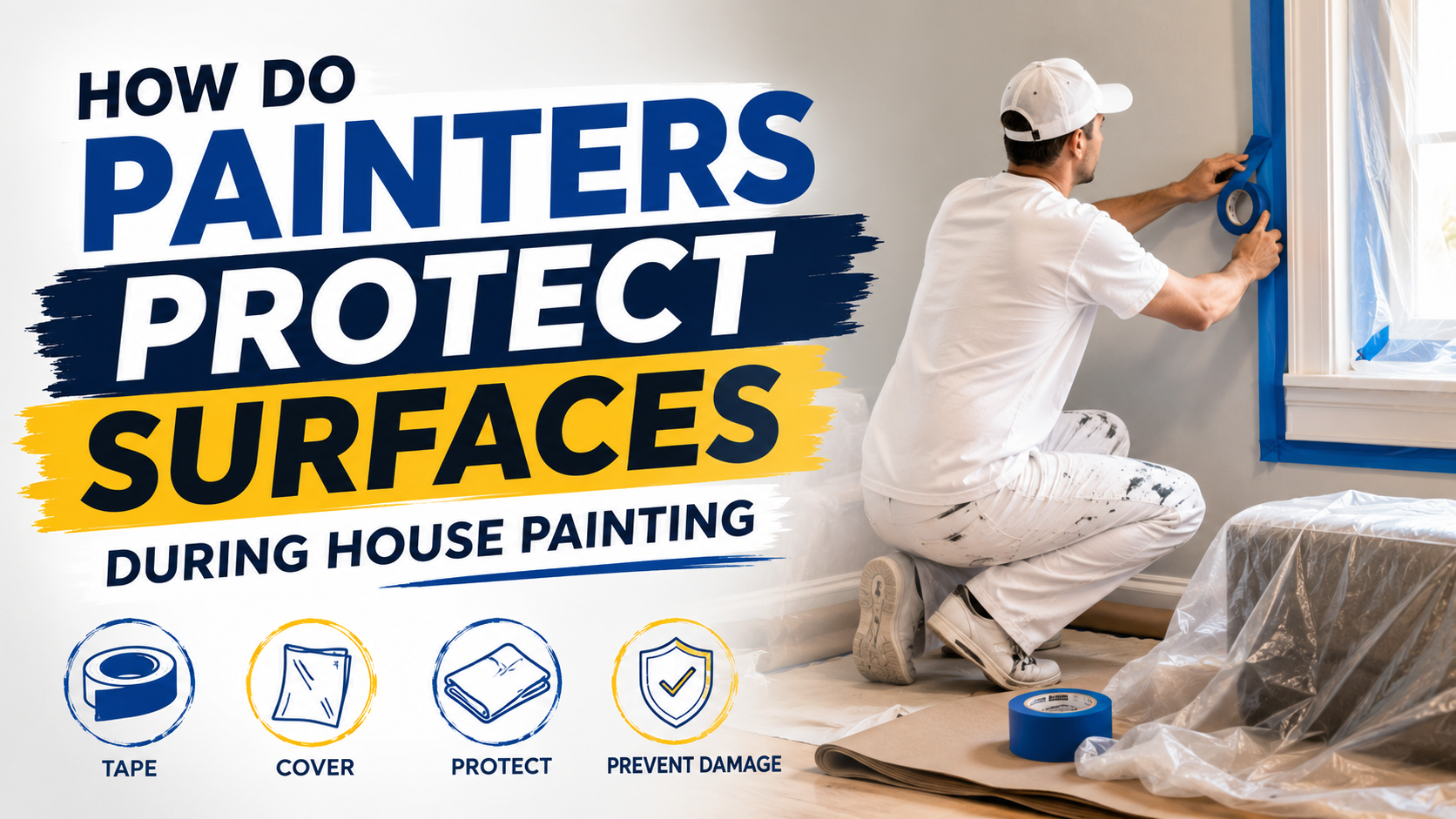
How Do Painters Protect Surfaces During House Painting?
Many homeowners ask the same question before hiring a contractor: how do painters protect surfaces during house painting without creating a mess or damaging the home? The answer comes down to a detailed process built around preparation, materials, and consistent care. A professional paint job starts long before the first coat of paint touches the walls. It begins with protecting surfaces, organizing the space, and setting up the room so painters can work efficiently and safely. At Cover Pro Painting, every painting project is handled with careful attention to furniture, floors, and every surface in the home. The goal is simple: protect everything so the only thing that changes is the color on your walls.
Here’s a Quick Answer
Professional painters protect surfaces by using drop cloths, plastic sheets, painter's tape, and masking systems throughout the entire painting project. They cover furniture, protect floors, seal off edges, and control paint spills and paint drips before work begins. This layered protection process keeps paint where it belongs and ensures clean lines on walls, trim, and ceiling areas. From start to finish, protecting surfaces is what separates a rushed job from professional results.
Why Surface Protection Matters More Than Most Homeowners Realize
Surface protection plays a major role in the final outcome of any paint job. Many homeowners focus on color and finish, but protecting surfaces is what prevents damage and creates a stress-free experience. Paint spills, paint splatter, and excess paint can permanently damage floors, carpet, tile, and furniture if not controlled. Professional painters use the right materials and a proven process to prevent paint from spreading beyond the intended surface. This approach reduces risk, protects delicate surfaces, and allows painters to work efficiently without worrying about cleanup issues later. Clean lines along edges, trim, and ceiling areas are only possible when masking and tape are applied correctly.
Step 1 | Clearing and Preparing the Space
Moving Furniture and Fixtures
Before any work begins, painters create more room by moving furniture out of the work area. Large furniture pieces are carefully relocated or grouped in the center of the room and fully covered. This step protects furniture from paint spills and paint splatter while also giving painters the space they need to move ladders and tools safely in homes across our service areas. Many homeowners are surprised by how much preparation is required before a painting project even starts, especially when they see how much goes into properly prepping a house for painting day.
Removing Wall and Electrical Components
Professional painters remove picture frames, light fixtures, outlet covers, and door handles to protect these surfaces from paint. Removing these items allows for clean edges and prevents paint from collecting around hardware. It also ensures paint stays consistent across the entire surface of the walls.
Prepping Exterior Areas
For exterior projects in neighborhoods like Newcastle, the same process applies. Our Newcastle residential painters move outdoor furniture, grills, and décor away from the home. They protect nearby surfaces and landscaping using plastic sheets and drop cloths to prevent paint spills and overspray from reaching unwanted areas.
Step 2 | Protecting Floors and Surfaces
Drop Cloths vs. Plastic Sheets
Protecting floors is one of the most important steps in any painting project. Professional painters use canvas drop cloths on floors because they absorb paint drips and reduce slipping. Plastic sheets and plastic drop cloths are used to cover furniture and vertical surfaces. Using the right combination of materials helps protect floors and prevents paint spills from spreading across the room.
Hard Floor vs. Carpet Protection
Different floor types require different floor protection systems. Hardwood floors and tile surfaces are protected with canvas drop cloths or rosin paper to prevent paint from soaking through. Carpet protection often includes layered materials, such as plastic sheets combined with drop cloths, to stop paint spills from reaching the fibers. This is especially important in high traffic areas where foot traffic can spread paint.
High Traffic Area Protection
Hallways, entryways, and walkways are protected to prevent paint spills from being tracked through the home. Professional painters use drop cloths and tape to secure materials in place so they do not shift during the job. This keeps floors clean and safe throughout the entire project.
Step 3 | Masking and Taping for Clean Edges
What Gets Masked
Masking is a critical part of protecting surfaces. Painters use painter's tape, masking tape, and plastic to cover trim, windows, ceiling lines, and door frames. Every edge is carefully sealed so paint stays exactly where it should.
Types of Painter's Tape and When They’re Used
Not all tape is the same. Painter's tape is designed to protect delicate surfaces while still creating clean lines. Masking tape may be used in certain situations, but painter's tape is preferred for most painting services because it reduces the risk of sticky residue and surface damage.
Hand Masking vs. Machine Masking
Hand masking is used for precision work around edges and trim. Machine masking is often used for larger areas to speed up the process. Both methods rely on careful placement of tape and plastic to protect surfaces and create professional results.
Step 4 | Containing Dust During Prep Work
Sanding and Scraping Risks
Sanding walls and trim creates dust that can spread throughout the room. This dust can settle on floors, furniture, and other surfaces if not contained.
Containment Methods
Professional painters use plastic sheets, tape, and masking systems to seal off the room and prevent dust from traveling. This keeps the rest of the home clean during the painting project.
Lead Safe Practices
In older homes, additional protection is used to reduce risk. Containment systems and careful cleanup are part of the process to ensure safety while protecting surfaces.
Step 5 | Protecting Against Paint Drips and Roller Splatter
Brush and Roller Control Techniques
Experienced painters use a steady hand and proper brush techniques to control paint application. This reduces paint drips and paint splatter on surrounding surfaces.
Layered Protection Approach
Even with careful technique, protection is layered. Drop cloths, plastic sheets, painter's tape, and masking systems all work together to protect floors, furniture, and walls from paint spills.
Step 6 | Overspray Protection When Using Paint Sprayers
Why Spraying Requires Extra Protection
Sprayers can spread paint as a fine mist, increasing the risk of overspray. Without proper masking and plastic coverage, paint can reach unintended surfaces.
Full Masking Systems
Painters use plastic sheets, tape, and masking to seal entire rooms when spraying. Windows, trim, ceiling edges, and floors are fully protected to prevent paint from spreading.
When Spraying Is the Right Choice
Spraying is often used for large surfaces and exterior projects because it creates a smooth finish, especially on homes in climates like those our Tacoma painting company serves. With the right protection in place, it delivers professional results without creating a mess.
Step 7 | Exterior Surface Protection
Protecting Landscaping and Plants
Painters cover plants and surrounding areas using drop cloths and plastic sheets, a step our Covington painting experts follow on every exterior project. This protects landscaping while still allowing crews to work efficiently.
Protecting Rooflines, Windows, and Concrete
Windows, trim, and hard surfaces like concrete are protected using tape and masking systems, a standard part of our Tacoma interior and exterior painting process. This prevents paint spills and keeps edges clean.
Weather Considerations
Wind and weather can increase the risk of paint spreading. Professional painters plan around conditions to maintain control and protect nearby surfaces.
Step 8 | Daily Cleanup and End of Project Cleanup
Keeping the Job Site Clean Each Day
A clean job site is part of a professional process. Painters organize tools, remove debris, and maintain a clean workspace at the end of each day.
Final Cleanup Process
At the end of the project, painters remove all tape, plastic, and drop cloths. Any dried paint is addressed using a putty knife or damp rag where needed. Floors, carpet, and surfaces are cleaned so the room is ready for use once the paint is fully cured.
Final Walkthrough with Homeowner
A final walkthrough ensures the job meets expectations. This step confirms that all surfaces were protected and the finished paint job meets professional standards.
What Homeowners Should Expect from a Professional Painter
Homeowners should expect professional painters to follow a clear process for protecting surfaces. This includes using the right materials, applying painter's tape carefully, and maintaining a clean space throughout the job. A well-managed painting project should feel organized, controlled, and stress-free from start to finish.
Common Mistakes DIY Painters Make When Protecting Surfaces
Many homeowners underestimate the importance of masking and protection. Using plastic on floors without securing it can lead to slipping. Skipping painter's tape often results in uneven edges and paint spills. Failing to cover furniture or protect floors increases the risk of damage. These mistakes can turn a simple painting project into a frustrating experience.
How Cover Pro Painting Protects Your Home
At Cover Pro Painting, protecting surfaces is built into every step of our process, reflecting the values and standards described in our About Cover Pro Painting story. Our painters use canvas drop cloths, plastic sheets, painter's tape, and professional masking systems to protect floors, furniture, and every surface in your home. We take careful attention to prep, we use the right materials, and we keep the job site clean from start to finish. Our team understands that a quality paint job is about more than just applying paint or choosing the best interior paint for your home. It is about creating a clean, organized process that delivers lasting results. Whether you are planning interior work or exterior projects, our Seattle painting services are designed to protect your home and deliver professional results. If you are preparing for your next painting project, our team is ready to help you get started.
FAQs – Surface Protection During House Painting
Do painters move furniture or should I?
Professional painters typically move furniture as part of the process, especially large furniture pieces. Homeowners can help by removing smaller or fragile items before the project begins.
Will paint get on my floors or carpet?
With proper floor protection, paint spills and paint drips should not reach floors or carpet. Professional painters use drop cloths, plastic sheets, and tape to protect surfaces.
How do painters protect hardwood floors?
Hardwood floors are protected using canvas drop cloths, rosin paper, and secure tape placement to prevent paint from reaching the surface.
Is it safe to stay in my home during painting?
In many cases it is safe, but it depends on the scope of the painting project and the space being worked in.
How do painters prevent dust from spreading?
Painters use plastic sheets, tape, and masking systems to seal off the room and contain dust during prep work.
What happens if something gets damaged?
Professional painters are insured and take responsibility for any damage, although proper protection greatly reduces this risk.
Do exterior painters protect plants and landscaping?
Yes, exterior projects include protecting landscaping with drop cloths and plastic sheets.
How long does prep and protection take?
Prep time varies, but it is a critical part of the process and should never be rushed.
Final Thoughts – A Clean Job Is a Professional Job
A successful paint job depends on more than just applying paint to walls. Protecting surfaces, using painter's tape correctly, and following a proven process all contribute to professional results. When painters take the time to protect floors, furniture, and every surface, the entire project becomes smoother and more efficient. The end result is a clean space, sharp edges, and a finish that lasts. Choosing professional painters who prioritize protection ensures your home is cared for from start to finish.
