
%201.svg)


Garage Floor Paint: Epoxy, Concrete Paint, or Coating | What's the Difference?
Key Takeaway
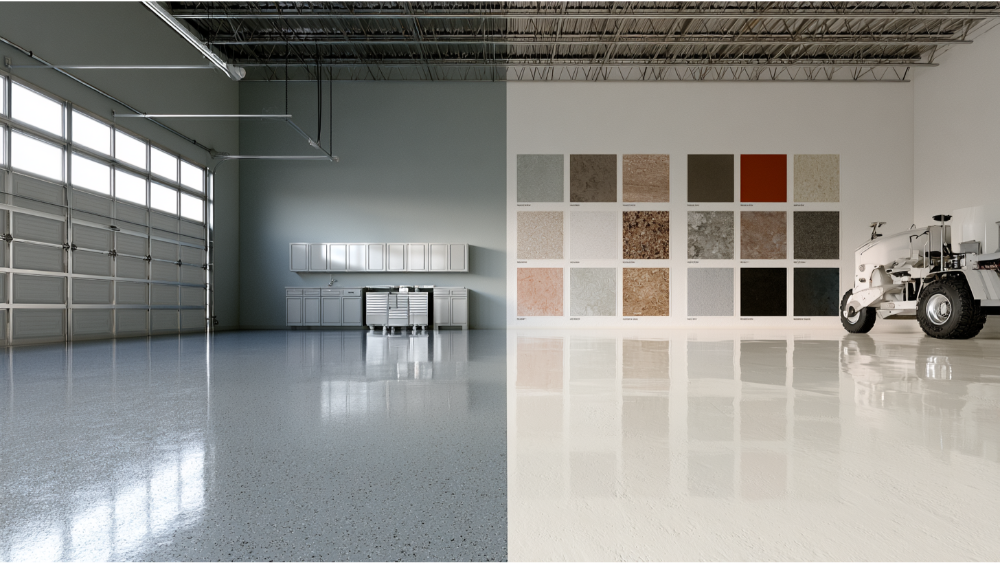
Garage floor paint is a thin one-part product that dries by evaporation and lasts roughly 2 to 5 years, while true epoxy is a two-component system that chemically cures into a film 8 to 10 mils thick and can last 15 or more years. The difference between garage floor paint, epoxy, and coating comes down to chemistry, thickness, and prep. Coatings are the broad category that includes epoxy, polyaspartic, and hybrid systems, each suited to different levels of use and exposure.
Garage Floor Paint Epoxy Concrete Paint or Coating: What's the Difference?
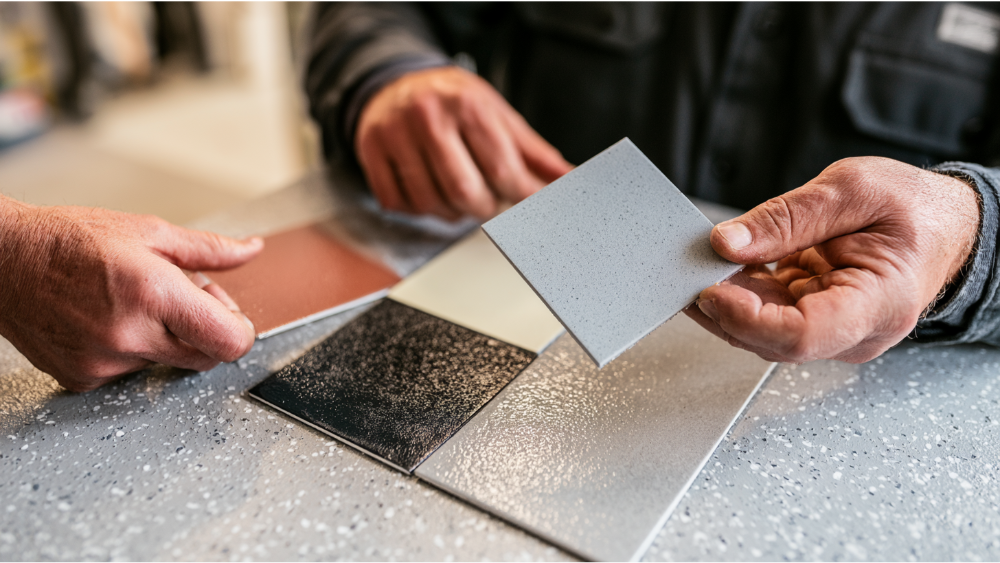
Garage floor paint is a thinner, one-part product that dries on the surface. True epoxy is a two-component resin system that chemically cures into a thicker, harder film with real chemical resistance. And "garage floor coating" is the broad category that can include epoxy, polyaspartic, polyurethane, or layered systems. The words on the can point at very different levels of durability.
If you're a homeowner or property manager weighing a garage floor project and you want a finish that lasts instead of one that peels in a year, the label is the least useful thing to focus on. What actually decides the outcome is the system: slab condition, surface prep, moisture, the chemistry of the product, and how thick the coating goes on. We'll break each term down below so you know what you're really buying for your concrete garage floor before anyone opens a bucket.
Quick Comparison: Concrete Paint, Epoxy Paint, Two-Part Epoxy, and Polyaspartic
Here's the fast version. Treat the numbers as examples pulled from product data sheets, not universal promises, since every product and slab is different.
What "Garage Floor Paint" and "Epoxy Paint" Really Mean
What garage floor paint is
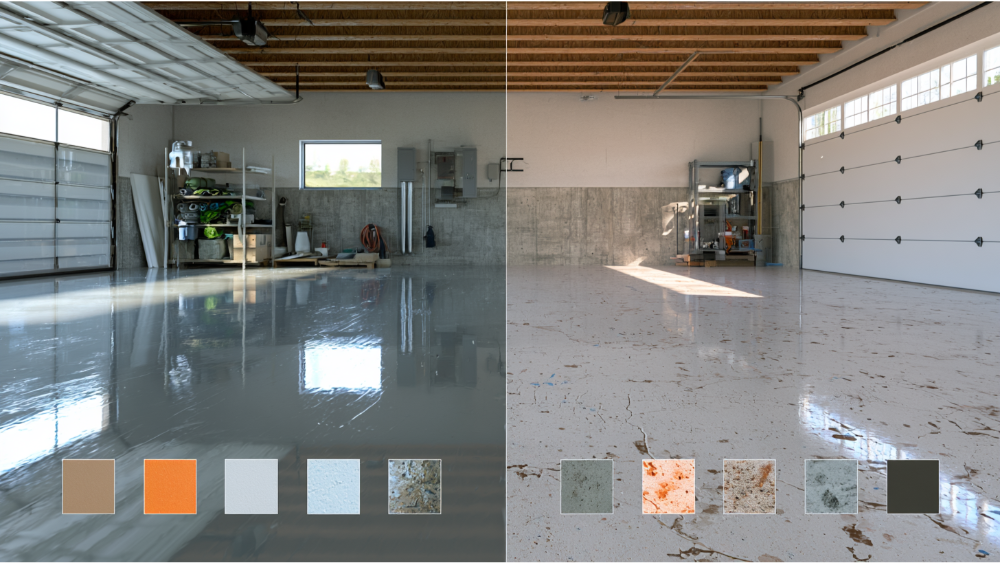
Garage floor paint is a thin-film, single-component floor paint, usually a latex paint made with an acrylic binder. It dries by evaporation, which means the solvent leaves and what's left sits on top of the concrete rather than bonding into a thick, reacted film. That makes it easier to apply, which is part of the appeal for a DIY weekend. It also means regular paint offers minimal defense against traffic, harsh chemicals, and stains. Concrete paint is prone to peeling and generally needs periodic repainting, with most products lasting somewhere in the 2 to 5 year range and usually requiring at least two coats to look right. For a storage-only or low-impact garage, that can be enough, and on a tight budget painted concrete is a genuinely cost effective starting point.
Why "epoxy paint" on the label can mislead you
This is where a lot of shoppers get burned. Some products marketed with "epoxy" in the name are actually one-part epoxy paint, sometimes a modified acrylic polymer, not a real two part epoxy coating. One common one-part floor paint lists its resin as modified acrylic and a dry film thickness of only about 1 to 1.5 mils on smooth concrete. That performs like paint, because it is paint.
The plain-language test: paint dries, real epoxy cures. Drying is evaporation. Curing is a chemical reaction between two components. So before you buy epoxy paint, check whether the product comes as a single can or as a resin plus a separate hardener you have to mix. That one detail, more than the marketing, is the key to understanding garage floor paint vs a true coating.
What a True Epoxy Garage Floor Coating Is
A true epoxy coating comes in two components: an epoxy resin and a polyamine hardener. When they're mixed in the correct ratio, they react and cure into a thick, durable surface instead of simply drying. Where a floor paint might land at 1 to 3 mils, a high-build epoxy floor paint can run about 8 to 10 mils per coat, and it's often described as roughly three times stronger than the bare concrete underneath.
That thickness and chemistry buy you real performance on concrete surfaces. The epoxy creates a nonporous, waterproof film that is highly resistant to chemicals and stains and easy to clean, which is why a well-installed epoxy surface stays low maintenance compared to paint. Oil, road salt, brake fluid, and household chemicals wipe up instead of soaking in, and that stain resistance is a big part of the appeal. An epoxy coating typically goes down in two to three coats and can last 15 or more years when it's installed correctly. Cure time matters here: a high-build epoxy often needs 5 to 7 days for proper curing, and generally around 6 to 7 days before you park a vehicle on it. Those are product-specific figures, so the exact schedule comes from the data sheet for the system being used.
For most homeowners, an epoxy garage floor is a job worth handing to a pro. The finish only delivers on its promise when the surface prep and cure conditions are right, and that's harder to control on a driveway with a rented mixer. Professional installation with premium products and the manufacturer's cure schedule is what makes an epoxy garage floor last and turns a plain slab into a functional space you actually enjoy using.
The Coating Umbrella: Polyaspartic, Polyurethane, and Hybrid Systems
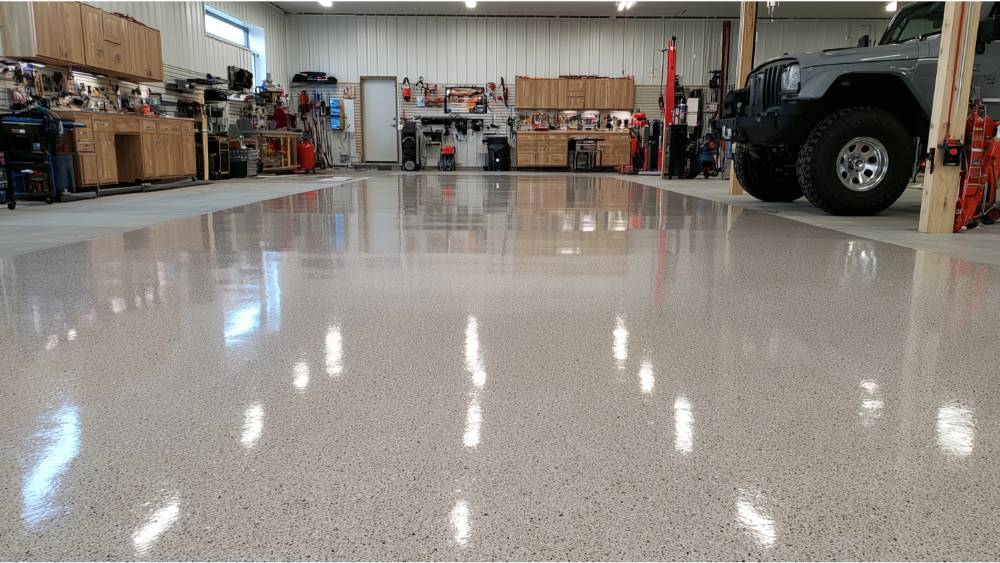
"Coating" doesn't automatically mean epoxy. It's an umbrella term that can cover epoxy, polyaspartic, polyurethane, polyurea, or a layered hybrid built from a base coat, broadcast flake or quartz, and a topcoat. Polyaspartic and polyurea concrete coatings are usually the highest-cost option. They cure fast, stay flexible under temperature swings, resist chemicals well, and offer strong UV stability, so they hold their color in sunlight better than many epoxies. They're often installed as a topcoat over a base broadcast with decorative flakes rather than on their own, and that layering is where you build in both looks and greater durability.
The right chemistry depends entirely on how the garage gets used. A shaded storage bay and a sunlit workshop that sees daily traffic call for different systems. (We'll link a deeper epoxy vs. polyaspartic guide here once it's live.)
Why Surface Prep and Moisture Decide Whether a Coating Lasts
This is the part cheap jobs skip, and it's the difference between a floor that looks good on day one and one that still looks good in year ten. The application process is only as strong as the prep underneath it, and prep is one of the key factors that separate a long lasting solution from a redo in a few years.
Prep is not optional
Proper prep means degreasing grease and oil spills, removing loose or failing garage floor coatings, repairing cracks and spalling, profiling the concrete floors so the coating can grip, clearing every bit of dust, and choosing the right primer. Profiling is usually done with a diamond grinder rather than an acid wash. New concrete should generally cure at least 28 days before any coating goes down. Grinding concrete surfaces creates respirable silica dust that requires proper dust control under OSHA's construction silica standard. On a pre-1978 home, if old lead-based paint on adjacent surfaces gets disturbed, EPA Lead-Safe (RRP) practices apply. Cover Pro Painting is EPA Lead-Safe Certified, so that work is handled correctly. Not every garage has lead paint, but where it's a factor, it matters.
Moisture is the hidden reason coatings peel or bubble
"The floor looks dry" is not a moisture test. Slab moisture pushing up from below is a leading cause of debonding and bubbling, and it can wreck an otherwise good coating on your concrete garage floor. Pros verify it with methods like the plastic sheet test, in-situ relative humidity probes, or calcium chloride kits that measure moisture over 1,000 square feet in 24 hours. There's no universal "safe number." The reading has to match the specific product's stated limits, which is exactly why we test the surface before we coat instead of hoping.
Daily Use, Hot Tires, and Slip Resistance: Key Differences on Concrete Floors
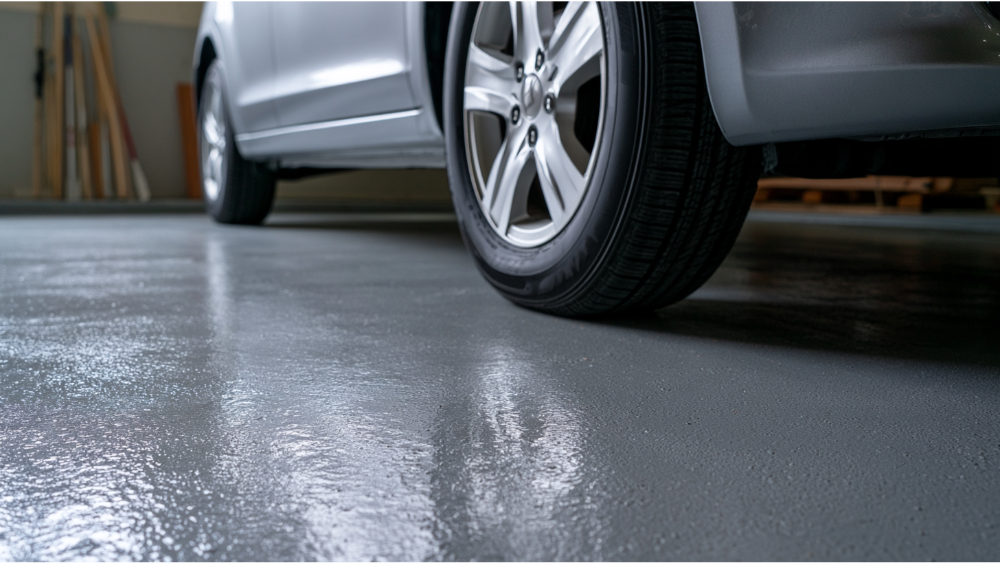
Hot tire pickup is the classic paint failure. Warm tires from a drive, plus the twisting motion of parking, can lift a thin floor paint right off the slab. A properly installed epoxy coating shrugs off hot tires, road salt, oil, cleaners, and the occasional dropped tool in high traffic areas of the garage, which is one of the clearest key differences between paint and a real coating.
Traction is the honest tradeoff. A high gloss, glossy finish can be slippery when wet, and one product's own data sheet warns exactly that. Rather than trusting a single slip rating, plan traction to match your conditions: broadcast flake or quartz texture, or an anti-skid additive in the topcoat, based on how much wet or oily traffic the floor really sees. In a garage that handles heavy equipment or steady vehicle traffic, that texture is worth building in from the start.
When Paint Is Enough vs. When to Choose a Coating System
Concrete or garage floor paint may be enough when
- The garage is storage-only or sees light foot traffic
- You want a temporary cosmetic refresh with a simple solid color
- It's a simpler, lower-scope project
A professional epoxy coating system is the better choice when:
- You park vehicles daily on the concrete floor
- You want lasting results, easy cleaning, and the best durability
- You need resistance to stains and chemicals from oil, salt, and cleaners
- You have old failing paint, cracks, or spalling to deal with
When durability is the top priority, the multiple layers of a real coating system win over any single-coat paint. If your slab has damage, that's the moment full-service matters. We handle crack and concrete repair as part of the same engagement, so you're not coordinating a repair crew for one half and a coating crew for the other half separately.
Frequently Asked Questions
Is epoxy better than concrete paint for a garage floor?
For most daily-use garages, yes. An epoxy coating is more durable, more resistant to chemicals, and can last 15+ years, while floor paint typically lasts 2 to 5. That advantage only holds with proper prep of the concrete surface.
What garage floor coating is better than epoxy?
Polyaspartic and polyurea systems are UV-stable, flexible, and fast-curing, and they're typically the highest-cost option. "Better" depends on how you use the space.
What is the best paint for a garage floor?
There's no single best floor paint. It depends on slab condition, use, and prep. Just remember that true two-part coatings outperform any one-part paint on durability and chemical resistance.
How much does it cost to epoxy a 20x20 garage floor?
Cost depends on slab condition, prep, moisture, labor costs, and the system installed, so we don't publish a fixed price. A professional epoxy coating is a different scope than a quick DIY refresh. We'll give you a clear number in a free estimate.
Why does garage floor paint peel?
Usually moisture in the slab, poor prep, coating over grease or contamination, or hot-tire pickup. Most of that peeling is preventable before the first coat touches the surface.
Get a Free Estimate for Your Garage Floor
The right choice for your garage floor is a project-specific decision. Slab condition, moisture, how you use the space, and the correct coating all factor in, and durability comes from the prep as much as the product. We'll walk your floor, test what needs testing, explain the epoxy and coating options in plain terms, and give you a transparent estimate with clear communication start to finish. Whether you want a fresh new coat or a full coating system, start with a free estimate and see exactly what your project will involve. Call us today at 206-222-0435 or reach out through coverpropainting.com.
