
%201.svg)


Epoxy Floor Paint vs Regular Floor Paint: Which Lasts Longer?
Key Takeaway
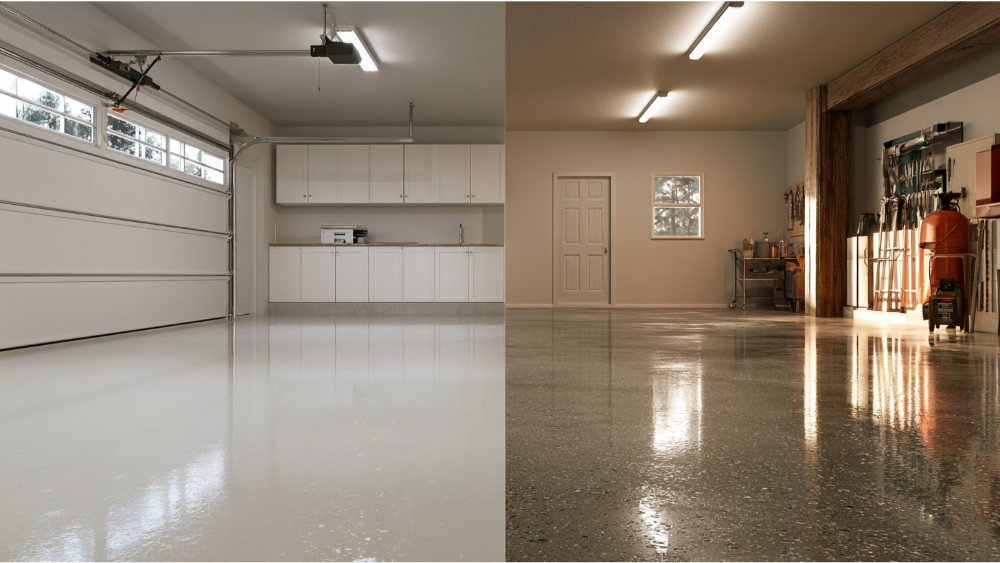
Epoxy floor paint vs. regular floor paint: a properly installed two-part epoxy coating lasts significantly longer, holding up 15 years or more on garage and high-traffic concrete, while latex acrylic floor paint typically needs redoing within one to two years. The deciding factor is not the product but surface prep. Skipped grinding, moisture testing, or degreasing causes most coating failures regardless of which product is used.
A properly installed two part resin epoxy floor coating generally lasts longer than regular floor paint. On garage, workshop, and high traffic areas over concrete, a well prepped epoxy coating can hold up for 15 years or more, while latex acrylic floor paint often needs redoing within one to two years under normal garage use. But here's the part most comparisons skip: the product isn't what decides the outcome. Surface prep does. If you're a homeowner or business weighing a floor coating for a garage, basement, workshop, or commercial space, this guide gives you a clear way to choose the right option, so you don't end up with a garage floor that peels before you've finished paying for it.
Epoxy Floor Paint vs Regular Floor Paint: Which Lasts Longer, and Why the Products Differ
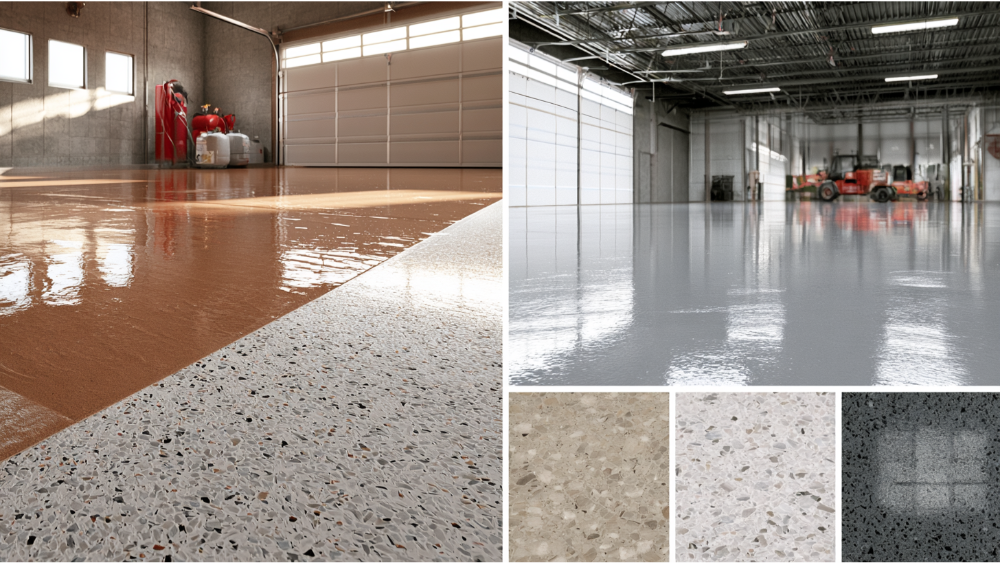
The word "epoxy" gets stretched to cover very different products. These are three separate things, not three names for the same thing. Regular concrete paint is water based and dries as the water evaporates. One part "epoxy paint" is that same paint with a little epoxy resin mixed in. A true two part epoxy coating chemically cures and bonds to the concrete floor. Here's how they stack up.
What Is Regular Concrete Paint?
Regular concrete paint is a water based acrylic or latex paint made for concrete floors. It dries the same way wall paint does: the water evaporates and leaves behind a thin material that grips the surface mechanically. There's no chemical reaction happening. The paint sits on top and holds on by texture alone.
That makes it easy to roll on and easy to refresh when you want a new color. It's a reasonable choice for a color update on interior concrete surfaces that don't take much abuse. The tradeoff is lifespan. Latex acrylic floor paint typically lasts around one to three years, and it can start failing in months once tires, tools, or spills get involved. On a garage floor that sees real use, that thin film of painted concrete wears through fast.
What Is a One-Part "Epoxy Paint" and Why It's Not True Epoxy
This is where a lot of people get burned. A product labeled "epoxy paint" isn't always a real epoxy. Many are one part paints that contain only a fraction of epoxy resin, essentially latex acrylic paint with a durability boost mixed in. It's a step up from plain concrete paint, and it usually performs three to four years before it needs reapplication. But it never chemically cures into a hardened film the way a true epoxy coating does. If you're paying for "epoxy" expecting a decade of protection, knowing this distinction saves you from buying the wrong thing for your garage floor.
What Is a Two-Part Epoxy Coating for Your Concrete Garage Floor?
A true epoxy floor coating is a two part system: an epoxy resin base coat and a polyamine hardener that you mix right before applying. Once combined, they don't dry, they chemically cure. The two components react and lock into a rigid film that's bonded to the concrete rather than just resting on it. That difference between "dries" and "cures" is the whole ballgame for durability, and it's why epoxy creates a far tougher result than paint.
The result is a hard, non porous surface that stands up to heavy impacts and daily wear. In heavy residential or light commercial settings, a properly installed epoxy garage floor commonly lasts five to ten years, and with the right prep and maintenance, well beyond that. It's the right call for a concrete garage floor, workshops, utility areas, and plenty of commercial buildings where the floor takes a beating and needs to keep looking clean.
Why Do Epoxy Floors Usually Last Longer Than Concrete Paint?
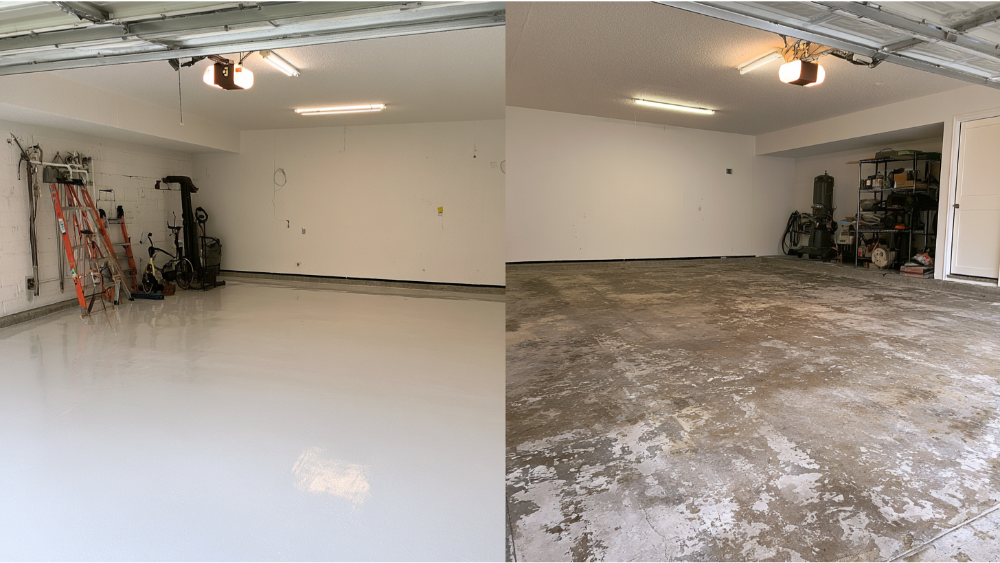
The advantage comes down to chemistry and thickness, and these are the key differences that matter most. Because epoxy chemically bonds to properly profiled concrete, it becomes part of the slab instead of a skin sitting on top. That bond, plus a much thicker layer of floor coating, is what lets it shrug off wear that would tear through paint. Dropped tools that would chip a painted surface tend to bounce off a hardened epoxy top layer.
Consider what a garage floor actually deals with. Oil, brake fluid, and harsh chemicals will quickly break down regular paint but slide right off a non porous epoxy coating. That chemical resistance is one of the biggest reasons epoxy holds up where paint fails. Hot tires are another common killer. When heat softens the film and a warm tire cools on painted concrete, it grabs the film and lifts it, a problem called hot tire pickup. A quality epoxy coating doesn't soften or release as tires cool, so the finish stays put across the entire floor.
Thickness matters too. AMPP describes thin build coatings as reaching only about 4 to 10 mils of dry film thickness, with limited resistance to abrasion and mechanical stress. Regular garage floor paint lands in that thin film range, which is exactly why it wears fast in high traffic spots and under vehicle loads. A heavier epoxy coating has far more material to grind through. You can also add color chips, a clear coat, or decorative patterns for a high gloss finish, added slip resistance, and visual interest that hides minor imperfections in the concrete floor.
Why Do Garage Floor Coatings Peel and Fail?
If you've seen a garage floor bubble up or flake off in sheets, your caution is justified. Here's the honest truth we tell every client: most floor coating failures are prep problems, not product problems. The coating gets blamed, but the real cause was almost always something skipped underneath it.
- Cleaning or degreasing was skipped, so the epoxy coating bonded to grime instead of bare concrete, causing poor adhesion.
- Old paint or sealer was left in place, and the new coating only held as well as the failing layer beneath it.
- The concrete was too smooth, with no profile for the coating to grip.
- Moisture vapor transmission rising through the slab pushed the coating loose, causing blistering and debonding.
- Cracks, spalling, or weak concrete were coated over instead of repaired.
- Traffic came too soon, before the coating fully cured.
- The wrong coating was used for UV exposure or wet conditions.
Moisture deserves special attention. Epoxy is more sensitive to slab moisture during installation than paint is, which is why proper mitigation matters so much. This is also why a bargain diy epoxy kit so often fails within one to two years: it rarely addresses the slab underneath. A big box kit typically leans on a one part product and skips the grinding and moisture testing that a lasting floor coating depends on. That's a hard lesson for a lot of diy projects.
Surface Prep: The Difference Between "Painted" and "Protected"
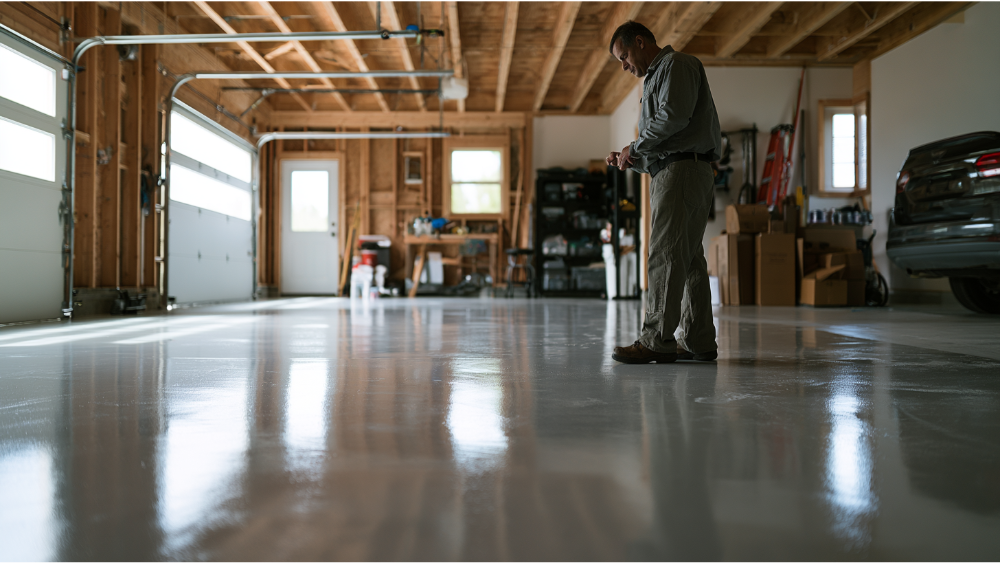
Prep is where a lasting floor is either won or lost. It's the least glamorous part of the installation process and the reason we lead with it. A floor coating is only as good as what it's stuck to, so the process on concrete floors looks like this:
- Inspect the slab. Check for cracks, spalling, past coatings, and signs of moisture.
- Repair damage. Fill cracks and address spalling before anything gets coated.
- Remove failing paint or sealer. A new coating can't outperform the old layer it sits on.
- Degrease. Oil and contamination have to come off completely so the epoxy bonds to bare concrete.
- Diamond grind or profile. A diamond grinder opens the concrete to the right surface texture so the coating can bond. ICRI's Concrete Surface Profile scale (CSP 1 through 10) exists to match the right profile to the right coating.
- Moisture test. ASTM F2170 uses in-situ probes to measure relative humidity inside the slab, and ASTM F1869 measures moisture vapor emission as pounds of water off 1,000 square feet in 24 hours. These catch problems before they ruin a finish.
- Prime, coat, and topcoat. Applied in the right sequence for the chosen system.
- Cure before use. No traffic until the coating is ready.
New concrete needs about 28 days to cure before coating, and even then a moisture test may still be needed. If the slab needs repair first, that's part of the same conversation. Being full-service means the crack repair, the grinding, and the epoxy coating are handled in one scope, so you're not managing separate contractors and hoping they coordinate. This is where professional installation earns its value.
When Is Regular Concrete Paint the Right Choice?
We won't push epoxy where paint does the job. Regular concrete paint makes sense for storage areas, a light foot traffic craft room, and a basement floor or utility room where an easy color refresh matters more than maximum protection. On low abuse interior concrete, a painted concrete floor can last anywhere from one to five years depending on use, and paint is simpler and faster to put down. If you're on a tighter budget and the space stays light duty, concrete paint is a fair, honest choice.
When Is an Epoxy Garage Floor the Better Choice for a Garage or Commercial Floor?
Epoxy earns its keep on floors that take real punishment. A concrete garage floor with parked vehicles is the classic case, since it deals with vehicle traffic and hot tire pickup that paint can't survive. The same goes for workshops, floors exposed to chemical spills from oil, tires, tools, or rolling equipment, and any high traffic space. Auto shops rely on that excellent resistance to chemical exposure every day. For commercial or HOA buildings where cleanability and lasting results matter, an epoxy garage floor or shop floor is usually the smarter investment. Yes, garage floor coatings carry a higher upfront cost than garage floor paint, but that cost is spread across many more years of service, which is where the value shows up.
How Long Before You Can Walk On or Park On Epoxy Floors?
It depends on the product and the conditions, so treat any number as a general example, not a promise. As a rough comparison, floor paint is often ready for foot traffic in about 12 hours and vehicle traffic in about 5 days. Epoxy products require more patience, and may allow foot traffic after 1 to 2 days and vehicle traffic after 6 to 7 days. Manufacturer guidance for two part garage epoxies commonly lists light foot traffic at 12 to 16 hours, heavier foot traffic at 24 to 48 hours, and vehicle traffic at around 3 days. Temperature changes and humidity shift all of these, so the exact return to service schedule for your specific product and space comes with your estimate.
Special Considerations: Older Homes, Moisture, and Safety
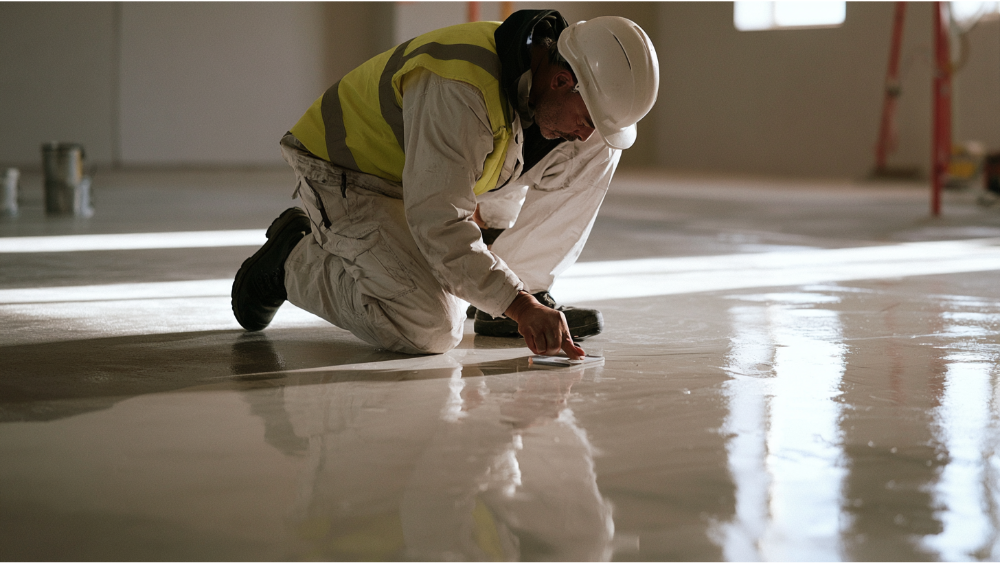
Pre-1978 homes. If an old painted concrete floor gets ground, sanded, or scraped, lead safe practices come into play. Federal law requires certified, lead safe work when disturbing more than 6 square feet of interior painted surface or 20 square feet of exterior surface in pre-1978 housing. Cover Pro Painting is EPA Lead-Safe (RRP) Certified, so that's handled correctly.
Moisture-prone slabs. Basements and slabs on grade need mitigation before coating, or vapor will push the finish loose.
UV exposure. Near doors and windows, standard epoxy can yellow under UV light. A UV resistant clear coat protects the color and keeps the rigid epoxy film from getting brittle.
Commercial safety. OSHA expects walking surfaces to stay clean and dry, and ADA guidance calls for floors that are stable, firm, and slip resistant. Texture additives and a maintenance plan help commercial buildings meet that bar.
What to Ask Before Hiring a Floor Coating Contractor
Since prep and moisture testing decide how long a durable surface lasts, ask the questions that expose whether prep is real or rushed:
- Will you test for moisture if the slab needs it?
- Will you remove old paint and sealer, or coat over it?
- What surface prep is included in the price?
- What repairs are part of the scope?
- What product system are you using?
- What's the return to service schedule for my floor?
- What warranty applies?
Frequently Asked Questions
Is epoxy floor paint the same as epoxy coating?
No. Many products labeled "epoxy paint" are one part paints with a small amount of epoxy resin added. A true epoxy coating is a two part system of resin and hardener that chemically cures into a rigid epoxy film bonded to the concrete floor.
How long does epoxy last compared with regular floor paint?
Regular floor paint often lasts one to two years under normal garage use, while a properly installed epoxy garage floor can last well over a decade. Exact lifespan depends on prep, moisture, concrete condition, traffic, and cleaning agents used for maintenance.
Can epoxy go over old floor paint?
Usually not without removing or addressing the old layer first. Coating over failing paint means your new garage floor only holds as well as the paint underneath it, which is a common cause of peeling.
Do you need to grind concrete before epoxy?
In most cases, yes. Diamond grinding opens the concrete to the right surface profile so the epoxy can bond. Smooth, sealed, or contaminated concrete doesn't give the floor coating anything to grip.
Is epoxy slippery when wet?
A glossy finish epoxy coating can be slick when wet, but adding texture or anti slip additives to the topcoat solves it. This matters most for commercial floors that need to stay slip resistant.
Get a Clear Answer for Your Floor
The right choice depends on your slab, your traffic, and how long you want the finish to hold. At Cover Pro Painting, we start with proper surface preparation, use premium products, and give you a transparent estimate that spells out the prep, any repairs, the product system, and the return to service schedule before work begins. If your concrete floor needs repair first, we handle that in the same scope. Call us at 206-222-0435 or reach out to schedule your epoxy floor coating estimate, and we'll walk your garage floor and give you clean, long-lasting results without the guesswork.
