
%201.svg)


Do You Really Need Special Ceiling Paint?
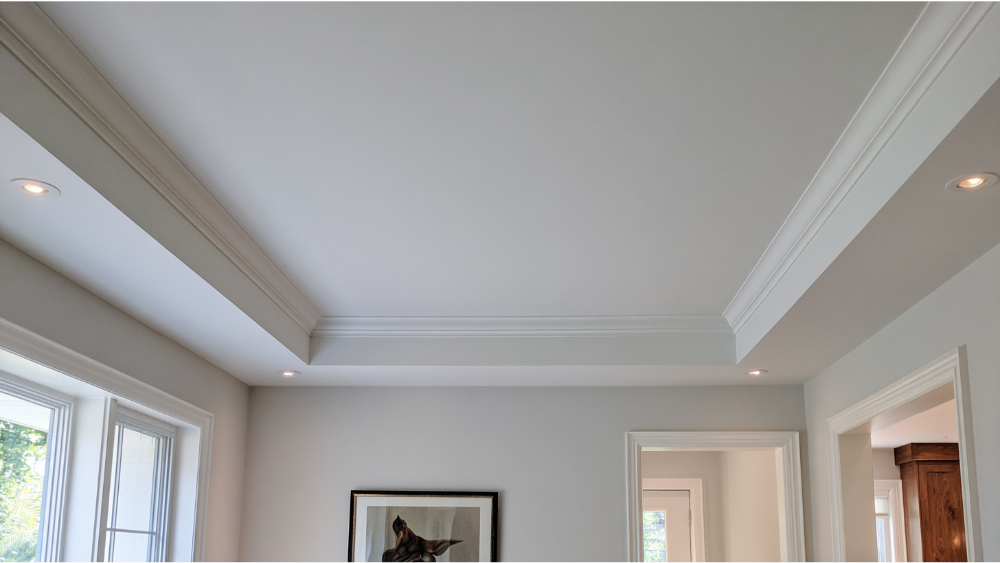
Key Takeaway
You don't always need special ceiling paint, but for most standard ceilings it is the smarter choice. Ceiling paint is formulated with higher viscosity to drip less overhead and dries to a flat sheen that scores under 15 on an 85-degree gloss meter, hiding roller marks and imperfections. Wall paint can work in specific situations, but prep, primer, and product selection matter more than the label on the can.
You don't absolutely need special ceiling paint, but for most standard ceilings it's the smarter choice. It's made to drip and spatter less overhead, hide imperfections, and dry to a flatter, more uniform finish than regular wall paint. If you're standing in the store comparing options and trying to avoid a redo, that's the short answer. The longer answer is conditional. The right paint depends on the room, the surface condition, and how well the ceiling is prepped before anything gets rolled on. We'll walk through when ceiling paint matters, when wall paint can work, and when the paint isn't the real problem at all.
What Makes Ceiling Paint Different From Wall Paint?
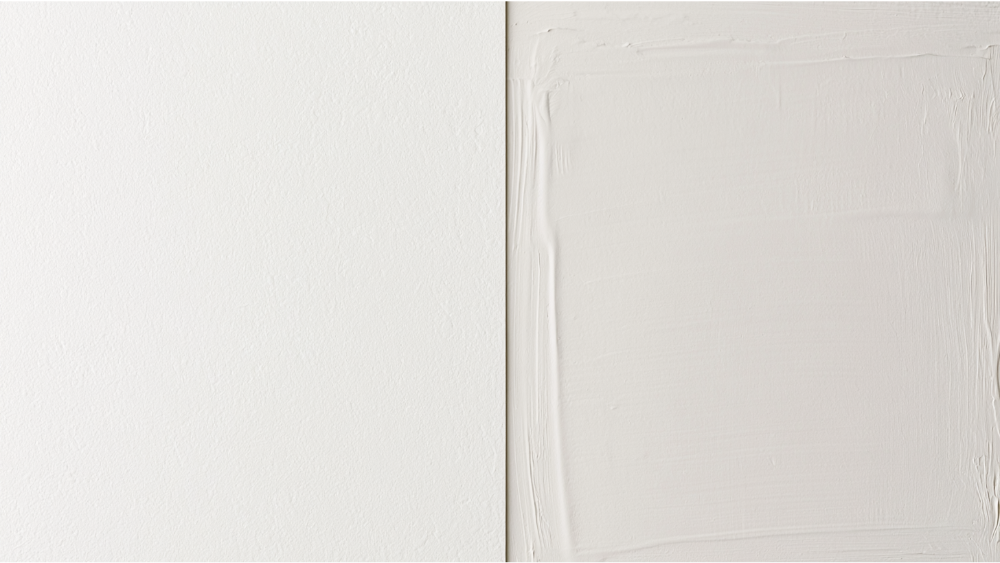
Ceiling paint and wall paint are formulated for two different jobs. Ceiling paint is specifically formulated to be thicker (higher viscosity) so it clings to the roller and drips less when you're working overhead. It dries to a flat or dead flat sheen, which keeps overhead lighting from raking across the surface and revealing roller marks or small flaws.
"Flat" isn't just a style word. Federal architectural-coating rules define a flat coating by measured gloss: under 15 on an 85-degree gloss meter, or under 5 on a 60-degree meter. Low reflectivity is exactly what helps a ceiling read as smooth and uniform, because a flat, non-reflective surface doesn't reflect light back at your eye. That same quality is what lets flat paint hide the uneven textures and imperfections that a shinier finish would broadcast.
Wall paint is built for a different life. It's designed to be more durable and scrubbable, and it often comes in higher sheens like eggshell, satin, or semi gloss. Those finishes hold up to hands and cleaning, but that same reflectivity works against you on a ceiling, where it can spotlight every patch and lap mark. Interior walls take abuse that ceilings never see, so wall paint trades a little glare resistance for toughness. That's the core difference between the two, and it's why ceiling paint and wall paint are formulated differently from the start.
When Should You Use Flat Paint on Your Ceiling?
For most rooms in a typical house, ceiling paint is the right default. It's the easiest choice to apply overhead, and its ultra flat finish does the best job of hiding imperfections in changing light.
Use ceiling paint when you're painting:
- Living rooms, bedrooms, and hallways with standard drywall ceilings
- Any ceiling that catches natural light or overhead fixtures, where a flatter finish keeps flaws from showing
- Textured ceilings, where a flat product helps the surface look even instead of glare-streaked
- Ceilings you want to keep bright white to reflect ambient light and make the room feel taller and more open
A white or near-white ceiling bounces light around the room, which can make even a smaller space feel larger. White ceilings are the standard for a reason: they read as clean and neutral, and they let your wall color take the lead. Pair a true ceiling white with a dead flat sheen and you get a calm overhead surface that doesn't compete for attention. Manufacturers even sell a dedicated ceiling paint tinted just off pure white so you can see where you've rolled while the paint is still wet.
When Can You Use Regular Wall Paint on a Ceiling?

Wall paint can work on a ceiling in a few situations, as long as you know the trade-offs going in. If you're painting a dry room, the ceiling is already smooth and primed, and you're using a high-quality flat wall paint or matte finish, the result can look fine.
The most common reason to use wall paint overhead is design. Painting the ceiling the same color as the walls creates a cohesive, enveloping look that works well with rich or dark wall colors. If that's the effect you're after, matching the wall paint makes sense, and carrying one ceiling color from the walls up onto the surface can visually soften the line where they meet.
Just know the downsides. Wall paint is thinner, so it tends to drip and spatter more overhead. And if you're using anything with an eggshell finish or higher, that reflectivity can highlight imperfections and roller marks under overhead light. It can work. Go in knowing you may fight the paint a little more and see a bit more shine than you would with a dedicated ceiling product. A flat wall paint narrows that gap, but it still won't match a purpose-built ceiling formula for drip control.
When Ceiling Paint Isn't Enough (Prep Comes First)
Here's the part a lot of people skip: ceiling paint can't hide failed prep. No product, however good, covers for a surface that wasn't cleaned, patched, or primed. The label on the can matters less than what happens before the roller touches the ceiling.
Ceiling paint alone won't fix any of these:
- Water stains from a past leak
- Smoke or nicotine discoloration
- Peeling or flaking existing paint
- New drywall or bare drywall patches
- Glossy areas that won't hold a new coat
- Loose or crumbling texture
- Active moisture problems
Good surface preparation means cleaning the ceiling, patching cracks and holes, dulling any glossy spots so the paint can grip, and spot priming where needed. Stains get their own treatment, which we'll get to next. This is where clean, long-lasting results are actually made. Skip it and even premium ceiling paint will show streaks, flashing, or patchy coverage within a season or two. Do it right and the finish holds. The same discipline applies to the trim and walls around the ceiling: masking those edges cleanly is what gives you clean lines instead of a sloppy border.
Is Ceiling Paint the Same as Primer?
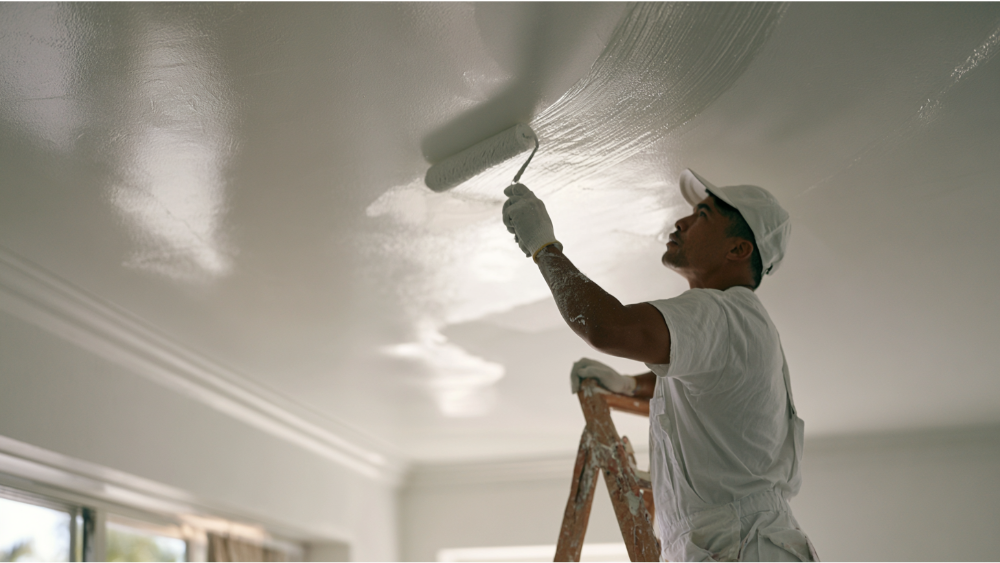
No. Primer and finish paint do different jobs. Primer is formulated to bond to the substrate and equalize porosity so the finish coat sits evenly. Finish paint handles appearance, hide, and sheen. One prepares the surface, the other completes it.
New drywall and joint-compound patches often need a drywall primer first. Without it, the seams and fastener spots can flash through the finish coat, showing up as dull or shiny patches under certain light. Priming evens out the difference between the paper face and the mud so the whole ceiling reads as one surface. Putting the finish coat straight onto bare patches almost always shows.
Stains are a separate issue. Water, smoke, and nicotine will bleed straight through ordinary ceiling paint, sometimes within days. The fix is a stain-blocking primer applied before the finish coat. If your real problem is discoloration, no amount of ceiling paint solves it. The right primer makes the difference between a stain that stays buried and one that ghosts back through in a week.
What About Bathrooms, Kitchens, and Moisture-Prone Ceilings?
Basic flat ceiling paint isn't the best fit where humidity and steam are constant. Bathrooms, kitchens, and basements put moisture on the ceiling regularly, and dead flat paint can struggle with that over time.
For these rooms, a moisture-resistant or mildew-resistant interior coating is usually the better call. These products stand up to humidity better and are easier to wipe down when needed. A slightly higher sheen also helps: it resists moisture and cleaning better than a true flat, without the glare problems you'd get from a full satin or semi gloss. That added durability is what keeps a wet-room ceiling from looking worse each year.
The exact product depends on how much moisture the room sees and how the ceiling is built. That's a detail worth sorting out in an estimate rather than guessing at the store. The goal is a finish that lasts in a wet room, not one you're repainting in a year.
Choosing the Right Paint: Do Brands Like Benjamin Moore Matter?

Brand does play a role, though not the way marketing suggests. A premium line from a maker like Benjamin Moore tends to lay down more evenly, hide with fewer coats, and hold its color longer than a bargain can. Benjamin Moore and other top manufacturers make a full range of products, from a dedicated ceiling formula and flat wall paint to moisture-resistant coatings, so you can match the product to the surface instead of forcing one paint to do everything. Some lines, like an ultra spec ceiling paint, are built specifically for overhead work.
We use premium paint products backed by lifetime manufacturer warranties, and we choose the specific line based on the room and surface rather than a name on the label. Many low VOC options now perform as well as older formulas, which matters when you're spending hours in the space. The right paint for your interior walls isn't always the same one you want overhead, and a good painter sizes that up before buying a single gallon. Getting the interior paint choice right at the start is far cheaper than repainting a ceiling that flashed or a wall color that read wrong once it was up. Grab the wrong base for a tint and even a great brand disappoints.
Older Homes and Lead-Safe Ceiling Prep
If your home was built before 1978, take a moment before sanding or scraping a ceiling. Older painted surfaces may contain lead, and disturbing them can release lead dust.
The EPA's Renovation, Repair, and Painting (RRP) program covers paid work that disturbs paint in homes built before 1978, and painting prep is specifically included. There's a minor-repair exception for interior work that disturbs 6 square feet or less of painted surface per room, with jobs in the same room within 30 days counted together. Larger prep work falls under the rule, and firms doing that work are required to be certified.
Cover Pro Painting is EPA Lead-Safe (RRP) Certified, so if your ceiling prep involves disturbing old paint, it's handled the right way from the start. That's peace of mind on an older home, not an upsell.
How Professional Painters Choose the Right Ceiling System

A good ceiling result comes from a system, not a single can of paint. Here's how we approach it, and how professional painters get professional results the first time:
- Inspect and repair. Look for cracks, patches, damaged drywall, and any sign of an old leak before deciding on product.
- Clean the surface. Dust, grease, and residue all interfere with adhesion.
- Prime where needed. Drywall primer on new or patched areas, stain-blocking primer on discoloration.
- Match product to the room. Flat for standard ceilings, a moisture-resistant coating for wet rooms.
- Mask and protect. Floors, walls, trim, doors, and fixtures get covered before the first roll.
- Roll evenly with the right nap. A good roller and a fine brush along the edges keep overhead lighting from catching lap marks.
- Paint ceilings before walls. This keeps drips and spatter off freshly painted walls.
- Check the finish in changing light. A ceiling that looks flawless at noon should still look right at dusk.
Because we're a full-service team, if there's rot above the ceiling, a leak source to trace, or damaged drywall behind it, the same crew handles that too. You don't end up managing a painter, a carpenter, and a repair company for one ceiling. Creating a finish with flawless results across every room in the house is the payoff of doing each of these steps in order. This is basically why a system beats a lucky can of paint.
Frequently Asked Questions
Does it matter what ceiling paint you use?
Yes. Sheen and formulation affect how much the paint drips overhead, how well it hides imperfections, and how the finish looks under overhead light. A flat product on a standard ceiling reads cleaner than a shinier one that catches glare. A ceiling isn't supposed to draw the eye, so a low-glare white does the job best. A rich color can work as a design choice, but a bold purple overhead reads very differently than a neutral white.
Do you really need to use ceiling paint?
Not always, but it's usually the better default for standard ceilings. The room, the surface condition, and the prep decide. Wall paint can work in specific cases, but you'll fight more drips and possibly more shine.
What are the most common ceiling painting mistakes?
Skipping prep, painting over stains without a stain-blocking primer, using paint that's too glossy or too reflective, and painting walls before the ceiling. Any one of these can break an otherwise good result and leave you with streaks, flashing, or bleed-through you'll have to redo.
What can I put on my ceiling instead of paint?
For wet rooms, a specialty moisture-resistant coating is often better than basic flat. Where discoloration is the real issue, a stain-blocking primer plus finish is the fix. Some homeowners choose textured finishes or coverings, but for most ceilings the right paint system, with easy access to the surface, is the simplest path.
Get a Clear Answer for Your Ceiling, Start With a Free Estimate
The right ceiling result comes down to prep, primer, product, and technique working together. If you'd rather not guess at the store, we can help. Cover Pro Painting is a founder-led, licensed, bonded, and insured team based in Edgewood, WA, handling interior and exterior projects start to finish with clean, long-lasting results. Call us at 206-222-0435 or request a free estimate to see exactly what your ceiling or interior painting project will involve. First-time customers get 10% off, and we offer 0% APR financing if you'd like to spread the cost. Don't see your city listed? Contact us to confirm service availability.
