
%201.svg)


Deck Paint vs Stain: Which Protects Better?
Key Takeaway
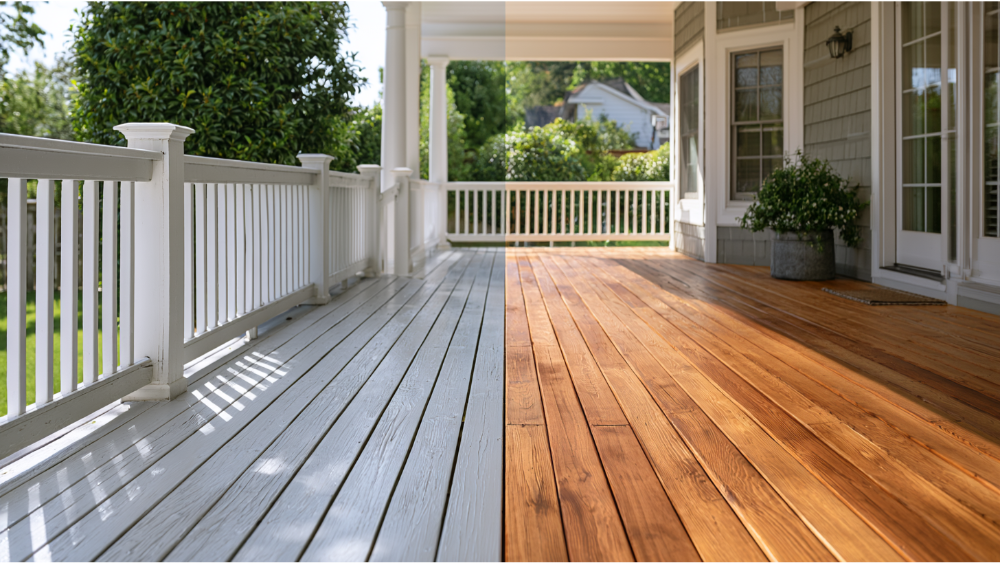
For most deck boards, a penetrating stain protects better than paint in the long run. Stain seeps into the wood, repels water, and won't peel the way a surface film does, which is why USDA Forest Products Laboratory researchers recommend penetrating finishes for decks. Paint lasts 5 to 10 years between coats but tends to blister and peel on horizontal boards exposed to constant wetting and drying. Deck paint vs. stain comes down to your deck's condition and how it was previously finished.
For horizontal deck boards, a penetrating deck stain usually protects better over the long run. It lets the wood breathe, repels water, and won't peel the way a surface film does. Paint blocks moisture and UV more completely at first, but on foot-trafficked boards that swell and shrink with the weather, that film tends to crack and peel. So paint often lasts longer between coats, while stain holds up better for the wood underneath.
The honest answer to the deck paint vs stain which protects better question depends on your deck condition, whether it's bare, weathered, or already coated, and how well it gets prepped. At Cover Pro Painting, we start every deck the same way: clean wood, sound boards, and proper surface preparation before any finish goes down.
The Short Answer: Why Stain Usually Wins on Deck Boards
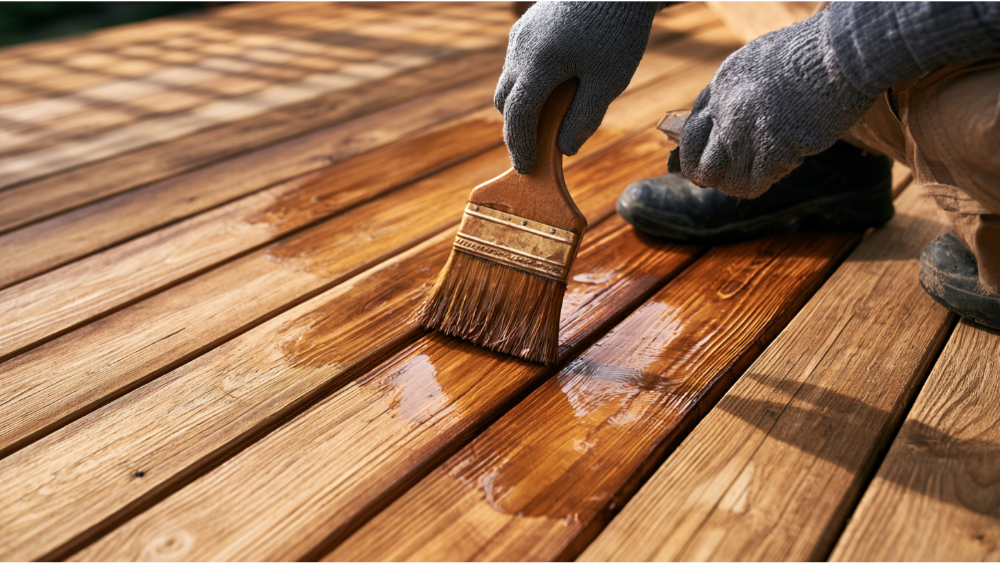
Deck boards live a harder life than siding or trim. They take heavy foot traffic, hold standing water after rain, bake in direct sun, and expand and contract every time the moisture level changes. Siding sheds water. Deck boards catch it.
Paint forms a film on top of the wood surface. When water finds its way underneath that film, and on horizontal boards it will, the paint blisters and peels. Penetrating deck stain works differently. The stain seeps into the wood and repels water while still letting the board dry out. Because the stain enhances water resistance without sealing the board, well maintained decks stay drier underneath. That's why USDA Forest Products Laboratory researchers have recommended penetrating finishes for decks: film-forming finishes struggle with the constant wetting and drying that deck lumber goes through. For long-term protection of the wood itself, that difference matters.
How High Quality Paint Protects a Deck
Deck paint lays down a thicker barrier than stain, a protective barrier with a thick consistency that sits on the surface. It blocks UV rays well, hides the natural wood grain, and covers cosmetic flaws like mismatched or worn boards. It also comes in a wider range of colors, so it's the choice when you want a specific look. When the film stays intact, it sheds moisture effectively, and a high quality paint job on a deck can last 5 to 10 years before it needs to be redone. Because it offers full coverage, applying deck paint over the right surface, with at least two coats where the label calls for it, gives you that full, uniform color.
The catch is that surface film. Once moisture gets underneath, you get cracking, blistering, and peeling. Unlike paint, a penetrating finish won't trap that moisture. Paint is also not a wood preservative or a sealer, and it won't stop decay when the conditions for fungal growth are present, per USDA guidance. It protects the surface. It doesn't restore or preserve the wood itself.
How Deck Stain Delivers a Natural Look
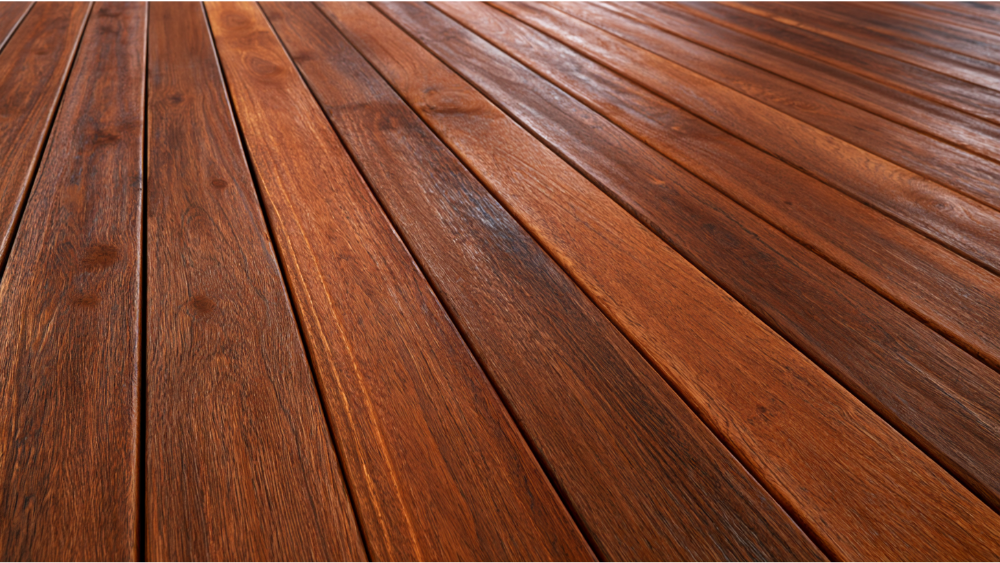
Stain penetrates instead of coating. Because it doesn't form a continuous surface layer, it won't blister or peel even if moisture enters the wood fibers. The pigment in a stain also shields the surface from sunlight, which is what actually drives durability outdoors and slows sun damage. And the natural grain stays visible, so the deck keeps its natural beauty and wood character.
Maintenance is easier, too. There's no scraping of peeled paint before you refresh a stained deck, which is the laborious part most homeowners dread. The tradeoff: stain fades gradually and needs reapplication more often, roughly every few years, and high-traffic paths wear faster. Deck stain can go on in one coat, but two coats generally improve how long it lasts and how evenly it protects. A single runny consistency pass gives less protection, while a second gives more protection.
Clear, Semi Transparent, Semi Solid, and Solid Stains: What's the Difference?
"Stain" isn't one product. ASTM D6763-16(2022) defines these by how much they obscure the wood, and each level trades appearance for protection:
- Clear stains/transparent: most natural look, least UV protection.
- Semi transparent: balances wood grain visibility with real protection.
- Semi solid: more subtle color and coverage, less grain showing.
- Solid stains: most hiding power and pigment, but they behave more like a film.
Consumer testing shows the best-rated stain deck finishes can provide at least three years of protection. A semi transparent stain is often the sweet spot: it keeps the natural look while giving the pigment needed for moisture protection and UV protection. Here's the nuance most guides skip: the more a coating behaves like a film, the more peeling risk matters on horizontal boards. Solid stains can look great and hide imperfections well, but treat them as the more film-like option.
When Applying Deck Paint Makes Sense
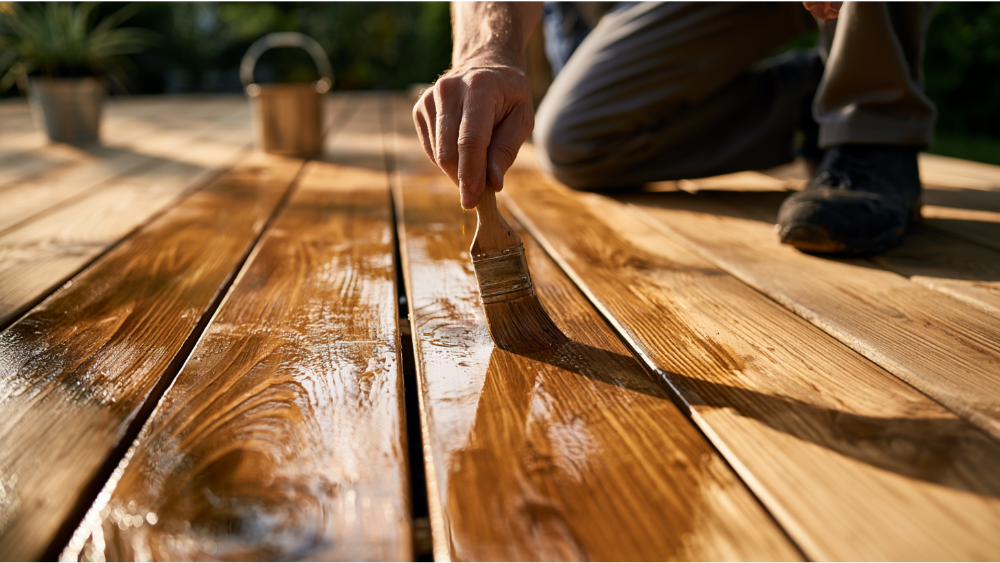
Paint is a reasonable choice when the deck was already painted and the existing coating is still sound and well-adhered. Oil based paints and their more durable film can suit railings, posts, and other vertical components that shed water and see little foot traffic. And if you want a full color change or need to hide imperfections like worn, mismatched boards, paint's hiding power and color range are hard to beat. On a wooden deck that has faded unevenly, that added layer of pigment evens everything out.
One condition: prep and coating compatibility aren't optional. Applying deck paint over a failing coating just buys you another peeling problem.
When Deck Stain Makes Sense
Stain fits bare or weathered but structurally sound wood, and it's the better call for deck boards that catch regular rain and foot traffic. If you want easier future maintenance without the scrape-and-repaint cycle, stain delivers superior protection for the wood over time. It's also the right pick when the natural wood is worth showing off, or when you've fought repeated peeling and are ready to stop. Older decks that have weathered gray often take stain beautifully once cleaned. For an outdoor space you actually relax in, a stained deck keeps its warmth underfoot and avoids the slick surface a heavy film can create when wet.
Can You Paint Over Stain or Stain Over Paint?

These go in opposite directions. You can paint over a stained deck if the surface is sound: clean it thoroughly, sand it, and use a quality primer for adhesion first. Going the other way is a different story. You can't stain over a painted deck unless the paint film is completely removed, because penetrating stain needs access to bare wood. Per USDA guidance, stain simply won't work over a film-forming finish. If you're switching from paint to stain, plan on stripping the old coating down to raw wood.
The Real Deciding Factor: Proper Surface Preparation
The finish gets the attention, but proper preparation decides how long your paint and stain lasts. Skipping it is the number-one cause of early peeling and lap marks. Here's what proper prep looks like:
- Clean the wood thoroughly, rinsing with a garden hose after washing.
- Remove all loose or failing coating.
- Sand and feather the edges so there are no hard lines.
- Test moisture. New decks should be below about 20% moisture content before finishing, per USDA.
- Remove mildew and algae.
- Repair or replace damaged boards.
- Confirm the coating is compatible with what's already there.
This is where clean, long-lasting results actually come from. We treat prep as part of the job, not an add-on, and it's the reason a finish holds instead of failing in a season. Stripping and recoating is labor intensive, so doing the prep right the first time saves you from redoing it.
Check for Rot Before You Coat
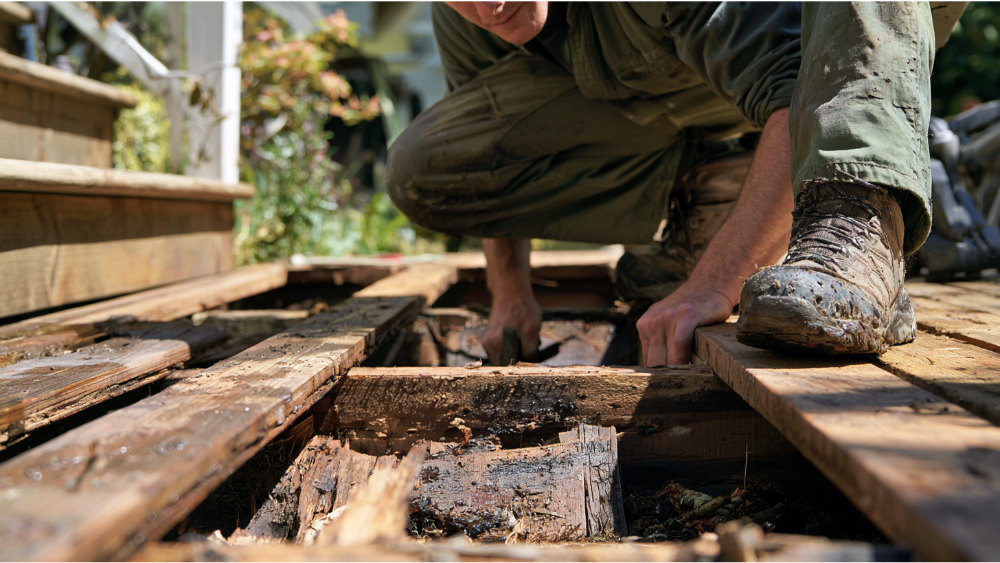
No finish restores decayed wood. Paint and stain slow weathering, but neither one rebuilds a soft board, and no sealer will either. Weather conditions and constant UV damage take their toll on any exposed board. Before coating, inspect the ledger, posts, joists, deck boards, railings, and stairs. NADRA notes that decay may be present if a tool penetrates the wood a quarter to a half inch, if the wood feels soft or spongy, or if a sliver breaks off cleanly without splintering. NADRA recommends an annual deck inspection.
If you find rot, repair or replace before you finish. This is where being full-service helps: we handle rot repair, siding, and carpentry with the same team, so you're not coordinating a separate contractor to fix the wood before it can be coated. Protecting your home's exterior starts with sound wood underneath the finish.
Lead-Safe Note for Older Painted Decks
If your home was built before 1978, any old painted surface may contain lead-based paint. Sanding or scraping it can release hazardous dust and chips, so EPA recommends hiring a lead-safe certified contractor for this kind of work. Cover Pro Painting is EPA Lead-Safe (RRP) Certified, so disturbing older painted surfaces is handled the right way.
Deck Paint vs Stain, Which Protects Better for Your Deck Condition?
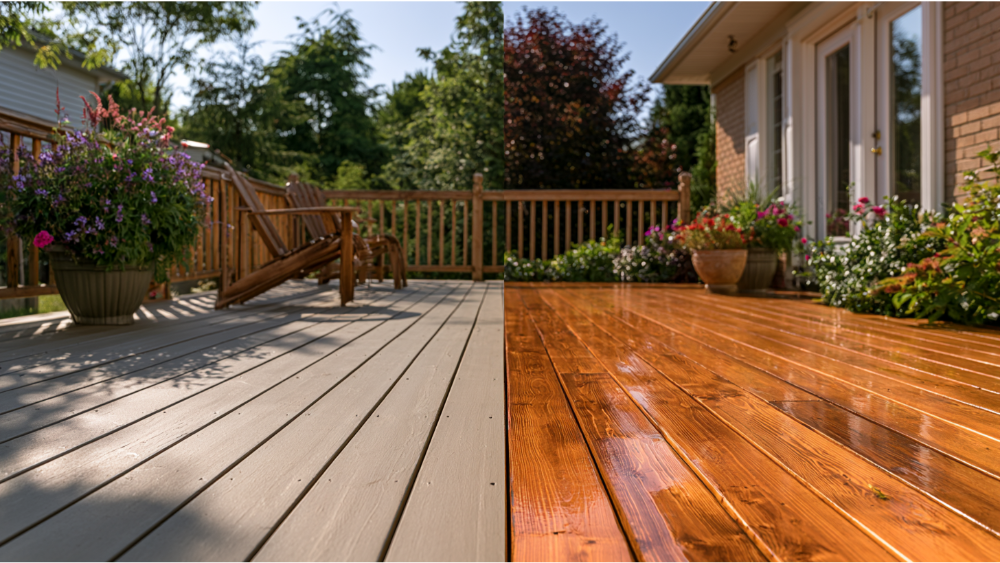
The finish that protects best is the one that fits the deck's condition. Whether you lean toward oil based or water-based products often comes down to personal preference and the look you want. Here's the quick version:
Why a Free Estimate Beats a Generic Answer
Every deck is different, which is why we don't post fixed prices online. Size, current coating, board condition, prep and repair needs, access, and your paint or stain choice all change the scope. A free estimate gives you a clear, transparent number and a plan before any work begins, with clear communication start to finish.
Based in Edgewood and serving the greater Seattle-Tacoma region, we handle painting, rot repair, and carpentry under one roof so your outdoor space gets treated the right way. First-time customers get 10% off, and 0% APR financing is available. Get a free estimate: call 206-222-0435.
Frequently Asked Questions
Is it better to stain your deck or paint your deck?
It depends on deck condition. Stain usually wins on horizontal deck boards because it breathes and won't peel. Paint makes more sense on a sound, previously painted deck and on vertical elements like railings.
Does stain or paint protect wood better?
Paint blocks moisture and UV more completely at first, but penetrating stain protects the wood's long-term health better because it repels water while letting the board dry instead of trapping moisture under a film.
What lasts longer, deck stain or deck paint?
Paint typically lasts 5 to 10 years between coats but is prone to peeling on deck boards. Stain needs refreshing every 2 to 3 years, but you skip the scrape-and-repaint peeling cycle. Stain usually needs fewer coats than a full paint system.
Is it better to stain a deck with a roller or a brush?
Brushing improves penetration and even appearance on deck boards, per USDA guidance. Rollers speed things up, but back-brushing helps the stain work into the wood. Always follow the product label.
