



Does Deck Paint Fill Cracks?
Key Takeaway
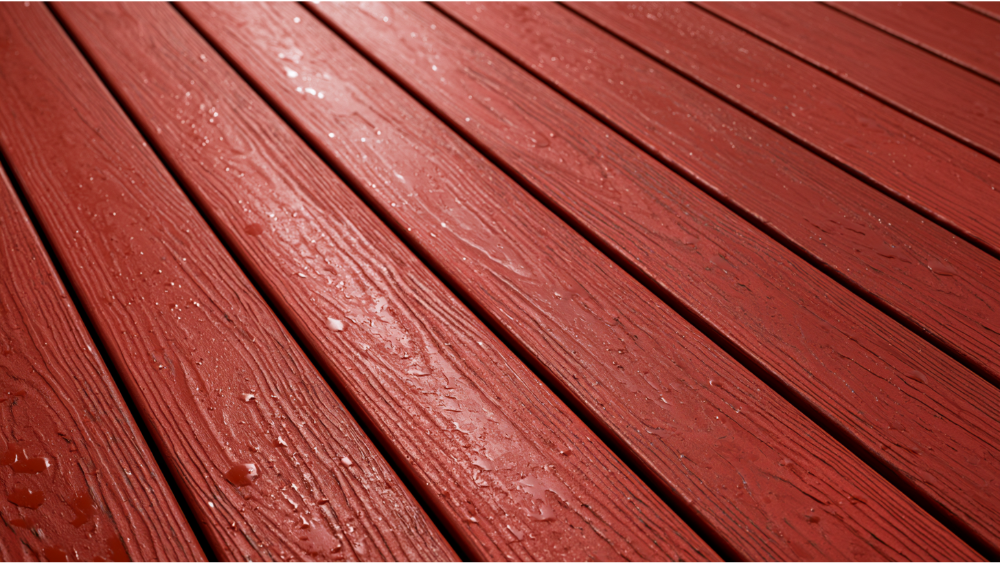
Ordinary deck paint does not fill cracks, but high-build deck resurfacing coatings are engineered so deck paint fills cracks up to about 1/4 inch on sound, dry, properly prepped wood. That 1/4-inch figure is a product claim, not a structural safety threshold. No coating repairs rot, moving splits, or cracks in structural members like posts or joists.
Ordinary deck paint does not fill or repair cracks. It's a thin film that adds color and some protection, and it will flow right over a crack without closing it. Some high-build deck resurfacing coatings are a different product altogether, and a number of them are rated to conceal cracks up to about 1/4 inch, but only in sound, dry, properly prepped wood. That 1/4-inch figure is a product-specific coating claim, not a structural safety threshold, and no coating repairs rot or structural splits.
If you have an aging wood deck with visible cracking and you're deciding whether to coat it, patch it, or replace boards, start with one honest idea: a thick coating can improve sound, weathered wood. It cannot turn damaged wood into sound wood.
First, Identify What Kind of Crack You Have
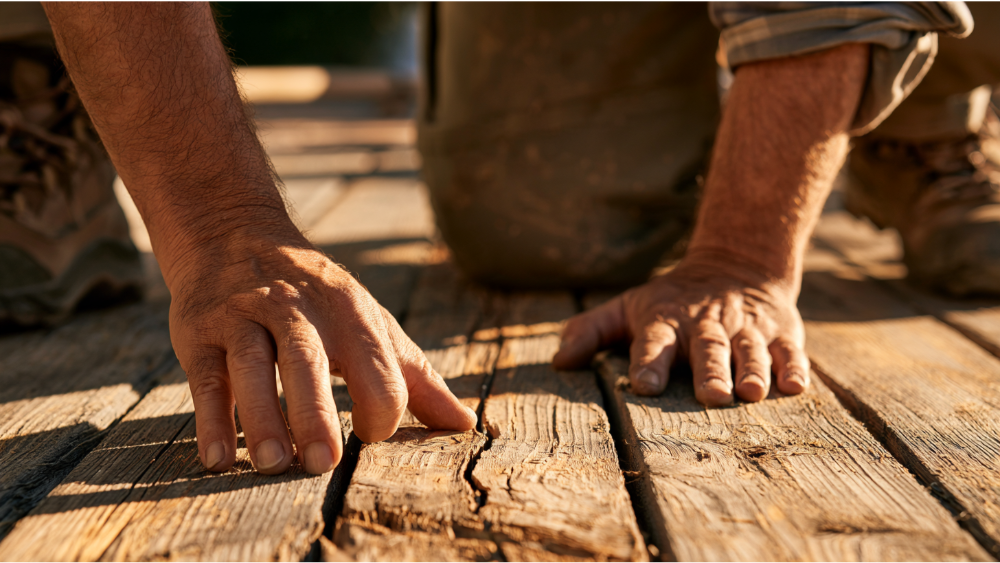
Before you buy anything, figure out what you're actually looking at. The word "crack" covers very different situations, and the right response depends on which one you have.
- Shallow surface checking. Fine lines that open as wood ages and dries in the sun. Usually cosmetic in hard, stable deck boards.
- An open but stable crack within a board. Wider than a check, but the wood around it is firm and isn't moving.
- A split running through a deck board. The board has separated along its length, which often means movement or weakness. Knots in the wood sometimes open up the same way.
- Soft, spongy, or rotten wood. If a screwdriver sinks in, this isn't a crack problem, it's a decay problem.
- A crack in a structural member. A post, joist, stair stringer, railing, or ledger. Location changes everything here.
- The intentional gap between boards. That spacing is not a crack. It drains water and lets the deck dry, so it stays open.
A surface check in a walking board is not the same as a split through a joist carrying the deck's weight. Keep three questions in mind as you go: Is the wood sound? Is the crack stable? Is the coating actually rated to fill it?
Deck Paint vs. Deck Resurfacer vs. Stain
Most articles blur these three, and that's where readers get misled. They aren't interchangeable.
- Ordinary deck paint. A thin film that protects and adds color. It does not fill cracks and shouldn't be expected to.
- Solid color stain. Color plus protection with a more natural look than paint. A solid color stain soaks in and wears differently than a film, and it is also not a crack filler.
- High-build deck restoration coating. A thick system, far heavier than conventional paint (one example builds around 20 mils dry). The chunky texture hides minor checking and splinters, gives a slip-resistant surface, and has some elastomeric flex so it can move as the wood expands and contracts. These are the products engineered so deck paint fills cracks up to roughly 1/4 inch on sound boards.
That thickness comes at a cost: coverage runs much lower than regular paint, often somewhere around 20 to 75 square feet per gallon, and two coats are commonly required for durability. The low coverage is the point, since the film has to build to work. Thin stain products behave differently and won't bridge a gap at all. None of these materials repair rot or structural damage.
Coat, Patch, Replace, or Inspect: An Old Deck Crack Decision Table

Worth repeating: 1/4 inch describes what a coating can bridge, not whether the deck is safe. A wider crack isn't automatically something to patch. The board needs to be checked for movement, rot, and lost strength first.
Why Wood Filler Often Fails on Deck Boards
Search online and you'll find advice telling you to fill every crack with wood filler, and other sources saying never use filler at all. The honest answer sits between them. Wood filler or caulk can work on an old deck, but only for the right crack, with an exterior-rated product that's compatible with your finish. For deeper gouges, a two-part exterior epoxy such as Bondo holds better than a rigid filler.
The problem is that generic rigid fillers often crack, loosen, or telegraph through the finish. Outdoor wood shrinks and swells with the weather, and a coating slows that moisture movement but never stops it. Add horizontal exposure, standing water, and foot traffic, and a stiff patch gets worked loose. Compatibility matters too: a wood filler might take paint fine yet show clearly under a translucent stain. Pressure treated wood also needs to be fully dry and weathered before it will hold most stains and fillers. Use only repair products your coating manufacturer approves for horizontal decking. And never fill the designed gaps between boards, since that traps water and blocks the deck from drying.
Surface Prep Where Deck Restoration Is Won
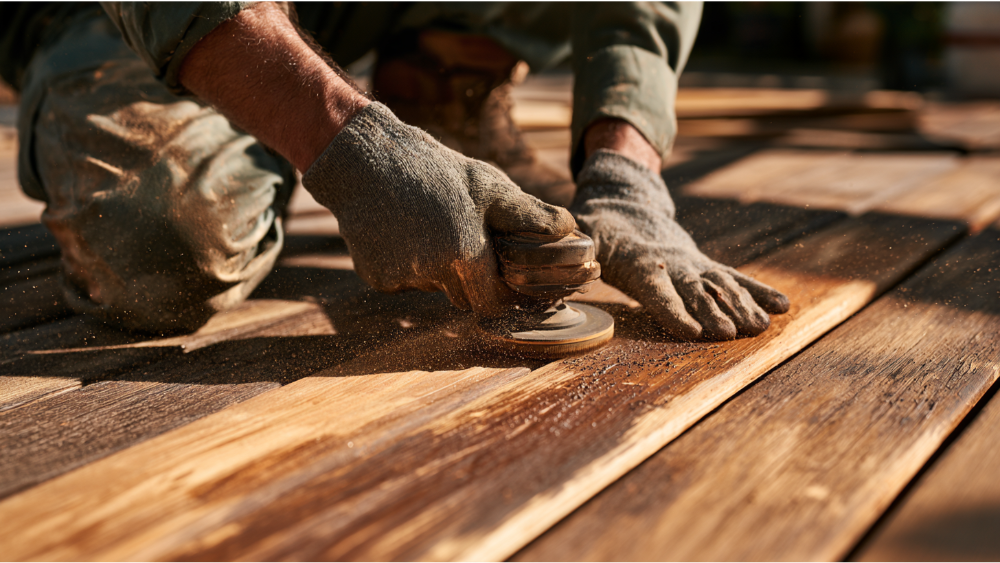
Prep is where lasting results are won or lost, and it's non-negotiable for thick coatings. Rush it and the coating fails no matter how good the product is. The order matters:
- Complete any rot repair or carpentry first, before a drop of coating goes down. Reset or replace loose screws and popped fasteners while you're at it.
- Remove peeling coatings and loose, worn wood fibers.
- Power wash to clear dirt and debris, then scrub mildew with a deck cleaner where it clings. A stiff brush and a bucket of cleaner handle the spots a pressure washer misses.
- Sand for adhesion. An orbital sander with 80-grit is a sensible starting point, and a belt sander makes quick work of a badly weathered, uneven whole deck.
- Let the wood dry fully. Confirm dryness with a moisture meter where you can (some exterior primers call for below 15% moisture content). High humidity slows this down, so plan ahead.
- Mask off adjacent surfaces, and keep the board gaps open.
When you apply a high-build coating, work it into cracks with a brush as you roll, then smooth the deck boards toward one even smooth surface with a 6-inch staining brush. Give railings and other vertical surfaces extra attention, since drips and thin spots show there first. Expect roughly 3 to 6 hours between coats. Drying times, temperature windows, and recoat windows vary a lot by product. Working in direct sun, cold, or heat all shift those windows, so follow the current label for the exact stain or coating you're using rather than leaning on one universal rule or elapsed time alone.
When You Should Not Paint Over the Cracks
Some conditions are a clear stop. Do not coat over rot or soft, spongy wood, unstable or moving boards, widespread peeling driven by trapped moisture, loose railings, wobbly stairs, corroded hardware, or cracks in framing and critical connections like posts, joists, and the ledger. Large or unexplained cracking belongs in the same category. If a section already fell through or flexes underfoot, that is a repair, not a paint job. Pull your furniture aside and look at the whole structure before you decide.
Coatings and stain slow moisture movement, but they never make wood permanently moisture-proof. Hiding a problem under a thick film can let decay keep working out of sight, and sealing in damage wastes money you'd rather spend once. These are repair-or-inspect situations, not paint situations.
One more thing on older decks and the house they attach to: on homes built before 1978, scraping or sanding painted surfaces can disturb lead paint, so it isn't a casual DIY first step. Paid work that disturbs paint may fall under the EPA's Renovation, Repair and Painting Rule and its lead-safe procedures.
Frequently Asked Questions
What's the best way to fill cracks on my deck?
It depends on the crack. Sand and leave shallow checks, or conceal them with an approved high-build coating. For cracks within the label limit on sound wood, pre-fill with the coating or a manufacturer-approved wood filler. Replace unstable or rotten boards, and get structural cracks inspected.
What deck product actually fills cracks?
Not ordinary deck paint. Look specifically for a high-build deck resurfacing or restoration coating rated to bridge cracks up to about 1/4 inch, and follow that product's current label for prep and application.
Can I paint over existing paint on a deck?
Yes, if the old coating is sound and well prepped. Remove peeling or loose paint, clean, sand, and make sure the deck is fully dry first. Widespread peeling points to a moisture problem to fix before you refinish or recoat.
Is it better to paint, stain, or refinish an old deck?
If the wood is sound and you mainly want to refresh color and protection, a quality stain or refinish often looks best and wears gracefully. If you need to hide checking and splinters, a high-build coating makes more sense. Either way, deck restoration starts with prep and an honest look at the wood, not with the can you buy. Spring, when the weather settles, is an essential window to tackle this before the busy season, and it saves your knees from working in the summer heat. A proper comment from someone who has evaluated the deck in person beats any one-size answer online. If you notice soft spots as you scrub, stop and have it inspected.
Get a Clear Answer Before You Coat
A thick coating can improve sound, weathered wood. It can't turn damaged wood into sound wood, so the deck should be evaluated before you choose paint, stain, or a resurfacer. This is where our full-service capability matters: we handle deck painting and staining along with rot repair, siding, and carpentry, so you're not coordinating separate crews or letting a coating hide a repair that should come first. We can also customize the approach to how your deck meets the elements, so the finish we create holds up to real Washington weather and restores the look you want. As the owner who stands behind the work, Alex wants the deck done once and done right.
We're licensed, bonded, and insured in Washington State, and EPA Lead-Safe (RRP) Certified. Founder and owner Alex personally oversees each project. We serve Edgewood and the greater Seattle-Tacoma area. Get a free estimate or call 206-222-0435. Don't see your city listed? Contact us to confirm service availability.
{"@context":"https://schema.org","@type":"FAQPage","mainEntity":[{"@type":"Question","name":"What's the best way to fill cracks on my deck?","acceptedAnswer":{"@type":"Answer","text":"It depends on the crack. Sand and leave shallow checks, or conceal them with an approved high-build coating. For cracks within the label limit on sound wood, pre-fill with the coating or a manufacturer-approved wood filler. Replace unstable or rotten boards, and get structural cracks inspected."}},{"@type":"Question","name":"What deck product actually fills cracks?","acceptedAnswer":{"@type":"Answer","text":"Not ordinary deck paint. Look specifically for a high-build deck resurfacing or restoration coating rated to bridge cracks up to about 1/4 inch, and follow that product's current label for prep and application."}},{"@type":"Question","name":"Can I paint over existing paint on a deck?","acceptedAnswer":{"@type":"Answer","text":"Yes, if the old coating is sound and well prepped. Remove peeling or loose paint, clean, sand, and make sure the deck is fully dry first. Widespread peeling points to a moisture problem to fix before you refinish or recoat."}},{"@type":"Question","name":"Is it better to paint, stain, or refinish an old deck?","acceptedAnswer":{"@type":"Answer","text":"If the wood is sound and you mainly want to refresh color and protection, a quality stain or refinish often looks best and wears gracefully. If you need to hide checking and splinters, a high-build coating makes more sense. Either way, deck restoration starts with prep and an honest look at the wood, not with the can you buy. Spring, when the weather settles, is an essential window to tackle this before the busy season, and it saves your knees from working in the summer heat. A proper comment from someone who has evaluated the deck in person beats any one-size answer online. If you notice soft spots as you scrub, stop and have it inspected."}}]}
