
%201.svg)


Concrete Patio Paint: When It Works, What to Use, and How to Keep It From Peeling
Key Takeaway
Concrete patio paint works best on a sound, clean, dry slab where the main issue is cosmetic. Water-based acrylic porch and floor coatings are the most common choice, but prep, including pressure washing, crack repair, and a bonding primer, determines whether the finish lasts years or peels by next summer. For moisture problems or old coating failures, stain or resurfacer may be the smarter fix.
Yes, you can paint a concrete patio. But the result depends far more on surface prep, moisture control, and the right product than on the paint itself. If you're looking at a stained, faded, or worn slab and you don't want to redo the paint job in two years, the honest truth is that paint forms a film on the surface, and prep is what makes that film stay put. This guide gives you a clear decision framework: when concrete patio paint is the right call, when it isn't, what to use, and how to keep it from peeling.
When Concrete Patio Paint Is a Good Option
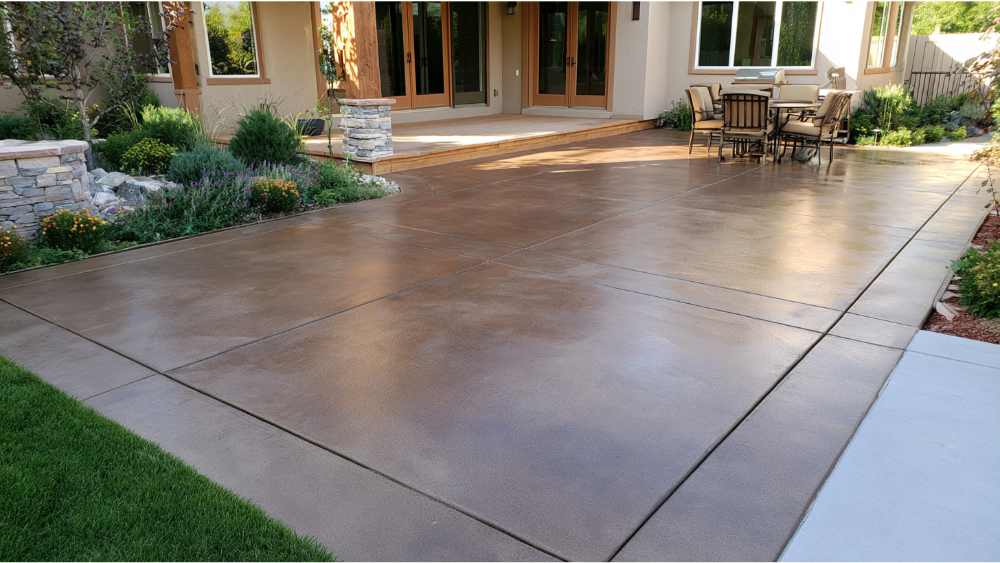
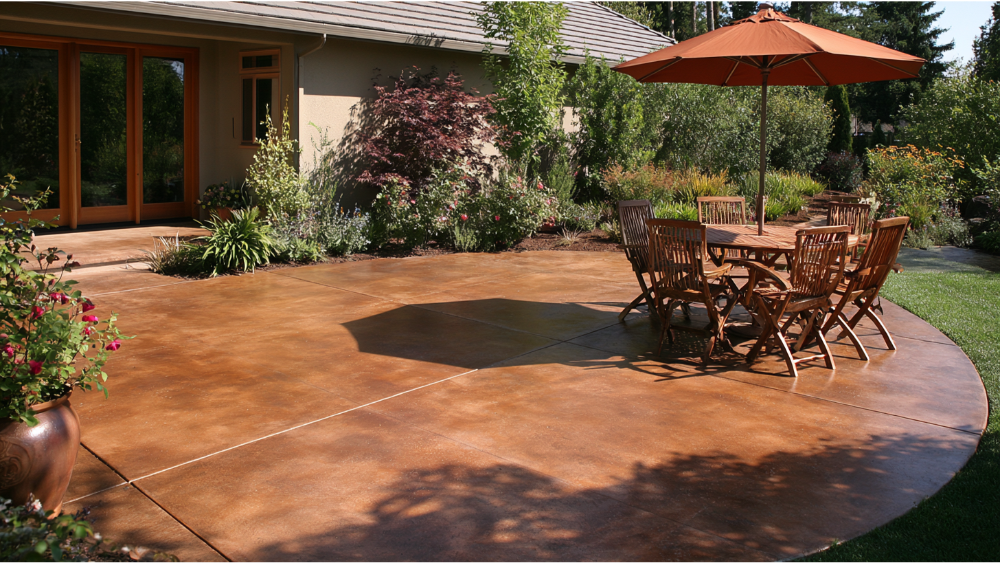
Paint is a solid choice when the concrete underneath is sound and your problem is mostly cosmetic: discoloration, light wear, or a plain slab you want to freshen with a clean solid color. That's where paint shines, because it hides blemishes and gives you the widest color range for the space.
Most homeowners choose neutrals like gray, brown, or black, and a soft gray reads especially clean on an open patio or porch. But paint also opens up design options a bare slab can't offer: bold stripes, a faux tile look, a checkerboard, or a Mediterranean-inspired stenciled design. A bright pattern can make a small back porch feel like a finished outdoor room, and a well-placed outdoor rug layered over painted concrete pulls the whole space together. It can protect and transform a tired concrete patio in one project, and the result can look amazing once it's done right. The catch is simple. This only works when the slab underneath is ready for it.
When Paint Is the Wrong Fix
Paint isn't magic, and we'll tell you straight when it isn't the answer. Skip painting if you're dealing with:
- Repeated peeling or chipping from a past coating
- Active moisture or efflorescence (that chalky white residue on the cement)
- Large cracks, gouges, or spalling masonry
- Standing water or drainage problems
- Old coatings that won't bond soundly
When patio paint peels, the cause is almost never bad paint. It's prep, moisture, or a product mismatch. Moisture trapped beneath the film pushes it right off the slab. A professional inspection here saves you money, because coating over a problem just buries it for a few months before it resurfaces. We'd rather recommend a repair than sell you a coating that fails by next summer.
Concrete Paint vs. Stain vs. Sealer vs. Resurfacer
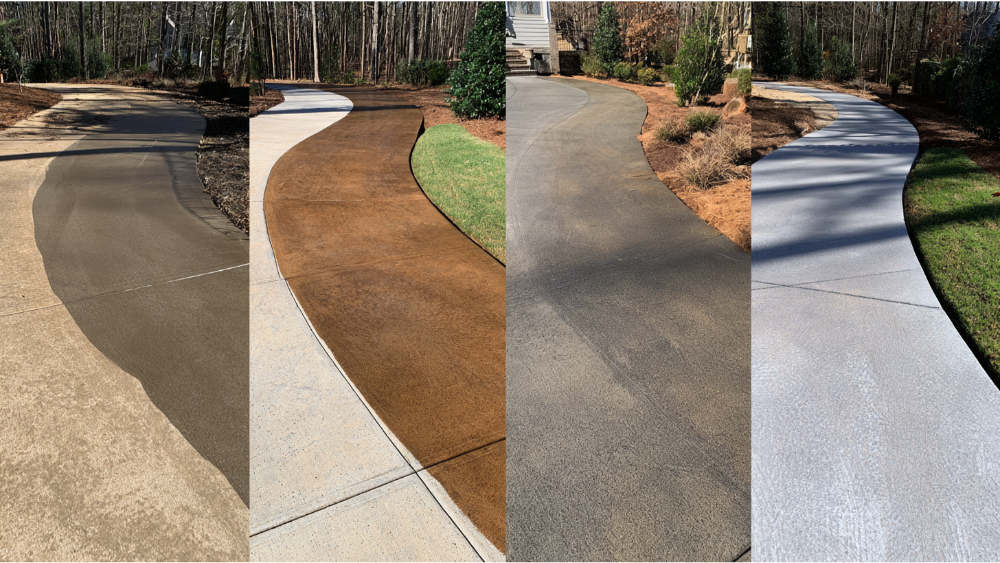
The core difference is film versus penetration. Paint sits on top as an opaque film. Stain soaks in and bonds within the surface. A sealer can seal the concrete for protection while keeping much of its natural look. That distinction drives most of the decision.
Acrylic products are breathable, which lets some moisture vapor escape instead of getting trapped under the film. Many homeowners also choose to seal a stained patio afterward so color and slab both stay protected. The right answer comes down to the condition of your slab, not preference alone.
What Kind of Paint to Use on a Concrete Porch or Patio
Use an exterior concrete porch and patio floor coating built for a horizontal surface and outdoor use, not standard house paint. House paint isn't made to take foot traffic, UV, and the movement of a slab as it expands and contracts.
Water-based acrylic porch and floor coatings are a common, breathable choice, and you'll find them at most home centers and paint stores, including Lowe's. A dedicated concrete bonding primer belongs under the topcoats so the finish has something to grip. A clear UV-resistant topcoat adds fade and dirt resistance and helps seal the surface against weather. For high-wear or sun-exposed patios, polyurethane and polyaspartic hybrid systems resist yellowing and add durability. Anti-skid additives improve traction. Whatever the system, thin, even coats bond better and peel less than one thick pass. We use premium products backed by lifetime manufacturer warranties and match the system to how your patio is actually used.
Surface Prep and the Pressure Wash Step That Decides Whether It Lasts
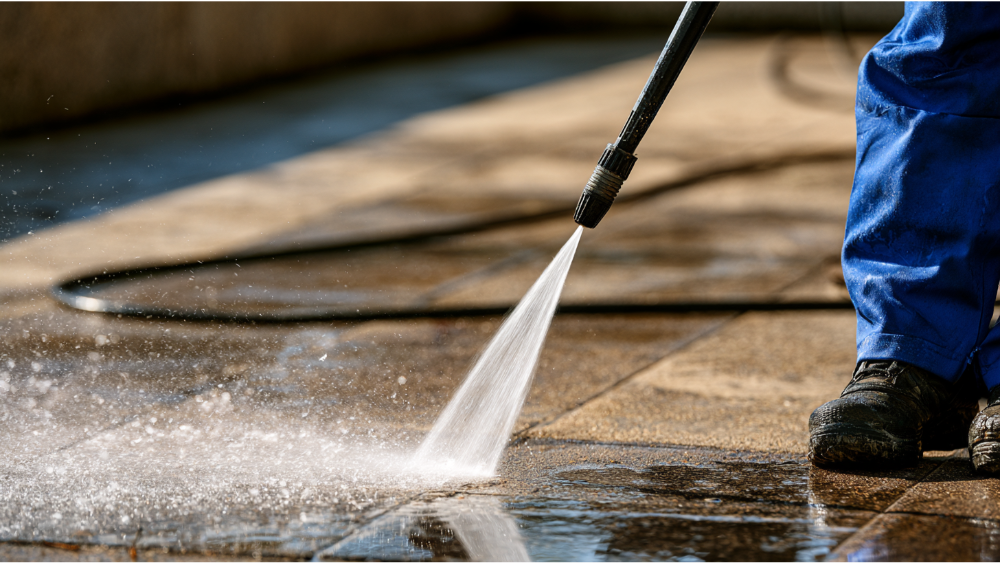
This is where the job is won or lost. Prep often outweighs the paint brand entirely, and painted concrete only holds up when the slab beneath it is properly readied. Here's the order that matters:
- Inspect the slab for cracks, spalling, and drainage issues.
- Clean and degrease, then pressure wash to strip dirt, oil, and residue.
- Remove loose or peeling old coating so you're bonding to something sound.
- Repair cracks and holes before any coating touches the surface.
- Check moisture (more on this below).
- Etch or profile smooth concrete so paint can grip.
- Prime with a bonding primer, then apply a compatible coating.
A simple moisture check: tape an 18-by-18-inch plastic sheet to the slab and leave it at least 16 hours. Darkening or condensation underneath means the concrete is too wet to coat. Paint over damp concrete and that trapped vapor lifts the film. Following the manufacturer's instructions to create a clean, sound, dry, and properly profiled surface is the standard. Don't skip the pressure wash step either, since even a clean-looking patio holds fine grime that keeps paint from bonding.
Weather, Cure Time, Dry Time, and Slip Safety
Timing is product-specific, so always follow the coating's data sheet. As general guidance: newly poured concrete commonly needs at least 28 days to cure before coating, and some products require 60. Most exterior coatings want application around 50 to 90°F, humidity below 85%, and no rain within 24 hours. Late spring and summer often give the most reliable window in our region, though a stretch of dry weather matters more than the calendar.
One porch and floor coating gives these example windows: dry to touch in 1 to 2 hours, recoat in 4 to 6 hours, light foot traffic after 24 hours, furniture after 72 hours, and 7 days before washing the surface. Treat those as examples, not universal rules.
Painted concrete gets slippery when wet, especially near pools and on porch steps. Anti-skid additives and texture are real safety measures, and they matter for accessibility too. Light annual maintenance keeps the finish fresh and traction intact, and a good coating can stay looking sharp for years with that small effort.
DIY vs. Hiring a Pro (and Older-Home Lead Safety)
.webp)
DIY can work on a small, sound, dry concrete patio with straightforward prep, and for the right slab it's a great idea. Bring in a pro when you're facing old paint failure, a large or commercial area, cracks and spalling, moisture concerns, slip-risk zones, or older painted surfaces nearby. That's when it makes sense to let a crew tackle the project so you don't carry the stress.
That last point matters on pre-1978 homes. Prep that disturbs old paint on adjacent porches, steps, rails, thresholds, or trim can require lead-safe work practices. Cover Pro Painting is EPA Lead-Safe (RRP) Certified, so that work is handled correctly. And if a patio project uncovers rot, siding, or carpentry needs, one team takes care of it. You won't be juggling contractors, and you won't lose your weekend to a job that fights back. The cost and features of your system are always explained upfront, so there are no surprises.
Start with a free estimate so you get a clear, transparent scope before any work begins. Call us at 206-222-0435 or reach out through our website. We love seeing pictures of a finished patio, and we serve cities across the greater Seattle-Tacoma area from our home base in Edgewood, WA, where our team has painted for years. Don't see your city listed? Contact us to confirm service availability. Thanks for reading, and if you found this post helpful, learn more on the pages that follow.
More Posts and Concrete Patio Paint FAQ
What is the best paint for a concrete patio?
An exterior concrete porch and patio floor coating, with water-based acrylic being a common pick you can find at stores like Lowe's. Prep and a bonding primer matter more than any single brand, and we're happy to recommend a system that fits how you use the space.
Is painting a concrete patio a good idea?
Yes, when the slab is sound, clean, and dry. It's not a good idea over active moisture, peeling coatings, or unstable concrete. If you've bought a home with an already painted patio that's failing, plan on stripping and prep before recoating.
What paint is permanent on concrete?
No coating is truly permanent. Polyurethane and polyaspartic hybrids paired with proper prep give the longest life. If you live with a sun-baked slab, expect light annual maintenance to keep painted concrete looking its best.
Can you paint directly over concrete?
Only after cleaning, prepping, and applying a concrete bonding primer. Never straight onto raw or dirty cement, and always pressure wash first. For a similar look with less peel risk, a mix of stain and sealer is worth considering.
