
%201.svg)


Chalky Exterior Paint: What That White Residue Actually Means
Key Takeaway
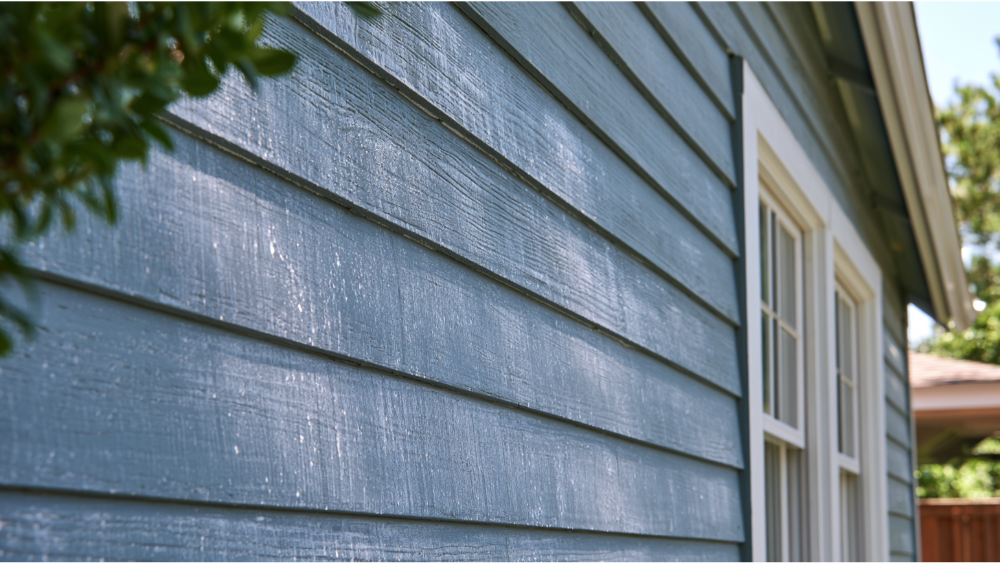
Chalky exterior paint forms when UV exposure and moisture break down the paint binder, leaving loose pigment as a powdery white film on your siding or trim. Light chalking over a sound, glossy film is normal aging, but heavy chalking means the coating has eroded and must be cleaned and stabilized before repainting. New paint applied over loose chalk has no adhesion and will fail.
That white powder on your fingers is loose pigment. As exterior paint weathers, the binder holding the pigment together breaks down under sun and moisture, and the pigment is left sitting on the surface as a fine, powdery film. Light chalking is normal aging. Heavy chalking means the coating has eroded and needs to be cleaned and stabilized before any new paint goes on.
You probably noticed the residue on siding, trim, or stucco and now you're deciding whether to wash it or repaint. Quick note: this is about paint failure, not decorative "chalk paint," which is a different product.
Why Does Exterior Paint Turn Chalky?
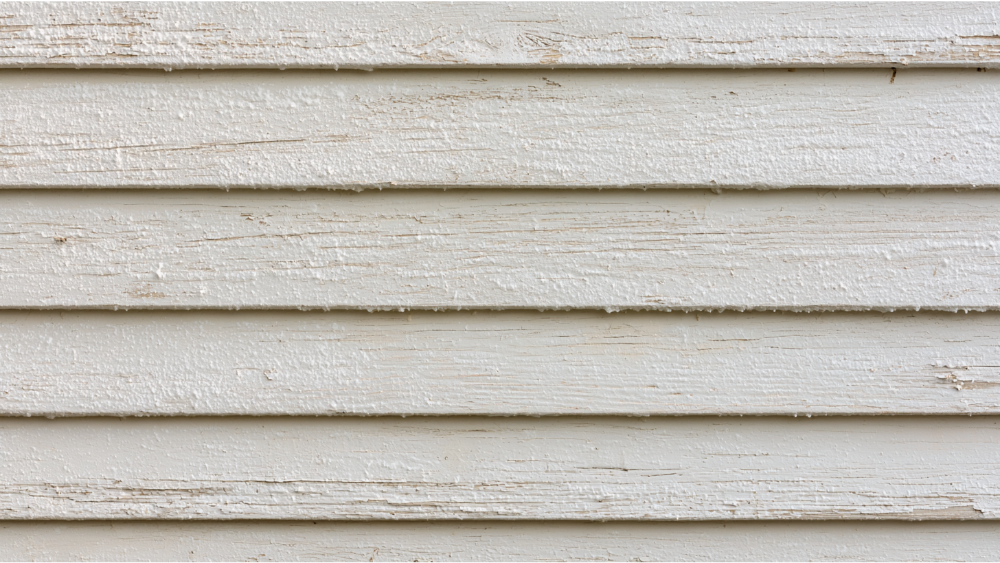
Paint is pigment suspended in a binder (the resin that glues everything together and to your siding). Constant exposure to the elements degrades that binder. When it lets go, the pigment stays behind as powdery residue you can rub off with a thumb. Older coatings chalk more readily than newer ones. Chalk formation is fastest in high-UV climates like Florida and the desert Southwest. Here in Edgewood our sun is gentler, but nine months of rain works on the same binder from the other direction.
How to Test for Chalky Surfaces in Five Minutes
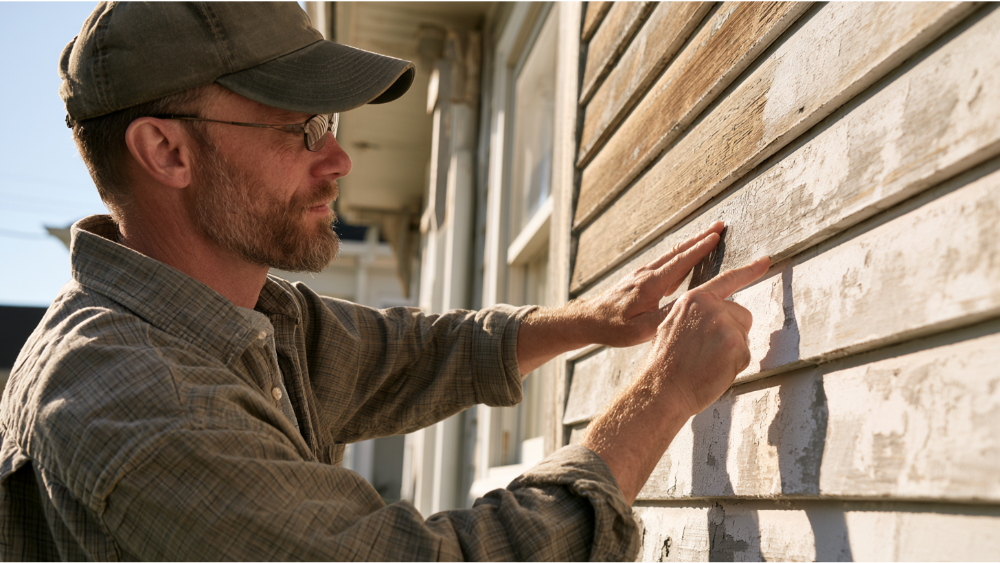
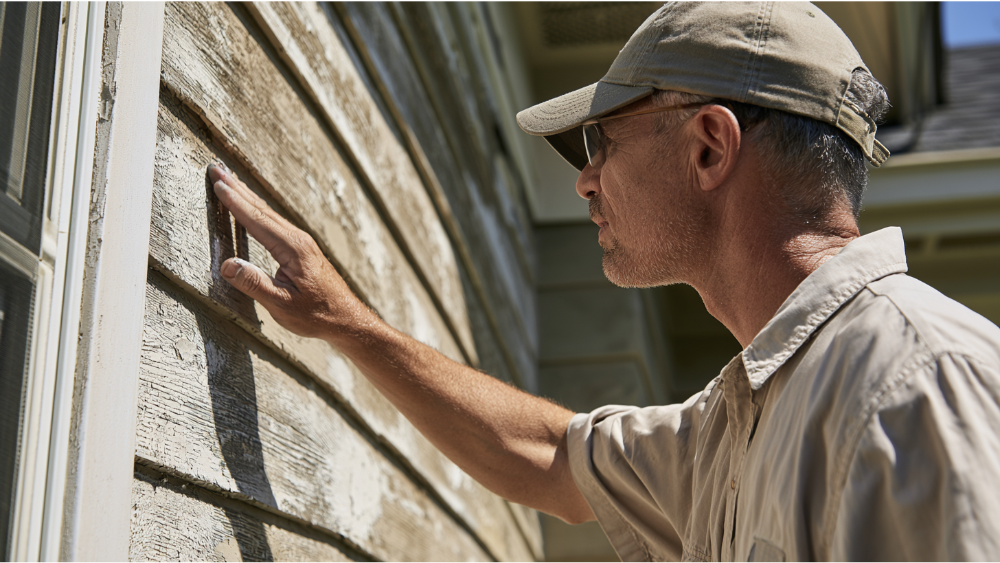
The retest is the step that matters. It separates removable surface chalk from a coating that has eroded all the way through. The industry method, ASTM D4214-23, works the same way: transfer chalk to cloth, a fingertip, or tape and rate the result.
- Pick a dry, inconspicuous area.
- Wipe it with a clean fingertip or a dark cloth.
- Note how much powder transfers.
- Wash a small test patch and let it dry fully.
- Rub again, then look at what's underneath: gloss, sound film, cracks, bare wood, soft spots.
Is Chalking Normal, or Is Your Paint Failing?
USDA and National Park Service guidance makes the distinction well: a slowly chalking but sound, glossy film still seals out moisture, while deep chalking with checking or cracking means protection is impaired. One comment we hear often from homeowners is that the paint "looked fine, just faded." Chalking dulls a home's appearance before it dulls its protection, so test before assuming it's cosmetic.
What Causes It in the First Place?
- Long-term sun and weather exposure
- Low-grade formulas loaded with cheap extender pigments
- Over-thinning or spreading paint too thin
- Interior paint used outdoors, which chalks fast
- Painting over unsealed porous stucco, masonry, or concrete
- Older oil-based coatings and oxidized factory finishes on metal or aluminum siding
Most premature cases trace back to a shortcut in surface prep, product choice, or film build.
Is It Chalking, or a Different White Residue?
Can You Paint Over Chalky Exterior Paint?
Not without proper preparation. New paint bonded to loose powder has no adhesion at all. It will release. Before you proceed, a quality cleaner and a stiff brush change that outcome more than any product claim on a label.
How to Remove Residual Chalk and Prep Chalky Surfaces
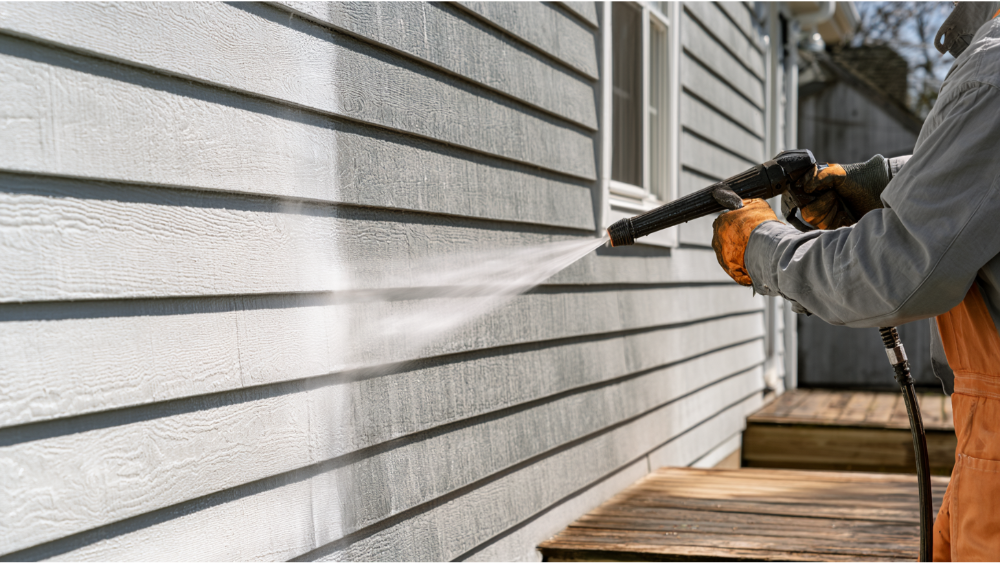
Cleaning is the step people rush. This is the order we follow on previously painted surfaces:
- Inspect the substrate and check for lead-paint considerations before anything is disturbed.
- Protect landscaping, windows, and hardware.
- Wash with the gentlest effective method: an exterior house cleaner, a stiff brush, and controlled water pressure instead of high-power blasting.
- Rinse thoroughly, let the wood, fiber cement, or stucco dry, then retest for residual chalk.
- Scrape and remove loose paint, then complete any rot repair or siding replacement.
- Apply a bonding or masonry primer formulated for chalky surfaces where the coating system calls for it.
- Finish with premium paint products over a clean, sound surface.
A good primer seals what's left and gives the topcoat something to grip. It won't manufacture adhesion out of nothing, which is why the rinse-and-retest step tells you whether the surface is ready. You may also see bonding additives such as Emulsa Bond mentioned for weathered exteriors; whether one belongs on your house depends on the substrate and the coating system.
Common Mistakes When Repainting Chalky Surfaces
- Treating a power washer as a substitute for prep work.
- Assuming a spray rig will bury the problem. Fast application still can't bond to powder.
- Skipping the retest after the surface dries.
- Using a standard primer where a binding primer for chalky residue is required.
- Coating siding that is still damp.
Does Chalking Mean There's Rot Underneath?
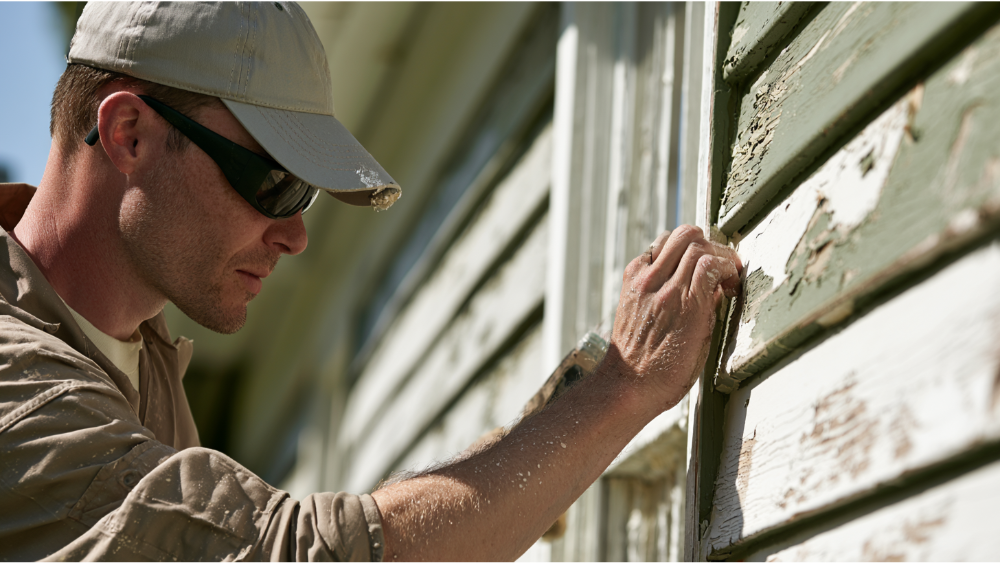
Not by itself. But heavy chalking alongside cracking, open seams, soft wood, or swelling calls for a closer look at siding, trim, porch posts, and caulking. Water gets in where the coating gave up. We handle rot repair, siding, and carpentry ourselves, so repairs happen before paint rather than after someone else's schedule.
Homes Built Before 1978
Disturbing old paint creates hazardous lead dust. Washington runs its own Renovation, Repair and Painting program, and federal rules count chalking as deteriorated paint. Don't casually scrape, sand, or pressure wash a pre-1978 exterior, and confirm certification before you hire anyone. Cover Pro Painting is EPA Lead-Safe (RRP) Certified.
Frequently Asked Questions
Will power washing remove chalking completely?
Often not. It can loosen residue but may leave a weakly bound surface, and on wood or masonry it can do damage. Always retest after the area dries.
What cleaner works on chalky siding?
A mild detergent or a dedicated exterior cleaner with a stiff brush removes more chalk than water alone. Match the cleaner to the substrate and rinse until the runoff is clear.
Do I need primer after washing chalky siding?
Usually yes, if residue remains or bare substrate is exposed. A binding primer designed for chalky surfaces seals them so the finish coat holds.
Does paint chalk faster in Florida than in Washington?
Generally yes, since UV intensity drives binder breakdown. Our wet season causes its own wear, so the timeline here is different, not longer by default.
Does chalking mean I must repaint immediately?
No. Light chalking over a sound, glossy film can wait. Powder that returns quickly after cleaning means the coating is spent.
Get a Straight Answer on Your Exterior
We evaluate the coating and the condition beneath it before recommending anything, because the goal is to protect and transform the exterior, not just recoat it. If your Edgewood-area home has chalky paint, failing siding, or suspected rot, start with a free estimate. Contact Cover Pro Painting at 206-222-0435. Over 13 years in business, and every exterior project carries our five-year warranty.
