
%201.svg)


Can You Paint Pressure-Treated Wood Right Away?
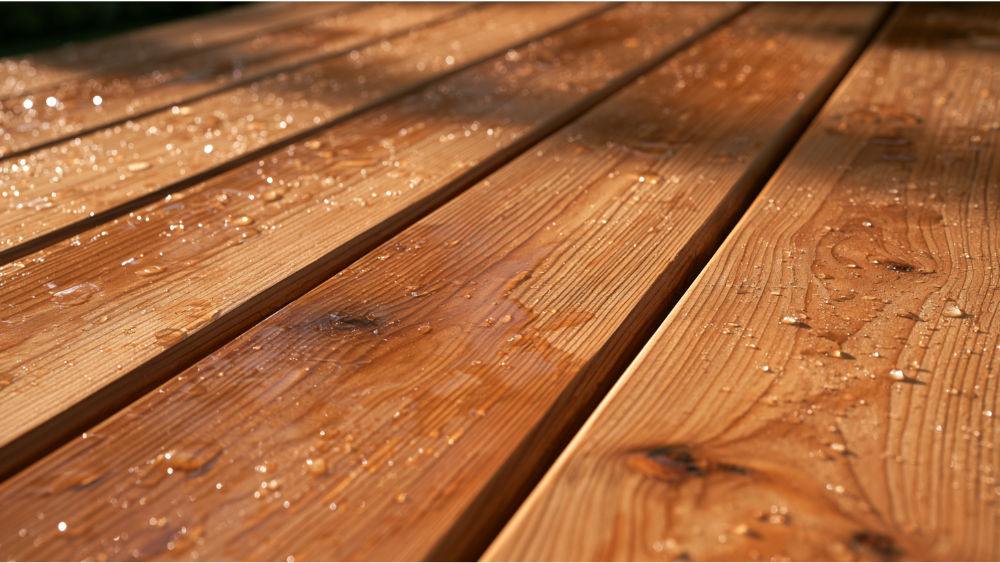
Key Takeaway
You cannot paint pressure-treated wood right away unless it is KDAT lumber. Standard wet pressure-treated wood must dry to about 15% moisture content or lower before paint or primer will bond properly. Use a moisture meter and the water-drop test to confirm readiness rather than guessing by the calendar.
No. Standard "wet" pressure treated wood shouldn't be painted right away. It needs to dry until it reaches about 15% moisture content or lower, which is the level most exterior coatings need to bond well. KDAT lumber is the main exception and can often take paint or stain much sooner, but you should still test it before you prime. If you're planning a deck, fence, railing, or trim repair, here's the rule that saves you from a redo: paint by the moisture reading, not the calendar.
Why Pressure Treated Wood Is Usually Too Wet to Paint
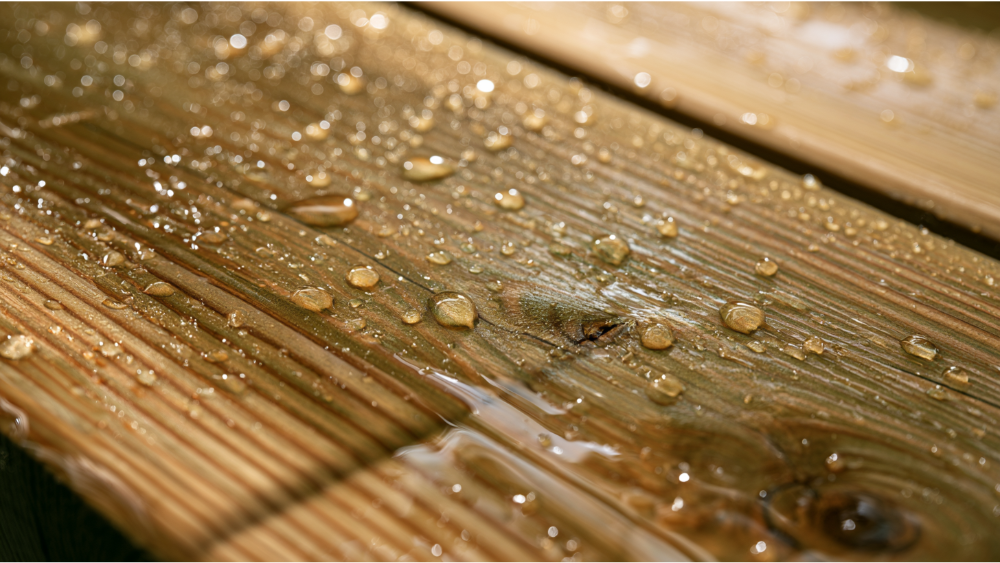
Pressure treatment works by forcing waterborne wood preservatives deep into the wood, and that process pushes a lot of moisture back in. Freshly treated pressure treated timber can hold roughly 16 to 32 pounds of water per cubic foot. You can often spot fresh stock by its green tint, and that green color comes from the copper preservatives that protect the wood against rot, insects, and moisture.
All that trapped water is the problem. Paint and primer can't grip a surface that's still shedding moisture, so the bond never forms. As the wood dries later, it can shrink, check, or warp, and that movement pushes a fresh coat right off. Prep starts with letting the wood get to the right condition first.
How Long Should You Wait Before You Stain Pressure Treated Wood or Paint It?
There's no single honest answer here, and any guide that gives you one flat number is guessing. Some lighter, thinner deck boards of treated lumber may be ready in a few weeks. Thicker or shaded stock can take a few months. What actually controls the wait is a handful of conditions:
- KDAT versus standard wet pressure treated lumber
- Board thickness (posts hold moisture longer than pickets)
- Shade and airflow around the wood
- Season and humidity
- Recent rain or washing
So instead of circling a date, wait until it's dry enough and confirm it with a quick test. This applies whether you plan to paint or stain the boards, since both need a dry surface to perform, and it holds true for most outdoor projects.
How to Tell If Pressure Treated Wood Is Ready to Paint
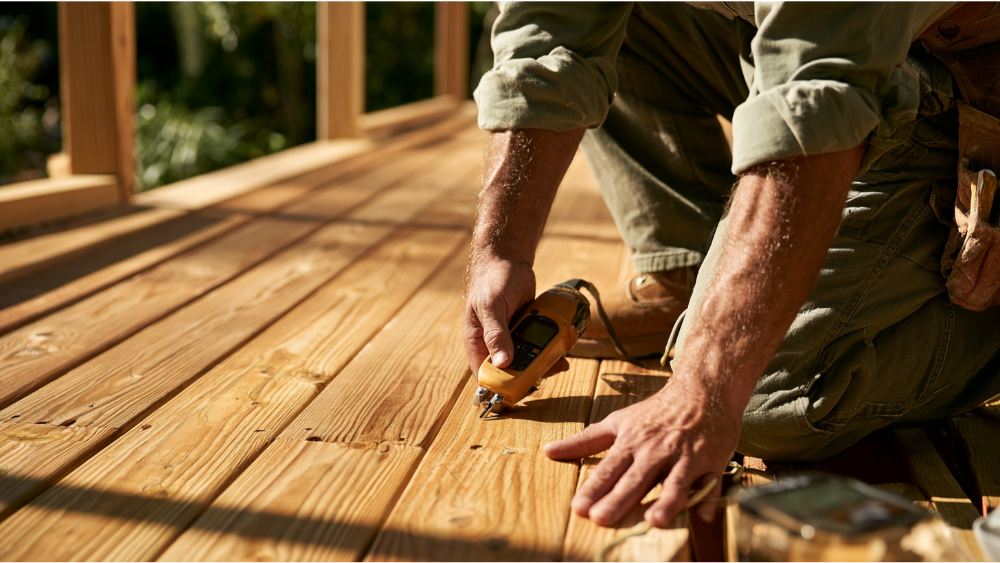
Use two checks together:
- Moisture meter. Aim for about 15% or lower before priming. That's the threshold most coating manufacturers point to for good adhesion and penetration.
- Water-drop test. Sprinkle a few drops on the surface. If the water beads up, the wood is still too wet, so wait. If it soaks into the wood fibers, the surface is more likely ready.
One caution: a dry-feeling surface isn't the same as a dry core. Thick posts and shaded faces can still hold moisture inside. Test several boards and the shaded areas, which matters even more in damp climates. This simple method helps you determine readiness without guessing.
What Happens If You Stain Pressure or Paint Treated Wood Too Soon?
The moisture has to go somewhere, and it works its way out through your finish. You get blistering, bubbling, peeling, and poor adhesion, plus a much shorter coating life. National Park Service coating guidance notes that finish failures are likely above 15% moisture content and extremely likely above 20%. Trapped moisture can also set the stage for decay and wood problems down the road, especially on flat horizontal surfaces where water lingers.
Can You Paint Pressure Treated Lumber Right Away If It's KDAT?
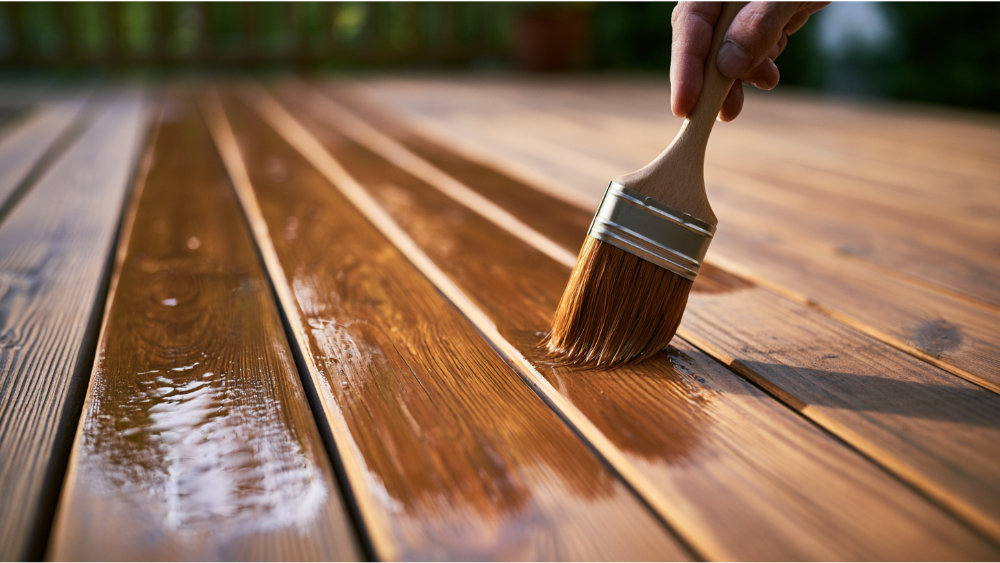
KDAT means kiln dried after treatment. Because it's dried after the preservative goes in, it's the main exception and can often be painted or stained much sooner than other pressure treated lumber. Most KDAT lumber is dried to about 25% moisture content or less. That's still above the paint-ready target, so verify the actual reading before you prime. KDAT is a good option for time-sensitive exterior carpentry projects or board replacements, and in cold conditions it also cuts the drying process short.
How to Prep and Stain Pressure Treated Wood for Paint
Surface prep is where a clean, long-lasting result is won or lost. The steps:
- Let the wood dry to the target moisture level.
- Inspect for rot, raised grain, mildew, or loose fibers.
- Clean with a mild detergent and a stiff brush to lift dirt and mildew. A pressure washer on a low setting can help remove debris, then let it dry again.
- Lightly sand rough spots.
- Remove all dust and dirt.
- Prime bare wood with an exterior primer made for pressure treated lumber.
- Apply premium exterior acrylic/latex paint in proper conditions, usually two coats, with a brush for edges and a roller for broad faces.
Water-based acrylic latex is the recommended mixture for durability. Oil-based paint is more rigid and tends to chip and peel sooner on treated wood.
Paint vs. Solid Stains vs. Sealer: How to Finish Treated Lumber
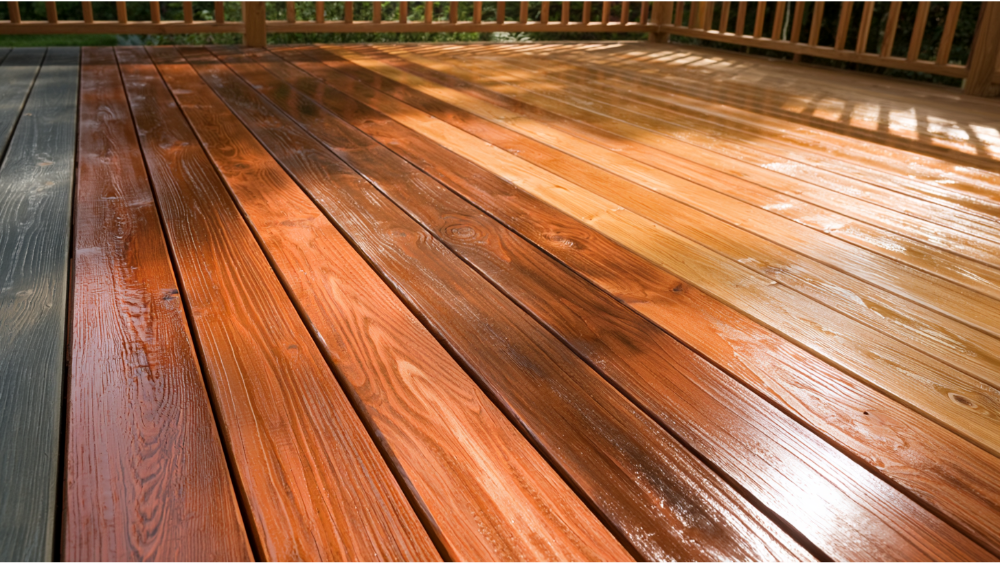
Paint isn't automatically the better choice. Paint gives strong color coverage and curb appeal, can hide small cracks, and works well on vertical or architectural pieces like fences, railings, trim, and siding-related repairs. When you stain pressure treated wood instead, solid stains or a sealer penetrate the fibers, resist peeling, and often suit a deck walking surface better because film paints can get slick underfoot and abrade with foot traffic. Solid stains let some of the natural wood grain show through while still adding protection and better resistance to wear. Stain offers fewer color options, and some products are meant to go on within about six weeks. In many cases, matching the finish to the surface and the project is what makes it last a lot longer. That's especially worth planning before you install a new deck, since a fresh surface gives you a clean start.
Safety and the Right Treatment Rating
Wear gloves and a dust mask when sanding or cutting treated wood, and never burn the scraps because of the preservative chemicals. Modern residential preservatives like ACQ replaced CCA after manufacturers voluntarily canceled virtually all residential CCA uses effective December 31, 2003.
Paint is not a substitute for the correct treatment rating. Ground-contact, near-ground (under six inches), or frequently wet components need ground-contact-rated lumber, not just a coat of paint. And on homes built before 1978, disturbing old paint may call for lead-safe practices, which is why we're EPA Lead-Safe (RRP) Certified.
Local Note and When to Call Cover Pro Painting
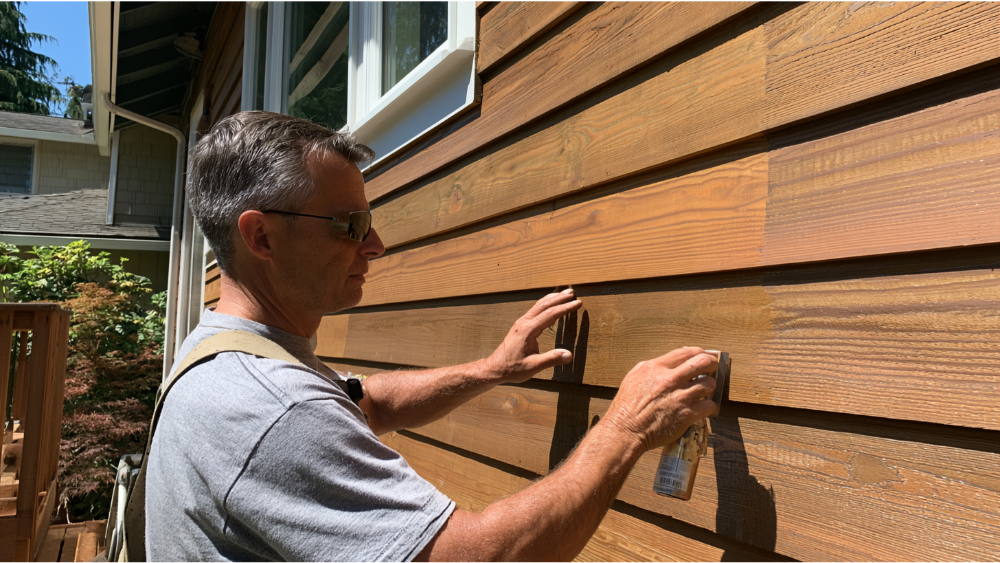
For homeowners around Edgewood and the greater Seattle-Tacoma area, damp weather, shade, vegetation near fences, and poor deck airflow all slow drying and expose wood to the elements. That's exactly why moisture testing beats a seasonal guess, and why you shouldn't rush painting or staining freshly treated wood after rain or washing. A uniform finish depends on it.
Call a professional when moisture readings vary, when there's old peeling paint, or when the job also involves rot repair, siding replacement, or exterior carpentry, all handled by the same team. Ongoing maintenance is part of that too. Cover Pro Painting is licensed, bonded, and insured in Washington State, we coordinate repairs and painting in one engagement, and we carry every deck, fence, and exterior project from a free estimate and a transparent scope through the finished result. Call 206-222-0435 to get a free estimate.
Frequently Asked Questions
Can you paint pressure treated wood right away?
Not standard wet stock. Trapped moisture works its way out and pushes on the finish, causing peeling, blistering, and poor adhesion. Wait until the wood tests at about 15% moisture or lower. That's the short answer.
How long should pressure treated wood dry before you paint it?
There's no single number. Standard wet stock often needs weeks to a few months. Test to about 15% moisture rather than watching the calendar.
What paint will stick to pressure treated wood?
Use a water-based exterior primer made for treated wood, then premium exterior acrylic/latex paint over it. If you'd rather stain pressure treated wood, use a solid stain or penetrating sealer instead.
How can you tell if pressure treated wood is ready to paint?
Use a moisture meter with a target around 15% or lower, plus the water-drop test. If water beads, wait. If it absorbs, it's likely ready.
