



Best Deck Paint for Pacific Northwest Weather: What Actually Holds Up?

Key Takeaway
For most wood decks in Pacific Northwest weather, the best deck paint is actually a pigmented penetrating semi-transparent stain, not conventional film-forming paint. The region sees 150 or more days of precipitation a year, and film-forming coatings trap moisture under the boards and peel. Penetrating stains wear gradually and recoat without stripping. The right choice still depends on what is already on your deck and the wood condition underneath.
For most bare or weathered wood decks in Pacific Northwest conditions, the best "deck paint" is actually a pigmented, penetrating semi-transparent deck stain, not conventional film-forming paint. It protects against moisture and UV while wearing gradually instead of trapping water and peeling off after a winter or two. That's the short answer, and it holds true for the majority of wood decks we see across the region. When homeowners search for the best exterior paint for their deck, what they usually need is a finish that works with the wood rather than fighting the Pacific Northwest climate from the surface.
Here's the catch: "deck paint" is a generic search term. People use it to mean paint, stain, deck stains, solid-color finishes, floor coatings, and resurfacers, which all behave differently. The right choice depends less on a brand name and more on what's already on your deck and what condition the wood is in underneath. Two decks on the same street can need two different finish systems, and the difference usually comes down to drainage, shade, and whether there's old paint still clinging to the boards.
This guide is for homeowners planning a deck project who want a result that lasts, not a job they'll redo in two winters. We'll walk the decision by deck condition, explain why surface preparation and moisture matter as much as the coating, and show where rot repair comes into the picture before any finish goes down. We'll also be honest about where a quality paint product is the right call and where it isn't, because matching the right paint to the surface is what separates a deck that holds up from a paint job that fails early.
Why Pacific Northwest Decks Are So Hard to Protect

Much of the Pacific Northwest sees 150 or more days of precipitation a year. That alone makes exterior wood a challenge. But the bigger issue for decks is the direction they face: up.
Horizontal deck boards collect water and hold it. They sit through repeated wet-dry cycles that vertical exterior walls never experience, and that cycling accelerates checking, cupping, and wood movement. A finish that performs beautifully on a wall or a railing can fail fast on a walking surface for exactly this reason. This is why so much standard exterior paint advice falls apart on a deck floor. Pacific Northwest weather doesn't just rain on a deck, it soaks in, then draws back out when the sun finally shows, over and over through the seasons. The constant moisture here is harder on horizontal wood than almost any other surface on a home.
Damp, shaded decks also invite moss, mold, mildew, and algae. These thrive where boards stay wet and airflow is poor, and they'll undermine a coating from below and above. Growth like this is one of the main reasons a mildew resistant finish isn't a luxury in rainy climates, it's a baseline requirement. Then come the dry summer stretches, when UV exposure and direct sunlight fade pigment and break down the surface. Overnight dew adds another layer of moisture even on clear days, so the wood rarely gets a true extended break from water. Add cold winters and the temperature fluctuations that come with them, and the wood is constantly expanding and contracting under any coating.
One more practical note: colors read darker under overcast skies. A stain that looked right in the can or on sunny paint samples can appear noticeably deeper on a gray afternoon, so it pays to test color in real conditions before committing. We often set out a sample board and look at it at different times of day before anyone signs off on a color, because Pacific Northwest light is not the same light shown on a store display.
And the region isn't one climate. Wet maritime areas, mountain elevations, and drier inland zones all behave differently. Shade, drainage, elevation, and sun exposure on your specific deck matter more than the label "Pacific Northwest." A coastal deck under firs faces a different problem than an inland deck in full afternoon sun. The maritime deck battles persistent moisture and growth, while the inland deck fights UV fade and heat from strong UV rays. Northwest weather has that kind of range inside a single region, which is why a one-size recommendation rarely survives contact with a real deck.
Deck Paint vs. Deck Stain: Penetrating or Film-Forming?
This is the distinction the whole decision turns on. Finishes fall into two families, and it matters far more than oil versus water.
Penetrating finishes soak into the wood. They wear and fade gradually instead of peeling, which makes maintenance simpler. When they thin out, you clean and recoat. Because there's no membrane to lift, moisture moving through the wood doesn't have a film to push off.
Film-forming finishes (conventional paint, solid-color stain, many porch and floor coatings) sit on top of the wood as a membrane. When moisture gets trapped underneath, that film blisters and peels. On a horizontal deck surface that holds water, trapped moisture is almost guaranteed over time. This is the exact mechanism behind the peeling paint you see on so many older decks, where a once-clean coating has turned into flaking patches and bare gray wood.
The USDA Forest Products Laboratory is direct about this: film-forming coatings on deck boards often don't last longer and are harder to maintain than penetrating finishes. Persistent moisture under a film causes blistering and peeling.
The failure modes are what separate them:
- Penetrating stain fades or erodes. Recoating is straightforward: clean, dry, apply.
- Film-forming paint peels. Fixing it means scraping or stripping down to sound wood first, which is a much bigger job.
Appearance differs too. A semi transparent penetrating stain keeps the wood grain visible while adding color and UV protection. Opaque paint and solid-color stain hide the grain entirely. Elastomeric paint and other membrane coatings exist and build a thicker waterproof layer, but the thicker the film, the greater the trapped-moisture risk, which is the opposite of what you want on boards that stay damp in rainy climates.
So when someone asks for the "best deck paint," the honest answer for bare wood is usually not paint at all. The best paint for a deck floor is often a penetrating stain that behaves nothing like paint, and we'd rather explain that than hand you a can that was set up to fail.
Where Oil Based Paint and Finishes Still Fit on Exterior Wood
Oil based products haven't disappeared from the deck conversation, and it's worth understanding where they still make sense. On bare exterior wood, an oil based semi-transparent stain penetrates well and carries pigment deep enough to give real UV defense while keeping the grain readable. Many homeowners who grew up with oil based paint expect that deep, wetted-in look, and a penetrating oil stain can deliver it on the right deck.
That said, oil based paint as a film on a deck floor runs into the same trapped-moisture problem as any other film-forming coating. It can look rich the day it goes down and still blister when water works up through the boards from below. Oil based finishes also tend to feed mildew over time in shaded, damp spots unless they carry a strong mildew resistant package. On vertical exterior wood like railings and posts, a modern waterborne system usually ages more gracefully and stays flexible longer than a traditional oil film. The takeaway isn't that oil based is bad, it's that oil based performs very differently depending on whether it's penetrating the wood or sitting on top of it.
Which Finish Is Right for Your Deck's Current Condition?
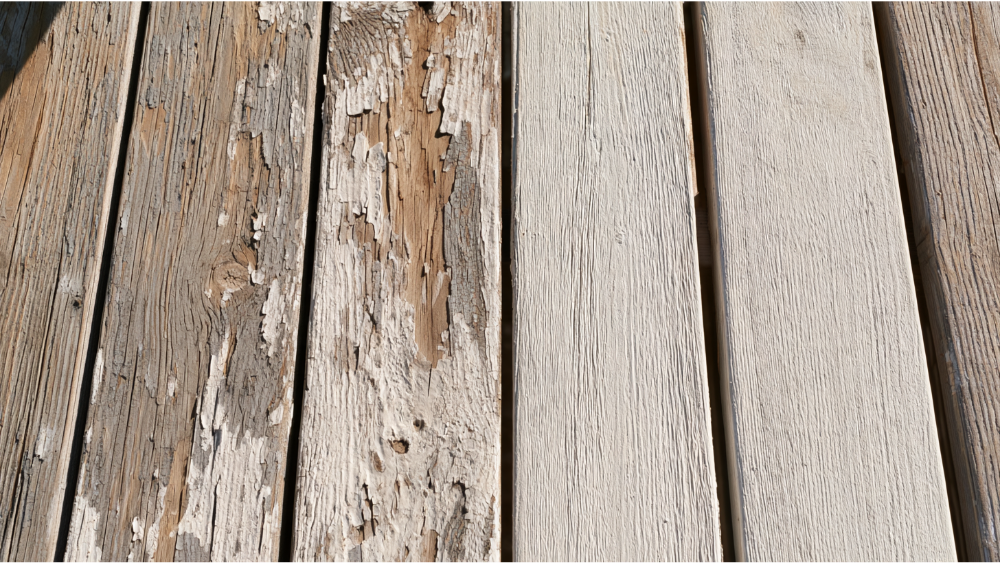
The right coating depends on what's already on the deck. Before anyone recommends a product, they should look at the surface. Here's the decision in one view:
Why does the existing coating control so much? A penetrating stain can't soak into wood that's covered by old paint, varnish, acrylic film, or solid-color stain. The USDA advises that old film-forming finishes must be completely removed before applying a penetrating stain. If the film stays, the stain has nowhere to go. You can buy the highest quality paint or stain on the shelf and it still won't penetrate through an old membrane, because not all paints can bond to a sealed surface.
This is also why spot touch-ups rarely work on a widely peeling deck. Dabbing fresh coating over isolated failures won't give you a uniform surface or lasting adhesion, because the surrounding film is already letting go. At that point, the honest path is to completely sand or strip enough to start from a sound base. Patching peeling paint with more paint just resets the clock on the same failure.
We'd rather tell you that upfront than sell you a coating that was never going to hold. The right finish follows from an honest diagnosis, not from whatever's on the shelf. That diagnosis is part of why Pacific Northwest homes with older decks so often need a reset rather than a quick recoat.
What to Look for in the Best Paint or Stain for a PNW Deck
Once you know your deck's condition, the finish itself still has to earn its place. Here's a practical checklist to read against any product's technical data sheet:
- Explicitly rated for decks and horizontal foot traffic. A product made for siding or trim isn't the same thing, even if it's a high quality exterior paint.
- Penetrating behavior on bare wood. You want it soaking in, not building a surface film. A reflective sheen or a smoothed-over grain is a sign of film formation and a peeling risk, per USDA guidance.
- Pigment for UV protection. More pigment blocks more ultraviolet. USDA research shows semi-transparent pigment gives color and UV defense while keeping grain visible, a good balance for our summers.
- Built-in mildew resistance. Damp, shaded decks need a mildew resistant finish with mildewcides. This is non-negotiable in maritime Pacific Northwest conditions.
- Water repellency and weather resistance. It should resist moisture and shed water rather than let boards drink it in, which matters enormously in rainy climates.
- Compatibility with the existing finish. If anything's already on the deck, the new system has to work with it or you have to remove it. This is where oil based and waterborne products can clash if you mix them carelessly.
- Appropriate traction when wet. Surface texture affects slip resistance, which matters on a rainy deck.
- Current application and rain-resistance requirements. Read the data sheet, not last year's advice.
For vertical components like railings, posts, and skirting, and anywhere you want true opaque color, a quality paint in a 100% acrylic latex performs well in high humidity. It handles the shedding of water that vertical surfaces allow, and a high quality paint here resists the fade and chalking that cheaper products show within a season or two. A semi gloss finish on those components also wipes clean more easily and holds up to handling. Just don't assume what works on the railing will work underfoot. We don't name specific brands, because the right exterior paint changes with the deck and the formulation can change year to year. What counts as the best paint for one deck isn't automatically the best paint for the next.
Why Proper Surface Preparation Matters More Than the Product on the Can

Prep is everything. Premium paint products can't fix damp wood, an incompatible coating, failing boards, or skipped preparation. This is where a deck job is won or lost, and it's exactly where cutting corners saves painters time at your expense. You can spend top dollar on the best exterior paint available and still watch it peel within a year if the surface preparation underneath it was rushed.
Proper surface preparation is what prevents peeling paint and early failure. Here's the sequence we work through:
- Explicitly rated for decks and horizontal foot traffic. A product made for siding or trim isn't the same thing, even if it's a high quality exterior paint.
- Penetrating behavior on bare wood. You want it soaking in, not building a surface film. A reflective sheen or a smoothed-over grain is a sign of film formation and a peeling risk, per USDA guidance.
- Pigment for UV protection. More pigment blocks more ultraviolet. USDA research shows semi-transparent pigment gives color and UV defense while keeping grain visible, a good balance for our summers.
- Built-in mildew resistance. Damp, shaded decks need a mildew resistant finish with mildewcides. This is non-negotiable in maritime Pacific Northwest conditions.
- Water repellency and weather resistance. It should resist moisture and shed water rather than let boards drink it in, which matters enormously in rainy climates.
- Compatibility with the existing finish. If anything's already on the deck, the new system has to work with it or you have to remove it. This is where oil based and waterborne products can clash if you mix them carelessly.
- Appropriate traction when wet. Surface texture affects slip resistance, which matters on a rainy deck.
- Current application and rain-resistance requirements. Read the data sheet, not last year's advice.
Bare exterior wood gets primed where the system calls for it. A quality primer gives the finish something solid to hold, and on bare or stained-prone boards an oil based primer can block tannin bleed that would otherwise discolor the top coat. The best primer for your deck depends on the wood and the finish going over it. Skip any of this and even the best product on the market will fail early. That's not an opinion; it's how coatings behave on wood. The investment you make in high quality paint only pays off when the surface preparation underneath earns it.
Check Wood Moisture Before You Coat Anything
Wood lies about how dry it is. The surface can feel bone dry while the core and board ends still hold water. That trapped moisture is what pushes a fresh coating off later, so appearance isn't enough. In the Pacific Northwest climate, where boards may only get a few truly dry days in a row, this is the single most common reason a deck paint job fails.
A moisture meter is the reliable check. A common ideal target before staining is below roughly 15% moisture content, often cited as a 12 to 15% range. Treat that as a general guideline, not a rule for every job. The selected product's technical data sheet controls the final number.
The same goes for waiting after rain. A common starting point is 24 to 48 hours, but it's only a starting point. Shade, humidity, temperature, board thickness, exposed end grain, and recent power washing all stretch the drying time. A shaded deck under trees can need noticeably longer than an open one, and in Pacific Northwest weather that window can be hard to find at all during the wet months. Rushing it leaves you with wet paint that never cures properly.
We don't publish a single universal moisture or rain-free number, because there isn't one. The right move is to verify both the forecast and the actual wood moisture against the chosen coating's label.
New pressure-treated lumber is its own case, and the "always wait six months" advice you'll hear is often wrong. Guidance for wet treated Southern Pine suggests about 30 days before an oil based semi-transparent stain and at least six months before paint or solid finishes. But if the lumber was properly re-dried after treatment, it may be ready much sooner. The waiting period is material- and product-specific, not a blanket rule, and it's one more thing we verify rather than guess.
Repair Rot and Unstable Boards Before Painting
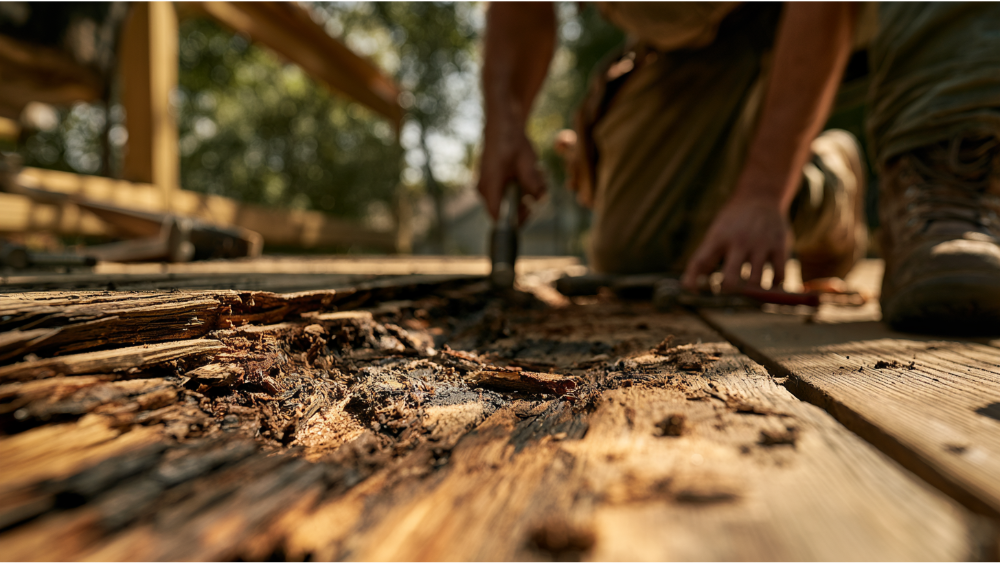
A coating can hide a gray, weathered look. It cannot restore structural strength. Paint or stain over a soft board just buries the problem under color. No quality paint, oil based or otherwise, turns a failing board back into a sound one.
Moisture is the driver of decay. USDA research shows fungal decay risk climbs when wood stays above about 20% moisture content, with serious decay associated with moisture near or above the fiber-saturation point of roughly 30%. Our climate keeps a lot of deck wood in that danger zone for long stretches, which is why rot shows up on Pacific Northwest homes far more often than in drier regions.
Before any prep or coating, a deck should be checked for trouble. Watch for:
- Soft, punky, or crumbling boards
- Splitting or visible movement underfoot
- Loose fasteners and connections
- Failing railings or stair components
- Trapped debris between boards holding moisture
- Standing water that doesn't drain
- Exposed, water-soaked end grain
- Water entry around posts and the ledger where the deck meets the house
Anything soft or structurally weak needs assessment and repair or replacement first. This is where our full-service approach matters. Rot repair, siding, carpentry, and the finish are all handled by one team, so you're not coordinating a carpenter, a repair crew, and a painter on your own. One scope, one coordinated project. That's how lasting value gets built, not through a coat of paint over failing wood. When the structure is sound, the finish, whether a penetrating stain or a high quality exterior paint on the railings, finally has something worth protecting.
When Is the Best Weather Window to Paint or Stain a Deck?
Conditions beat the calendar. A "good month" on paper means nothing if the wood is wet or dew is rolling in overnight. In Pacific Northwest weather, the number of days that actually meet the product's requirements can be smaller than the calendar suggests.
Three things have to line up. The wood must be dry, confirmed with a meter as covered above. The temperature and rain-free window must match the product's technical data sheet. And you have to account for overnight dew, which can re-wet a surface even after a dry day and ruin a cure that looked fine at sundown.
Shaded decks need extra drying time, both before and after application. Where the label advises against direct sunlight during application, follow it, since fast flash-drying in hot sun can hurt penetration and appearance. This matters for both penetrating stains and film finishes, and it's one reason an oil based stain applied in blazing midday sun often looks blotchy later.
After coating, a common general guide is to wait 24 to 48 hours before replacing furniture or resuming heavy use, but that too depends on the product and the weather. We don't hard-code a universal temperature, humidity cap, or rain-free window. Those come from the product data sheet and the actual forecast, which is why we plan the window around both. Hitting that window reliably is a big part of why a professional paint job tends to outlast a rushed weekend one.
How Long Should a PNW Deck Finish Last?
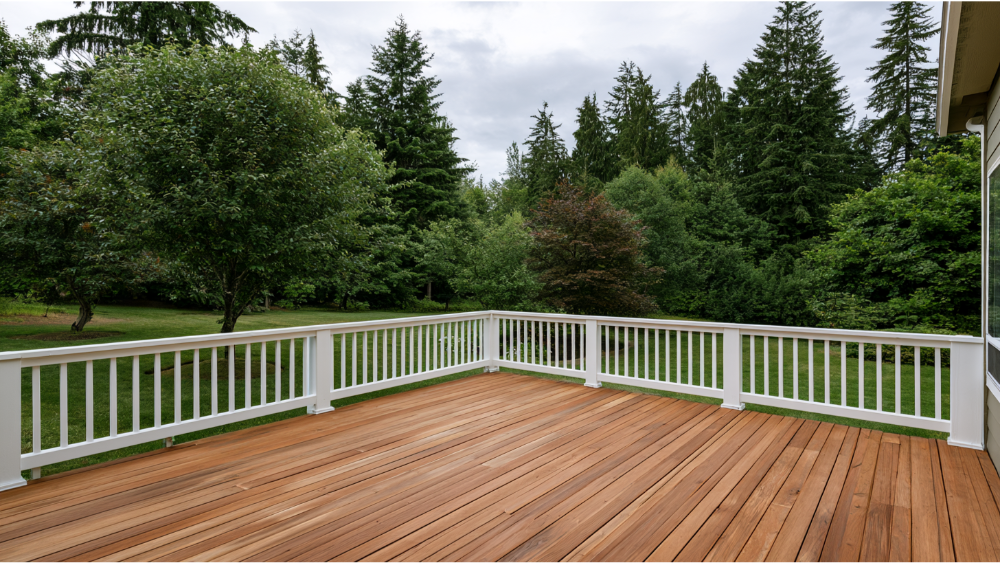
The USDA publishes service-life estimates for horizontal deck finishes. These are average contiguous-U.S. maintenance estimates, not warranties, and damp, shaded, high-traffic decks here may need attention sooner.
Weathered, saw-textured boards hold stain longer than fresh smooth lumber because the open surface accepts more material. Formulation, prep quality, traffic, and exposure all move these numbers. A deck that drains well and gets some sun will stretch toward the longer end, while a shaded deck that stays wet most of the year will land near the shorter end even with high quality paint or stain. A brand new deck built from smooth lumber often sits at the shorter end until the surface weathers enough to accept more material.
For context on vertical surfaces, a premium exterior paint system on house siding (not deck floors) can last roughly 10 to 14 years in our conditions when applied over proper surface preparation. That gap between walls and deck boards is exactly why horizontal surfaces get a different finish strategy. The best exterior paint in the world still lasts longer on a wall than on a floor, simply because the wall sheds water and the floor holds it.
The maintenance difference is the real takeaway. A penetrating stain fades and erodes, so a recoat is a clean-and-apply job. A film finish peels, which means scraping or stripping before you can start over. An annual inspection catches wear early and keeps a quick maintenance coat from becoming a full strip-and-restart. Our exterior painting projects carry a 5-year warranty, which reflects how we approach the work from surface preparation on up.
Lead Paint Safety and Lead Paint Removal for Older Painted Decks
If your deck is on a home built before 1978 and it has old paint, prep becomes a safety matter. Old coatings on pre-1978 structures can contain lead paint, and disturbing them during sanding or scraping releases lead dust. For paid work that disturbs painted surfaces in most pre-1978 housing, EPA Renovation, Repair and Painting (RRP) requirements may apply unless the affected surfaces are properly determined to be lead-free.
The exterior minor-repair exception is generally limited to a total of 20 square feet or less of disturbed painted surface, and other restrictions still apply. Sanding, scraping, and stripping old deck paint is precisely the kind of work that can disturb enough surface to trigger these rules. Because a full deck recoat usually means removing peeling paint across a large area, older decks often fall well outside that small exception, which pushes the job into genuine lead paint removal territory. EPA updated its lead-safe renovation guidance in March 2026.
Cover Pro Painting is EPA Lead-Safe Certified (RRP Certified). On older homes, that means the work protects your household from lead dust and stays compliant with federal practice. It's one less thing you have to worry about when old paint has to come off, and it's a real concern on many Pacific Northwest homes that predate 1978.
When Professional Deck Restoration Makes Sense
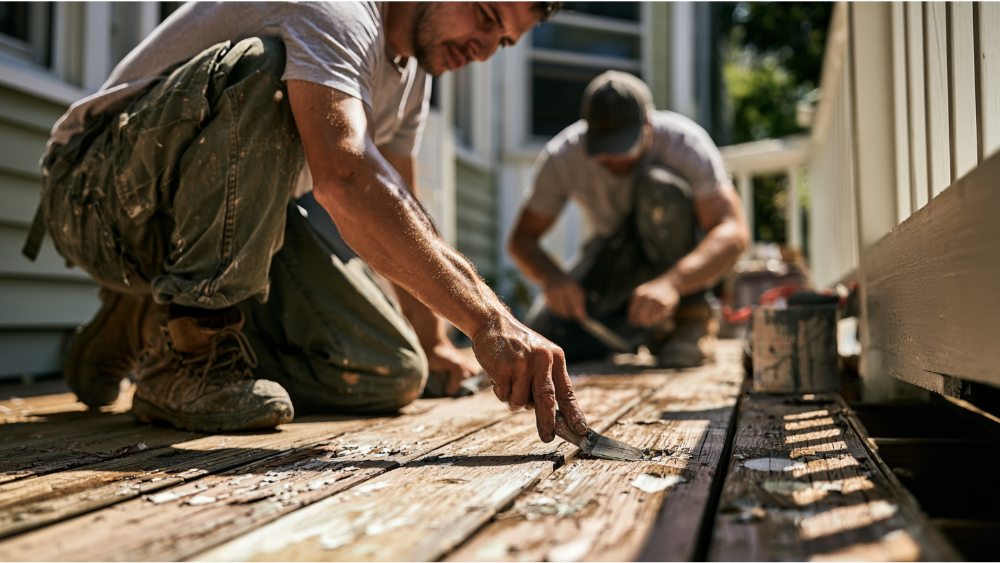
Plenty of simple recoats are reasonable to do yourself. A sound deck with a known finish that just needs a cleaning and a fresh maintenance coat is a fair weekend project. Other situations call for professional painters:
- Unknown existing coating. If you can't identify what's on the deck, compatibility and adhesion testing come first, including whether an old oil based layer is involved.
- Widespread peeling paint that requires real stripping or sanding before anything new goes down.
- Rot or soft boards that need carpentry before coating.
- Multiple repair needs at once, like boards plus railings plus adjacent siding.
- Pre-1978 painted surfaces where lead paint and lead-safe practices apply.
- A large deck or narrow dry weather window that's hard to hit around your work schedule, which is common in Pacific Northwest weather.
This is where full-service earns its keep. We handle rot repair, carpentry, and the finish in one coordinated engagement, so you're never juggling separate contractors or wondering whose work is whose. On a large deck, the prep work alone can take longer than most homeowners expect, and getting multiple layers of coating applied in the right conditions takes planning. Alex, our founder, personally oversees projects, backed by a team with over 100 years of combined painting experience. After 13-plus years in business, most of our work now comes from repeat clients and referrals, which tells you how we'd rather be judged.
Start With a Free Estimate and a Clear Plan
Lasting results start with diagnosis and surface preparation, not a product name on a can. The right finish follows from what your deck actually needs, whether that's a penetrating stain on the boards, a high quality exterior paint on the railings, or rot repair before anything goes down. Done right, the result adds real curb appeal along with protection.
A free estimate is the low-risk first step. We assess the deck's condition, check for rot, test coating compatibility, and recommend the right exterior paint or stain system with a clear, transparent scope and a number before any work begins. We're licensed, bonded, and insured in Washington State, EPA Lead-Safe Certified, and we back exterior projects with a 5-year warranty and premium paint products carrying lifetime manufacturer warranties. We also offer 0% APR financing and 10% off for first-time customers if that helps you move forward.
We serve Edgewood and the greater Seattle-Tacoma region, and we've protected plenty of Pacific Northwest homes against exactly the moisture and growth problems this guide describes. Don't see your city listed? Contact us to confirm service availability. Call us today at 206-222-0435 or request your free estimate, and we'll give you a straight read on your deck.
Frequently Asked Questions
What is the best exterior paint for humid climates?
For vertical surfaces and anywhere you want opaque color, a 100% acrylic latex with built-in mildew resistance performs well in humid conditions. A high quality paint here resists fade, chalking, and mildew far better than a budget product, with excellent adhesion and excellent durability when applied over clean, dry wood. For deck walking surfaces, a penetrating semi-transparent stain usually outlasts film-forming paint, because it won't trap moisture under a film and peel. Match the finish to the surface, not just the climate.
What is the longest-lasting deck coating?
On weathered or saw-textured boards, the USDA estimates a semi-transparent penetrating stain at roughly 3 to 6 years. It fades rather than peels, so recoats are simpler. Actual life depends on surface preparation quality, exposure, foot traffic, and how wet and shaded the deck stays in the Pacific Northwest climate. The superior durability of any finish still comes back to prep more than the label.
What is the best temperature to paint a deck outside?
There's no universal number. Follow the product's technical data sheet, make sure the wood is dry (often below about 15% moisture content), and pick a window clear of rain and overnight dew. Shaded Pacific Northwest decks need extra drying time before and after application, and that dry window can be narrow during the wet months. Plan the first coat for stable conditions so the second coat can go on within the recommended recoat window.
What type of paint is best for an outdoor deck railing?
Railings are vertical and shed water far better than deck boards, so they can often take a film-forming finish like a quality 100% acrylic latex or a solid-color stain after proper prep. Waterborne acrylics generally age better than a traditional oil based paint film on exterior wood in wet climates. Match the railing system to the rest of the deck and to whatever coating is already there, so everything stays compatible.
Is oil based or water based paint better for a deck?
It depends on the surface. An oil based semi-transparent stain penetrates bare exterior wood well and gives a deep, grain-forward look with good UV defense. But as a film on a deck floor, oil based paint runs into the same trapped-moisture peeling problem as any film-forming coating. On railings and posts, a modern waterborne acrylic usually stays flexible and mildew resistant longer in Pacific Northwest weather. We pick the system based on the surface and the deck's condition, not a blanket rule, and we apply two coats where the product calls for it.
Can paint or stain cover deck rot?
No. Coatings can hide discoloration but can't restore structural strength. USDA research links serious decay to moisture near the roughly 30% fiber-saturation point, and a finish does nothing to reverse that. Soft, punky, or moving boards need repair or replacement before coating, which is why we handle rot repair and finishing as one full-service scope.
