



What Is the Best Deck Paint? A Clear Guide to Choosing the Right Coating

Key Takeaway
The best deck paint is an exterior floor coating rated for horizontal wood and foot traffic, but on bare wood a penetrating semi transparent stain is often the smarter long-term choice because film-forming finishes are more prone to moisture-related peeling on flat boards. Quality acrylic latex deck coatings last around five to eight years with proper prep. The right product depends on your deck's material, existing finish, and moisture level, not the brand name.
The best deck paint is an exterior floor or deck coating specifically approved for horizontal wood, foot traffic, and the deck's existing finish. On bare wood, though, a penetrating semi transparent stain is often easier to maintain than paint, because film-forming finishes sitting on top of flat boards are more prone to moisture-related peeling. In other words, the "best" product depends on what your deck is made of, what's already on it, and how much weather it takes.
That answer frustrates people who want a single can to buy. We understand the impulse. But the honest truth, backed by the USDA Forest Products Laboratory, is that a deck is one of the hardest surfaces a coating ever has to survive. It lies flat, holds water, bakes in the sun, and gets walked on every day. Choosing the right finish for a wood deck is a system decision, not a brand decision.
This guide is for homeowners deciding how to refinish a deck, and whether to do it themselves or hire it out. We'll walk you through how to match a coating to your deck's condition, when paint is the right call, when a stain serves you better, and when the smartest move is to repair the wood before anything touches it. Our view at Cover Pro Painting is simple and we hold to it on every project: prep and repairs come first, the finish comes last, and a coating is only as good as the surface beneath it. Skip that order, and even premium paint peels early.
By the end, you'll know how to pick a coating with confidence, what to look for on a technical data sheet, and how to avoid the mistakes that send deck owners back to the store a year later. We'll also talk plainly about where paint beats stain, where deck stain beats paint, and why the answer changes board by board.
Which Deck Coating Is Right for Your Deck's Condition?
Before you look at colors or brands, look at your deck. Its material and condition drive almost every good decision here. Here's a quick way to match your situation to the most defensible approach.
Notice what drives the table: condition, not color. A beautiful premium paint on a wet or failing board will fail just as fast as a cheap one. That's because paint is not a wood preservative. It can't stop decay once the boards stay wet, and the USDA is clear that moisture trapped under a film is what causes blistering and peeling in the first place.
The single most expensive mistake we see is painting over a surface that isn't ready. Painting over loose paint, active rot, or damp wood doesn't solve the problem. It hides it for a few months, then the new coating peels along with the old. Every dollar you spend on the finish is wasted if the foundation underneath can't hold it.
So start with an honest look at your boards. Are they solid underfoot? Is the old coating bonded tight or flaking? Is there a soft, spongy spot near the fasteners or where water pools? Those answers tell you more about the right product than any label on the shelf. They also tell you whether you're even looking at a paint question yet, or a repair question wearing a paint question's clothes.
Should You Paint or Stain Your Deck?
This is the real question hiding behind "best deck paint." For a lot of decks, especially bare wood, a stain is the better long-term choice. Here's how the options compare, from the thinnest penetrating finish to full opaque paint.
Deck finishes sit on a spectrum from thin and penetrating to thick and film-forming:
- Semi transparent stain soaks into the wood, shows the wood grain, and recoats easily because there's little film to strip. A semi transparent stain offers lighter color and less hiding power, so defects still show. It's the finish most homeowners reach for when they want the natural look of a wooden deck to carry through.
- Semi solid stain gives more color and UV protection while still letting some wood grain through. A semi solid finish is a middle ground: more pigment than a semi transparent stain, more visible grain than a solid color stain.
- Solid stain hides most of the wood grain and covers much like paint, with a thinner film than full paint. A solid color acrylic stain is a popular choice on older boards where mismatched or weathered color needs to be unified without going all the way to a heavy paint film.
- Paint is fully opaque. It delivers the strongest color, the best UV and abrasion coverage, and hides mismatched boards and cosmetic flaws. The tradeoff is the film: on fully exposed horizontal boards, that film is the thing most likely to peel.
UV exposure is a bigger factor than most people expect. Without UV protection, a rich brown deck can fade toward gray in under a year under steady sun exposure. The pigment in a coating is what blocks those uv rays. More pigment means more protection, which is one reason a solid stain or paint holds its color longer than a lightly tinted finish in full sun. A semi transparent stain carries less pigment by design, so it protects less and needs recoating sooner, but it also recoats without the heavy stripping that a failing paint film demands.
Acrylic latex paints build uv resistance right into their pigment system, which is one reason a solid color holds its look longer than a clear or lightly tinted finish in full sun. If you want the richest, most uniform color on an entire deck, paint and solid color stain are where you'll find it. If you want the warmth of real grain, a semi transparent or semi solid stain keeps that character visible.
On lifespan, be realistic. A quality acrylic latex deck coating applied over proper prep commonly lasts around five to eight years with maintenance. You'll see claims of 10 to 15 years floating around online. For fully exposed horizontal wood, that's optimistic. Deck boards take far more abuse than vertical siding, and the USDA specifically warns that film-forming deck finishes are vulnerable to moisture-related peeling. Treat big longevity numbers with caution, and weigh them against how much recoating effort you're willing to take on down the road.
One nuance worth knowing: railings, posts, and vertical surfaces accept paint far more successfully than the flat walking surface. Water runs off vertical exterior wood instead of sitting on it, so the film stays intact longer. A common and sensible approach is a painted or solid-stained railing paired with a penetrating stain on the deck floor, giving you a crisp finished look up top and an easier-to-maintain surface where your feet go. That split finish is one of the most durable ways to dress a wood deck in a wet climate.
If you love the look of natural wood and want easy upkeep, lean toward a penetrating semi transparent stain. If you want bold, uniform color and you're coating a previously painted or defect-heavy deck, a solid stain or quality floor paint makes sense, as long as the prep is done right. There's no universally correct choice here, only the right one for your boards, your climate, and how you want the space to look and age.
Oil Based vs Water Based: What Should You Look for When Painting Exterior Wood?

If paint is the right call for your deck, the label matters less than the specifications behind it. Here's the checklist we'd use for painting exterior wood, including the question of whether an oil based paint or water based product suits your situation.
- Approved for exterior horizontal surfaces and foot traffic. Not every exterior paint is rated to walk on. Look for a product clearly labeled for floors, porches, or decks. An acrylic floor and patio enamel is a good product type to ask about, and it's a solid starting point when you want a durable floor paint for a wood deck.
- Oil based or water based, matched to the job. Oil based paint penetrates well and can bond strongly to certain bare or older surfaces, but it is slower to cure, harder to clean up, and has higher VOC content. Water based acrylic products dry faster, stay flexible as the wood moves, and resist UV fading well. Many homeowners now lean toward acrylic for the deck surface and reserve oil based products for specific primer or problem-sealing roles. Whatever you choose, don't mix an oil based topcoat over an incompatible water based layer, or the reverse, without confirming compatibility first.
- Compatible with the existing coating. If your deck is already painted, the new product has to bond with what's there. Mixing incompatible chemistries is a fast path to peeling. This is where knowing whether the old finish was oil based or water based genuinely matters.
- A traction option. Regular paint can be slick when wet. A low-luster finish grips better than gloss, and textured paint adds real traction to a deck. These coatings contain silica or fine sand for grip and can fill surface imperfections up to about a quarter inch, giving a subtle non slip texture underfoot. They're a smart choice for high-traffic walking surfaces. Just don't expect any product to be truly slip-proof, and don't let a manufacturer imply one is.
- UV and mildew resistance. Premium products with UV inhibitors hold color and film integrity far longer in full sun, and a mildew resistant formula matters anywhere the deck stays damp or shaded, which describes a lot of decks in the Pacific Northwest.
- Waterproofing qualities for wet climates. Decks that take a lot of rain or stay damp need a coating designed to shed and resist water, not just color the wood. In some cases a flexible elastomeric paint is marketed for this, though on flat decking it carries the same film-peeling risk as any thick coating.
- A current technical data sheet. This is the document that actually tells you the truth. It lists recoat windows, foot-traffic restrictions, full-cure time, application temperatures, and coverage. If a product's data sheet is vague or hard to find, that's a red flag.
One more practical point: color affects temperature. Lighter colors keep the deck surface cooler underfoot in hot summer sun, which matters if you go barefoot out there or have kids and pets using the space. Darker colors look dramatic but soak up heat.
Is Benjamin Moore or Another Brand the Best Paint for a Deck?
People often ask us to name the best paint or the best deck paint by brand, and they'll mention names like Benjamin Moore or Sherwin Williams. Both companies make respected exterior wood and floor products, and plenty of good decks have been finished with each. But the honest answer is that the best paint for your deck is the one whose technical data sheet matches your deck's material, moisture level, and existing finish, not the one with the most familiar label. A Benjamin Moore or Sherwin Williams product applied over bad prep will peel exactly like any other. When you're weighing a specific product, read the data sheet before you read the marketing. The claims that matter, about substrate, traction, and cure, live in that technical document.
The Best Deck Coating Approach for Each Deck Type
Here's the specific approach for the situations we see most often. Find yours and start there.
Previously Painted and Sound Decks
If the existing paint is bonded tight and the boards are solid, you can recoat with a compatible exterior floor coating rated for horizontal wood. Dull any glossy areas so the new coat can grip, scrape off anything loose, repair small defects, and spot prime bare wood where the coating system calls for it. Then apply the topcoat at the recommended film thickness. If the old finish was oil based paint, confirm your new product is rated to go over it, because an unexpected chemistry mismatch is one of the quieter causes of early failure.
Bare or New Wood
Raw wood is where a penetrating semi transparent stain usually wins. It soaks in instead of forming a film, so it doesn't peel the way paint can, and future recoats are far simpler. A semi transparent stain or semi solid stain also keeps the wood grain visible, which is usually why someone built a wood deck instead of pouring a slab. If you do choose to paint decking that's bare, prime only where the system requires it, since excess primer under a deck coating can cause its own problems. New wood that has just been installed often needs time to weather or dry before it will accept a finish evenly.
Pressure Treated Wood
Ignore the old "wait six months" rule. A brand new deck built from pressure treated lumber is often damp from treatment, and nothing coats wet wood well. The real test is whether the wood will accept a finish. Sprinkle water on it: if it beads and sits, the surface isn't ready. If it soaks in, you're closer. For a reliable answer, use a moisture meter and follow the coating's technical data sheet, which will specify an acceptable moisture reading. Pressure treated wood also tends to be smoother and more sealed when new, so a penetrating stain may sit on the surface until the deck wood opens up enough to accept it.
Old or Weathered Exterior Wood
Here's where you have to tell cosmetic weathering apart from rot. Gray, checked, dried-out weathered wood that is still structurally sound can be cleaned, sanded, and recoated. Boards that are soft, spongy, or crumbling are a different problem. Be skeptical of thick resurfacing products marketed to "rebuild" old decks. A heavy coating can hide checking and surface wear on exterior wood, but it cannot restore a failing board, and sealing moisture into bad wood accelerates decay. On badly faded gray boards, a solid color stain or paint will unify the look better than a semi transparent stain, since a thin finish has no pigment to hide the damage.
Peeling or Blistered Surfaces
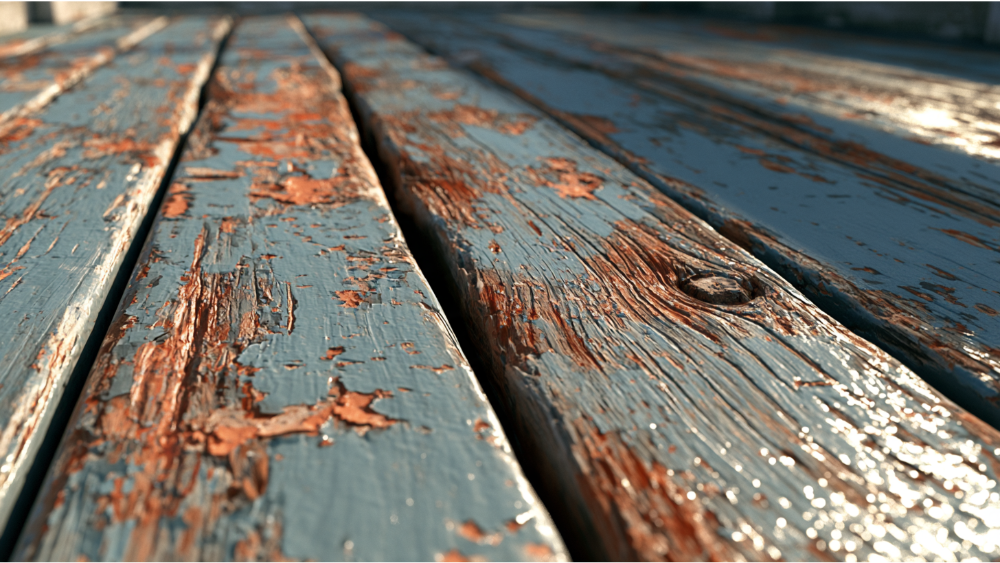
Peeling is a symptom, not the disease. Remove the failed coating and figure out why it let go. Usually it's moisture: wet wood under the film, poor drainage, or a coating that never bonded. Recoat only after you've addressed the cause. Paint over a peeling surface and the new film peels right along with the old one.
Composite and PVC Decking
Verify your decking brand and product line before you sand, prime, or coat anything. Current instructions from major composite manufacturers advise against painting or staining many newer capped boards. One warns that painting can void fade-and-stain warranty coverage, and another states that problems caused by third-party coatings won't be covered. Identify what you have first, because a coating mistake here can cost you a warranty on the whole deck.
Stairs and Shaded, Moisture-Prone Areas
Stairs, shaded sections, and wet entries deserve extra attention. These are the spots where slips happen and where water lingers. Use a low-luster or manufacturer-rated textured finish for traction, and make sure water isn't being trapped against the wood. A board full of wood knots in one of these areas may also need a shellac based primer to keep the knots from bleeding through, since primers both seal the wood and fill grooves for better bonding. On a damp, shaded entire deck like this, an oil based primer under a water based topcoat is a common way to get strong adhesion where the surface stays wet longest.
Why Surface Prep Matters More Than the Paint on the Can

We'll say it plainly: prep is where a deck finish is won or lost. You can buy the most expensive coating on the shelf, and if the surface underneath isn't clean, sound, and dry, it will peel. Proper surface preparation is what prevents that. This prep work is the step cut-corner painters skip, and it's the step we never do.
Here's the real sequence, in order:
- Inspect the whole deck. Walk every board, check the fasteners, press on soft spots, look at the framing and connections underneath. You're finding problems now so the finish doesn't fail later.
- Repair or replace damaged wood first. Rot repair and replacing boards come before anything else. Paint cannot restore a compromised board, so the bad wood has to go before the coating goes on. If you've had to pull and reset deck screws or fill old screw holes during that work, make sure those repairs are flush and sound before moving on.
- Clean the surface. Remove dirt, mildew, and debris. Go easy with a power washer. Aggressive power washing damages soft wood like western red cedar, gouging the surface and raising the fibers, which creates a rough, uneven base that coatings don't like. Lower pressure and the right cleaner beat brute force.
- Remove loose coating. Scrape off anything peeling or flaking. If old paint is lifting, sanding is necessary. A coating can only bond to what's firmly attached underneath.
- Sand and feather. Smooth weathered areas and feather the edges where old coating meets bare wood so the transition doesn't telegraph through the finish. A belt sander handles weathered boards and rough spots well, and 50 to 80 grit is appropriate for exposed exterior wood, as long as no lead-based paint is present. You don't always need to completely sand a sound deck, but you do need to knock down every raised or flaking area.
- Dry and check moisture. After any wet cleaning, let the wood dry fully. Moisture trapped under a coating is the number one cause of early failure. A moisture meter takes the guesswork out.
- Prime where the system requires. Spot prime or prime bare wood per the coating's instructions. An oil based primer or shellac based primer, such as a dedicated cover stain product, seals the wood underneath and improves bonding, and a shellac based primer is what blocks knots and tannin bleed from showing through. An oil based primer is also a reliable choice on weathered or tannin-rich boards before a water based topcoat, as long as the two are compatible. When only a few boards are stained, it's enough to spot prime those areas rather than coat the whole surface.
- Apply at the correct film thickness. Usually two coats, applied at the thickness the manufacturer specifies. Too thin and it won't protect. Too thick and it can crack. Let the first coat reach its recoat window before the second goes on.
This is also where our full-service approach earns its keep. If your deck needs rot repair, a few replacement boards, or some carpentry before the finish, you shouldn't have to line up one crew for the wood and another for the paint. We handle the inspection, the repairs, the prep, and the coating under one scope. The homeowner doesn't juggle contractors or wait for a second company to show up. That attention to detail through every step is what produces clean, long-lasting results instead of a paint job that looks great for a season and then lets go.
When Will Deck Paint Fail Early, and When Should You Not Paint at All?
Most top guides tell you what to buy. Few tell you when not to paint. This is the part that saves people money, so we'll be direct about it.
Deck paint fails early when:
- The wood is still wet. Moisture under the film is the most common cause of peeling and blistering.
- The coating isn't compatible with what's already there, so the new film can't bond. An oil based product over an incompatible water based layer is a classic version of this.
- You paint over loose or failing old paint without removing it first.
- There's active rot under the surface, which keeps spreading no matter what's on top.
- Board gaps are blocked and water gets trapped against the wood.
- The deck sees rain, heavy dew, or foot traffic before the coating has cured, so weight lands on wet paint.
- A composite deck gets coated against the manufacturer's instructions.
And here's the line we won't cross, because it matters: paint does not restore structural stability. If your boards are soft, loose, or rotted, no coating fixes that. Not a thick resurfacer, not two extra coats, not premium paint. Those boards need to be repaired or replaced before any finish goes on. A coating can make bad wood look fine for a little while, but it also seals moisture in and can speed up the decay you were trying to hide.
This is why we separate the two decisions cleanly. There's the cosmetic decision, which color and which finish, and there's the structural decision, whether the wood is sound enough to coat at all. The structural question comes first, every time. If an inspection turns up rot or movement, that gets addressed before we talk about color. It's the honest way to work, and it's the only way to get a finish that actually lasts.
If you're looking at your deck and seeing soft spots, spongy boards near the fasteners, or widespread peeling, that's not a painting job yet. It's a repair job first. The good news is that both can happen in one engagement with the right contractor, so you're not left chasing two trades to finish one wood deck.
Deck Painting Weather, Drying, and Cure Times

When you coat a deck matters almost as much as what you coat it with. Weather and timing decide whether the finish bonds or fails.
For application conditions, the USDA's general guidance for waterborne latex paint is a good baseline:
- Apply when the temperature is at least 50°F.
- Expect it to stay above that for the next 24 hours.
- Avoid hot surfaces and direct sun, which can flash-dry the coating before it bonds.
- Avoid late-afternoon application when heavy nighttime dew is likely to settle on an uncured film.
- After wet cleaning, allow at least two warm, windy days for the wood to dry before you finish.
All of that defers to the product's own data sheet. Some newer formulas allow different temperature ranges, and oil based coatings in particular follow their own cure timelines that differ from water based acrylics. The label always wins over general rules.
Now the part people get wrong most often: drying is not curing, and there are four distinct stages you need to respect. One won't mean the next.
Those numbers are one product's example under its stated temperature and humidity, not a universal rule. A fast drying acrylic will differ from an oil based floor paint, which often needs longer between coats. The point is that a deck that feels dry after an hour is nowhere near ready for your patio furniture, and putting weight on it too soon leaves marks and weakens the film. Check the data sheet for your product's actual numbers.
If you're coating a deck in a wet climate, scheduling becomes the hard part. Around the greater Seattle-Tacoma region, Sea-Tac averages roughly 39 inches of precipitation a year across about 156 days with measurable rain. Nighttime dew is common, and genuinely dry windows can be narrow outside of July and August. That doesn't mean you can only paint in summer. It means the forecast, the wood's moisture level, the shade, the dew point, and the coating's cure window all have to line up before the work starts. We plan deck projects around those conditions rather than against them, because a coating applied into the wrong window is a coating that peels. This is also why a thin semi transparent stain can be more forgiving here than a heavy paint film: it carries less moisture risk and recoats without a full strip when the weather finally cooperates.
Lead-Safe Prep on Pre-1978 Decks
If your deck is part of a home built before 1978, there's an important safety layer to the prep work. Scraping and sanding old paint on an older surface can create lead-contaminated dust and chips, which are a genuine health hazard, especially for children. This isn't a reason to panic, but it is a reason to handle the work correctly.
Federal rules under the EPA's Renovation, Repair, and Painting (RRP) program generally cover paid work that disturbs paint on pre-1978 target housing and child-occupied facilities. There's an exception for minor exterior work disturbing roughly 20 square feet or less, but demolition and certain prohibited practices are covered regardless of the area involved. Contractors performing covered work are required to hold the proper certification and use lead-safe work practices, including containment and careful cleanup.
Washington administers its own EPA-authorized RRP program and requires certification for renovation, repair, or painting on applicable pre-1978 properties. If you're hiring out deck work on an older home, this is something worth asking about directly.
Cover Pro Painting is EPA Lead-Safe Certified (RRP Certified), and we're licensed, bonded, and insured in Washington State. We mention that here not to boast, but because it's exactly the kind of thing you want confirmed before anyone sands an old painted deck on your property. Lead-safe prep protects your household and keeps the work compliant, and it's part of doing the job right rather than fast.
When Should You Hire a Professional Deck Painter?

Plenty of decks are a reasonable DIY project. Others aren't, and knowing the difference saves you from a weekend that turns into a redo. Lean toward hiring a professional painter when you see any of these:
- Extensive peeling across the deck, which means serious removal and prep.
- Suspected rot, soft boards, or any structural movement.
- Multiple previous coatings stacked up, which complicates compatibility and removal, especially if some layers are oil based and others water based.
- Pre-1978 painted surfaces that need lead-safe handling.
- Composite or PVC decking where you're unsure whether coating it is even allowed.
- Difficult access, tall railings, multiple stair runs, or an elevated back deck.
- A large deck or a commercial, HOA, or multi-unit scope where schedule and consistency matter.
The real advantage of hiring the right team is that everything happens under one roof. We inspect the deck, handle rot repair and any carpentry, address damaged siding stain or trim nearby if it's part of the picture, do the full surface prep, and apply the finish. One team, one clearly defined scope, one point of contact. You don't coordinate a carpenter and a painter and hope their schedules meet. And because we handle the whole wood deck from the framing up, the person who prepped the boards is the person who finishes them, which is how details stop falling through the cracks.
A little about how we work, since trust is the whole question here. Cover Pro Painting is founder-led by Alex, who's been painting since he was a teenager and has run this company for over 13 years. Our team carries over 100 years of combined painting experience, and most of our work now comes from repeat clients and referrals, which is the report card we care about most. We back exterior painting with a five-year warranty, use premium products carrying lifetime manufacturer warranties, and give you a clear, transparent estimate before any work begins, so you know what your project involves and what you're investing.
One homeowner tip whether you hire us or anyone else: in Washington, construction contractors are required to register with the Department of Labor & Industries, and registration requires bonding and liability insurance. It takes a minute to verify, and it's a simple way to confirm you're dealing with a legitimate business before you sign anything.
Start With a Free Estimate
The thread through all of this is the same: the coating is only as reliable as the inspection, the repairs, and the surface prep beneath it. Pick the right system for your deck's material and condition, decide honestly between paint and stain, fix the wood before you finish it, and apply the coating in the right window. Do that, and you get a result that holds up, whether it's a new deck or one you're bringing back to life.
If you'd rather not sort it out alone, start with a free estimate and see exactly what your deck needs, from rot repair and surface preparation to the final protective finish. We serve homeowners and businesses across the greater Seattle-Tacoma region from our home base in Edgewood, WA. Don't see your city listed? Contact us to confirm service availability.
We also offer 0% APR financing through Paint Now, Pay Later, and 10% off for first-time customers, so cost doesn't have to stand between you and a deck that's done right. Call us today at 206-222-0435 to Get My Free Painting Estimate or to Schedule My Exterior Painting Estimate. We'll give you a clear number and an honest plan before any work starts.
Frequently Asked Questions
What is the best paint to use on decking?
Use an exterior floor or deck coating rated for horizontal wood and foot traffic, such as an acrylic floor and patio enamel. On bare wood, a penetrating semi transparent stain is often easier to maintain, because it soaks in instead of forming a film that can peel. The best paint for your deck depends on its material and existing finish, not on a single brand name like Benjamin Moore or Sherwin Williams, though both make capable products.
Is oil based or water based better for a deck?
Both have a place. Oil based paint penetrates well and can bond strongly to certain bare or weathered boards, but it cures slowly and carries higher VOCs. Water based acrylic coatings dry faster, stay flexible as the wood moves, and resist UV fading, which is why many deck surfaces today use acrylic. A common hybrid is an oil based primer on problem spots under a water based topcoat, as long as the two are confirmed compatible.
What's the longest-lasting deck paint?
Longevity comes more from prep, compatibility, and a quality coating with UV inhibitors than from any single brand. Acrylic latex deck coatings commonly last around five to eight years with maintenance on a well-prepared surface. Be cautious of promises of 10 to 15 years on fully exposed horizontal boards, since flat decking is far harder on a finish than vertical siding.
Should I use paint or a semi transparent stain on my deck?
If you want the wood grain to show and easy future recoats, a semi transparent stain or semi solid stain is usually the better long-term choice on bare wood. If you want bold, uniform color or you're covering a previously painted or defect-heavy deck, a solid color stain or quality floor paint makes more sense. The structural soundness of the boards comes before either decision.
Can you just paint over old deck paint?
Only if the existing coating is sound and compatible with the new product. Remove anything loose or peeling, clean the surface, dull any gloss, repair defects, and prime bare wood where the system requires. If the old finish was oil based, confirm your new product is rated to go over it. Painting over an unsound layer simply transfers the failure to your new coating.
Do you need primer before painting a deck?
Prime bare wood where the coating system calls for it. Primers fill grooves and seal the wood for better bonding, and a shellac based or oil based primer blocks knots and tannin from bleeding through the finish. Always follow the product's technical data sheet, since some coatings are designed to go on without a separate primer.
Is it better to paint a deck with a roller or brush?
Use both. A brush cuts in edges, board gaps, and railings, while a roller covers broad boards quickly. Back-brushing the rolled areas works the coating into the grain for even coverage across the entire deck. The application method matters far less than proper prep and achieving the correct film thickness.
