
%201.svg)


Bathroom Tile Paint: What Works, What Doesn't, and When It's Worth It
Key Takeaway
Bathroom tile paint works on sound, clean, dry tile in low- to moderate-moisture areas when you use the right coating system and complete thorough surface prep. Two-part epoxy or epoxy-acrylic systems suit higher-moisture zones; water-based bonding primer systems handle dry spots. Expect a full cure of 3 to 7 days before any water exposure. Prep and moisture control determine whether the finish lasts for years or peels in months.
Yes, you can paint tile in a bathroom. But it only works when the tile is sound, clean, dry, and in a low- to moderate-moisture area, and only when you use the right coating system with proper surface prep behind it. If you're weighing a refresh against a full replacement, here's the straight read: painting tile updates the look for far less than a remodel, but painted tile is a refresh, not a replacement. The result depends far more on surface prep and moisture conditions than on the paint you buy. We don't paint over problems, and neither should you. Done right, painted tile can hold up for years. Done on the wrong surface, it peels. This guide will help you tell the difference before you spend a dollar.
What Bathroom Tile Paint Can and Can't Do
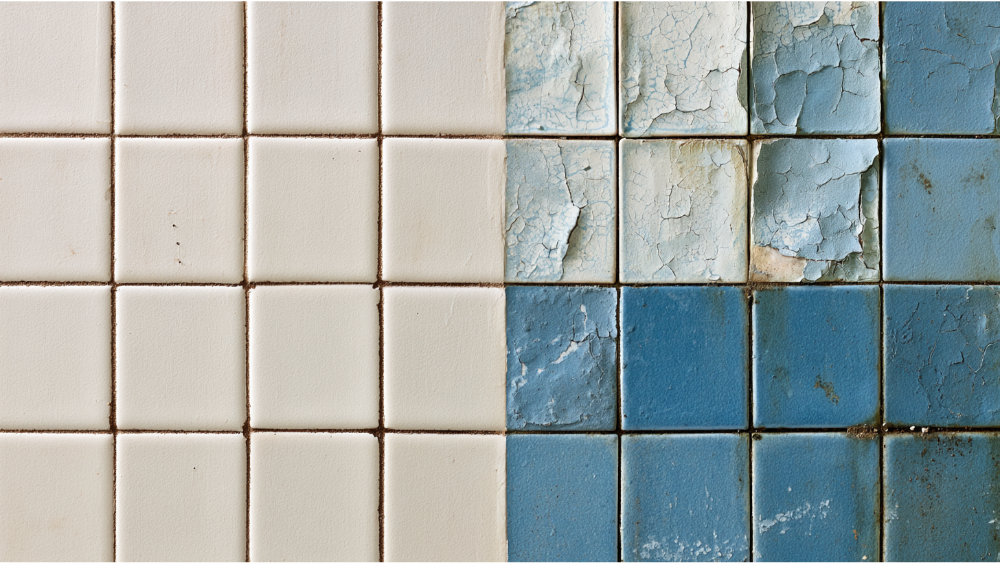
Painting tile changes color and appearance without demolition. There's no tear-out, no dumpster, no days of dust, and it costs a fraction of a full remodel, which can run into the thousands once you factor in labor and new material. That's the appeal, and it's a real one. A dated tan or pink surface can become clean white, soft gray, or a deeper tone that reads modern.
Here's the honest limit. Painted tile is not as durable as new tile or a professionally specified wet-area surface. In a low-traffic spot like a powder room, a properly applied coating can last several years. In areas that get scrubbed, splashed, or walked on constantly, you may be looking at touch-ups every couple of years. The upside is that chips patch easily, so upkeep is manageable when the surface was a good candidate to begin with. What painting can't do is fix a bad substrate or a moisture problem. If the tile is failing or the room stays damp, paint just hides the issue for a while.
Which Bathroom Tile Is a Good Candidate (and Which Isn't)
Different zones in a bathroom carry very different moisture, abrasion, and safety risk. Wall tile, a backsplash, a tub surround, a shower wall, a shower floor, and a bathroom floor are not the same job. The area behind a sink sees more splashing than a dry accent wall, and that matters for how well a coating holds. Before you decide, sort your tile into one of these two groups.
The table below lays out how the main bathroom zones compare, using the durability and moisture guidance already covered in this guide.
Chips and cracks have to be filled and repaired before any coating goes on. And if there's an active moisture problem, that gets solved first. Paint won't stop a leak or dry out trapped moisture. It'll only trap the problem underneath a fresh finish.
What Kind of Epoxy Paint or Water Based System Should You Use to Paint Tile?
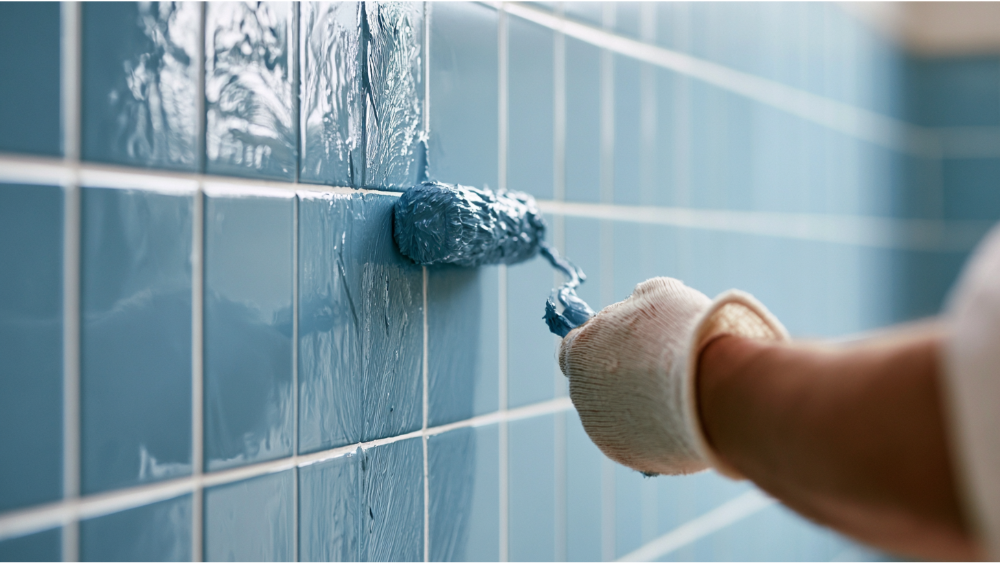
The useful answer isn't "buy tile paint." It's about choosing a coating system that matches the surface. Ordinary wall paint or latex won't bond to glazed tile and won't survive moisture or regular cleaning, so skip it for this. The cheap can of leftover wall stuff in your garage is the wrong tool here.
Two-part epoxy paint and epoxy-acrylic systems chemically cure into a hard, non-porous shell that resists moisture and stains, which makes them the stronger pick for higher-moisture areas. Epoxy paint is also what gives you real durability against daily use and wear. For low-moisture spots, a high-adhesion water based bonding primer system can do the job. Primer choice depends on what's underneath: an epoxy or urethane primer suits ceramic and porcelain, while natural stone or unglazed quarry tile calls for a masonry primer. A bonding primer is essential on any slick, glossy surface, because that's what gives the topcoat something to grab. Adding a protective clear coat or sealer on top pushes the finish closer to waterproof and improves durability against moisture and scrubbing.
You'll find these products at a hardware store or paint retailer, but grit specs, mix ratios, and product limits vary by system. Follow the coating manufacturer's current technical data sheet (TDS) rather than a universal rule. At Cover Pro Painting, we use premium paint products backed by lifetime manufacturer warranties, matched to the surface and the moisture level in the room. A quick color consultation helps you land on the color you want, whether that's a crisp white, a warm gray, or a bold black accent wall behind the vanity.
Surface Prep: The Part That Decides Whether It Lasts
Prep is where this job is won or lost. Skipping it is exactly what causes peeling a few months later. Here's the process that gives you clean, long-lasting results:
- Clean and degrease thoroughly. Remove soap scum, dirt, and limescale, since coatings won't stick to a dirty surface.
- Remove any mildew completely.
- Repair chips and cracks so the surface is even.
- Cut out old, failed caulk.
- Scuff-sand the glossy glaze to create grip. One common tub-and-tile coating calls for #400/#600 wet/dry sandpaper, but grit is product-specific, so check the TDS.
- Remove all dust with a vacuum and a tack cloth right before coating.
- Apply the correct bonding primer.
- Work in dry conditions from start to finish.
When you apply the topcoat, a thin first coat followed by a proper second pass almost always beats one heavy layer. Thin coats level out nicely and cure evenly. After the paint has cured, reseal the edges with fresh mold-resistant silicone caulk. That clean seam is what keeps water out of the gaps and protects the work you just did. Attention to detail here is the difference between a finish that lasts and one you'll be redoing.
How Long Does It Take to Dry and Cure the First Time You Paint Tile?
Drying and curing aren't the same thing. Paint can feel dry to the touch in an hour and still be days away from a full chemical cure, which is when it actually hardens and bonds. Get those confused and you'll expose the coating to water too early, which leads to adhesion failure and peeling.
Product numbers are examples to verify against the current TDS, not promises. One two-part tub-and-tile coating calls for application at roughly 50 to 90°F with humidity below 85%, lists dry-to-touch around 1 hour, recoat around 1 to 2 hours, and full cure around 3 days before water exposure. As a general range, plan on 3 to 7 days before the surface gets wet. Keep the room ventilated during application and while it cures. For large tile areas or a full backsplash, a small foam roller lays down an even coat and you apply the second coat once the recoat window opens. If you're wondering how to keep the space usable, plan around the downtime, since bathroom access is real. Your estimate should spell out the timing for your specific project rather than lean on a universal number.
Moisture, Ventilation, and Safety You Can't Skip
Paint does not fix moisture. Failed caulk, damaged grout, a slow leak, or weak ventilation all have to be handled before any coating goes down. The EPA points to moisture control as the key to preventing mold, and recommends keeping indoor humidity between 30 and 60%, drying wet materials within 24 to 48 hours, and venting bathrooms to the outdoors. A bathroom exhaust fan should move at least 50 cfm for intermittent use (or 20 cfm running continuously), and it's worth leaving it on for an hour after a shower.
On safety: read the SDS and TDS before you open the can. Follow the instructions on both, because they tell you exactly how each product should be handled. Ventilate well, because the EPA advises fresh air and extra fans during painting, and notes indoor VOC levels can run 2 to 5 times higher than outdoors while products are in use. One tub-and-tile coating lists a VOC of 540 g/L, so use proper PPE. If your old grout has gone yellow or a section of wall behind the tile feels soft, sort that out first.
In a house built before 1978, sanding painted surfaces near tile, such as trim, walls, or painted-over tile, can release lead dust. The EPA's RRP rule covers paid firms that disturb paint in pre-1978 housing, with minor-repair thresholds of 6 square feet indoors or 20 square feet outdoors (with exceptions). This is the kind of problem that can occur without you seeing it right away. Cover Pro Painting is EPA Lead-Safe (RRP) Certified, so older homes get handled the right way.
Can You Paint Shower Tile or Bathroom Floor Tile?
These are the two highest-risk zones, and we'll be direct about them.
Shower tile: higher risk and very product-specific. Shower walls can sometimes be coated with the right two-part epoxy system. Shower floors and areas under constant water immersion are a different story, and many coatings explicitly exclude them. Whatever you use, let it cure fully before water touches it.
Bathroom floor tile: possible only with a floor-rated system. Epoxy handles foot traffic better than most coatings, but painting changes the surface texture and its traction. Tile industry standards set a wet dynamic coefficient of friction (DCOF) benchmark of 0.42 for interior floors that get walked on when wet, and no floor tile is truly slip-proof. We won't casually recommend a painted floor unless the system is floor-rated and the wet-slip risk has been evaluated. A garage floor made of concrete is a better home for epoxy paint, where the traction tradeoff matters far less. We cover both of these in more depth in separate guides.
How to Maintain Painted Tile, and When to Call a Pro
Painted tile lasts longest with gentle care. Clean with mild products, skip abrasive pads and harsh scrubbing, wipe up standing water, keep the fan running, and check the caulk and grout now and then. A backsplash or a small shelf-height accent band tends to hold up fine for years since it takes little abrasion, while high-traffic areas may need touch-ups every couple of years. Chips patch easily, so small fixes are quick.
A tidy DIY refresh can be a fun weekend win when the surface is a good candidate and you achieve the desired look without breaking the budget on something expensive. Call a pro when the surface needs real assessment, when there's rot, damaged grout, or failed caulk to repair, when moisture is part of the picture, or when it's an older home that needs lead-safe practices. Our full-service capability means the repairs and the painting are handled by one team, so you're not juggling multiple contractors. That's a great fit if you'd rather not manage the project yourself. A proper estimate inspects the surface and explains the scope in plain terms before anyone gives you a number.
Start with a free estimate so the surface, the prep needs, and the full scope are clear before work begins. Read through our reviews to hear how past projects have turned out, then contact us today at 206-222-0435 to schedule your bathroom tile assessment. Homeowners across our service area use this same first step before any painting work.
Does it really work to paint tile in a bathroom?
Yes, on sound, dry, low-moisture tile with proper prep and the right coating system. The result depends more on surface preparation and moisture control than on the paint itself. Reading product reviews and the TDS before you buy helps you set fair expectations, and a good post-project maintenance routine keeps it looking fine for years.
What is the best tile paint for a bathroom?
A tile-specific coating. Two-part epoxy paint or epoxy-acrylic systems suit higher-moisture areas, while water based bonding primer systems work for low-moisture spots. Ordinary wall or latex paint won't bond or hold up.
Is it a good idea to paint over bathroom tile?
In the right conditions, it's a smart, budget-friendly refresh. It's a poor idea over shower floors, constantly wet areas, failed grout or caulk, or damaged tile. On a dry backsplash or wall it's a great candidate.
How long before painted bathroom tile can get wet?
Wait for a full cure, which generally runs 3 to 7 days depending on the product and conditions. Check the coating's TDS, and don't rush it, because early water exposure causes peeling.
