
%201.svg)


Bathroom Paint Colors for Small Bathrooms: A Practical Guide
Key Takeaway
The best bathroom paint colors for small bathrooms are warm whites, soft greige, pale blues, sage, seafoam, and blush pink, all of which reflect light and keep tight spaces feeling open. Choose colors with an LRV above roughly 60 for the most brightening effect. Always test large paint samples under your actual bathroom bulbs and against your existing tile before committing.
The best bathroom paint colors for small bathrooms are warm whites, soft off-whites, light greige or taupe, pale blues, soft sage, seafoam green, and blush pink. These hues reflect light and keep a tight space feeling open. If you want drama instead of the illusion of size, an intentional deep color like navy, forest green, or plum can make a powder room feel finished and confident. If you're planning a refresh and want a result that lasts, not one you'll redo in two years, the right paint colors depend on your light, your existing tile and fixtures, and the room's moisture, not one magic shade.
Quick Bathroom Color Guide: Choose by the Result You Want
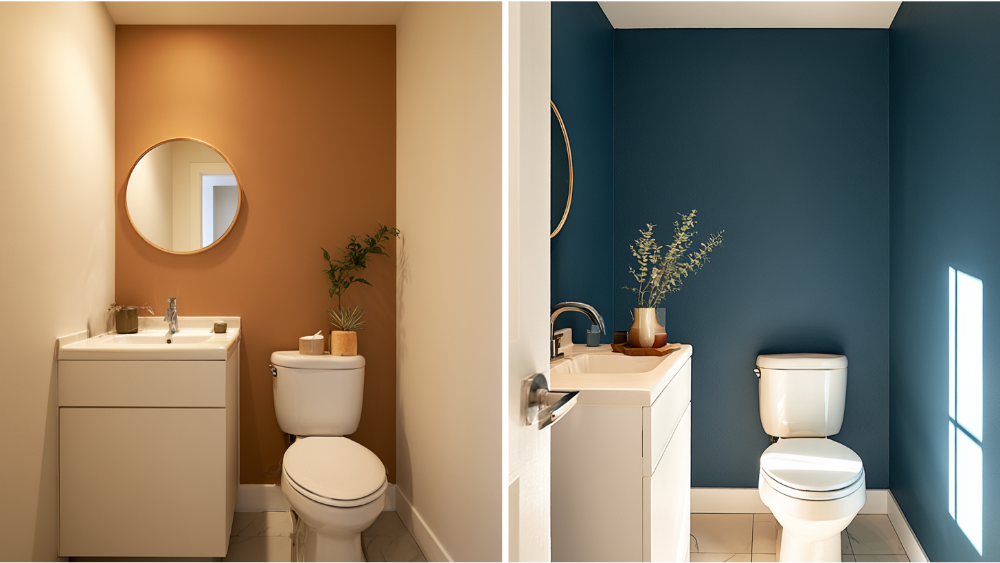
Start with the feeling you want, then work back to the color family that fits your style. Use it as a jumping-off point for bathroom color ideas.
Why Small Bathrooms Are Tricky to Paint
A small bathroom breaks the usual rules because so much of the room is already decided for you. A few things make paint color selection here a real decision:
- Limited natural light, sometimes with no windows at all.
- Reflective tile and mirrors that bounce color back at you.
- Fixed features like tile, countertops, cabinetry, and metal fixtures you can't change.
- Moisture and steam that stress the paint on your walls.
- Small wall areas, which make a color's undertone show up more strongly than a chip suggests.
Dark colors absorb light and can shrink an already tight room, while light hues help the walls recede. That's why the same paint can feel great in a big, sunny room and wrong in a small one. The goal is to create a space that feels open rather than closed in. A downstairs bathroom often has less light to work with, which makes color choice even more important.
Understand LRV Before You Choose the Best Paint Colors
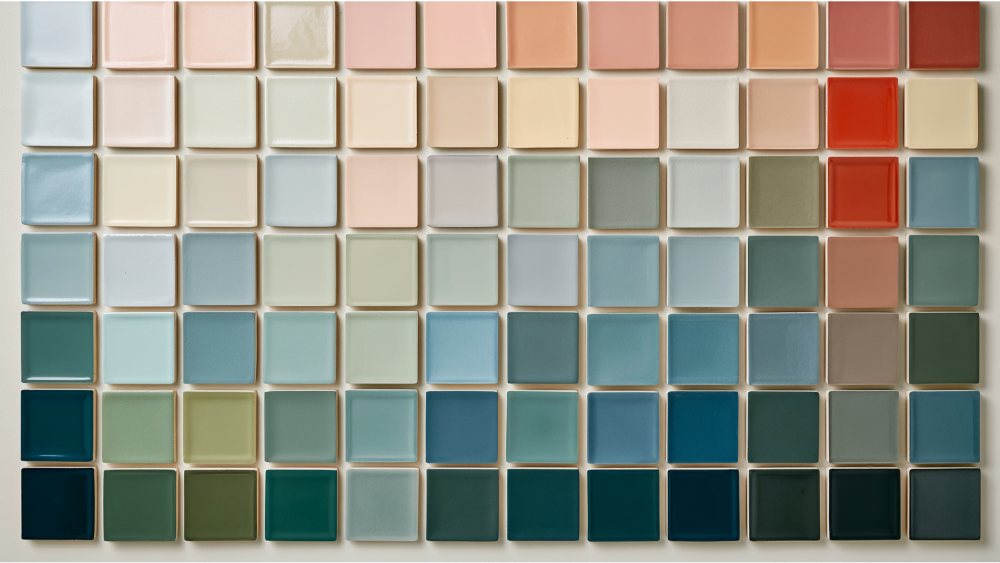
Light Reflectance Value, or LRV, is the single most useful number for a small bathroom. According to Sherwin Williams, the scale runs from 0 to 100, where 0 absorbs light and 100 reflects it. Higher-LRV colors bounce more light around the room and help a small or dark bathroom feel open. As a general guide, colors above roughly 60 tend to brighten a space. Treat that as guidance, not a rule you have to obey. Keep in mind the same paint colors read differently under warm and cool light, so an LRV number tells you part of the story, not all of it.
The Best Paint Colors for Small Bathroom Walls
Here are the families of bathroom paint colors that consistently work in tight spaces. Each one can go in a different direction depending on your fixtures, your tile, and the style you're after. Use them as a starting point for inspiration.
Warm White and Off-White
The reliable starting point. Warm whites keep a windowless bathroom from feeling cold and sterile the way a stark cool white can. Sherwin Williams Greek Villa and Benjamin Moore Simply White are two named bathroom paint colors people gravitate toward in this range, and both pair easily with almost any tile.
Soft Greige and Taupe
A quiet neutral with a little warmth. Greige plays well with gray tile and warm wood bathroom cabinets, and it hides everyday wear on the walls better than a pure white. It's a forgiving choice for a busy family bathroom.
Pale Blues and Blue-Gray
Cool and calming without going cold. Sherwin Williams Blustery Sky is a soft, tranquil option, and a medium blue-gray reads more sophisticated if you want a touch more depth. Blues are a natural fit for a bathroom because they echo water and calm.
Sage and Seafoam Greens
Tranquil greens are a favorite for spa-like bathrooms. Sage grounds the room, seafoam keeps it light and airy. Both greens work well on the walls when your fixtures lean warm, and they bring the outdoors in without overpowering a small space.
Blush and Muted Pink
Soft pink is more versatile than people expect. Under warm light this bathroom color is flattering and spa-like, and it stays subtle rather than loud. It's an easy way to add personality without a bold commitment.
Soft Yellow and Butter Tones
A gentle way to warm up a room with weak light. Keep these hues muted, not sunny, so the space feels serene instead of busy.
Muted Clay and Terracotta
An earthy, cozy choice that adds warmth without going dark. It pairs nicely with natural wood, matte black fixtures, and warm-metal features like brass.
Best Bathroom Paint Colors for a Small Bathroom With No Window
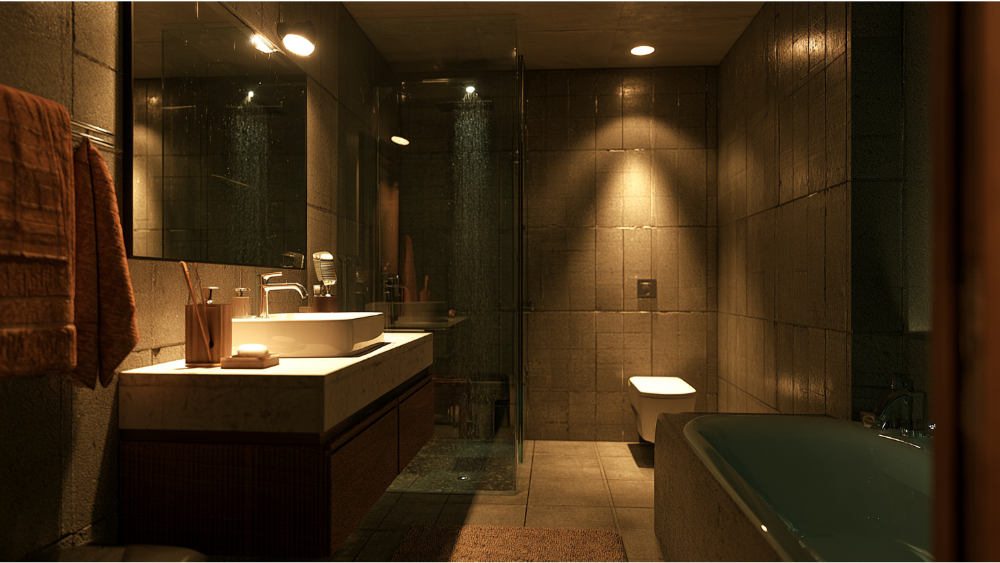
White isn't automatically magic in poor light. A cool, stark white with nothing to reflect can look gray or flat and even a little cold. In a bathroom with no windows, lean into warmth: a warm off-white like Simply White, a light greige, a pale blue-green, or a soft blush all brighten the space while keeping it inviting. Your bulbs matter as much as your paint. Warm light and cool light change how colors read, so choose them together rather than one after the other. And remember a satin or semi-gloss finish reflects more light than flat, which helps when there's little to work with. A fresh coat in the right shade can transform even a dim, windowless bathroom.
Can Bold Colors Work in a Small Bathroom?
Yes, when the choice is intentional. Bold colors shine in a powder room or half bath, where mood matters more than the illusion of size, and where good lighting can carry a saturated, moody look. Dark olive makes a dramatic powder room, navy and plum feel rich and finished, burgundy has been a trending powder room move, and black against white or off-white tile creates crisp contrast. What to avoid is a random dark accent wall when you want a clean, cohesive result. A color-drenched approach, wrapping one deep color across the walls, usually reads more polished than a single wall left dark. If you love bold ideas, the powder room is a great place and a fun spot to try them, and it can bring real life to a small footprint.
Should the Ceiling, Trim, and Doors Match the Walls?
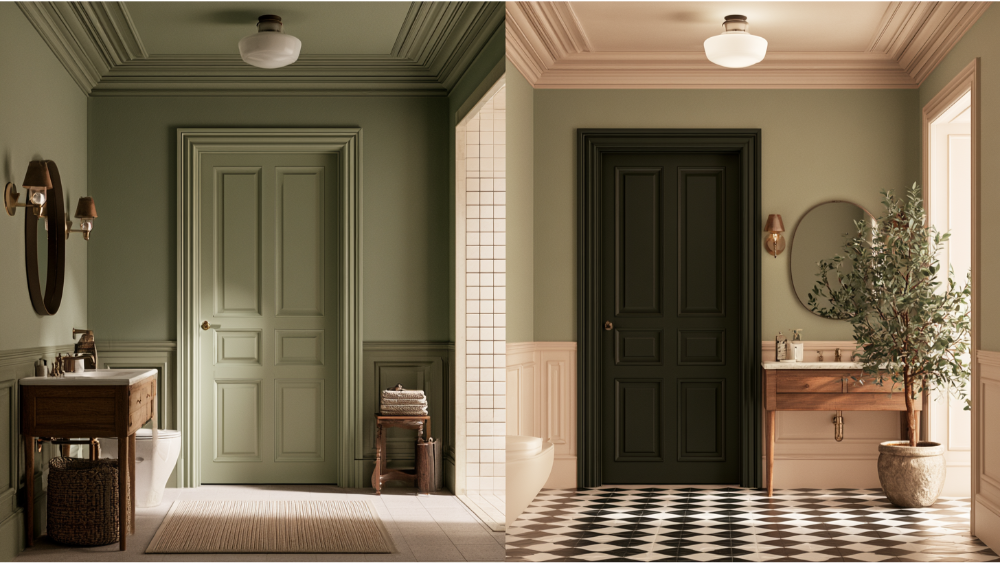
It depends on your goal. Painting the walls, trim, and ceiling the same color, often called color-drenching, blurs the edges and can make a small room feel more seamless and larger. If you'd rather keep things bright overhead, a lighter ceiling lifts the room and keeps it feeling open. For trim, doors, and windows casings, semi-gloss adds durability and a quiet bit of contrast that frames the space without shouting.
What Paint Finish Is Best for a Bathroom?
For a full bathroom with a shower or tub, satin or semi-gloss is the safe call. Both resist moisture, wipe clean easily, and reflect more light than flat. Eggshell can work in a powder room or half bath with no shower, as long as the room is well ventilated. On the Master Painters Institute sheen scale, finishes run from G1 flat through G7 high-gloss, with eggshell, satin, and semi-gloss sitting in the middle where most bathroom walls belong. One tradeoff worth knowing: higher sheen shows wall flaws more clearly. That's exactly why surface prep decides how good the finish looks. Finishes on the vanity and cabinetry typically vary from wall finishes for the same reason.
Surface Prep Matters More in a Bathroom
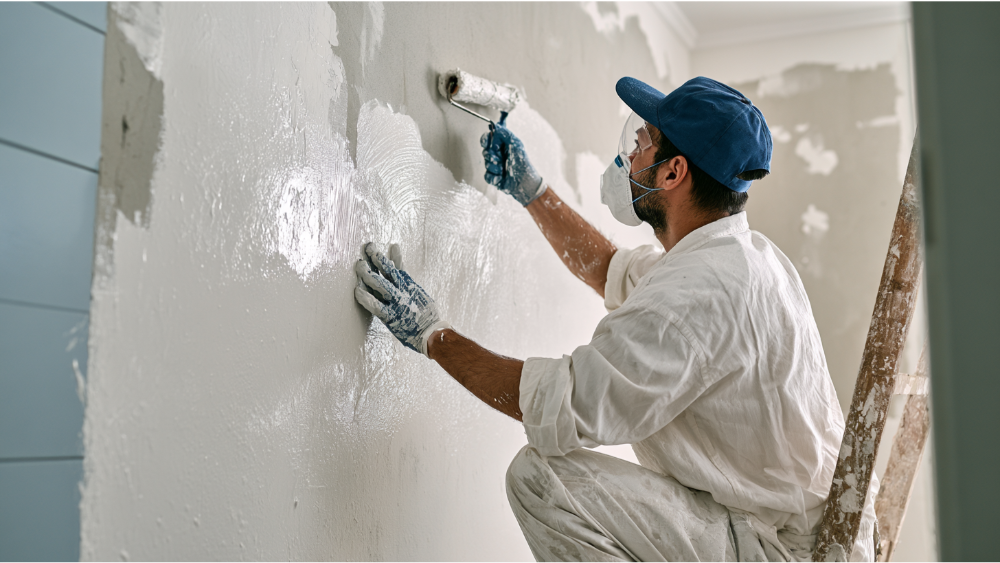
Paint only performs as well as the surface underneath it, and a bathroom punishes shortcuts. Before we open a can, we work through the surface:
- Clean off soap residue and film so the paint can adhere to the walls.
- Treat mildew and fix the moisture source. Paint doesn't fix a moisture problem. The EPA recommends keeping indoor humidity between 30 and 60 percent, drying wet materials within 24 to 48 hours, and venting the bathroom outdoors.
- Repair cracks and holes.
- Sand glossy surfaces so new paint can grip.
- Prime stains and big color changes for even coverage.
If your house was built before 1978, there's one more consideration. Older paint may contain lead, and sanding or scraping can create hazardous dust. The EPA recommends hiring a lead-safe certified contractor for those projects. We're EPA Lead-Safe (RRP) Certified, so we handle that prep correctly.
How to Test the Best Paint Colors Before You Commit
Because small wall areas magnify undertones, testing bathroom paint colors matters more here than almost anywhere else in the house. A tiny chip won't tell you the truth. Do this instead:
- Paint large samples on more than one wall, not a two-inch swatch.
- Look at them in the morning and again at night.
- Check the colors under the actual bulbs you use in that bathroom.
- Hold the samples against your tile, countertop, toilet, and metal features before deciding.
The quality of light near your windows and fixtures drives how colors read, and the same shade can look creamy under warm light and gray under cool light. This is where a little inspiration meets real-world testing, and where your color journey really starts to click. A modern bathroom you use for makeup and getting ready deserves this extra step.
When to Bring in the Color Experts
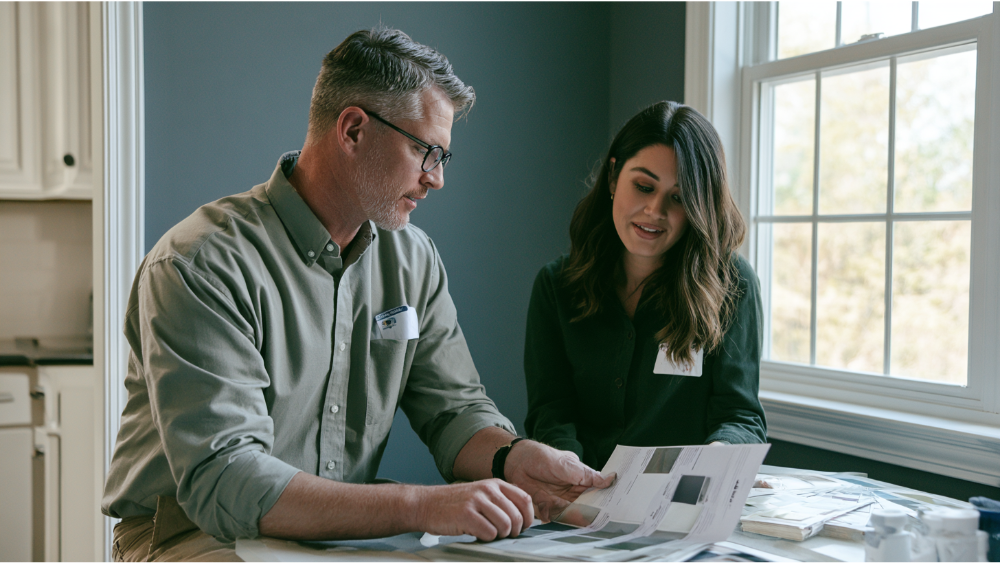
Some signs point to a repaint that's more than a color swap: peeling paint, staining or mildew, poor ventilation, old glossy paint, or a house built before 1978. In those cases we look at light, tile, trim, cabinetry, and moisture before recommending a bathroom color and finish. Every project starts with a free color consultation with our color experts and a transparent estimate, so you know the scope before work begins. A finished bathroom that feels good is a top priority for us and worth doing right. Whether you're drawn to soft blues, calming greens, or a bold plum, we help you land on paint colors that suit your style and your light and lend the room a spa-like atmosphere. We use premium products backed by lifetime manufacturer warranties, with low-VOC, family-safe options where they fit, and we prep the surface for clean, long-lasting results that feel fresh and inviting for guests. From our collection of favorite hues, we'll help you choose. Keep the room ventilated for 2 to 3 days after painting, as the EPA suggests.
Start With a Free Estimate and Color Consultation
The easiest first step is a conversation. Start with a free estimate and color consultation so you know exactly what your bathroom project will involve before any work begins. Call us at 206-222-0435 to get started. We're based in Edgewood, WA, and serve homeowners and businesses across 20-plus cities in the greater Seattle-Tacoma area. Don't see your city listed? Contact us to confirm service availability.
What color paint is good for a small bathroom?
Warm whites, soft neutrals, pale blues or greens, and blush are all strong choices because they reflect light and keep the room feeling open. Match the colors to your light and your existing tile rather than picking from a photo alone.
What color is most flattering in a bathroom?
Warm-toned soft neutrals and soft pinks tend to flatter skin under warm light, which is why they feel good in a room where you get ready each day. Avoid stark cool whites in a low-light bathroom, since they can read cold and gray.
What paint colors make a small bathroom look bigger?
High-LRV light hues reflect the most light and help the walls recede, which makes the room feel larger. Painting the walls and trim the same light color blurs the edges and adds to that sense of space.
What is the best bathroom color for a small bathroom in 2026?
There's no single answer. Light warm neutrals stay reliable when you want brightness, while deep olive greens, navy, plum, and burgundy are trending ideas for intentional powder rooms where you want drama instead of the illusion of size.
