



Basement Floor Paint: What to Use and How to Make It Last

Key Takeaway
Basement floor paint must be rated for concrete: acrylic concrete paint works for light-use utility slabs, while a two-part epoxy delivers the durability and chemical resistance busier basements need. Before any coating goes down, test the slab for moisture using ASTM F1869 or ASTM F2170, since active seepage or efflorescence will cause even premium paint to fail. Surface preparation, including cleaning, profiling, and crack repair, determines whether the finish lasts.
Use a product rated for concrete, not ordinary wall paint. For a dry, well-prepped slab that sees light use, an acrylic concrete floor paint is simple to apply and does the job. For a basement that takes more wear, a two-part epoxy or resinous coating holds up far better and resists chemicals and scuffing. But none of that matters if the slab has active seepage, efflorescence, or fails moisture testing. In that case, fix the water source first. Concrete almost always carries some moisture, so testing the surface before you coat isn't optional. If you're planning a laundry, storage, workshop, or utility floor, keep one thing in mind as you read: the slab decides what lasts, not the paint can.
Is painting your basement floor a good idea?

For most dry, sound slabs, yes. Painting a concrete basement floor is a sensible upgrade for a laundry area, storage room, workshop, home gym, or general utility space. A coating gives you a finished look, makes the floor easier to clean, cuts concrete dust, and adds a layer of surface protection that can genuinely enhance how the room feels and functions. The right concrete paint also improves the appearance of a dull gray slab without a major renovation. Laundry rooms in particular benefit, since a sealed floor shrugs off the splashes and detergent spills that bare concrete soaks up.
Just be clear on what a coating doesn't do. It isn't insulation. It won't fix structural problems or spalling concrete. It doesn't waterproof the basement, and it is not radon mitigation. Basement floors deal with moisture and temperature swings that other floors don't, which is exactly why a moisture-first mindset saves you from a redo.
Don't apply basement floor paint yet if you see these warning signs
We'd rather tell you to wait than watch a finish fail in a season. Hold off if you see any of these:
- Standing water anywhere on the slab
- Dampness that shows up after rain
- Cracks that stay wet
- Efflorescence (white, chalky mineral deposits)
- A musty odor or visible mildew or mold
- Old coating that's peeling or blistering
- An unknown sealer, where water beads on the surface instead of soaking in
- Spalling, flaking, or otherwise unsound concrete
These point to a water source or a bond problem that has to be corrected before any paint goes down. The same caution applies where a basement floor meets the walls, since moisture often shows up first along those lower edges. Running a dehumidifier helps keep the space dry once the source itself is handled.
How do you test a concrete basement floor for moisture?
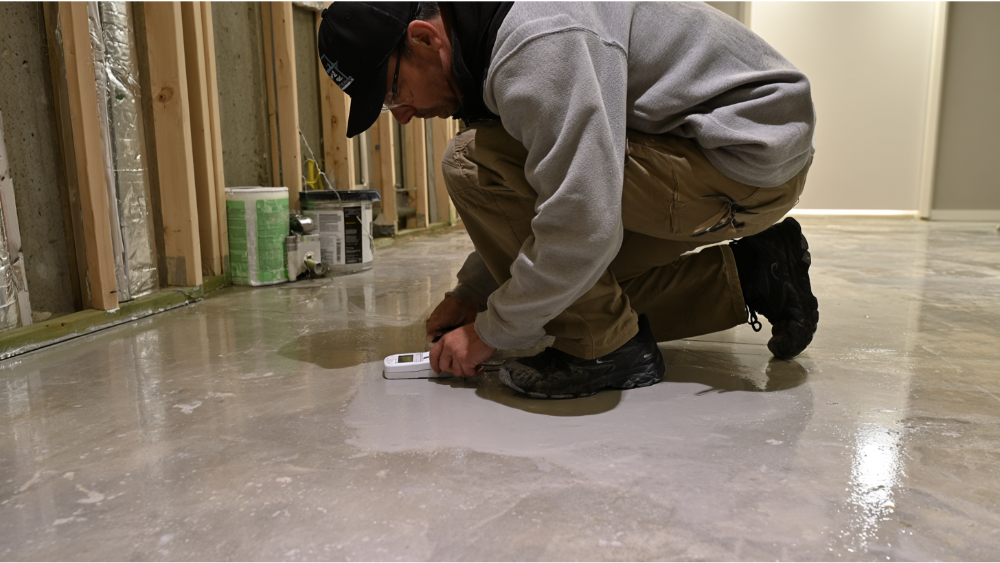
Start with your eyes. Check for staining, efflorescence, and damp spots after wet weather. For a basic screen, the ASTM D4263 plastic-sheet method tapes a sheet of plastic to the slab and checks for trapped moisture underneath. It's a useful indicator, not final proof.
For finished living space or any higher-risk floor, quantitative testing is the honest call. ASTM F1869 measures the moisture vapor emission rate from bare concrete, reported over 1,000 square feet in 24 hours. ASTM F2170 measures relative humidity inside the slab with in-situ probes. Here's the myth worth correcting: a standalone moisture-meter reading like "under 4%" is not a universal pass or fail. The coating manufacturer's data sheet sets the acceptable limit, and different systems allow different numbers. On the source side, EPA advises correcting leaks and keeping indoor humidity below 60%, ideally between 30% and 50%. (We'll be linking a dedicated guide on moisture testing if you want the full procedure.)
Concrete floor paint options for basement floors compared
The word "epoxy" gets stretched to cover three different materials, so let's separate them. Acrylic concrete floor paint is a one-part, water-based product that rolls on easily. One-part epoxy-modified paint is premixed and acrylic-modified; it does not go through the chemical reaction that cures true epoxy paint. Two-part epoxy or resinous coating mixes resin and hardener before application, has a limited pot life, and delivers the most durable finish. Concrete stain and clear sealer are cosmetic or protective options, not wear coatings on their own. The same products also work well on garage, porch, and patios surfaces, and many carry over to driveway, walkways, and other concrete surfaces outside, though an exterior slab brings its own temperature and moisture demands.
CoatingBest usePrep demandsAdvantagesMain limitation / failure modeAcrylic concrete floor paintLight-use utility and basement floorsModerateSimple to apply, easy recoatWears faster; may need repainting over timeOne-part epoxy-modified paintLight to moderate useModerateTougher than plain acrylicDoesn't match true epoxy durabilityTwo-part epoxy / resinousBusy basements, workshops, gyms, garage floorsHigh (profiling required)Hard, chemical-resistant, tight filmHigh traffic areas shorten service life; unforgiving prepConcrete stainDecorative colorModerateNatural lookNot a protective wear layer aloneClear sealerDust control, mild protectionLow to moderateBreathable options existThin; limited abrasion resistance
For a basement that gets real use, a durable two-part epoxy is usually the stronger choice. Any lifespan you read depends on traffic, moisture, film thickness, and prep, so treat those claims as conditional, not guarantees.
Surface preparation: where lasting quality comes from
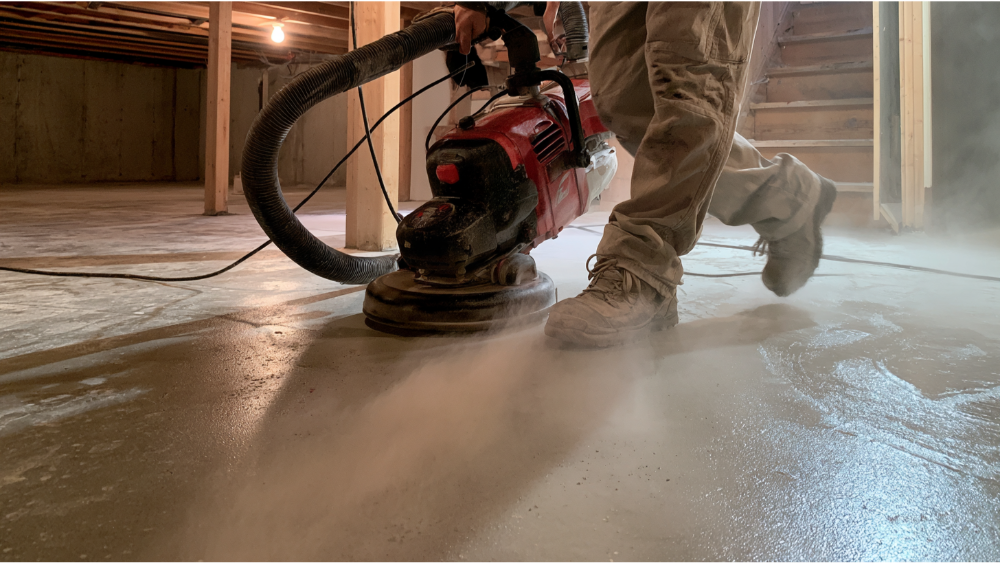
This is where a floor earns its longevity. Skip it, and even premium products peel. First, figure out what you're working with: sprinkle water on the surface. If it beads, there's a sealer that likely needs mechanical removal. Strip any failed coating. Then clean and degrease the entire surface with a heavy-duty concrete cleaner to lift grease, oil, grime, and dirt. A stiff bristle brush and some soap work loose embedded buildup, then rinse well, mop up the residue, and confirm the slab is fully dry before going further. New concrete needs extra patience here, since fresh masonry has to cure for weeks before it will accept a coating.
Fill cracks and patch damaged concrete so the surface is sound and smooth. Next, create the profile the coating needs, either by acid etch or mechanical grinding. An etch opens the pores so the paint can grip, but it won't remove a sealer the way a grinder will. The ICRI Concrete Surface Profile scale runs from CSP 1 to CSP 10; thin-film coatings around 4 to 10 mils typically want roughly CSP 2, while high-build systems around 10 to 40 mils lean toward CSP 3. The manufacturer's data sheet controls the exact profile. For spot smoothing you can hand-sand rough patches, but don't rely on sandpaper to profile a whole slab. HEPA-vacuum the dust so nothing interferes with adhesion. Prime only if your chosen system calls for it. Don't automatically seal concrete before painting, and never pair a mismatched primer with a topcoat, because that combination is a common cause of premature peeling.
Safety, application, and curing: getting the second coat right
Grinding concrete releases crystalline silica. OSHA sets an action level of 25 μg/m³ and a permissible exposure limit of 50 μg/m³ as eight-hour time-weighted averages, and generally prohibits dry sweeping. Wet methods, shrouded tools, and HEPA vacuuming are the controls that matter. Ventilate with a fan when using epoxy or resins and wear proper PPE; odor is not a reliable sign that exposure is safe, and some products carry toxic fumes until they cure. In pre-1978 homes, grinding or scraping old paint can create lead dust, and EPA's RRP rule covers disturbance of more than six square feet of interior painted surface per room. Our team is EPA Lead-Safe Certified, which matters on older floors inside the house.
Before coating, check floor and air temperature, humidity, and dew point, and follow the manufacturer's directions throughout. Mix two-part products accurately and respect pot life. Cut in the edges first, then keep a wet edge as you roll the first coat, and add compatible slip-resistant aggregate near laundry or utility areas where the floor may get damp. Let each layer dry completely and follow the product directions on recoat timing, which usually allow roughly 12 to 24 hours and vary by the flat sheen or finish you chose. Wait for the window the product label gives before adding a second coat. Know the difference between dry-to-touch, light foot traffic, and full service cure: one common one-part coating allows foot traffic around 24 hours and furniture around 72, while a polyaspartic may take foot traffic in about 4 hours but 5 days to complete the cure. This patience is what eliminates most early failures. Always follow the specific directions on the label, and keep kids and pets off until it's done.
Should you DIY or hire a pro?

A dry, sound, bare, lightly used utility floor with a one-part acrylic product is a reasonable DIY project. Bring in a pro when you're dealing with recurring moisture, an unknown or sealed existing coating, extensive grinding, large cracks, finished living space, a resinous two-part system, or pre-1978 painted surfaces. Cover Pro Painting is a founder-led team started by Alex, licensed, bonded, and insured, and EPA Lead-Safe Certified. As a full-service shop, we handle prep, crack and rot repair, and the coating in one engagement, so you're not juggling trades. Start with a free estimate and see exactly what your project will involve. Call 206-222-0435 or request Get My Free Painting Estimate.
Frequently Asked Questions
What kind of paint do I use on a basement floor?
Use a concrete-rated coating only. Acrylic concrete paint suits light use, and a two-part epoxy gives the durability and chemical resistance a busier basement needs. Standard wall paint isn't suitable for floors, and the same rule holds for a garage or porch slab.
Is painting a basement floor a good idea?
Yes, for a dry, sound slab in a utility space. A coating protects the concrete and improves the room, but it doesn't waterproof or insulate. Fix any moisture problem first.
Can I paint my concrete basement floor myself?
It's doable on a dry, sound, bare, lightly used floor with a one-part product. Call a pro for moisture issues, heavy grinding, resinous systems, or pre-1978 paint.
What is the cheapest way to cover a concrete basement floor?
Acrylic concrete floor paint is the simplest entry point, but proper surface prep determines whether any coating actually lasts. Request a free estimate so the recommendation fits your specific slab.
